By donating to the News you help us bring more news to you! We will use the donations to pay additional reporters, and spend more time on stories! Want to donate more than $10? Under the $10 is a dropdown box, choose multiples of 10. (i.e. Qty 3 at $10)
*DataGovArchive
archive of data.gov on Source Cooperative. The 16TB collection includes over 311,000 datasets harvested during 2024 and 2025, a complete archive of federal public datasets linked by data.gov. It will be updated daily as new datasets are added to data.gov.
-Alexandra Morton's Web Site (NEW)
The new web site for the work of Canada’s leading researcher in to farmed Atlantic Salmon and it’s effects.
North Olympic Peninsula Skills Center Natural Resources
To provide a program that provides hands-on, relevant natural resources research experience while meeting the needs of and building capacity within individual students and the North Olympic Peninsula region.
openchannels.org
OpenChannels is designed to become a comprehensive source for news, guidance, and community discussion on sustainable practices in ocean planning and management.
River of Kings – Video
Part 1 of 2 part series by Carl Safina on the Nisqually River Restoration.
Salish Magazine
Salish Magazine is a free online magazine that takes inquisitive readers outdoors with visually rich storytelling about features people can see firsthand in our public forests and beaches.
Victoria Sewage Project
The official city site on the project. The latest scoop on the Canadian poop!
WA State Family Forest Fish Passage Program
The Family Forest Fish Passage Program provides funding to small forest landowners to repair or remove fish passage barriers. Download the film.
News Sites
Green Acre Radio on KBCS
Green Acre Radio on KBCS — Sustainability, local food production, restoration & environmental talk radio.
NW Indian Fisheries Commission
The Northwest Indian Fisheries Commission (NWIFC) is a support service organization for 20 treaty Indian tribes in western Washington.
Brinnon Group
Local group opposing Black Point resort
Clam Gardens
Network of researchers exploring First Nation gardening of clams in history, and it’s relationship to today.
Coastal Watershed Institute
“To promote long term, ecological, community based stewardship of marine and terrestrial ecosystems thru scientific research and local partnerships.”
League of Women Voters – Clallam County
a nonpartisan political organization, encourages the informed and active participation of citizens in government, and influences public policy through education and advocacy.
League of Women Voters – Jefferson County
The League of Women Voters, a nonpartisan political organization, encourages the informed and active participation of citizens in government, and influences public policy through education and advocacy.
Local Food Access Network
North Peninsula local food org with an emphasis on developing and supporting increased and sustainable capacity for production, distribution, and consumption locally.
North Olympic Salmon Coalition
The mission of the North Olympic Salmon Coalition is to restore, enhance, and protect habitat of North Olympic Peninsula wild salmon stocks and to promote community volunteerism, understanding, cooperation and stewardship of these resources.
Northwest Watershed Institute
NWI’s mission is to provide scientific and technical support to protect and restore fish and wildlife habitats and watershed ecosystems of the Pacific Northwest.
Olympic Environmental Council
The Olympic Environmental Council works on issues related to the environment and health that affect our North Olympic Peninsula communities.
Olympic Park Associates
If you share with us a passion for Olympic National Park, a concern for the Park’s future, and a vision that Olympic National Park should always be a wild and natural place, we invite you to join Olympic Park Associates.
Washington Environmental Council
WEC has been working for a couple of decades on environmental activism. A great group of people actually getting things done.
Whale Trail
Signs along the way to take you to great whale viewing locations
Wild Fish Conservancy
Wild Fish Conservancy seeks to improve conditions for all of the Northwest’s wild fish
Another of the mysteries of science showing up in the waters off our peninsula.
Data collected since 2011 shows 349 methane plumes in Puget Sound and Hood Canal. Researchers are exploring a potential correlation between the distribution of plumes and fault lines. Nicholas Turner reports. (Seattle Times)
Dr. Anne Shaffer of the Coastal Watershed Institute
February 17, 7:00PM, via Zoom
RSVPs Required
For three decades, The Coastal Watershed Institute has lead the way in nearshore ecosystem conservation and restoration through place-based science.
Dr. Anne Shaffer, CWI’s Executive Director, and a small group of colleagues first formed CWI in 1996. Thru her leadership CWI conducts world class coastal ecosystem science, conservation, and restoration with very modest resources.
A nearshore marine scientist and manager for her entire career, Dr. Shaffer has authored over forty scientific papers. She and CWI have received numerous awards over the years including the NOAA/AFS Nancy Foster Award, the American Fisheries Science Conservation Organization of the Year Award, and the Seattle Aquarium Conservation Research Science Award.
A resident of the Olympic Peninsula for over 30 years, Anne and her husband continue their dedication to understanding, conserving, restoring, and promoting the physical and ecological processes of our vanishing wild Pacific Northwest coastlines.RSVP Here: https://act.sierraclub.org/events/details?formcampaignid=7013q000002GME1AAO
After the 2011 Fukushima earthquake there was much made of the possible “permanent” nuclear pollution to the oceans around it, and further afield. Many of the readers of the Olympic Peninsula Environmental News had concerns about what happened after the earthquake and the affects of nuclear radiation on fish in the area. Here’s an update I found recently. Worth a look regardless of whether it changes your point of view on the disaster. I offer it only as a data point among many. First hand from the field by a noted scientist, Dr. Leslie Mabon.
Another big challenge for consumers and fisheries post-disaster has been trust. Who can one trust for reliable information on the safety of Fukushima fish? To assess the safety of fish caught in Fukushima waters – but primarily to promote cooking and eating Fukushima produce – the local NGO Umi Labo (meaning: Sea Lab) regularly catches fish from the sea off the coast of the Fukushima Dai’ichi nuclear power plant. With support from the Aquamarine Fukushima aquarium, they then independently check the content of the fish they catch. Anyone can join their cruises, which use the Cho-Ei Maru vessel (see Destination 7 above), and their monitoring data goes online for verification:
This about says it all. Global warming is real. Questions?
Temperature changes are normalized by the size of year-to-year variations – this is then a signal-to-noise ratio. Note how changes in Africa stand out more clearly because the variability there is much smaller than in Europe, for example.
From Ed Hawkins@ed_hawkinsClimate scientist, University of Reading/NCAS | IPCC AR6 Lead Author | MBE | Warming Stripes: http://ShowYourStripes.info | Partner to @OceanTerra | Views own
The long awaited report. Will be interesting to get the feedback on this from the Navy’s opponents.
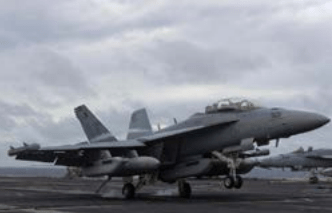
Following the release in December of a study requested by Congress on noise from EA-18G jets, the Navy released last week a related technical report. The report includes more insight into where and when the Navy collected live jet noise data on the Growler jets during the study, which was conducted near Naval Air Station Whidbey Island and near a base in California between December 2020 and August 2021. Eleven sites were included in the study around Naval Air Station Whidbey Island, including one on a Skagit River dike on north Fir Island in west Skagit County. Kimberly Cauvel reports. (Skagit Valley Herald)
Skagit Valley Herald link to their story. No real analysis done.
This is an update on the meeting happening on Thursday to get citizen feedback on allowing the State to have military training operations in our State parks. Just say no. Sent out by the local group No Park Warfare. Olyopen is not a member of this group but supports their stance.
PARK MEETING THURSDAY 1-27-22
TIME TO ADVOCATE FOR OUR PARKS!
Washington State Parks and Recreation Commission will be holding their next public meeting in person at Ft. Worden State Park in Port Townsend on Thursday, Jan. 27 this month. Please attend this meeting and continue to advocate for our State Parks!
Military training in State Parks is an issue that will be raised. One year ago in a single, virtual public hearing, the Commission voted 4 to 3 to allow military warfare training in our parks in spite of overwhelming opposition from the public, Jefferson County, the City of Port Townsend and other Puget Sound communities and groups.
This controversial decision granted permission for the military to conduct covert warfare surveillance trainings in our State Parks, using submersible vehicles, “fake” weapons, and unsuspecting park visitors as proxy enemies. Right now the trainings are being planned by park staff for Fort Worden, Fort Flagler, and other parks.
Soon after last year’s decision, a lawsuit was filed against the Commission by Washington taxpayers — the actual owners of the parks — who want continued protection for natural park environments, and for the peaceful recreation of the people.
A Citizens’ Complaint Letter signed by hundreds of concerned park users was filed with the Commission as well. To date, no response from Washington State Park Commissioners has been received.
The Commission usually meets from 9am to 5pm with a designated time for public input around 11am. This allows local residents—like YOU—to speak. Simply fill out a comment card at the sign-in table and the Chair will call on you at the appropriate time. Come early if at all possible.
Written comments can be handed to staff at the meeting with a request they be read aloud by Commissioners. We also encourage people to submit written comments by snail mail or email to Commission@parks.wa.gov.
January 27, 2022 Fort Worden State Park, 200 Battery Way, Port
Townsend, WA 98368, Commons Conference Space
If Possible, please:
Come at 8:30 am and stay until noon. (The Café is open from 7:30am until 2pm – very good coffee, food, inside/outside seating.)
Bring friends.
Bring signs (Parks Are for People, Octopus, Relaxation, Peace).
Bring cell phones and take lots of photos (signs, crowds, etc.)
Wear a name tag – name and group if you belong to one.
Wear masks inside and observe Covid precautions.
Sign in to speak at entry desk.
Give written comments to staff (if you are not going to speak, ask that Commissioners read your comments aloud).
Warfare training in parks is not on the agenda, but we may all bring this up during the ‘open public comment’ period around 10 or 11am.
Use Compassionate Communication in interactions. Focus on what we do want – our parks for play, relaxation, enjoyment of nature, healing, celebrations. Not everyone present may be on our same page. Be prepared to speak peacefully and walk away immediately from antagonism.
The report is out for the Christmas Audubon Bird Count. This annual event is extremely important in monitoring the birds of our area. There are a few surprises and also some birds that were missing from the count that had been there over the decades. Read up and join up if you like to get out and enjoy birds and the outdoors!
The money has been spent on the studies, now we need to save the fish that they eat. That, will be incredibly harder. We are in a race against time.
While scientists, wildlife managers and others continue to untangle the complex web of fish, boat and water quality issues that affect the health of Southern Resident orca whales, the population remains endangered — and continues to shrink. The National Marine Fisheries Service published a five-year review of the species on Jan. 4 in which it recommended the orca’s status under the federal Endangered Species Act remain unchanged. The species uses West Coast and Salish Sea habitat and eats the region’s salmon. Despite billions of dollars spent and dozens of studies authored since the Southern Resident orca was listed as endangered in 2005, there are now 15 fewer whales than there were in 2005. Kimberly Cauvel reports. (Skagit Valley Herald)
· Directs DNR to develop a kelp forest and eelgrass health and conservation plan, which the agency should do with Tribal Nations and other agencies like WDFW.
· Kelp forests and eelgrass meadows provide important habitat for juvenile salmon and other aquatic species.
Though a stake was driven through the heart of the Cooke Aquaculture zombie a few years ago (with the help of the same tribe that now is in a joint venture with them!) they have returned and managed to get the State Supreme Court to side with them, with the help of the State Department of Fish and Wildlife (who neglected to properly monitor their pens that collapsed) allowing them to open for business again in the Port Angeles harbor and over near Cyprus Island. (and I would assume elsewhere).
From the Skagit Valley Herald: The state Supreme Court published a unanimous decision by its nine judges Thursday to uphold the state Department of Fish and Wildlife’s approval of steelhead farming in Puget Sound. The environment groups Wild Fish Conservancy, Center for Biological Diversity, Center for Food Safety, and Friends of the Earth have been fighting the state’s decision to allow steelhead farming since early 2020. At issue is the plan of international seafood company Cooke Aquaculture to switch from raising nonnative Atlantic salmon at net pens in the region to raising native steelhead trout at the facilities. Kimberly Cauvel reports. (Skagit Valley Herald)
But… let’s look at the details, that the wider press did not address. Here is the summary from the State Supreme Court website.
The Wild Fish Conservancy (WFC) challenged the Washington Department of Fish and Wildlife’s (WDFW) approval of a permit that allowed Cooke Aquaculture Pacific LLC to change fish species to commercially farm steelhead trout in Puget Sound. The WFC alleged: (1) WDFW’s conclusion that an environmental impact statement (EIS) was not required was clearly erroneous; and (2) WDFW violated the State Environmental Policy Act (SEPA) by failing to consider and disclose appropriate alternatives to the proposal under RCW 43.21C.030(2)(e). The WFC asked the Washington Supreme Court to reverse the permit approval and order WDFW to complete an EIS. The superior court found WDFW’s SEPA analysis was not clearly erroneous and the steelhead permit application did not trigger RCW 43.21C.030(2)(e). Finding no reversible error in that judgment, the Supreme Court affirmed.
What the courts have confirmed were:
The EIS not being required was a correct decision.
This just means that the EIS was not required for reestablishing a fish farm. I personally disagree with this part of the ruling, but it does not seem to say that if you start a new fish farm, that you do not have to do an EIS.
That WDFW did not violate the SEPA.
That part was open to interpretation, clearly.
There are still places to fight Cooke, at the local and county levels. But given that farming steelhead is a net new industry, I can see some possible openings moving forward. Any notion that the lack of proper monitoring of the failed pens by WDFW would lead to greater oversite by them seems to have gone out the window with this decision. They weren’t even willing to demand an EIS… It’s ironic, that given the battle that Tribes have made for eating wild salmon, that Jamestown S’Klallam and others are willing to back fish farming locally. What do you make of that?
Bottom line, we cannot trust the Dept of Fish and Wildlife, nor some Tribes, to protect us from commercialization of the Sound for profit. if you don’t like the notion of eating farmed fish, with their feedlot like use of mass feeding and the impact to the bottom by having tens of thousands of fish congregated together, then boycott eating them and demand that your local fish markets do too. The impact to the wider community of wildlife in the Salish Sea will need to be seen as they reopen these destructive fish pens.
By the way, if you want to know how bad it can get here, just look at Chile. They are in the process of reviewing and possibly moving hundreds of salmon farms that have been allowed to proliferate off their coasts. The 270 applications are in addition to the hundreds that already exist. This was helped by the election of a young socialist candidate that has said he is going to help the indigenous people regain their ocean.
According to the presentation, made in the senate by Subpesca Head of the Aquaculture Division Eugenio Zamorano, Subpesca estimates that some 500 salmon concessions should be relocated, out of a total of 1,320 that the industry operates, with plans to merge some farming centers. (emphasis is mine)
Kelp is a critical part of the marine habitat. Kelp has been in decline across the Salish Sea, with few exceptions. Now, after a number of years monitoring the kelp beds (some done by the local volunteers of the Marine Resources Committees) a new bill has been put forward to the legislature this year to protect it. Worth weighing in with your support at the State web site. https://app.leg.wa.gov/billsummary?BillNumber=5619&Year=2021&Initiative=false
Marine Resources Volunteer surveying kelp bed. Photo by Al Bergstein
It’s Senate Bill 5619 (sponsored by Senators Lovelett, Conway, Das, Hasegawa, Nobles, Pedersen, Randall, Rolfes, Saldaña, Stanford, Van De Wege, and C. Wilson; by request of Department of Natural Resources.
House bill is 1661 sponsored by Representatives Shewmake, Ryu, Berry, Fitzgibbon, Ramel, Springer, Duerr, Walen, Callan, Goodman, Paul, Peterson, Ramos, Rule, Simmons, Slatter, Tharinger, Kloba, Pollet, and Harris-Talley; by request of Department of Natural Resources
Here’s an edited version of the bill.
AN ACT Relating to conserving and restoring kelp forests and eelgrass meadows in Washington state; adding a new section to chapter 79.135 RCW; and creating a new section.
BE IT ENACTED BY THE LEGISLATURE OF THE STATE OF WASHINGTON:NEW SECTION. Sec. 1. (1) The legislature finds that coastal ecosystems and marine vegetation provide an array of valuable ecosystem goods and services to deep water and nearshore environments in Puget Sound and along the coastline. In particular, kelp forests and eelgrass meadows act as three dimensional foundations for diverse and productive nearshore ecosystems, supporting food webs and providing important habitat for a wide array of marine life, including orcas and threatened and endangered salmon and salmonid species. These marine forests and meadows play an important role in climate mitigation and adaptation by sequestering carbon and relieving ocean acidification. Marine vegetation can sequester up to 20 times more carbon than terrestrial forests, and therefore represent a critical tool in the fight against climate change.(2) Washington state is home to 22 species of kelp and is a global hotspot for kelp diversity. However, these kelp forests are under threat and have declined in recent decades.
A 2018 study conducted by the Samish Indian Nation on the bull kelp beds in the San Juan Islands found a 305-acre loss of kelp beds from 2006 to 2016, a 36 percent decline in one decade. A statewide study published in 2021 by the department of natural resources found that compared to the earliest baseline in 1878, the amount of bull kelp in 2017 had decreased by 63 percent in south Puget Sound, with individual areas showing up to 96 percent loss.(3) The legislature also finds that kelp and eelgrass have important cultural value to northwest tribal nations and have provided diverse marine resources that have sustained and inspired indigenous traditions over generations. In particular, bull kelp has played a prominent role in traditional knowledge and technology and is used in fishing, hunting, and food preparation and storage.
Decline in kelp forests threatens these uses, and the cultural livelihoods of coast Salish peoples.(4) Washington state’s eelgrass meadows also provide vital habitat for many organisms, including nursery habitat for juvenile salmon and feeder fish. Eelgrass also helps prevent erosion and maintain shoreline stability by anchoring seafloor sediment with its spreading roots and rhizomes. Eelgrass is used as an indicator of estuary health, because of its fast response to changes in water quality.
Examples of rapid eelgrass loss include Westcott Bay in San Juan county, where in 2000 there were 37 acres of eelgrass meadows and 20 years later less than one acre remains. Changes in the abundance or distribution of this resource are likely to reflect changes in environmental conditions and therefore are key species to monitor and protect to ensure marine ecosystem health.
Kelp forests and eelgrass meadows also provide and enhance diverse recreational opportunities, including productive fishing and picturesque kayaking and diving. These activities are important for local economies and for promoting strong senses of place and overall human well-being in communities. There is a need for greater education and outreach to communities to promote sustainable recreational practices in and near kelp forests and eelgrass meadows.
Existing regional plans for conservation of kelp forests and eelgrass meadows, including the Puget Sound kelp conservation and recovery plan (2020) and the Puget Sound eelgrass recovery strategy (2015), identify the need to prioritize areas for conservation and restoration based on historical and current distributions.
The legislature further finds that our terrestrial and marine ecosystems are interlinked and the state must be proactive in conserving our resources from trees to seas by protecting and restoring our marine forests and meadows in concert with conservation and reforestation of terrestrial forests. Therefore, it is the intent of the legislature to conserve and restore 10,000 acres of kelp forests and eelgrass meadows by
2040.NEW SECTION.
Sec. 2. A new section is added to chapter 79.135 RCW to read as follows:
(1) The department shall, consistent with this section, and subject to available funding, work with partners to establish a kelp forest and eelgrass meadow health and conservation plan that endeavors to, by the year 2040, conserve and restore at least 10,000 acres of kelp forests and eelgrass meadows. The plan should proactively and systematically address:(a) The potential loss of kelp forest and eelgrass meadow habitat throughout Puget Sound and along the Washington state coastline; and(b) Potential current and future stressors related to the decline of kelp forests and eelgrass meadows.
(2) The department shall develop the plan, in collaboration with partners, to assess and prioritize areas for coordinated conservation and restoration actions. The plan must consist of the following elements: Assessment and prioritization; identifying coordinated actions and success measures; monitoring; and reporting.(a) The department shall, together with partners, develop a framework to identify and prioritize kelp forest areas in greatest need of conservation or restoration. The framework must incorporate:(i) Conservation of kelp forests and eelgrass meadows. Utilize and build on existing research to map and prioritize areas of kelp forests and eelgrass meadows throughout Puget Sound and along the coast that are at highest risk of permanent loss, or contribute significant environmental, economic, and cultural benefits to tribal nations and local communities, including salmon recovery and water quality, and where opportunities for partnership and collaboration can accelerate progress towards the goal, and develop criteria by which an acre of kelp forests and eelgrass meadows can be considered to be conserved or restored;(ii) Map and prioritize kelp forest and eelgrass meadow areas throughout Puget Sound and along the coast where they were historically present, identifying priority locations for restoration, and where opportunities for partnership and collaboration exist that will accelerate progress towards the goal. This should include identification of sites where restoration may be possible and would most benefit nearshore ecosystem function, including where restoration could also support healthy kelp forests and eelgrass meadows, salmon recovery, water quality, and other ecosystem benefits;(iii) Identify potential stressors impacting the health and vitality of kelp forests and eelgrass meadows in prioritized areas in order to specifically address them in conservation and restoration efforts.(b) The department shall collaborate with impacted tribal nations, and other local and regional partners, to address conservation and restoration needs in the priority areas and the appropriate tools and partnerships to address them. In developing coordinated actions and success measures, the department shall:(i) Conduct an assessment and inventory of existing tools relevant to conserving and restoring kelp forests and eelgrass meadows and reducing stressors related to their decline;(ii) Identify new or amended tools that would support the goals of the plan created under this section; and(iii) Identify success measures to track progress toward the conservation and restoration goal.
(3)(a) By December 1, 2022, the department must submit a report in compliance with RCW 43.01.036 to the office of financial management and the appropriate committees of the legislature, that includes a map and justification of identified priority areas, determines an approach to monitoring the kelp forest and eelgrass meadow areas that are meeting the criteria for conservation or restoration established in the plan, and describe activities to be undertaken consistent with the plan. The kelp forest and eelgrass meadow health and conservation plan must be finalized and submitted to the office of financial management and the appropriate committees of the legislature by December 1, 2023.(b) Subsequently, each biennium, the department shall continue to monitor the distributions and trends of kelp forests and eelgrass meadows to inform adaptive management of the plan and coordinated partner actions. The department shall submit a report to the legislature that describes the kelp forest and eelgrass meadow conservation priority areas, and monitoring approaches and findings, including success measures established in the plan. Beginning December 1, 2024, and by December 1st of each even-numbered year thereafter, the department shall provide the appropriate committees of the legislature and the office of financial management with:(i) An updated map of distributions and trends, and summary of success measures and findings, including relevant information from the prioritization process;(ii) An updated list summarizing potential stressors, prioritized areas, and corresponding coordinated actions and success measures. The summary must include any barriers to plan implementation and legislative or administrative recommendations to address those barriers;(iii) An update on the number of acres of kelp forests and eelgrass meadows conserved by region, including restoration or loss in priority areas; and(iv) An update on consultation with impacted tribal nations and local communities by region.
(4) In developing the plan, the department shall:(a) Consult impacted communities using the community engagement plan developed under RCW 70A.02.050; and(b) Invite input from federally recognized tribal nations on kelp forests and eelgrass meadows with important cultural and ecological values that are threatened by urbanization or other disturbances.
Here’s an update on the work at Ediz Hook in Port Angeles by the Lower Elwha Klallam Tribe. They have been removing debris from the shore and planting eel grass to renew the nearshore habitat for fish and other species.
Below the surface, the tribe and partners Pacific Northwest National Laboratory (PNNL) and Washington Sea Grant have been restoring eelgrass beds on the sand spit’s south shore for the past four years, with greater success than expected
In a grand “Climate Change” welcome to 2022 King tides moved into the Salish Sea along with a major storm front. The outcome was widespread destruction across a huge swath of the shorelines, from the South Sound up through British Columbia. This is just a taste of what’s ahead, as we await the break off of a huge glacier in Antarctica, and it’s subsequent melt down, which will add to sea level rise. If you have a home or business on the shoreline, now is a good time to reconsider your long term options.
Let’s do a quick overview. If there is only one thing to see, watch this video that was posted by a homeowner from Blaine on Twitter.
This does not even begin to cover the amount of businesses that have docks that may have been destroyed, nor the simple flooding that may have occurred.
I have watched with disbelief over the last decades as more and more luxury homes have been built on spits in Puget Sound. Some examples? Three Tree Point in South King County. A more recent one in is Miller Bay near Indianola. Let’s look! These houses are really expensive and right at sea level!
Image by Google Earth
Or how about our own Beckett Point in Jefferson County?
Image by Google EarthBeckett Point Flooding January 9, 2022 Photos by Diane Jones
Beckett Point is no stranger to flooding. It was wiped out in the 1930s by a massive wind storm. Back then it was just fishing shacks but those were replaced by homes. Bottom line, these people are living on a sandspit, at sea level, and likely their home owners insurance is provided by the Federal Government because there is no way they could afford to pay for private insurance, even if it’s available. Choosing to live here, while incredibly beautiful and usually no problem, is and will continue to be challenging.
It is worth remembering that these homeowners get federal insurance to live here, so our tax dollars go to help continue this behavior. Please make sure that you let our elected officials know that with rising costs due to sea level rise, we cannot continue to subsidize everyone who lives on the shore. Now is the time to end this practice and let these homeowners bear the full cost of their decision (and it is also the decision of the local land use officials and county officials).
I’ve left out the massive flooding all over western Washington and British Columbia in the last 60 days, along with wildfires in December in Colorado, and massive super tornadoes in Kentucky (can you picture a tornado 250 miles long? with winds of 94 MPH sustained over four hours and 24 minutes?). Global warming is upon us and our best situation is to begin making changes to issues like insurance and infrastructure to mitigate the worse that is yet to come in future decades.
This has been an known ongoing issue with the Navy base, poisoning water supplies on Whidbey Island. The $500 million should help identify where this is happening and what can be done about it. The hidden costs of our “sound of freedom” as some promoters of the base would like to call it, creates poisoned ecosystems, ear splitting noise even inside insulated classrooms for children, and many other costs. Another sound of freedom is also the roll call in Congress to fund this activity.
By Jonah Brown
The National Defense Authorization Act for Fiscal Year 2022 (“FY22 NDAA”), signed by the President on December 27, 2021, directs the Department of Defense (“DoD”) to test for per- and polyfluoroalkyl substances (also known as “PFAS”) at military sites throughout the country. A map of formerly used defense sites can be found here: Former Sites https://www.usace.army.mil/Missions/Environmental/Formerly-Used-Defense-Sites/FUDS-GIS/. A map of current military installations can be found here: Active Sites https://militarybases.com/. DoD must begin its assessment with a report to Congress on the status of 50 priority current and former sites within 60 days of the effective date, meaning the end of February. A map showing the locations of these sites can be viewed at the end of this article.
Groundwater contamination from use of PFAS-containing aqueous film-forming foam (“AFFF”) has already been discovered at hundreds of current and former DoD facilities, including military airports, National Guard bases, and installations controlled by the Army, Navy, Air Force, and Marine Corps. The FY22 NDAA provides $500 million in funding to DoD to fulfill Congress’ direction to test for PFAS. Read More
My end of the year appeal is to support the work of Sea Shepard and the Wild Fish Conservancy. Both these organizations are focused on taking radically important steps to stop the destruction of our seas and take the battles into courts and governments around the world. Here is a quick overview of the incredibly important work of Sea Shepard in stopping the rape of the ocean by putting themselves physically at risk. They have been helping Alexandra Morton in our area of the world as well. Ok. You know the drill. Click and support. See you in 2022.
And here is a short video on the latest project from Wild Fish Conservancy. They have been at the forefront of legal challenges to a variety of threats to the shores and waters of the Sound and elsewhere. They have a proven track record of success at stopping monied interests from pillaging the Salish Sea.
NW Environmental writer Dan Chasen puts together a good look at the Spotted Owl controversy and what is in store for the endangered bird.
So, where does this leave us? The most prominent environmental battle of the late 20th century; the most ambitious ecosystem management plan ever attempted; the most acres of critical habitat for a listed species; the only environmental conflict that has been the subject of a conference led by the President and attended by a good deal of the Cabinet; a species in a steep, scientifically-acknowledged and widely-reported decline — even with all those factors the FWS can’t find time to boost its status from “threatened” to “endangered?” This is bizarre. But hardly surprising.
As you read this article, it’s worth noting that the Skagit Valley Herald did not print any input from the people who are suing the Navy. Only what the Navy said. I looked up the Citizens for Ebey’s Reserve web site and found the information that I posted below.
First a bit of the Skagit Valley Heralds story. Please read the whole story if you need get more info.
On the heels of a U.S. District Court critique of the Navy’s environmental review for increasing its EA-18G jet fleet and related flight operations at Naval Air Station Whidbey Island, the Navy has released a noise monitoring report that was requested by Congress…The Navy’s noise monitoring report that is dated Nov. 30 concludes that the modeling it used to predict the impact of aircraft noise, such as for the EIS for NAS Whidbey Island, is accurate. In fact, according to the report, monitoring data shows jet operations often create less of an impact than modeling suggested. Kimberly Cauvel reports. (Skagit Valley Herald)
The Navy describes noise exposure using the Day-Night Average Sound Level (DNL). The DNL metric expands daily noise events into a 24-hour average for an entire year. DNLs do not tell us what the loudest event is in a 24 hour period, nor how many noise events there may be in a 24 hour period. Our ears, unfortunately, do not average noise events or duration. So yes; averaging the noise level of a deafening explosion over 24 hours, and then again for an entire year, would seem to indicate that the explosion was really quiet… statistically.
This summer the new rafts were used to great effect, providing the means to effectively patrol smaller rivers. On a day when a number of citations for violations were written, Officer Patrick Murray holds up a wild chinook an angler had kept after cutting off the adipose fin. Photo courtesy WDFW Police
Over the following two years, the cameras and raft allowed law enforcement officers to greatly expand their reach and led to increased enforcement against illegal fishing, hunting, logging, and other wildlife violations and numerous poaching arrests. Encouraged by this success, the Wild Steelhead Coalition reached out to our colleagues at the Wild Salmon Center and Wild Steelheaders United of Trout Unlimited and our friends at Simms, Outcast Boats, and Sawyer Paddles & Oars to expand the impact of the original donation with a larger, additional gift in 2021.
After working with WDFW Law Enforcement staff to ensure we provided helpful tools to enforce regulations and find poachers, our group of conservation organizations and business partners have donated a new collection of equipment that includes a pair of small one-person rafts, multiple sets of waders and boots for game wardens, new oars for an existing drift boat, almost forty trail and security cameras, and a drone. Combined, the equipment has a retail value over $20,000 and gives WDFW Law Enforcement – especially with the drone – the ability to survey a much wider geographical area, and many more miles of river, than might otherwise be possible.
This larger inventory of gear also means the cameras can be spread further afield. The new cameras will be utilized on the Olympic Peninsula, Hood Canal, and throughout the Chehalis River Basin. A few will also go to North Puget Sound where they may be deployed on the Skagit and Sauk Rivers, and other watersheds depending on the need, as well.
As fishery groups, we are particularly interested in this new equipment’s ability to provide important, necessary protections for Washington’s struggling populations of wild steelhead and salmon, but in the off-season it will all also assist WDFW Law Enforcement in their work to protect big and small game animals and non-game wildlife, prevent illegal timber harvest, and discover and document unpermitted hydraulic projects that damage watershed and shoreline habitat.
Read the rest of the story and see additional photos at:
The focal point for environmental news & perspective on the news. Our goal is to help educate and connect the public on the Peninsula. We are not a non-profit so donations are not tax deductible. Maybe someday with your help!
HOTLINES FOR REPORTING SPILLS
WA State Emergency Management Division: 1-800-258-5990
National Response Center: 1-800-424-8802
Pacific States & British Columbia: 1-800-OILS-911 (1-800-645-7911)
Local Events
Add your local event here. Contact us to include your next event.
—————————————————
TSUNAMI DEBRIS HOTLINE:
1-855-WACOAST (1-855-922-6278)
—————————————————
Event Date:
NATURE NOW
A Program About the Natural World.
KPTZ.ORG 91.9
WEDNESDAYS AT 12:05
REPEATS: SATURDAYS 12:30 AND WEDNESDAYS
PODCASTS AT KPTZ.ORG