By donating to the News you help us bring more news to you! We will use the donations to pay additional reporters, and spend more time on stories! Want to donate more than $10? Under the $10 is a dropdown box, choose multiples of 10. (i.e. Qty 3 at $10)
*DataGovArchive
archive of data.gov on Source Cooperative. The 16TB collection includes over 311,000 datasets harvested during 2024 and 2025, a complete archive of federal public datasets linked by data.gov. It will be updated daily as new datasets are added to data.gov.
-Alexandra Morton's Web Site (NEW)
The new web site for the work of Canada’s leading researcher in to farmed Atlantic Salmon and it’s effects.
North Olympic Peninsula Skills Center Natural Resources
To provide a program that provides hands-on, relevant natural resources research experience while meeting the needs of and building capacity within individual students and the North Olympic Peninsula region.
openchannels.org
OpenChannels is designed to become a comprehensive source for news, guidance, and community discussion on sustainable practices in ocean planning and management.
River of Kings – Video
Part 1 of 2 part series by Carl Safina on the Nisqually River Restoration.
Salish Magazine
Salish Magazine is a free online magazine that takes inquisitive readers outdoors with visually rich storytelling about features people can see firsthand in our public forests and beaches.
Victoria Sewage Project
The official city site on the project. The latest scoop on the Canadian poop!
WA State Family Forest Fish Passage Program
The Family Forest Fish Passage Program provides funding to small forest landowners to repair or remove fish passage barriers. Download the film.
News Sites
Green Acre Radio on KBCS
Green Acre Radio on KBCS — Sustainability, local food production, restoration & environmental talk radio.
NW Indian Fisheries Commission
The Northwest Indian Fisheries Commission (NWIFC) is a support service organization for 20 treaty Indian tribes in western Washington.
Brinnon Group
Local group opposing Black Point resort
Clam Gardens
Network of researchers exploring First Nation gardening of clams in history, and it’s relationship to today.
Coastal Watershed Institute
“To promote long term, ecological, community based stewardship of marine and terrestrial ecosystems thru scientific research and local partnerships.”
League of Women Voters – Clallam County
a nonpartisan political organization, encourages the informed and active participation of citizens in government, and influences public policy through education and advocacy.
League of Women Voters – Jefferson County
The League of Women Voters, a nonpartisan political organization, encourages the informed and active participation of citizens in government, and influences public policy through education and advocacy.
Local Food Access Network
North Peninsula local food org with an emphasis on developing and supporting increased and sustainable capacity for production, distribution, and consumption locally.
North Olympic Salmon Coalition
The mission of the North Olympic Salmon Coalition is to restore, enhance, and protect habitat of North Olympic Peninsula wild salmon stocks and to promote community volunteerism, understanding, cooperation and stewardship of these resources.
Northwest Watershed Institute
NWI’s mission is to provide scientific and technical support to protect and restore fish and wildlife habitats and watershed ecosystems of the Pacific Northwest.
Olympic Environmental Council
The Olympic Environmental Council works on issues related to the environment and health that affect our North Olympic Peninsula communities.
Olympic Park Associates
If you share with us a passion for Olympic National Park, a concern for the Park’s future, and a vision that Olympic National Park should always be a wild and natural place, we invite you to join Olympic Park Associates.
Washington Environmental Council
WEC has been working for a couple of decades on environmental activism. A great group of people actually getting things done.
Whale Trail
Signs along the way to take you to great whale viewing locations
Wild Fish Conservancy
Wild Fish Conservancy seeks to improve conditions for all of the Northwest’s wild fish
The Tribe has been expanding shellfish and fin fish aquaculture in the last few years. This latest push, is an interesting issue. While the Tribe supported shutting non-native salmon fish farming, they never said they supported shutting down native salmon fish farming. This farm is for black cod, also known as Sablefish or Butterfish. It is native to the Pacific Northwest, but farming it by feeding it pellets, as they do with salmon, makes it not that appealing. Wild caught black cod is delicious, widely served in the Pacific NW. But I certainly will be asking if my black cod is wild caught or not. Not interested in eating fish raised in the backwater of Port Angeles harbor, near the pulp and paper mill.
It will be interesting to see how Ron Allen gets around the ruling. They likely would have to end the relationship with Cooke, which is a financial boon to the Tribe. We’ll continue to follow this as it unfolds.
Jamestown S’Klallam Tribal Chairman Ron Allen vowed Tuesday to move forward with plans to establish a fish farm in Port Angeles Harbor despite a recent state Court of Appeals decision upholding the termination of its business partner’s lease. The three-judge panel Dec. 14 affirmed a Thurston County Superior Court decision that struck a blow to the joint plans of the tribe and Canadian aquaculture company Cooke Pacific LLC. Paul Gottlieb reports. (Peninsula Daily News)
Washington Environmental Council is partnering with the Port Townsend Marine Science Center to bring this exhibit to the north Olympic Peninsula community. The We Are Puget Sound traveling photo exhibit will be on display at the Marine Science Center’s Flagship store in downtown Port Townsend from December 18, 2021 through February 2022.
The photo series explores people, places, and wildlife through extraordinary images, describes human connections in the past and present, and showcases community members engaged in remarkable efforts that benefit Puget Sound and all of us.
The in-person photo exhibit will inspire and engage people on the Olympic Peninsula to join together and preserve this vital ecosystem and the livelihoods they support by focusing on one action each month from the campaign’s 10 Things You Can Do for Puget Sound.
The exhibit highlights 18 striking images from the book We Are Puget Sound: Discovering and Recovering the Salish Sea (Braided River, 2019). It also features work from 13 regional photographers showcasing individuals who are working to find meaningful solutions to protect the Puget Sound’s waters, wildlife, and the human health and economic prosperity this region supports.
Port Angeles Netpen managed by Cook Aquaculture – Photo provided by Wild Fish Conservancy
Cook loses another one. Very good news.
Media Contacts: Kurt Beardslee, Executive Director, kurt@wildfishconservancy.org
DECEMBER 17, 2021—In another legal defeat for Cooke Aquaculture, a second Washington state court has rejected efforts by the seafood giant to sue Washington state over the termination of the company’s lease for their Port Angeles netpen operation. On Tuesday, the Court of Appeals issued an opinion affirming a lower court ruling upholding the Department of Natural Resources’ (DNR) decision to terminate the lease.“
The Court’s decision represents another major step forward in the public’s hard-fought efforts to remove this dirty industry from Puget Sound waters,” says Kurt Beardslee, Executive Director. “I applaud the Courts for putting our natural resources and the interest of the public ahead of this powerful corporate interest.”
The court said:
We hold that the superior court properly applied the arbitrary and capricious standard of review because DNR’s decision to terminate the lease was administrative, and that DNR’s decision to terminate the lease was not arbitrary and capricious. Accordingly, we affirm the superior court’s final order upholding DNR’s lease termination decision.
This week’s decision concludes a nearly four-year appeal process that began in early 2018 when Cooke filed suit against DNR, arguing the agency had wrongfully terminated the lease ahead of the 2025 expiration date. In 2020, a Thurston County Superior Court Judge rejected Cooke’s challenge and the company appealed the decision to the Court of Appeals which issued the opinion this week.
DNR terminated the lease in December 2017 after an investigation revealed various violations at the Port Angeles facility,including operating outside of its boundaries, failure to pay rent timely, and not operating the facility in a safe condition.Shortly following the termination, the net pens were completely removed from Port Angeles Harbor.This week the Court overwhelming rejected Cooke’s opinion that the decision to terminate the lease was arbitrary and capricious, finding DNR’s decision “was based on facts supported by substantial evidence, pursuant to plain terms of the contract, was well reasoned and made with due regard to the facts and circumstances.”Cooke is also suing DNR in a separate ongoing lawsuit over the early termination of the company’s Cypress Island lease.The lease was terminated following the 2017 catastrophic collapse of a Cooke net pen that released over 260,000 nonnative Atlantic salmon infected with an exotic virus into Puget Sound. A comprehensive investigation by Washington agencies found Cooke at fault for the collapse and Cooke was also required to pay $2.75 million in Clean Water Act violations in a lawsuit brought by Wild Fish Conservancy. The collapse also resulted in Washington passing a landmark and widely celebrated law banning all nonnative Atlantic salmon finfish aquaculture, Cooke’s only enterprise at the time.“I hope the public will join me in thanking Commissioner of Public Lands Hilary Franz and her department for their unwavering commitment to protecting Puget Sound in the face of Cooke’s meritless, costly, and time-consuming lawsuits,” says Beardslee. “Under Commissioner Franz’s leadership, DNR has a proven record as the only regulatory agency in Washington willing to take bold action to hold this dangerous industry accountable.”In a controversial decision, the Washington Department of Fish and Wildlife permitted Cooke in 2020 to begin rearing steelhead in their Puget Sound net pens where the company holds valid leases. With the Cypress Island and Port Angeles leases terminated by DNR, Cooke only holds valid leases for two net pen sites in Puget Sound. Both leases will expire next year and Cooke will need to apply and secure new leases from DNR to continue operating in Washington. In a letter to Cooke earlier this year, DNR warned the company that the agency has not yet decided if they will issue Cooke new leases.“This week’s Court decision could not have come at a more important time. With Cooke’s only existing leases set to expire next year, DNR is in a critical decision-making period that will determine the future of this industry in Puget Sound,” says Beardslee. “
The Court’s decision removes any opportunity for Cooke to try and recover millions in lost revenue from DNR, which would have provided Cooke important leverage to potentially negotiate their future and new leases in our public waters.”
In July 2020, Wild Fish Conservancy submitted official applications to DNR requesting to lease all of the sites used by Cooke for commercial net pen aquaculture. This alternative proposal, the Taking Back Our Sound Restoration Project,seeks to hold these waters in public trust for the sole purposes of restoring these polluted sites to their natural state and restoring the public’s access to over 130 acres of Puget Sound that have been restricted for private profit for over three decades. This proposal is supported by a broad-based coalition of over 100 businesses and organizations and over 6,000 individuals who have signed onto an ongoing petition to Commissioner Franz calling on DNR to not extend, renew, or reissue leases for commercial net pen aquaculture in Puget Sound and to instead lease these waters for this unprecedented restoration project.“The expiration of these leases comes only once in a decade and offers the public a rare opportunity to work together to take back our sound from the net pen industry, “says Beardslee. “Cooke’s first lease will expire in March 2022, there foreit’s critical at this time that we continue to work together to call on DNR to make the right decision for wild fish and the health of Puget Sound.
Very interesting short story by a reporter for the Lewiston Tribune who was sent to get an overview of the success of the Elwha Dam removal and how it might be applied to the Snake River dam removals. Lots of good context to the story, including comparing the John Day and the Snake, along with interview excerpts from tribal members of the Lower Elwha on restoration results. Worth a quick, read.
“What has been really exciting has not only been the increase in abundance we have seen in a lot of species, but we are starting to see new life histories arise that we didn’t see before the dams were out,” he said. “For example, summer steelhead have come back really strong, the bull trout have resumed migration back to the ocean and the king salmon are starting to produce remarkable numbers of naturally produced offspring.”
Good news on the state wide climate legislation front. Beyond helping finance electric bikes and cars for couple under $500k in income and $250k for singles, the legislation would provide economic pathways towards installing solar panels for a variety of state, local, tribal and NGOs.
Governor Inslee at COP26 (photo by Governor’s Press Office)
There has been some confusion about whether or not the state has *forced* the ending of natural gas heat in new construction. This legislation would give incentives for ending natural gas use, and proposes to end it’s use by 2034. Previous legislation to end natural gas use by 2030 died in committee last session. Nothing is certain at this point, as this is just a proposal and if readers are being told differently, I would love to see the source of that information. I have been unable to find anything saying differently, even on right wing news outlets.
“The amount of carbon emissions that we will have to reduce to meet that legally binding commitment is equivalent to the emissions of taking 1.3 million vehicles off the road,” said the governor. “We have some real work to do starting today.”
In a dramatic conclusion to a long running court battle over the expansion of the Whidbey Island Naval Base, the District Court of Washington Judge Richard Creatura has forced the Navy to sit down with State’s Attorney General office and the environmental groups led by Citizen’s of the Ebey’s Reserve (COER) and Paula Spina, to forge an agreement to satisfy some of the issues raised by the environmental groups. The judge was scathing in his findings against the Navy’s work in their Environmental Impact Statement (EIS). His language could not be more clear,”the Navy appears to have used certain statistics “‘much like a drunk uses a lamppost: for support, not illumination.’ “
Whidbey Island Naval Base
While the groups did not win all their demands, they won what likely will be the most critical issues. Here is a condensed version of the judge’s findings. I cannot improve on his language.
Plaintiffs challenge the Navy’s 2018 final environmental impact statement (“FEIS”) and 2019 record of decision authorizing t he expansion of EA-18G “Growler” aircraft operations at the Naval Air Station Whidbey Island (“NASWI”) under the National Environmental Policy Act (“NEPA”), the National Historic Preservation Act (“NHPA”), These statutes mandate a procedure that an agency must follow before taking an action as significant as the Growler expansion at NASWI.
Under NEPA and the APA, the Navy’s decision may be overturned if the Navy acted “arbitrarily and capriciously” and failed to take a “hard look” at the consequences of the proposed action.
Here, despite a gargantuan administrative record, covering nearly 200,000 pages of studies, reports, comments, and the like, the Navy selected methods of evaluating the data that supported its goal of increasing Growler operations. The Navy did this at the expense of the public and the environment, turning a blind eye to data that would not support this intended result. Or, to borrow the words of noted sports analyst Vin Scully, the Navy appears to have used certain statistics “much like a drunk uses a lamppost: for support, not illumination.”
When reporting on the environmental impact of Growler fuel emissions, the Navy underreported the true amount of Growler fuel emissions and failed to disclose that it was not including any emissions for flights above 3,000 feet. Even after receiving a comment on the issue, the Navy failed to disclose its underreporting and dismissed the issue with broad generalities.
With respect to the impact of this increased operation on childhood learning, the Navy acknowledged numerous studies that concluded that aircraft noise would measurably impact learning but then arbitrarily concluded that because it could not quantify exactly how the increased operations would interfere with childhood learning, no further analysis was necessary.
As to the impact of increased jet noise on various bird species, the Navy repeatedly stated that increased noise would have species-specific impacts on the many bird species in the affected area but then failed to conduct a species-specific analysis to determine if some species would be more affected than others. Instead, the Navy simply concluded that certain species were not adversely affected and then extrapolated that all the other species would not be affected, either.
Regarding evaluating reasonable alternatives to the Growler expansion at NASWI, which the Navy was required to do, the Navy rejected moving the Growler operations to El Centro, California out of hand, summarily concluding that such a move would cost too much and that moving the operation to that location would have its own environmental challenges. The Navy’s cursory rationale was arbitrary and capricious and does not provide a valid basis to reject the El Centro alternative.
For these reasons, the Court recommends that the District Court find the FEIS violated the NEPA and grant all summary judgment motions in part and deny them in part. Also, the Court grants plaintiffs leave to submit extra record evidence to address certain issues. Assuming the District Court follows this recommendation, it should order supplemental briefing regarding the appropriate remedy for the NEPA violations described herein.
This blog has argued for years that the only way to stop environmental degradation is with lawsuits. Once again, as we have seen against the aquaculture industry and the Army Corps of Engineers, the legal system continues to be the last bastion of hope against the flood of money, hubris, greed and incompetence that continue to attempt (and sometimes succeed) and permeate many of our public funded agencies. Our politicians so rarely step up and stand up to these agencies, leaving it up to us to fund and fight them. To those supporters of the Navy base, including both Democrats and Republicans, it’s clear that the Navy did not do it’s job, nor did it consider moving the base, which the judge said should have been considered. The environmental argument is not anti-navy, it’s pro environment.
Thanks to Attorney General Bob Ferguson for taking a very hard stand against a very large foe. And thanks to COER for their never ending optimism in this battle. They have not won the war, but a significant battle for protection of our environment.
An update based on the Sierra Club’s Peter Guerrero’s take on this. And also my thoughts at the end.
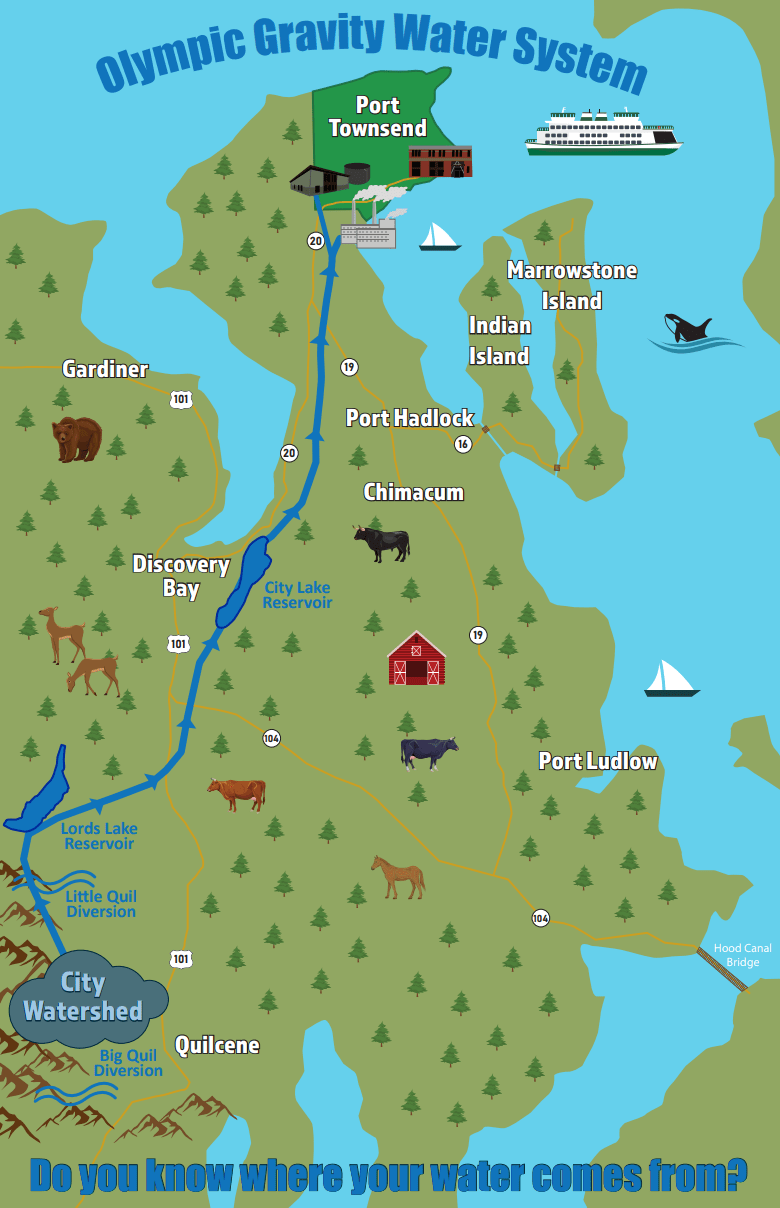
On Monday, the City Council voted unanimously to approve the new water agreement that includes raises in the cost of water to city residents, along with a new contract with the PT Paper Mill and improvements to the pipeline infrastructure. The agreement incorporates the Sierra Club’s recommendations for charging the mill for water used ($4.5 million/year) and for increasing these charges, over time, to encourage conservation. Unfortunately, the agreement establishes the current mill water usage of 11MGD/day as the baseline without seeking any reductions, resulting in the mill continuing to account for over 91% of all water consumed from the Quilcene watershed.
Both the mill and the city got what they wanted: The mill was assured of being able to continue using up to 11MGD while the city was able to put together a “partnership” that avoided having to go to the bond market and that was of a sufficient duration (20 years), avoiding draconian residential rate increases. It was more important for the city to get the mill to offset the steep capital costs of the Olympic Ground Water System (OGWS) than to achieve the kind of conservation gains the Sierra Club and other environmental activists would have liked to see.
Unfortunately, it is likely to be an unstable agreement given the past economic history of the mill and its aging infrastructure. Both suggest the mill may not be around for the full 20-year term of the agreement, leaving the city having to pay tens of millions for infrastructure improvements anyway. Knowing this, the city also voted last night to unanimously to create an industrial water rate, allowing it to sell water to another entity (industrial, PUD, etc.) if needed.
The next debate will be over increases to residential rates required by the agreement. Residential ratepayers have already expressed concern that they are “paying” for the mill’s excessive water use. Unfortunately the city doesn’t see a viable alternative at this time.
Environmentalists will have a second opportunity come 2025-2029 when the USFS will be reconsidering the city’s special use permit allowing it to withdraw water from the Quilcene Watershed.
I would also like to add that one thing I learned by listening to the discussion and reading the agreement is that we are extremely vulnerable to the impending climate changes that are unfolding around us. One issue that was mentioned was that the city looked into substituting well water for the water coming from the mountains and found that there is not nearly enough to supply our needs, let alone the mill. My personal take on the agreement is that it could have been set to a 10 year renewal, given the changing climate. It was also odd that there is no mention of the impact of our taking of significant water from the rivers, given the efforts to restore salmon in those streams. It certainly was never considered in the original setup of the water system.
It also brings up the issue of growth of the city. As new housing developments continue at the roundabout on Discovery Road and also on Cook Avenue there will be a need for more water for the city. The mill is guaranteed 11 MGD. But if the city increases water use, there is more revenue for the OGWS. This is a perverse reversal of conservation, the built reward to grow the city’s water use by greater development in order to lower water costs for all. But the caveat is that if there’s drought conditions and the water is not at the level needed, and does not replenish the holding lakes, we could be in for greater conservation and higher rates.
The water is stored in two holding lakes and we usually end up shifting to drawing from them exclusively by mid summer. As the planet warms and the snow packs become lessened, we will be drawing on those lakes sooner and sooner in the year. That day is coming in the next two to five years, once those large scale developments are built out. That was not discussed by the City Council. Not even a question on it, unless I missed it.
The following letter (edited to 250 words) was sent to the PDN this morning.
It was dismaying to see the PDN give column space today to the opinions of Pat Neal and his alternative universe of salmon restoration. If I read it right, he offers nothing but criticism of what he calls “The Salmon Restoration Industry” and no actual concrete proposals other than “build and fund more hatcheries” as if this will somehow fix the slow extinction of salmon in our region. It’s so easy to ignore the decades of science, funding and citizen involvement that has brought us to this point of restoration, as well as ignoring the habitat destruction that all of us contributed to over the last 100 years. I guess it’s easy to stand on the river and pretend hatcheries will fix everything.
Virtually all scientists agree on an “All H” method of salmon restoration. This means addressing Habitat, Hydro (dams, rivers, lakes),Hatcheries and Harvest. Increase and restore habitat. Monitor and manage river flows, well densities, fix hydropower issues, or perhaps tear down dams. Increase hatchery size and type. And manage harvest to save runs. The current “salmon restoration industry” as Neal so derisively puts it, has been established *because* of the need to address all four of these issues. If it’s failing, maybe it’s from something other than ongoing support. Like needing even more funding which is substantial but nowhere near enough. Perhaps more enforcement of the regulations on the books. Well, the list of what could be done goes on and on. Easy to pick your favorite solution and say “if only”.
Hatcheries have been given far more importance in budgets over the last 10 years, including large increases proposed by the Governor in his 2019 and 2021 budgets at the behest of sports fishermen and tribes (2020/21 had cuts to everything due to the Pandemic). This despite mounting scientific evidence that hatcheries produce fish that compete for food with wild stock and reduce genetic diversity. Salmon for fishermen and not for whales or the ecosystem at large. Neal uses hatchery numbers from 1961 to supposedly show that these hatchery fish were the reasons we had such a huge amount of salmon in our waters. Given the survival rate of hatchery fish it seems absurd to draw a conclusion like that. It ignores that we had dramatically fewer people, a climate under some semblance of stability, and had yet to finish destroying virtually all old growth forests between here and Juneau. But the signs of impending doom were clear to those that wanted to look.
Neal’s use of the Dungeness River as an example is perfect. It is a perfect example of not understanding history. For my 2010 movie “Voices of the Strait” I interviewed fishermen who were on the Dungeness in the 40s, 50s and 60s and their stories all were the same: they understood but had no way to stop the unrestrained destruction of habitat that they witnessed, including the cutting of irrigation channels into the Dungeness during peak salmon return seasons, leaving millions of fish to die without spawning. They had no environmental vocabulary to describe it,as we do now. They just all said, “what a waste”.The diking of the Dungeness only helped to kill the river by accelerating the river flow and wiping out locations where the fish spawned. It was done for the benefit of farmers and homeowners, not salmon. The late Port Angeles angler Dick Goin actually documented the losses in his unpublished “Roll Call of the Lost” counts of the loss of fish on all our rivers. I have a copy if anyone is interested. He saw it in real time. The hatcheries Neal describes were created to *fix* that problem, and yet the science shows it’s not nearly enough and they are failing to produce significant results. For instance, we now know by scat analysis what Orcas actually eat and it’s not hatchery salmon but fish from the Fraser and Columbia.
Additionally, charter fishermen who I interviewed described to me in vivid detail that there were no limits on sports fishing up until the 1960s, despite their pleas to Fish & Wildlife to not waste the fish. The sports fishermen from Seattle would come out, catch 30 to 40 fish in a day and leave with a few in their coolers. The charter fishermen couldn’t hire enough kids to clean the fish so they would just throw them back in the Strait when the guys from the east side of the Sound left. They knew this was wrong but had no power to stop it and no storage for the fish. Limits on salmon were finally put in, too little too late. Now we are at place where shutting down the season appears as the only way to protect the runs from complete destruction.
Habitat restoration has been funded due to the efforts of the Tribes, the Counties, the Cities, the State, the Feds, sports and commercial fishermen and hundreds of other people who have *volunteered* their time to work on this. They sit in interminably long, boring meetings trying to come to consensus. They debate long lists of priorities. There is not the money for all of the priorities. The results of their work may take decades to show up in any significant numbers. It is like a giant puzzle with the pieces fitting together and finally, near the end, painting a bigger picture.
Pat ignores the history of international fishing fleets with gear so good they could laugh about who would catch the last fish, as one old timer who fished with them told me. Pat ignores our own logging for raw logs right here on the Peninsula to ship to Japan in the 70s & 80s, wiping out entire ecosystems of salmon runs for the quick profit of the few. He ignores that we clearcut over 90% of old growth forests until the Feds put an end to it due to documented losses of species, like salmon and birds. He ignores the enormous build out of suburbs & exurbs around Puget Sound most with little or no efforts back then to protect fish. I watched that happen myself, seeing subdivisions on the East side of Lake Washington build right down to the banks of streams and small lakes. Or ignoring 100 years of culverts put into roads for our benefit that cut off salmon from returning to spawn. And the armoring of shorelines around Puget Sound that is still going on. And of course ignoring a warming climate that could make all these efforts go for naught. All of it nibbling away at the habitat and the fish until there wasn’t enough left. And of course, there was the Boldt Decision, used for propaganda purposes to demonize the very people who have done the most to attempt the restoration. Love them or hate them, they haven’t sat idly by while the fish vanish. They are at the table, working to save them using the best available science today.
Will the efforts to restore runs succeed? We don’t know yet, but some runs on the Elwha are returning, just not yet the chinook in any numbers. As are some runs on Jimmy Come Lately Creek and others. It costs a lot of time, people and money to fix 100 years of destruction.
No one I’ve talked to or read in the last 20 years who is seriously working on this issue, other than Pat Neal, thinks simply making more hatchery fish is some kind of solution. Pat, you have a lot of passion, how about working to help solve the problems rather than ignore the scientists and anglers who have been in the trenches fighting to reverse this ? Your passion might be useful if you are willing to listen and learn.
Europe Met a Climate Target. But Is It Burning Less Carbon? The European Union promised to reduce its emissions 20 percent by 2020. Did it happen?
An interesting series in the New York Times called Hindsight has been evaluating business and government pledges on various social issues such as global warming, deforestation, drinking water availability and other social crisis’ that have brought attention and demands for change.
This week, they looked at promises made in the 2010 timeframe to lower carbon emissions in the EU. What did they find that’s interesting to us on the Peninsula? That Biomass was thrown in with the mix of “solutions” and that it is not a solution at all.
Back in around 2010, this blog covered the efforts of then State Representative Kevin Van De Wege to promote biomass as a solution to lowering energy costs and protecting the environment. His work was based on research by WSU that resulted in a paper that was heralded as as a reason to promote using clear cut slash (also known as ‘hog fuel’) to burn to create electricity. No environmental organizations at that time bought the idea, though it was passed using a special designation of calling it “experimental” in the bill. It never was taken off experimental status.
Rep Van de Wege understandably promoted it because it gave more jobs to out of work loggers here on the Peninsula and incentivized pulp plants in P.A., Port Townsend and Shelton to experiment with burning hog fuel. Concerns by environmental organizations were ignored in order to allow the companies to build the plants and start using the fuel. Ultimately, all attempts to make this source of energy failed. Additionally, as the NY Times article points out, it actually made things worse.
As one drives around 101 on the Peninsula these days, it is impossible not to notice the enormous amounts of clear cuts going on, from west of the Hood Canal Bridge to Port Angeles. The stacks of slash are sitting in massive piles, some burning, some just rotting. With them go any hope of using the vast forest resources of the Peninsula to sequester carbon for reasons documented in the article above.
Learn about the natural conditions that create king tides, projected sea level rise for Port Townsend, the Washington King Tide Program, and local efforts to monitor these events and document total water levels. A demonstration on how to use the MyCoast app for contributing your observations on king tides will also be provided.
Speakers will include Bridget Trosin, Washington Sea Grant’s Coastal Policy Specialist, and Dave Wilkinson, a marine weather instructor. Dave also serves on the joint City of Port Townsend / Jefferson County Climate Action Committee and volunteers for the Local 20/20 Climate Action Group. Co-presented by PTMSC and the Jefferson Co. Marine Resources Committee. The presentation is free. Time: 6-7 pm | Location: Online. Register.
What would your meal look like long before Europeans arrived here? An interesting quick read on the native plants and animals that were staples for those that lived off this land for thousands of years. Who catches eels out of our rivers anymore? When did you last eat Camas?
Camas photo by Jim Choate
The mechanized system of food production has churned over recent centuries, but when the land was occupied only by Indigenous people whose ties to the land had deep roots, the Pacific Northwest served an abundance of helpful herbs, fragrant flowers, fat-rich fish and vital vegetables that could easily make a feast.
OLYMPIA – Razor clam digging continues in December, as shellfish managers with the Washington Department of Fish and Wildlife (WDFW) have approved the next round of digs for Washington’s coastal beaches.
Photo courtesy NOAA
The latest tests for marine toxins came back all clear from the Washington Department of Health, which means the first round of December digs can proceed as planned.
“The weather hasn’t always been cooperative the last couple of weeks, but there’s still plenty of opportunities to hit the beach and dig for some razor clams,” said Dan Ayres, coastal shellfish manager with WDFW. “Hopefully December will bring some clearer winter days for people to get out and enjoy this amazing resource.”
Very good news for both the crab and those of us that eat them.
For the first time in years, commercial Dungeness crab fisheries in Oregon, Washington state and Northern California will begin on the traditional Dec. 1 opener after recent preseason testing showed high meat yield in crabs across the region.
A Department of Natural Resources head who claims to be an environmentalist has “no knowledge” of her office letting commercial aquaculture invade a National Wildlife Refuge.
Photo of Dungeness Spit by Al Bergstein
Hilary Franz who is the head of the department of natural resources here in Washington state, approved putting a commercial shellfish aquaculture business inside the Dungeness Spit wildlife refuge just to the right in this photo. Up to 80,000 oyster bags covering the bottom. This refuge was created for diving birds and other wildlife that feed here. You and I can’t even fly a kite in there and haven’t been able to for 100 years.
As this author wrote back in 2018:
New concerns over the possible permitting of an oyster aquaculture farm within the Dungeness Spit Wildlife Refuge have been raised by the Department of the Interior, which manages the refuge. In a letter written to Steve Gray, the Clallam County Deputy Director and Planning Manager, Jennifer Brown-Scott, the Project Leader for the Department of the Interior, has raised significant questions about issues concerning the application.
Of concern to the Department are a number of issues relating to wildlife in the refuge. The applicants have asked for permission to place approx. 150,000 (it appears that 80,000 is the current number at most) of “on bottom” oyster bags on the central west side of the bay, in approximately 34 acres of the tide flats 1141 acres of the inner spit. This appears to be approx. 3.35% the inner bay area. The applicants propose to raise non-native oysters. To be clear, a significant number of cultivated oysters in the Salish Sea are non-native, so this is not a surprise.
Within the area of the Dungeness Spit Wildlife Refuge are federally listed species that are protected or have environmental listings of concern. They include but aren’t limited to: Bull Trout, Marbled Murrelet, Puget Sound Chinook and Hood Canal Summer Chum. Also within the area is significant state listed wildlife habitat. Of somewhat lesser concern is the impact on the public to the scenic beauty of the wildlife preserve, which is one of the main reasons most visitors go to the area in the first place.
Herring also spawn at the west end of Dungeness Harbor and the Department of Interior raised questions about protecting Strait of Juan de Fuca herring, which have been designated “critical” (as in critically low). Sand Lance and Surf Smelt spawning grounds are also found in the area of the application. These species have been identified as “Washington Species of Greatest Conservation Need within the State Wildlife Action Plan (WDFW 2015). A worry related to this is that these spawning fish will be competing with the oysters for plankton. A failure to find enough food could lead to a significant reduction in the survival rates. There is no know mitigation for this, other than limiting the size and scope of the project.
The area just to the east of the proposed site is the location of the highest infestation of European Green Crabs in the Salish Sea. Another concern is that the proposed oyster bags may provide habitat for green crabs, allowing them to be moved to other areas outside the Spit the bags are transported.
This shoreline has been designated “Natural” in the Critical Areas Ordinance, as far back as 1976. That designation limits activities to those that preserve the national features unchanged. One would assume that the tidelands are also part of that designation.
Noted bird biologist George Divoky commented:
When birds can’t find their food in an area they have used in the past they will not die at that location but fly elsewhere to find suitable habitat. Mortality could occur due to the costs of involved in seeking out that habitat. Certainly, the aquaculture being proposed would modify the habitat used by the birds and all of the far less visible components of the nearshore ecosystem. People tend to focus on birds being affected by anthropogenic changes to the marine environment – since they are visible and warm-blooded vertebrates – but this sort of exploitation of the marine environment by the growth economy would have ecosystem effects.
George Divoky
It is certainly reasonable for the applicants to want to return to aquaculture in the Bay, however the scale is being significantly increased. Science has learned a lot about the environment since the time when the State allowed the use in this location, dating back to around the time of WWII. In many other locations we have decided that the tradeoff of commercial activity is outweighed by a newer appreciation of the value of the natural landscape for a variety of species. One example of this is that we have ended other bad practices, such as gold mining in salmon streams, which was accomplished not that long ago.
It is up to all of us to question our elected officials and bureaucrats, not the applicants, as to why they believe that this is in all our best interests, when we so clearly have set this aside this location for wildlife protection and enhancement.
What the Dungeness Spit Wildlife Reserve will soon look like. As many as 80,000 of these bags will be located on the bottom.
The head of DNR, Commissioner Franz, when recently asked at a fundraiser for Jefferson County Democratic supporters about her department permitting this controversial site, said, “I have no idea what you are talking about.” However, the Department approved it on her letterhead. She also had a direct report of hers send out a response letter to an environmentalist who was expressing their concern in August. The letter stated that “Commissioner Franz has asked that I respond to your concerns on her behalf.“
As the old saying goes, “The buck stops here.”Commissioner Franz, in her second term, has run on being an environmental supporter if not an activist. Her campaign web site states” Hilary is on the front lines protecting our lands and waters and standing up for our communities.” A search of her campaign finance contributions showed both the Grantee, along with Pacific Seafood and Taylor Shellfish as donors. That in and of itself seems unseemly, if not worse, to be taking donations from the very people who you are regulating. But we all know it happens all the time. However, her ongoing blanket approvals of the ever-expanding shellfish industry now has apparently been a bit of environmental protection that she does not even pay attention to in her department.
What could she have done instead? Land swap. It’s being done by her department all over the State, where environmentally sensitive areas are being protected. That it wasn’t even a point of discussion is irresponsible.
In a letter to local activists, by Katrina Lassiter, the Interim Deputy Supervisor for Aquatic Resources it was stated that “These measures were created through collaboration and input from scientists, regulatory agencies, and the environmental community including the Audubon Society.”
On 8/20/21, Ms. Lassiter was asked to provide documentation for the statement: She has not responded.No environmental organization that was contacted offered any support for that statement.
Where were the local Audubon Society and Sierra Club members? They both apparently thought it was too controversial and choose to take no action. Why be a member of groups that were created to protect the environment and now can’t even take verbal stand against an action like this? Where is the Washington Environmental Council and their People For Puget Sound Campaigns? Silent. Remember this as you consider your end of the year donations.
Want to put your money where it works? Try starting with the Protect Our Peninsula’s Future, or the Olympic Forest Coalition, or Sea Shepard’s legal fund, or the Wild Fish Conservancy, or the Center for Environmental Law, or any of the other organizations who will sue for change, since we cannot rely on paper “environmentalists” to do the work we expect of them. They all seem to be beholden to the people continuing these policies of destruction. Everyone seems to want to restore destroyed environments but few want to stop them from being destroyed in the first place.
The call to action on your parts, if you choose to take one, is to call Commissioner Franz’ office and let them know your dissatisfaction with this decision. When she comes to your county looking for donations for her future political ambitions, tell her when she reverses this decision, you’ll consider funding her next campaign.
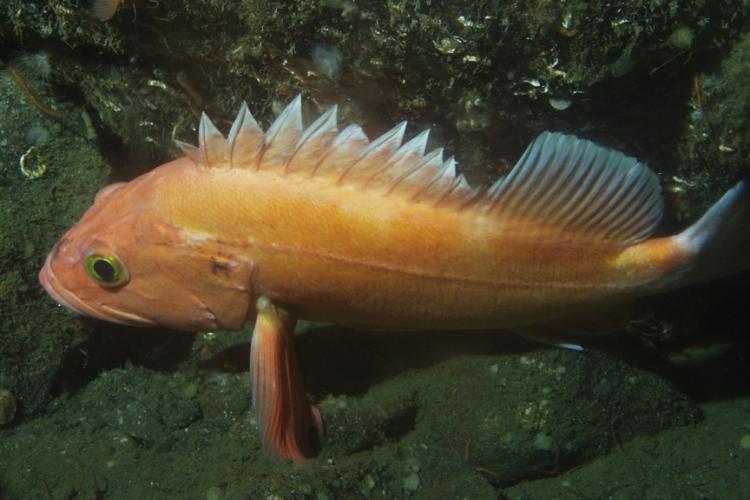
Fishing for rockfish was once promoted as a sustainable alternative to salmon harvests, but when rockfish numbers plummeted, fisheries managers realized they had a problem. Now a rockfish recovery plan seeks to reverse the damage as scientists learn more about protecting this once-popular game fish. David Williams writes. (Salish Sea Currents Magazine)
A release of seven fishers from Alberta, Canada into Olympic National Park earlier this month is part of a program to increase the genetic diversity of the once-decimated native species. Five were released into the wild at Lake Ozette and two were released near Sol Duc, said Patti Happe, wildlife branch chief of Olympic National Park (ONP), on Friday. Leah Leach reports. (Peninsula Daily News)
There was so much to be cynical about over the last two weeks of the climate meeting in Glasgow, called COPS-26. But a little discussed part of it was the awards for the places in the world that are acting without waiting, moving us towards a future that we hope the rest of the world will catch up to eventually.
Samsø: An Island Community Pointing to the Future | Denmark
This was one of the winners of the United Nations Climate Leaders Action Awards:
Denmark’s municipality of the island of Samsø has completely transformed its energy system from fossil fuels to renewable energy, becoming the world’s first renewable energy island. Key results that have been achieved include: becoming carbon negative; 100% local ownership of renewable energy investments; and significant socio-economic benefits from the energy transition.
Here is a short video on some of the winners of the 2021 Action Awards. Can we be next? Kiwi over at Edensaw has gone 100% solar, as he mentions in the comments below!
The ongoing saga of the development of Black Point, a beautiful promontory covered in tall firs and having unique geographic elements overlooking the Hood Canal, has taken another turn for the worse. It appears that the Statesman Group, the international developer who claimed to have vast resources available to successfully do this project, has not paid the County for work that the county did on behalf of them for the last six years. The county, operating on good faith back then, along with the County Commissioners that backed it, bought their promises without any financial bonding to ensure the work would be completed on time and budget. Hundreds of people in the County publicly questioned this decision and unfortunately, they appear to have been proven correct in their concerns.
The Brinnon Group, the organization of local people challenging the Pleasant Harbor has requested that Jefferson County collect the fees due it by for the work done on the proposal.These fees, in the amount of $191,379.25, are for 2133 hours of work the county did for Statesman between 2016 and 2019. It is unclear if Statesman is in breach of contract with the county, and whether the county could sue for payment and revoke the agreement. It is also unclear of whether the county has been attempting to collect on these fees.The invoice provided to The Brinnon Group attorney, was dated June 6th, 2020.
The letter, sent to Jefferson County Chief Civil Deputy Prosecuting Attorney Philip C. Hunsucker called into question the financial ability of the Statesmen group to complete the project. It stated the following (bold face has been done by me to highlight key issues):
Dear Mr. Hunsucker: As you know, this office represents the Brinnon Group, a local community organization concerned with the proposed master planned resort (MPR) at Black Point. This proposal, termed the Pleasant Harbor development, has been under various stages of review since 2007.
Most recently, a development plan was approved that called for phased construction on the site. However, to date there has been little progress toward completion of the development plan, which advertises a variety of amenities for the community, including a large community center.
Over the past several years, Statesman’s development proposal has consumed significant time of county staff in reviewing and processing this complex proposal. Pursuant to adopted codes and ordinances, well known to Statesman, Jefferson County charges staff time spent on land development proposals back to the developer. This process, adopted by the Jefferson County Commissioners, is to assure that county taxpayers do not subsidize land developers. The requirement of reimbursement applies uniformly to all persons using the services of Jefferson County planning employees.
Over the past several months, my client has directed emails to the County regarding the Pleasant Harbor development and the status of billings and payments by Statesman for work performed by county employees. After expressing financial concerns about this project numerous times, my client was shocked to find that Statesman is in arrears to the County for $191,379.25, accumulated from 2016 to 2019, representing more than 2,000 staff hours spent on the Pleasant Harbor application (see Attachment 1, Jefferson County Invoice 20-001 issued June 9, 2020). Based on current information, we cannot find a record of payment for these fees. Our investigation has been hampered by redactions of emails and other information by your office, which seem wholly inappropriate when inquiries into taxpayer-supported county finances are involved.
It certainly appears that special privileges are being extended to Statesman by Jefferson County. County residents or other developers who owe taxes and fees to the County are expected to promptly pay their obligations and cannot just ask the County to “put it on their tab” for several years. Article 8, Section 7 of the Washington Constitution states: “No county, city, town or other municipal corporation shall hereafter give any money, or property, or loan its money, or credit to or in aid of any individual, association, company or corporation . . .” (emphasis added). While Jefferson County appropriately grants leeway to county residents in times of need, such as that caused by Covid-19 impacts, Statesman is a large development company with substantial holdings in the United States and Canada and certainly has, or should have resources to pay its bills.
The Statesman’s arrearage to the County raises another serious issue: does Statesman have the resources to implement the complex venture they are proposing? The Pleasant Harbor plan includes multiple phases, most of which will require substantial financial wherewithal to construct. One of the proposed amenities is the large community center, which will be a multi-million dollar project with unclear and uncertain financial returns. A redflag on Statesman finances was raised back in August, 2016, when the company distributed a flyer that proposed public financing of the Pleasant Harbor development. A copy of that brochure is attached. Statesman proposed a $2,000,000 “Recreational Community Grant” from Jefferson County. A transfer of about 30 acres of the Pleasant Harbor site to the state for another Recreational Community Grant in the amount of $9,250,000 was proposed (a cost of over $308,000/acre of undeveloped, vacant land), as well as a $26,500,000 loan from the state. These requests totaled almost $38,000,000 in corporate welfare to Statesman.
During this time in 2016, while Statesman was asking for public money for its project, it was not paying its bills to Jefferson County. These events raise the real concern that Statesman lacks the financial backing to complete the Pleasant Harbor proposal. The Northwest and other parts of the United States are littered with partially completed resort and recreational proposals that have been abandoned. Regrettably, these failures have created substantial costs for local governments.
Based on the foregoing, Jefferson County should take two actions. First, it should insist that Statesman’s past due bills for county services be paid immediately, and with interest. Jefferson County finances are not such that special privileges and deferral of payment can be allowed to land developers, including Statesman. After Statesman has come current on their account, the County should insist that any additional services provided be paid in a timely fashion. If further deferrals of payment are proposed by Statesman, they should be accompanied by complete financial security or a bond for payment to the County, such as an irrevocable line of credit from an established financial institution.
Second, Jefferson County should insist that Statesman demonstrate that it has the financial backing to complete the entire Pleasant Harbor project. These assurances should take the form of third party assurances of financing for the project, again from established banks or other financial institutions, or private committed financing. Jefferson County is not Statesman’s bank. Moreover, it is time for the County to insist, after 15 years of inaction, that Statesman demonstrate it can complete this project and not leave Jefferson County taxpayers holding the bag for a partially completed project that does not meet master plan resort standards.
J. Richard Aramburu
The letter from Mr. Aramburu goes on to state that
Moreover, our investigations have disclosed a residential/recreational development in eastern British Columbia with many similarities to Pleasant Harbor, this one called Pine Ridge. One of those similarities is a proposed and promised community center which has been advertised as far back as 2008. Over the years, Statesman has also proposed public financing for this project. However, neither public nor private financing has been secured for this community center, and, like the one at Pleasant Harbor, it has not been constructed. A video from Statesman discussing the project, and community center, is here https://www.youtube.com/watch?v=hhE0z31AGLw. Discussion of the proposed Community Center occurs at approximately 2’35”.
The County has been in discussions with the Statesman Group to get these bills paid, but the Groups’ lawyer is pushing back very hard on the County, refusing to pay based on a variety of details. On May 19th the County sent an email to the lawyer for Statesman, very strongly worded about the County’s billing, and demanding immediate payment.
Is the county finally ready to withdraw this approval and force Statesman to go back to the drawing board for this project? Is anyone at the county paying attention to this project at all?
While watching the COPS-26 Circus in Glasgow over the last couple weeks it’s easy to get dismayed especially about China’s commitments to solving global warming. However this interesting article in the New York Times today has a different perspective on it from someone who has followed the Chinese environmental stories for the last 20 years. Well worth a read if you’re feeling down about what happened in Glasgow. some of you might have also missed that China announced about a month ago or so the largest solar farm in the world to be constructed in the deserts in eastern China. I think that China takes global warming far more seriously than we do in some cases. They are a leader in electric bike and car production and have ambitious goals to produce vastly more of them. It’s just that, given their behavior on the world stage, it’s very hard to know what it all really means.
Good news of groups working together to protect habitat for birds.
A multi-agency, private-public effort to help trumpeter swans safely depart from their seasonal home on Kirner Pond is complete…Local bird advocates came together to start a GoFundMe fundraiser that kicked off on Jan. 25, and it quickly raised more than the goal of $65,000. Those funds, along with in-kind labor and efforts from Clallam PUD, helped fund the work to bury the power lines clearing the way for the trumpeter swans to take off from the small pond located about a mile west of the Woodcock/Sequim-Dungeness Way intersection. Michael Dashiell reports. (Peninsula Daily News) Subscription required.
The focal point for environmental news & perspective on the news. Our goal is to help educate and connect the public on the Peninsula. We are not a non-profit so donations are not tax deductible. Maybe someday with your help!
HOTLINES FOR REPORTING SPILLS
WA State Emergency Management Division: 1-800-258-5990
National Response Center: 1-800-424-8802
Pacific States & British Columbia: 1-800-OILS-911 (1-800-645-7911)
Local Events
Add your local event here. Contact us to include your next event.
—————————————————
TSUNAMI DEBRIS HOTLINE:
1-855-WACOAST (1-855-922-6278)
—————————————————
Event Date:
NATURE NOW
A Program About the Natural World.
KPTZ.ORG 91.9
WEDNESDAYS AT 12:05
REPEATS: SATURDAYS 12:30 AND WEDNESDAYS
PODCASTS AT KPTZ.ORG