Washington may ban sales of farmed octopus

The Washington State Standard is reporting on a new bill, that will outlaw the sale, possession, transport, and distribution of farmed octopus. The bill was sponsored by our own Representative Adam Bernbaum (D-Port Angeles).

The full story is at the link above, but let me just state my support for this bill. In fact, our family stopped eating octopus and squid years ago, and you should consider not eating it as well.

Octopus have been around on this planet for millions of years longer than us. They appear from many studies to show human like traits and exhibet pain and suffering similar to us. The study, found here from none other than the London School of Economics showed distinct traits of sentience in these creatures along with many other similar creatures, i.e. cuttlefish, crab and squid.

I think that we can easily do without these on our dinner plates. I hope you join me and my wife in supporting House Bill 1608 and the previous bill 1153 that outlawed octopus farming in Washington and the new one that ends the economic market for these creatures.

New concerns over PFAS in drinking water

Wired magazine has just run a major exposé on ground water contamination with PFAS on military bases and its likely connection to a significant rise in Parkinson’s Disease. This is a story I would highly recommend reading and subscribing to Wired to support their journalism efforts.

New ideas about chronic illness could revolutionize treatment, if we take the research seriously.

https://www.wired.com/story/scientists-thought-parkinsons-was-in-our-genes-it-might-be-in-the-water

Back in 2016, we carried an article about the contamination of groundwater at the Navy base on Whidbey Island.

The Navy did publish the work on testing wells in the areas around the bases.

From the information copied from the links below, it is clear that the Navy was trying to find the level of exposure to PFAS in drinking wells, but it’s important to note that they were not looking for Parkinson’s Disease, only three kinds of cancers: testicular, kidney and prostate.. They do list a comprehensive list of bases where they were testing here: https://media.defense.gov/2020/Mar/17/2002265607/-1/-1/1/SPREADSHEET_OF_INSTALLATIONS_WHERE_DOD_PERFORMING_ASSESSMENT_OF_PFAS_USE_OR_POTENTIAL_RELEASE.PDF

Follow the story:

From the web: https://www.hillandponton.com/toxic-exposure/naval-air-station-whidbey-island/

Whidbey Island Water Contamination 

Naval Air Station Whidbey Island has been identified as a significant source of PFAS (per- and polyfluoroalkyl substances) contamination in the surrounding communities. These “forever chemicals,” which have been used in industry and consumer products since the 1940s due to their resistance to grease, oil, water, and heat, were present in the Aqueous Film Forming Foam (AFFF) used for firefighting and training purposes at the base. 

Beyond PFAS contamination, Whidbey Island’s groundwater faces other threats including potential saltwater intrusion and nitrate runoff from fertilizers, animal waste, and septic systems, prompting increased focus on testing the island’s wells. 

PFAS Contamination

In early 2017, testing by the U.S. Navy near NAS Whidbey Island revealed PFAS levels above the EPA’s lifetime health advisory level of 70 parts per trillion (ppt) PFOA/PFOS. One well showed contamination as high as 2,516 ppt, more than 35 times the advisory level. A more recent Navy sample taken in 2022 showed a certain cancer-causing particulate in drinking water at levels 30,000 times higher than what the EPA considered safe. 

The Navy is currently conducting investigations at multiple locations including the Area 6 Landfill, Ault Field, OLF Coupeville, and Seaplane Base.

291 wells have already been tested near Ault Field, Area 6, and Coupeville. The Navy reported 18 contaminated wells, though it’s unclear how many homes these wells served and there may be many other drinking water sources likely to be contaminated. 

To-date, the Navy has sampled over 360 private drinking water wells near NAS Whidbey Island Area 6 Landfill, Ault Field, and OLF Coupeville. Of these, certain PFAS have been detected at or above the DoD PFAS interim action levels for PFAS in private drinking water wells in over thirty drinking water wells. 

PFAS exposure has been linked to various types of cancers and serious health issues, raising significant public health concerns for residents in the affected areas. If you developed a medical condition after living or working at or near NAS Whidbey Island, you may be eligible for compensation. Get a free case evaluation here to explore your legal options. 


Wired story documents the first major study that showed that bases without PFAS in their water supply had dramatically lower case’s of Parkinson’s than those that did.


Camp Pendleton, in Southern California, is the Marine Corps’ West Coast equivalent to Lejeune. Thousands of young, healthy Marines shuffle through its barbed-wired gates each year. But Pendleton has one thing Lejeune does not: uncontaminated drinking water.

When Goldman compared both populations, the results were shocking: Marines exposed to TCE at Lejeune were 70 percent more likely to have Parkinson’s than those stationed at Pendleton. And in a follow-up study last year, he showed that disease progression in Lejeune vets with the highest exposure to TCE was faster than those with low or no exposure, too. In the world of Parkinson’s research, Goldman’s study was a blockbuster.

The military has been downplaying and lying to us for decades about health issues. Was it that they knew how harmful above ground nuclear testing was, or agent orange, or the burning of toxic wastes in the field in both Gulf Wars, and now PFAS that could be the root cause of a massive increase in Parkinson’s especially among members of the military who lived on some bases.

We may never know how widespread the plume on Whidbey was, nor how many people who lived near the base or in the Oak Harbor area and were exposed to PFAS and developed Parkinson’s Disease. Read the article in Wired to learn the whole story.

If you subscribe to Apple News you can read it as part of your subscription. Also your local library probably has an issue. Or you can buy it on a newsstand, like at airports.

https://pacific.navfac.navy.mil/Facilities-Engineering-Commands/NAVFAC-Northwest/Our-Services/Environmental-Stewardship/Environmental-Restoration/PFAS-Groundwater-and-Drinking-Water-Investigation/Naval-Air-Station-Whidbey-Island

Military accepting public comment on environmental impact statement

here we go again…thank you for the Peninsula Daily News for covering this story. The whole story link is found at the bottom of this article.

While I normally in the past would’ve suggested you send in your comments, it’s been my experience that the Navy takes them says thank you very much and then totally ignores them. The only thing that stops them are court orders, but send your comments in nevertheless. It might be useful in court.


SILVERDALE — The U.S. Navy and U.S. Coast Guard are accepting public comment regarding the environmental impact of at-sea military training activities through Jan. 19.

The services are jointly preparing a supplement to the 2015 Northwest Training and Testing (NWTT) final environmental impact statement (EIS) and the 2020 NWTT final supplemental EIS to assess the potential environmental effects associated with continuing at-sea military readiness activities, according to a press release from Navy Region Northwest.

At-sea military readiness activities include training, research, development, testing and evaluation activities, and range modernization and sustainment.

Those activities would occur on and beneath the water surface and in the airspace within the study area.

The study area, which does not include any land or overland airspace, consists of areas offshore of the Washington, Oregon and Northern California coasts, inland waters of Washington and the western Behm Canal in Southeast Alaska.

Comments may be submitted via the project website at www.nepa.navy.mil/nwtteis or by mail to: Naval Facilities Engineering Systems Command Northwest; Attention: NWTT SEIS/OEIS Project Manager; 1101 Tautog Circle, Room 102, Silverdale, WA 98315-1101.

Read the rest of the story in the Peninsula Daily News today at the following link. please subscribe to the Peninsula Daily News to support local journalism like this .

https://www.peninsuladailynews.com/news/military-accepting-public-comment-on-environmental-impact-statement/

Update on Sen. Murray’s Wild Olympics Bill Advances Through Senate Hearing

Senator Murray’s Wild Olympics Bill Advances Through Senate Hearing on Wave of New Sportsmen Endorsements Calling for Permanent Protection of Wild Olympics.

from the Wild Olympics Coalition:


Dear Wild Olympics Supporter, 

We’re excited to share the great news that Senator Murray’s Wild Olympics bill advanced through a key senate hearing this week on a wave of new sportsmen endorsements who sent a letter to the Committee calling for swift passage of the Wild Olympics Act. This brings the total number of Sportsmen endorsements backing Wild Olympics to nearly 40. The successful hearing is a testament to the fact that your calls, letters, emails and social media posts continue to power the Wild Olympics forward. But above all it’s a testament to Senator Murray’s tenacity and her commitment to getting her and Representative Randall’s Wild Olympics Wilderness & Wild & Scenic Rivers Act across the finish line this congress. So please take a moment to like her facebook post on the hearing and thank her in the comments for fighting to protect the Wild Olympics, and then read her full press release on the successful hearing at the bottom of this email below. 

Washington, D.C. —  Today, U.S. Senator Patty Murray (D-WA) advanced her Wild Olympics Wilderness & Wild and Scenic Rivers Act through a hearing before the Senate Energy and Natural Resources Public Lands Subcommittee, a key milestone in the legislative process toward becoming law. The hearing came after a wave of new endorsements from sportsmen organizations—including the Washington Chapter of Backcountry Hunters & Anglers and the Washington Council of Trout Unlimited—who sent a letter urging the Committee to pass Wild Olympics to protect hunting, fishing and salmon streams for the future against the increasing threats to public land. The new endorsements bring the total number of sportsmen organizations backing Wild Olympics to nearly 40.The Wild Olympics Wilderness & Wild and Scenic Rivers Act, which Senator Murray reintroduced in May with U.S. Representative Emily Randall (D, WA-06) would permanently protect approximately 125,000 acres of Olympic National Forest as wilderness and 19 rivers and their major tributaries—a total of 464 river miles—as Wild and Scenic Rivers. 

“The movement behind our Wild Olympics legislation continues to grow year after year thanks to the tireless work of our coalition of sportsmen, conservationists, Tribes, businesses, local leaders, timber communities, shellfish growers, and so many others,” said Senator Murray. “Today’s Senate hearing is a significant step forward for our effort to permanently protect key areas of the Olympic National Forest—a crown jewel in Washington state—while preserving world-class recreation opportunities and supporting local economies. As long as I’m in the Senate, I won’t stop fighting to win the support we need to get our Wild Olympics bill across the finish line and protect these treasured areas on the Olympic Peninsula for generations to come.”

The bill’s inclusion in the hearing came after Senator Murray took to the Senate floor in August to block a public lands package that did not include the Wild Olympics bill. On the Senate floor, Murray said about the Wild Olympics Wilderness & Wild and Scenic Rivers Act“It is a carefully drafted, it’s a thoughtful piece of legislation and the grassroots support for this bill has only grown over the years. That is exactly the kind of bill which should be included in a bipartisan public lands package. I would invite the Senior Senator of Utah to visit the land this bill covers to help protect our Olympic National Forest… I hope in the future we can work together in drafting a public lands bill that does include legislation like my Wild Olympics bill.” Video of Senator Murray’s remarks on the Senate floor is HERE.

Designed through extensive community input to conserve ancient forests and pristine rivers, protect clean water and salmon habitat, and enhance outdoor recreation, the Wild Olympics Wilderness & Wild and Scenic Rivers Act would set aside the first new wilderness on Olympic National Forest in over four decades and the first-ever protected wild and scenic rivers on the Olympic Peninsula. With a strong foundation of overwhelming local support, the bill has made steady progress each successive Congress—passing the House with bipartisan support twice before and passing out of the Senate Energy and Natural Resources Committee last Congress for the first time in the bill’s history. 

“The forests, rivers, and wilderness of our region shape how we live, work, and play. And for communities around the Olympic Peninsula, access to these resources can make or break local economies,” said Representative Randall when the bill was introduced in May. “This bill protects the remote wilderness we treasure while ensuring access where it is essential for livelihoods, recreation, emergency response, and cultural practices. Protecting our natural resources also means protecting local economies, livelihoods, and Tribal Sovereignty. I’m grateful to all who have shaped this bill and Senator Murray for her leadership to secure the future of the community we proudly call home.”

Senator Murray and former U.S. Representatives Norm Dicks and Derek Kilmer spent years gathering extensive community input on the Olympic Peninsula to craft the carefully balanced legislation, which was first introduced in 2012. It would permanently preserve ancient and mature forests, critical salmon habitat, and sources of clean drinking water for local communities, while also protecting and expanding world-class outdoor recreation opportunities like hiking, camping, boating, hunting, and fishing. No roads would be closed, and trailhead access would not be affected.

Senator Murray worked extensively with local and regional timber interests to remove any currently viable timber base from the proposal to ensure the legislation would have no impact on existing timber jobs, as confirmed in a 2012 Timber Impact Study by the respected independent Forester Derek Churchill.

Aberdeen Forest Products Consultant and Former Timber CEO Roy Nott said in his July 10th 2019 testimony before the House Natural Resources Committee, “My own experience as a CEO and Entrepreneur is that our area’s natural treasures—which provide world-class outdoor recreation, clean water and our area’s high quality of living—are what give us a competitive edge over other regions in attracting and retaining the talented people new companies require.  Wilderness and wild and scenic river protections would help protect and grow the local jobs that depend on our ability to compete for talent against other regions, and they would enhance our recruitment efforts as we work to grow new businesses in the future. And as a former Timber Industry Executive, I appreciate that (the) final compromise proposal was scaled-back to ensure it would not impact current timber jobs.” 

Today’s committee hearing came on a recent wave of other new local endorsements also rallying behind the Wild Olympics Wilderness and Wild & Scenic Rivers Act against the backdrop of increasing threats to public land. The new additions bring the total number of local Olympic Peninsula & Hood Canal region endorsements to more than 800 endorsers, including the Quinault Indian Nation, Quileute, Lower Elwha Klallam and Jamestown S’Klallam Tribes; now nearly 40 local sportsmen organizations and fishing guides; the mayors of Port Angeles, Port Townsend, Westport and other local elected officials; businesses and CEOs; farms and faith leaders; conservation and outdoor recreation groups; and many others. Additionally, more than 14,000 local residents have signed petitions in support. 

Below are just a few of many local testimonials in support of the Wild Olympics Wilderness & Wild and Scenic Rivers Act:

Chairman Ron Allen, Jamestown S’Klallam Tribe: “As stated in the Northwest Indian Fisheries Commission’s “Treaty Rights at Risk” report, “Salmon recovery is based on the crucial premise that we can protect what habitat remains while we restore previously degraded habitat conditions.  Unfortunately, significant investments in recovery may not be realized because the rate of habitat loss continues to outpace restoration.  The resulting net decline in habitat demonstrates the federal government’s failure to protect the Tribes’ treaty-reserved rights.”  In an era where we are witnessing unprecedented rollbacks of environmental safeguards on federal public lands, the Wild Olympics legislation would permanently protect some of the healthiest, intact salmon habitat left on the Peninsula. It is our heritage and cultural principles to protect the lands and waters Nature provides, as well as the natural resources she sustains.  Therefore, we do continue to support and urge swift passage of the Wild Olympics Wilderness & Wild and Scenic Rivers Act.” 

Chairwoman Frances Charles, Lower Elwha Klallam Tribe: “The Lower Elwha Klallam Tribe (“Lower Elwha”) strongly supports the proposed Wild Olympics Wilderness and Wild and Scenic Rivers Act. We believe that it represents a fair compromise between potentially competing interests of preservation, economic use, and recreation. This legislation creates 126,600 acres of new wilderness and nineteen new wild and scenic rivers designations in the Olympic National Forest, the Olympic National Park and Washington State Department of Natural Resource-managed land. For Lower Elwha, the most important aspect of these new designations is the increased protection for salmon habitat. And we appreciate that it expressly acknowledges the fundamental interests and expertise of all treaty tribes in the restoration of fish habitat. This is an important complement to our ongoing successes, along with our federal and State partners, in restoring Elwha River fisheries in the aftermath of dam removal.” 

Connie Gallant, Chair, Wild Olympics Campaign (Quilcene): “We are so grateful for Senator Murray and Representative Randall’s leadership at this critical time for our public lands. The local momentum for the Wild Olympics Act has never been stronger and the need for its protections for our ancient forests & salmon streams has never been greater.”  

Bill Taylor, President of Taylor Shellfish Farms (Shelton): “The Wild Olympics legislation will help protect our state’s shellfish industry, including hundreds of shell fishing jobs in Hood Canal alone – and many more in related industries like processing, shipping, and sales. It protects the rivers and streams vital to the health of our hatcheries and to the health and restoration of Puget Sound. Our oyster beds depend on the clean, cold, silt-free water that drains off Olympic National Forest into Hood Canal. Protecting these watersheds allows our industry to grow, expand and continue to benefit the economy and ecology of Washington State.” 

Ashley Nichole Lewis, Bad Ash Outdoors (Taholah), Sportsmen For Wild Olympics and Member of the Quinault Indian Nation: “Wild Olympics protects the Olympic Peninsula’s ancient forests, free-flowing rivers and salmon streams for the future,” Nichole Lewis stressed. “It will protect fishing, boating and hunting access without closing any roads, but it also permanently protects some of the last healthy upstream salmon and steelhead habitat left on the peninsula.” 

State Representative Steve Tharinger, 24th Legislative District (Sequim): “It is easy to see and understand the ecological value of the Wild Olympics idea, conserving clean and free-flowing rivers, but what is sometimes missed is the economic value that maintaining places like Wild Olympics brings by attracting people to the special outdoors of the Olympic region. I want to thank REI and Patagonia for engaging local community leaders like myself to help design the map, and for recognizing that encouraging people to get out and enjoy the special places in the Wild Olympics proposal brings economic benefits to the communities I represent.” 

Fred Rakevich, Retired logger and 49-year veteran of the timber industry (Elma): “I am a retired logger who worked for fifty years in the timber industry. I have also fished and kayaked most of the major rivers in the Olympics. I was born and raised in Grays Harbor, but have traveled halfway around the world. In all my travels, nothing impressed me more than the natural beauty of the Olympic Mountain Range and the clear running waters that begin their journey flowing toward the lands below. Timber is and always will be part of the Olympic Peninsula’s proud heritage. But our ancient forests and wild rivers are the natural legacies we will leave to our children and grandchildren. The bill protects our natural heritage while respecting our timber heritage.”

Casey Weigel, Owner & Head Guide of Waters West Guide Service (Montesano) and member of Sportsmen for Wild Olympics: “Through hard work and our passion for our rivers and fishing, my wife and I have grown our small business enough to be able to help 3 other year-round and seasonal local guides support families, who love fishing just as much as we do. I support the Wild Olympics Wilderness & Wild & Scenic Rivers Act because our rivers and our salmon are our lifeblood and, without them, businesses like ours, the local jobs they support, and the dollars they bring into our local economy would dry up. The Wild Olympics proposal would simply make the current safeguards protecting our rivers on the Olympic National Forest permanent. That’s all it does. It doesn’t change access or cost timber jobs. And if it did, I wouldn’t support it, because my family works in the timber industry. There are many challenges facing our rivers and salmon, with lots of debate and millions of dollars spent trying to help restore clean water and habitat downstream. But one basic, simple piece of the foundation we can put in place now that won’t cost any of us anything, is to permanently protect the healthy habitat on the federal lands upstream against any misguided attempts to develop them in the future. That’s why I am a proud supporter of the Wild Olympics Wilderness and Wild & Scenic Rivers Act. For Our Future.” 

State Senator Mike Chapman, 24th Legislative District (Port Angeles): “I have been very excited about the economic & recreational opportunities Wild Olympics will bring to the Olympic Peninsula. With REI and Patagonia’s support, our corner of the world is now attracting visitors from all over. Wild Olympics is our future, for fresh air, clean water, pristine forests, and future generations!” 

Dave Bailey, former President of the Grey Wolf Fly Fishing Club in Sequim, WA & co-founder of Sportsmen for Wild Olympics“People think that because our salmon streams on Olympic National Forest appear as they’ve always been, that they are safe. Unfortunately, that’s the furthest thing from the truth.  There are determined threats underway to sell-off public land, roll back current safeguards and open these sensitive spawning streams to small hydropower development, industrial clear-cutting and more road building once more.  That’s bad for fish, game, and sportsmen.  This legislation is critical to preserve what we have.” 

Douglas Scott, Owner of Exotic Hikes and The Outdoor Society (Hood Canal): “Outside my door, the river, forests and mountains of the Olympic Peninsula beckon me to hike and climb. In the Northwest corner of the contiguous United States, far from the hustle and bustle of the big cities, our glacial-fed rivers, full of salmon and surrounded by majestic eagles constantly inspire millions of locals and visitors to the region. Each year, over four million outdoor recreation enthusiasts head to the region, hoping to find a slice of natural beauty in pristine forests and impossibly gorgeous river valleys. As an author, tour guide and advocate for the Olympic Peninsula, I have witnessed the importance of nature and outdoor recreation in the Pacific Northwest. Thanks to the support outdoor enthusiasts from all walks of life, passing the Wild Olympics Wilderness & Wild and Scenic Rivers Act will help ensure that even more of the stunning scenery will be protected and accessible for all. I am proud to Support the Wild Olympics. Come visit and fall in love with the beauty of rainforests, wild rivers, and breathtaking adventures and you will too.”

A fact sheet on the Wild Olympics Wilderness & Wild and Scenic Rivers Act is available HERE.

ToxicDocs database of industry documents

From the Press release of Collaborative for Health and Environment.


Greetings CHE Community,

I hope you’re all doing well on this 10th annual Children’s Environmental Health Day! This national observance offers opportunities to raise awareness, celebrate successes, and share new initiatives protecting children’s health.

To mark the day we’re sharing a new collection of articles from leading experts in the latest issue of the SF/Marin Medical Society Journal. See commentary from Dr. Bruce Lanphear,Dr. Anne-Louise Ponsonby, Nse Obot Witherspoon, and others in a special children’s environmental health section of the journal, available now in the CHE Resource Library. See the full list of articles and authors below.

For those in Northern California — there’s still time to get your tickets for our in-person fundraising event on Sunday, October 26 to support our Zero Breast Cancer program! You’ll hear UCSF’s Dr. Kimberly Badal and CHE advisory team member Dr. Ted Schettler discuss cutting edge research on chemical mixtures and breast cancer risk, and enjoy a gorgeous seaside walk along the Bolinas bluffs. If you’re not in California — or can’t make it but would like to contribute — please make your donation here. Many thanks to those who’ve already purchased tickets! 

We hope you can join us for these upcoming webinars:

On Tuesday, October 14 at 11am PT/2pm ET we will host ToxicDocs: A database of once-secret chemical industry documents. The ToxicDocs website contains millions of pages 

dusty pile of paper documents

of industry documents about lead, asbestos, silica, PCBs, and other toxic substances. This collection includes internal memoranda, emails, slides, board minutes, unpublished scientific studies, and other documents that became publicly available through toxic tort litigation. The resource has been tapped by researchers, journalists, and others exploring environmental health risks. In this webinar one of ToxicDocs’ founders, Dr. Merlin Chowkwanyun, will give an overview of this growing dataset, introducing the interface, explaining the technology behind it, and offering a tour of the searchable content. RSVP here.

Sportsmen Fight Trump Plan To Log Roadless Headwaters on Olympic Peninsula Public Lands

Another day, another threat from the Trump administration to open public lands, revoke roadless areas to open them to cutting on Federal forests. This press release is from the Sportsmen for Wild Olympics.


FOR IMMEDIATE RELEASE September 8th, 2025

QUILCENE, WA—September 8th, 2025: Today, Sportsmen for Wild Olympics released a new map with photos illustrating the devastating impacts that developing key roadless backcountry public lands on Olympic National Forest could have on critical headwaters of prime trophy fishing rivers and public access on the Olympic Peninsula. The group is calling on Congress to pass the Wild Olympics Act as a proactive solution to permanently protect these lands.

“This map tells Congress and the Administration: protect the Olympic Peninsula’s public lands—don’t privatize or develop them,” said Ashley Nichole Lewis, a Quinault Indian Nation fishing guide and spokesperson for Sportsmen for Wild Olympics. “It gives our fellow sportsmen and women something to fight for, not just against—a lasting solution to threats we are confronting right now.”

The urgency comes as the Trump Administration announced a shortened comment period ending September 19th on their plans to rescind the Roadless Rule in order to log & develop sensitive spawning habitat on public lands, a key federal safeguard for undeveloped backcountry areas across national forests, including Olympic National Forest. The new map with photos highlights & names the critical ancient forest roadless headwaters & salmon streams on Olympic National Forest that are now threatened by the Trump Administration’s plan to lift protections for these backcountry public lands prized by Olympic Peninsula sportsmen for the clean water, critical habitat & access they provide.

What is the Roadless Rule?

The Roadless Rule, established in 2001, protects undeveloped areas of national forests from new road construction and logging. These “roadless” areas are often rugged backcountry landscapes that provide crucial habitat for fish and wildlife, protect water quality, and offer remote hunting and angling opportunities. Removing these protections opens the door to industrial development in some of the last remaining intact, healthy forest lands in the country.

“Rescinding the Roadless Rule is yet another attempt to hand over our essential public resources to special interests—at the expense of salmon, clean water, and future generations,” Lewis said.

The coalition—comprising thousands of local and regional hunters and anglers, and over 30 leading sportsmen organizations—has already punched well above their weight earlier this year playing an outsized role in the national backlash opposing the unprecedented threats to public lands coming from both Congress and the Administration. Lewis says these threats highlight exactly why the group supports the Wild Olympics Wilderness & Wild and Scenic Rivers Act, recently reintroduced by Senator Patty Murray and Representative Emily Randall.

“The different public land sale efforts in Congress and the new plan to strip protections from 59 million acres of core forest headwaters nationwide—including lands on the Peninsula—show that they will use any tactic to privatize or exploit our public lands,” Lewis said. “This map shows what that would actually look like. Congress & the White House must reverse course and pass Wild Olympics to permanently protect these critical salmon streams instead.”

The Wild Olympics Act, developed with years of local input, would enhance hunting and fishing access while permanently protecting some of the last, best intact salmon-spawning habitat left in the Lower 48. Importantly, it would not close existing roads or cost timber jobs. It has broad local support with over 800 local endorsements.

The new map & photos show how the Wild Olympics proposal would protect key areas such as South Quinault Ridge, Moonlight Dome, and other core ancient forest headwaters & rivers vital for hunting & fishing on the Peninsula —areas the Administration now plans to open for logging by rescinding the Roadless Rule.

(The steep forested slopes of the Moonlight Dome Roadless Area forms the critical headwaters for both the East and West Forks of the Humptulips River (seen ok the left), one of the top ten Trophy Fishing Rivers in Washington State).

The map also reveals that 300,000 acres of Olympic National Forest have been identified as eligible for sale under different plans by the Administration and some members of Congress during earlier drafts of the budget bill passed earlier this year. While the land sale provision was struck from the budget, proponents continue to push this idea forward.

The unprecedented threats to public lands recently sparked Senator Murray to throw down the gauntlet in the Senate, announcing she will block any public lands legislative package that comes out of Utah Senator Mike Lee’s Senate Energy & Natural Resources Committee unless it includes her Wild Olympics bill, a move that galvanized local supporters to pull out all the stops to get it done this Congress.

Lewis hopes the map inspires more hunters and anglers to join the thousands who have already signed their petition.

“The outdoor community is powerful. Our fishing and hunting guides are pillars of this community. The same places we work the hardest are the ones we return to after the day is done—because we love them. Let’s use that collective power to ensure a single pen stroke can never take our public lands away. Let’s pass the Wild Olympics Act.”

###

HOW TO FIGHT BACK. 

1) Sign the WildOlympics.org/wild-olympics-petition/ telling Congress ancient temperate rainforests of the #WildOlympics aren’t for sale & to permanently protect Olympic Peninsula #publiclands & rivers against travesties like this in the future. 

2) Those who can afford it PLEASE WildOlympics.org/DONATE to fuel our fight. We helped defeat this four years ago. Help us defeat it again & pass the Wild Olympics Wilderness & Wild & Scenic Rivers Act to permanently protect ancient forests & salmon streams once & for all. 

3) SUBMIT A COMMENT AT PORTAL LINK Comment Period Ends Sept 19th. Tell USDA to uphold the Roadless Rue to protect Olympic Peninsula Ancient Forests & critical salmon nurseries that were already centuries-old when our nation was born. 

For more information, including a rolling list of articles from sportsmen outlets covering the threats to public lands, visit: SportsmenForWildOlympics.org/threats


Sportsmen For Wild Olympics Members Include:

Waters West Guide Service (Montesano)

Bad Ash Outdoors (Tahola)

Northwest Sportfishing Industry Association

Northwest Guides & Anglers Association

The Washington Wildlife Federation,

Izaak Walton League (Gr. Seattle Chapter) Backcountry Hunters and Anglers, (Washington Chapter)

Association of Northwest Steelheaders,

The Gray Wolf Fly Fishing Club (Sequim)

SAGE Fly Rods

Doug Rose Fly Fishing (at request of family)

Bad Ash Fishing (Tahola)

Washington Council of Trout Unlimited

Little Stone Fly Fisher (Port Townsend)

Johnson Guide Service (Sequim)

Olympic Peninsula Skagit Tactics (Forks)

Able Guide Service (Seiku)

Mike Z’s Guide Service (Forks)

Brazda’s Fly Fishing

Angler’s Obsession (Forks)

Sea Run Pursuits

Peninsula Sportsman Guide & Outfitting Service (Port Townsend)

Waters West Fly Fishing Outfitters (Port Angeles)

The Wild Steelhead Coalition

Piscatorial Pursuits (Forks)

Able Guide Service (Sekiu)

LimbSaver

Oly Women On The Fly

WA Council of Fly Fishers International

Puget Sound Fly Fishers

Coastal Cutthroat Coalition

Plan to expand WA’s tugboat escort requirements for oil tankers stirs pushback

The escorts are meant to help reduce oil spill risks in waters around the San Juan Islands, Bellingham and Anacortes.

In the late 1990s and early 2000s People for Puget Sound pushed for an escort tug to protect the Strait of Juan de Fuca. After enormous lobbying (and resistance from the industry and the Coast Guard) our State Representative at the time, Kevin Van de Wege, got the bill passed through and into law. The tug has assisted dozens of ships in mechanical trouble since then. Now Friends of the San Juans are promoting this new effort, which could significantly improve the chances of spill protection in the event of a mechanical breakdown.

Support this effort.

Originally published in Salish Current.

https://salish-current.org/2025/08/12/effort-to-dial-up-oil-spill-prevention-meets-pushback/

Glass Recycling Returns

Jefferson County Public Works has announced that glass collection will resume on July 15 with two drop off locations: the County transfer station off Jacob Miller Road and the Quilcene Rural Drop Box just south of the US Forest Service Ranger Station on Highway 101.  


Says Al Cairns, Solid Waste Manager, “We chose these two staffed sites for glass drop-off to lower the rate of contamination in order to gain a higher commodity value and reduce the cost of the overall recycling program.  Unstaffed sites have seen contamination rates of up to 30% and illegal dumping outside of the bins at those sites totaled 41 tons in 2024 which also adds to recycling program costs.”


According to Cairns, glass is the most expensive material type to recycle because of the high transportation costs due to material weight and because the commodity value is low. “At an average value of $15 per ton, recycled glass doesn’t even cover the transportation costs to get it to the buyer in Seattle.  When the loads are highly contaminated the value drops even more.  Presently the cost of recycling glass and the other materials accepted as part of the County’s recycling program are part of the rate paid for garbage disposal at the County’s solid waste facilities. We have a responsibility to those customers to reduce costs for the programs funded with the tipping fee.”

Conservation Groups Sue Over Aquaculture Pollution of Columbia River

Press Release from Center for Food Safety and Wild Fish Conservancy


Pacific Seafoods’ so-called “sustainable” fish farming facilities in violation of Clean Water Act permits daily since at least 2020

Portland, OR – Today, Center for Food Safety (CFS) and Wild Fish Conservancy(WFC) filed a lawsuit against Pacific Seafood Aquaculture, LLC, for multiple violations of the Clean Water Act (CWA) at three commercial netpen aquaculture facilities on the Columbia River raising rainbow trout, often marketed as ‘steelhead.’ The filing, along with the prior 60-day notice of intent to sue, details how the company has repeatedly violated the terms of its National Pollutant Discharge Elimination System (NPDES) permit. The plaintiff nonprofits are represented by Kampmeier & Knutsen PLLC and CFS counsel.

In sharp contrast to the products’ marketing as sustainably raised, government records obtained through the Freedom of Information Act (FOIA) revealed that the Pacific Seafood facilities have actually been in continuous violation of their NPDES permit conditions since at least April 2020 when the permits were reissued. This includes both pollution discharge violations exceeding Environmental Protection Agency (EPA)-set limits, as well as monitoring and reporting violations. The unlawful pollution harms wild fish and the surrounding river ecosystem. The Columbia River is home to several endangered fish species protected under the Endangered Species Act.

“Despite ‘sustainable’ marketing claims and third-party certifications, government records tell a different story— one of chronic noncompliance and ecological harm,” said Emma Helverson, Executive Director of Wild Fish Conservancy. “In the face of the public’s sustained, long-term efforts to protect and restore the Columbia River and its ecosystems, Pacific Seafood has repeatedly violated the Clean Water Act, undermining public trust, degrading water quality, and threatening the survival of wild salmon and steelhead. Local communities and economies should not be left to shoulder the costs of cleanup and ecological damage while a billion-dollar corporation cuts corners on basic environmental protections.”

“These confined industrial fish farming operations have been unlawfully and egregiously polluting the Columbia River for years,” said George Kimbrell, CFS Legal Director. “Fish feed, fish waste, chemicals, pharmaceuticals, and other contaminants released by these facilities threaten water quality and native fish populations. We’re taking this action to ensure compliance with environmental laws designed to protect our waterways and the species that depend on them.” 

Background

Industrial netpen aquaculture is known to cause adverse environmental and intertwined socioeconomic impacts, including pollution from drugs, chemicals, pesticides, fungicides, pharmaceuticals, and other inputs; nutrient pollution from uneaten fish food and fish waste; the spread and amplification of parasites, viruses, and disease from farmed fish to wild fish; overfishing of forage fisheries in order to make fish meal and oil to grow aquacultured fish; adverse ecological effects on surrounding marine wildlife from the facilities; harm to traditional and indigenous fishing cultures and communities; and harm to recreational and commercial fisheries. Chronic fish spills, caused by equipment failure, human error, or weather, are among the worst causes of harm. Escaped fish harm wild fish by competing for food and habitat, spreading viruses and disease, and inbreeding, thus reducing genetic diversity and resilience. In August 2017, a devastating netpen aquaculture collapse at a facility maintained by Cooke Aquaculture in Puget Sound released an estimated 250,000 non-native and viral-infected Atlantic salmon into Puget Sound. Washington has subsequently removed the industry and permanently banned netpen aquaculture in its state marine waters. Globally, more than 25 million aquacultured fish escaped between 1996 and 2012. 

# # # 

Center for Food Safety and Wild Fish Conservancy are represented by Kampmeier and Knutsen, PLLC of Seattle and Portland and counsel from Center for Food Safety 

A win for saving Dungeness Spit


The battle over keeping industrial aquaculture out of our National Wildlife Refuges, is still being played out in the courts. Recently three environmental organizations have successfully sued to get the US Fish & Wildlife Service to complete a “compatibility determination (CD)” for the industrial operation. The court has ruled that a CD must be performed. It is not clear whether the company must now stop any work in the refuge.

Here is the press release from the plaintiffs. Please consider donating to any of them to help offset the costs of the lawsuit. It’s *our* wildlife refuge at stake.


In 2023, Protect the Peninsula’s Future, Coalition to Protect Puget Sound Habitat, and Beyond Pesticides sued the US Fish and Wildlife Service (USFWS) for its failure to conduct a compatibility determination (CD) for a proposed industrial shellfish operation at the Dungeness National Wildlife Refuge (DNWR). The case is being reviewed by the U.S. Federal District Court in Tacoma. 

USFWS regulations state that for any project on or near one of its refuges, a CD must be written.  These cases are not unusual, and the Dungeness case is especially important because if the case is lost, industrial shellfish operations might be free to open at other Refuges. 

Last year the Court ruled the case should proceed because it is clear the USFWS must write a CD.  

The industrial shellfish operator – the Jamestown S’Klallam Tribe (JST) – sought to moot the plaintiffs’ case due to potential financial impact to the JST.  The JST received various agency permits to plant 80,000 non-native oyster spat (larvae) in large plastic bags to be anchored to the substrate in the refuge area on 34 acres. The then manager of the DNWR had determined the shellfish operation was incompatible with the mission of the refuge, but higher ups in the agency overruled her and refused to write a CD. In the meantime, the JST started planting oyster spat. 

The federal court allowed the JST to present arguments against the plaintiffs’ suit.   

On 15 May 2025, the court responded in our favor.  The case will not be mooted; the USFWS must follow its regulations.   

From the Court documents:

“Compliance with the statutory procedures in the Refuge Act is undoubtably a  public right that safeguards environmental protection. 

Only the public right to administrative compliance with the Refuge Act procedural requirement to complete a compatibility determination and/or require a special permit are ripe for adjudication. 

Drawing all reasonable inferences in favor of plaintiffs, Jamestown appears to have planted seeds after it was aware that it was probable the Service would conduct a compatibility determination. 

Therefore, it is hereby ORDERED that Jamestown’s motion to dismiss, Dkt  44, is DENIED. “

The plaintiffs now wait for the Court’s final ruling against the USFWS, ordering it to write a CD. 

This just in from the Puget Sound Partnership’s Strait Ecosystem Recovery Network (ERN). Want to create a rain garden? Or other neighborhood storm water program? Get together with your town or county peeps and apply!

The RFP for the Neighborhood Stormwater Education and Assistance grants will open on May 7th and there are informational webinars on the horizon. These funds can support projects including:

  • Developing tools, resources, or programs to educate landowners and influencers (real estate agents, Homeowners Associations (HOAs), land use consultants, contractors, and others) about stormwater practices; 
  • Providing technical assistance such as pre-application and compliance support and incentives for landowners, developers, and residents to implement and maintain green stormwater infrastructure; 
  • Community outreach events, such as restoration plantings or Low Impact Design (LID)/Green Stormwater Infrastructure (GSI) educational seminars and trainings; 
  • Developing long-term plans, agreements, and funding mechanisms for developing and maintaining stormwater infrastructure within local individual catchments (including systems owned by HOAs); or 
  • GSI training and/or certification programs aligned with community affordable housing, workforce development, and environmental justice goals

Legislative Roundup

2025 Session Recap

From the Puget Sound Partnership: The 2025 Session of the Washington State Legislature has adjourned Sine Die on April 27. A robust budget deficit and debates about state spending and revenue dictated the session’s flow and outcomes, especially in the final weeks. Due to concerns about implementation costs, many bills aligned with Puget Sound recovery failed to pass and many more were trimmed back to reduce the associated workload. And the final budget included a series of budget cuts that will slow the work of Puget Sound recovery. At the same time, several new policies and budget items survived the legislative process and will provide benefits to Puget Sound recovery, including:

  • Ongoing funding to various state natural resource agencies to support interagency cooperation on environmental permitting of habitat restoration projects.
  • A new round of capital investments in habitat restoration and clean water infrastructure through programs like Puget Sound Acquisition and Restoration, Floodplains by Design, Salmon Recovery Funding Board, Estuary and Salmon Restoration Program, Stormwater Financial Assistance, Centennial Clean Water, and Remedial Action Grants.
  • Closure of a loophole in the Growth Management Act (GMA) to ensure local government plans are consistent with recent amendments to the GMA.
  • New investments in state capacity to monitor toxic chemicals from stormwater and implement measures to reduce those toxics.
  • Extension of the riparian task force and investments in voluntary riparian restoration efforts.

This online newsletter contains subpages for each of the Action Agenda topic areas listed at the top of the page. Each page includes a narrative description of themes and an interactive bill watchlist. The final budget page also includes a full breakdown of budget details.

Read the whole thing at

https://legislativenewsletter-wa-psp.hub.arcgis.com

A point of view from the Washington Policy Center (a conservative group), but worth noting for it’s summary, which seems pretty balanced in it’s analysis…(would welcome a critique of their POV)

Climate and Environmental Spending: Ambitious but Costly

The budget allocates $1 billion in spending to climate and environmental programs, and does not change significantly from the previous budget. The Climate Commitment Act (CCA), which imposes a tax on CO2 emissions, is projected to generate approximately $1.6 billion in revenue according to the department of Ecology. The additional tax is passed onto consumers through higher fuel and energy prices.

Washington Policy Center’s research estimates that the tax on CO2 emissions adds 40 cents per gallon to gasoline prices, disproportionately affecting low- and middle-income households. While the budget funds rebates for low-income families, these are insufficient to offset the regressive nature of the tax. Furthermore, the effectiveness of these investments in reducing emissions is poor, according to the Department of Ecology’s own research. Policymakers should prioritize effectiveness and consider redirecting funds to more immediate priorities, such as infrastructure or tax relief.

Fiscal Sustainability and Taxpayer Impact

The budget’s 6.5% spending increase outpaces the state’s economic growth rate (projected at 4.5% annually). This trajectory risks depleting overall reserves, projected to drop from $3.2 billion to $2.2 billion by 2027, but does add money to the state’s rainy-day fund. The four-year budget outlook shows a potential multi-billion shortfall unless revenues grow unexpectedly, or spending is curtailed. This raises the specter of future tax increases, particularly given Washington’s already high sales, property, and business taxes.

The budget’s reliance on one-time revenues, such as federal grants and the revenue from CCA auctions, masks structural imbalances. When these funds dry up, taxpayers may face pressure to backfill programs rather than cancel them. Washington Policy Center recommends adopting a sustainable growth model, such as tying spending increases to inflation plus population growth, which would cap biennial increases at 5-6%. This approach would preserve reserves and reduce the need for future tax hikes.

Conclusion: A Missed Opportunity for Reform

The 2025-27 conference budget reflects prioritizes spending over fiscal discipline. While investments in education, health care, and climate programs address pressing issues, their scale and structure raise concerns about affordability, efficiency, and long-term consequences. Taxpayers, already grappling with high costs of living, deserve a budget that maximizes value through competition, innovation, and accountability.

Despite record revenues, the budget proposal offers little in the way of tax relief for Washington families and businesses. The state’s tax burden has risen steadily in recent years, driven by increases in property taxes, sales taxes, and a controversial new capital gains tax. With billions in increased in spending over the next four years, lawmakers could easily afford to return some of that money to taxpayers-or at least pause new tax hikes.

Read their analysis of the whole budget items (more categories they analyze) at

https://www.washingtonpolicy.org/publications/detail/the-washington-state-2025-27-budget-proposal-is-out-and-legislators-are-still-spending-money-the-state-doesnt-have

Clallam County MRC Letter re: 3 Crabs road flooding

The Clallam County MRC has sent this letter to the Clallam County Board of Commissioners (BOCC) and the Clallam County Department of Community Development (DCD).RE: Shoreline management at Three Crabs Road.

At its recent monthly meeting, the MRC agreed to invoke its advisory responsibitity to the BOCC and communicate our concern about shoreline armoring (permitted and unpermitted) on Three Crabs Road, which recently came to our attention.

What we are seeing

Despite Comprehensive Plan policies for protecting marine shorelines and no-net-loss goats of the Shoreline Management Program, bulkheads have been and continue to be permitted – most often under emergency provisions following erosion from extreme storm surges, which are almost becoming an annual occurrence. ln addition, NASA has recently concluded that the pace of sea leveI rise is faster than previously thought, due to the thermal expansion of the ocean’s mass.

Summary of concerns

The MRC is concerned that intensifying weather conditions wit[ continue to cause erosion and that emergency bulkheads will continue to be requested and built, one property at a time, resulting insignificant impacts on shoretine functions and ecology. We urge the BOCC and DCD to develop a strategy that comprehensively addresses property and shoreline protection on Three Crabs Road.

The strategy shoutd include continued education and outreach to planners, contractors, property owners and county residents overall, and should also:

> clarify that avoidance of ecologicaI impacts is the top priority (but if avoidance is impossibte then

Ecology’s sequence of mitigation actions for shorelines should be followed and

> consider adjacent impacts and cumutative effects of any action; and

> identify mitigative approaches if avoidance is impossibte; and

> provide how no net loss witt be achieved through compensatory mitigation.

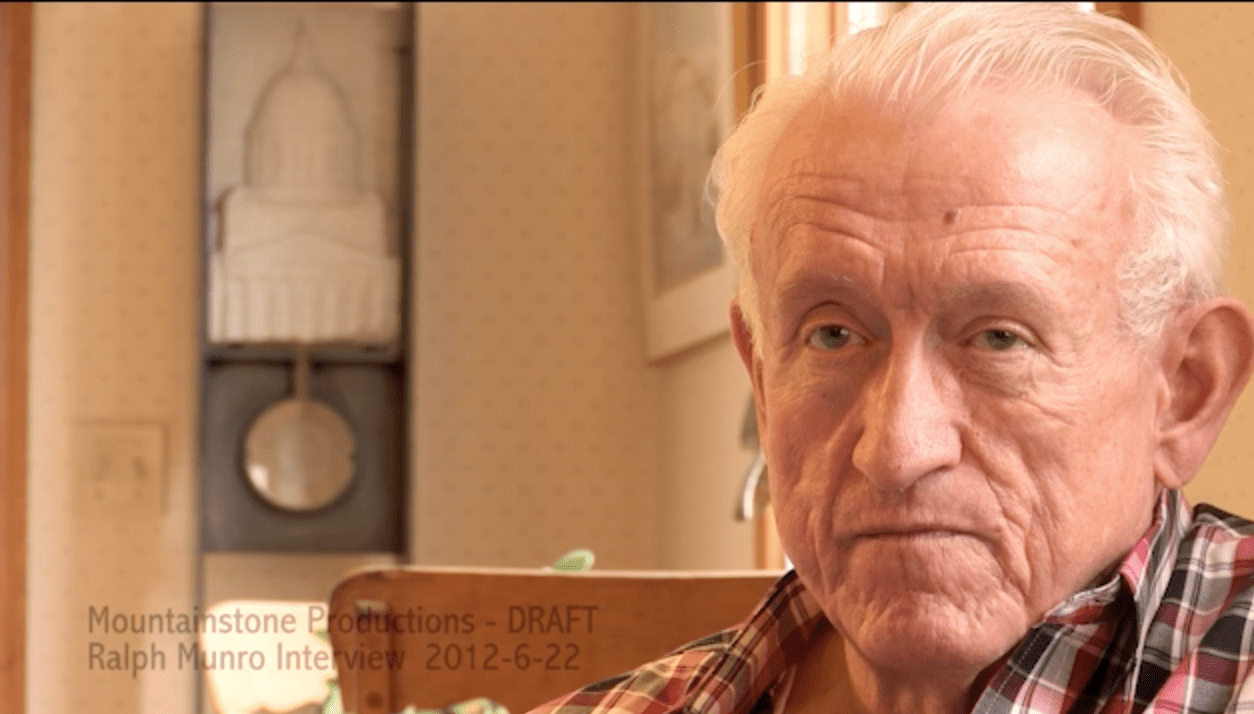
Ralph Munro walks on

The master of bi-partisan politics and perhaps the greatest politician this state ever had the honor to call one of its own, Ralph Munro, passed yesterday at the age of 81.

I had the good fortune to interview Ralph and spend a few hours with him a decade ago. He was a gentle, always upbeat and positive person. But his accomplishments are one of the greatest list of public service achievements we have ever seen.

Ralph was Secretary of State for five terms. During that time, he instituted vote by mail and voter registration (Motor Voter) when getting a drivers license or renewal.

But Ralph was also the person that Governor Dan Evans called on to go down to California and see about the Vietnamese refugees after Democratic governor Jerry Brown did not want them relocated there. Munro helped to bring them here to resettle in Washington State.

He was a champion of developmentally disabled children and helped get the first law in the country passed to support their needs, called the “Education for All” act. He befriended a 7 year old with developmental disabilities, eventually becoming his legal guardian.

He was a champion of environmental causes. He personally was responsible for ending the Orca hunt and capture in Puget Sound.

He was well respected by Puget Sound tribes. He allowed the tribes to do archeological digs on his property and was honored by them.

And on a personal note, he was the only Republican that I have ever voted for.

My sincere condolences to his family and friends. We will miss him. I doubt, given the current political system that we will ever see anyone like him again in Washington politics.

https://www.kuow.org/stories/remembering-ralph-munro-5-term-washington-secretary-of-state-and-statesman

How to Find Climate Data and Science the Trump Administration Doesn’t Want You to See

Eric Nost, University of Guelph, and Alejandro Paz, Massachusetts Institute of Technology (MIT)

Information on the internet might seem like it’s there forever, but it’s only as permanent as people choose to make it. This is clear as the second Trump administration has taken steps to dismantle science agencies and remove data and websites they use to communicate with the public, especially regarding climate science.

We are researchers in a network called the Public Environmental Data Partners, a coalition of nonprofits, archivists, and researchers working to ensure that data remains available to the public.

In the first few weeks of Trump’s second term, at least a dozen climate and environmental justice tools were removed. Government websites also scrubbed terms like “climate change” and “resilience.”

Why government websites and data matter

The internet and access to data are crucial for innovation, research, and daily life. Climate scientists use NASA satellite data and NOAA weather records to understand changes in the Earth system and how to protect economies reliant on specific climates. Other researchers use census data alongside climate data to identify who is most affected by climate change. Every day, people visit government websites to understand how to protect themselves from hazards and to learn about climate change policies.

When data and tools are removed, the work of scientists, civil society organizations, and government officials can grind to a halt. Data generated by government scientists is vital, especially for state governments that rely on federal data to run environmental protection programs.

Removing data from websites also makes it harder for the public to participate in key democratic processes, such as commenting on regulatory changes. It also breeds mistrust in the government and science. Federal agencies have been providing climate data to the public for years, and removing this data deprives everyone of essential information.

Bye-bye data?

The first Trump administration removed discussions of climate change and climate policies from government websites. However, in research with the Environmental Data and Governance Initiative, we didn’t find evidence that datasets were permanently deleted. The second Trump administration seems more aggressive, with more rapid removal of information.

In response, Public Environmental Data Partners have been archiving climate datasets, uploading copies to public repositories, and cataloging them to ensure they’re accessible if removed from government websites.

Maintaining tools for understanding climate change

The administration has targeted tools like dashboards that help visualize the social dimensions of climate change. For example, the Climate and Economic Justice Screening Tool, which mapped marginalized communities expected to experience severe climate impacts, was taken offline after Trump’s first executive orders. The original data behind the tool is still available, but it’s harder to find and access. Because the tool was an open-source project, it’s being recreated by archivists.

Preserving websites for the future

Some webpages have gone offline, such as the 25-year-old Climate Change Center at the Department of Transportation. Other pages, like those on the EPA website, have had their “climate change” links removed, making it harder to find relevant information.

Thankfully, the End of Term Web Archive has captured snapshots of government websites, making them accessible through the Internet Archive’s Wayback Machine. This initiative has been ongoing since 2008, capturing millions of government webpages for preservation.

If you’re concerned about missing climate change discussions on government websites, you can use the Wayback Machine to check past versions of pages.

What you can do

You can find archived climate and environmental justice datasets and tools on the Public Environmental Data Partners website. Other groups are archiving datasets linked to Data.gov and making them accessible in other locations.

Researchers are also uploading datasets to searchable repositories like OSF (Center for Open Science). If you’re worried that certain data might disappear, the MIT Libraries’ checklist provides steps on how you can help safeguard federal data.

Narrowing the knowledge sphere

It’s unclear how far the administration will push to remove or hide climate data, but it’s already clear that such actions are narrowing the public’s understanding of climate change, leaving communities and economies vulnerable. While data archiving can help preserve some of this information, there is no replacement for government research infrastructures that produce and share climate data.

This article is republished from The Conversation under a Creative Commons license.

Event: PT Paper (PTPC) Draft NPDES Renewal Permit & Meeting

The Washington Department of Ecology (WSDOE) is reviewing for renewal the PT Paper Mill’s (PTPC) Draft National Pollutant Discharge Elimination System (NPDES). Wastewater discharges from the mill, which have been going on for over 100 years, are regulated by the WDOE. Ecology is proposing a draft NPDES permit renewal for PTPC.

PTPC produces pulp by both chemical kraft process and from the repulping of old corrugated cardboard. All of the cardboard recycled in Jefferson County and other areas goes to the mill for repulping. The pulp is sold or used to make paper products, such as liner board for cardboard boxes.

The mill is seeking to discharge about 7% more effluent and 2% greater suspended solids. The permit includes new water-quality based limits for benzo(a)anthracene, chlordane and pentachlorophenol.

The permit includes some new studies of pollutants in Port Townsend Bay, requirements to minimize spills of certain chemicals to the wastewater treatment plant, an odor minimization study and other items.

You can send written comments to the Dept of Ecology HQ in Lacey (see document below for more specific info) and a public meeting and hearing will take place on December 4th, at 5:30 PM at the USO building (Bldg 326) Fort Worden. Interpretation services are available.

Dabob Bay conservation area expands by nearly 4,000 acres

Peter Bahls and his organization the NW Watershed Institute, have pulled off another successful land transfer that they’ve been working on for years in the waning days of public lands commissioner Hilary Franz’ administration. But the agreement may also find itself strapped for funds if the Climate Commitment Act (CCA) is reversed in the next election or a Republican takes office to replace Franz. Your vote is important to passing this . Our website is supporting King County Commissioner and former State Representative Dave Upthegrove as the next land commissioner because of issues such as this.

QUILCENE — The Dabob Bay Natural Resources Conservation Area has been expanded by 3,943 acres to include more than 11,000 acres around the bay.

Hillary Franz, the state Commissioner of Public Lands, signed an order on Sept. 23.

“Dabob Bay is a unique and special landscape, and I am incredibly happy to protect and preserve public lands there so that future generations get to enjoy its beauty and ecological importance,” Franz said. “This further expansion is a testament to years of hard work from stakeholders and staff to find a solution that protects these rare ecosystems while still supporting local services in east Jefferson County.”

To read the whole story, go to:

https://www.peninsuladailynews.com/news/dabob-bay-conservation-area-expands-by-nearly-4000-acres/

support local journalism subscribe to the Peninsula Daily News.

Glyphosate: more bad news for Roundup™️?

Glyphosate is the chemical agent in RoundUp, perhaps the most widely used pesticide in the world. It is now found in a huge percentage of Americans that have beentested for it, and its possible implication in degenerative nerve diseases and lymphomas is a subject of debate. Today in the New York Times, a very disturbing story of a cluster of rare cancers and neurological illnesses in New Brunswick may be leading back to the chemical.

The story, found here with a subscription (or at your local library), opens with “Doctors in Canada have identified dozens of patients with similar, unexplained symptoms — a scientific puzzle that has now become a political maelstrom.”

The symptoms that showed up in people in a small area of New Brunswick, included an incredible wide range of patients with no common thread except living in a small geographic location, a classic medical cluster. While it was not specific as a cancer cluster, it can be considered a medical cluster. Scientists have a specific definition of a cancer cluster. The US Centers for Disease Control and Prevention (CDC) and the National Cancer Institute (NCI) define a cancer cluster as a greater-than-expected number of cancer cases that occurs within a group of people in a defined geographic area over a specific period of time. These type of clusters were found in areas like the Love Canal back in the 70s.

This is not a small cluster. According to the Times article, “The number of undiagnosable patients currently under his care has risen to more than 430, 111 of whom are under age 45. Thirty-nine have died. ” The doctor who first identified this also noticed that, “… had noticed a pattern of new referrals peaking in the late summer and early fall, when pesticide use is at its highest, and wondered if there could be a connection.”

After having incredibly frustrating stop and start support from the Canadian government, and a number of years attempting to get to a root cause, the doctor who originally identified the cluster managed to get independent testing of many of the people suffering from it. What he found were extremely high levels of glyphosate in many of his patients.

Ninety percent of Marrero’s patients came back with elevated amounts of glyphosate in their blood, in one case as high as 15,000 times the test’s lowest detectable concentration.

This area of New Brunswick sees widespread use of Glyphosate in forestry.

The conclusion of this incredible story is that the government of Canada, after at first taking this cluster and the findings very seriously, mysteriously backed off and has done little to nothing, handing the investigation back to the province. They are now claiming that the cluster is not a cluster. Many people suspect that some kind of industry led lobbying may have stymied the investigation. The doctor who first discovered this cluster of patients is continuing to attempt to find a cause, while wondering why the federal government has given up any pursuit of a root cause to this group of his patients.

The point here is that all of us alive today in the Pacific Northwest likely have glyphosate in our bodies. Given the increasing amount of evidence, both direct and circumstantial about possible effects of glyphosate, it is worth reducing our intake of this potentially cancer causing chemical.

According to ConsumerNotice.org

Key takeaways:

  • 81% of Americans have had recent exposure to glyphosate.
  • The volume of glyphosate applied to crops has increased 100-fold since the late 1970s.
  • The introduction of glyphosate-resistant crops in 1996 added to the exposure.
  • Roundup is the most widely used herbicide in the world.
  • Bayer was supposed to stop selling Roundup in 2023, citing risks to farmworkers and consumers. It has not.
  • One study found glyphosate in more than 95% of the oat-based food samples.

national health survey released in June 2022 by the Centers for Disease Control and Prevention observed detectable levels of glyphosate in 80% of urine samples tested.

https://wwwn.cdc.gov/Nchs/Nhanes/2013-2014/SSGLYP_H.htm

NBC News.

According to Microsoft CoPilot: Bayer Corporation has not stopped producing Roundup (though it has been banned in some specific states, counties or towns). They continue to manufacture it while managing ongoing litigation related to its safety. Bayer has implemented a five-point plan to address and mitigate the risks associated with Roundup litigation12. This includes new formulations for the U.S. Lawn & Garden market and ongoing legal strategies to handle current and future cases1.

It is worth educating yourself on what to possibly avoid to minimize ongoing Glyphosate in your diet. Eating organic is a good start, but even some supposedly organic products have been found to have glyphosate in them. The ConsumerNotice.org article is a good start. https://www.consumernotice.org/environmental/pesticides/glyphosate-in-food/

A good overview of Glyphosate was done by NBC. https://www.nbcnews.com/data-graphics/toxic-herbicides-map-showing-high-use-state-rcna50052

Dungeness Spit Aquaculture: Court rules in favor of environmentalists

The U.S. District Court for the Western District of Washington State concludes that the Federal Refuge Act requires the U.S. Fish and Wildlife Service (USFWS/Service) to complete a compatibility determination, that the Court has jurisdiction and that plaintiffs’ case has merit and should be heard. 

In a major ruling for environmentalists fighting to stop the conversion of the Dungeness Spit wildlife refuge into an industrial aquaculture farm, a federal judge has ruled that the USFWS must complete a “compatibility determination” on potential impacts to these federal lands.  A 50-acre industrial shellfish operation has been allowed to operate abutting the Dungeness National Wildlife Refuge in Sequim WA without the agency having written a compatibility determination or permitted the shellfish operation. This Refuge hosts 240 species of birds, 29 species of mammals, 8 species of reptiles and amphibians, and 26 species of fish.  

Protect the Peninsula’s Future (PPF), a WA State non-profit was joined by another WA State non-profit, Coalition To Protect Puget Sound Habitat and the national non-profit, Beyond Pesticides challenging the USFWS in US Western District Court, pleading that the USFWS must write a compatibility determination stating the shellfish operation’s harm to this refuge.  The USFWS/Department of Interior asked the court to dismiss our case, denying their own authority. On July 17, 2024, the federal district court denied dismissal of the case.

The NGOs also pled that should the operation be allowed, it needed a permit. The federal judge left open the opportunity to strengthen this argument.

In his review of the USFWS attempt to dismiss the plaintiffs’ case, Judge Benjamin H. Settle underscored that the Refuge Act mandates that the Service “shall not initiate or permit a new use of a refuge or expand, renew, or extend an existing use of a refuge, unless the [Service] has determined that the use is a compatible use and that the use is not inconsistent with public safety.”  The federal judge continued, “To conclude otherwise would lead to absurd results. It would require the Court to ignore the clear instructions in the Refuge Act and its regulations that deputize the Service to regulate activity within the Refuge. Indulging the Service’s position would also require ignoring the points in the Refuge Act that carefully instruct the Service on how to navigate conflicting or concurrent authority within a refuge.”

“It bears repeating that the Service already acknowledged that it ‘cannot allow the proposed activity unless the entirety of the commercial oyster farming operation within the Refuge boundary is found Compatible with the Refuge purposes.’”

This blog has repeatedly reported on the move to create an industrial aquaculture operation inside Dungeness Spit. In previous articles, we saw key members of the wildlife reserve send reports saying that the proposal was bad for birds and other creatures in the waters inside the Spit. Regardless of the concerns DNR head Hilary Franz signed an approval of leasing the tidelands to the company. Yesterday, Franz lost her bid to move to the U.S. Congress, and she might be replaced by one of two Republicans, but the votes are still being tallied, and Democrat and environmental champion Dave UptheGrove is still in second place as of this writing.

You can help this legal case by sending donations to: PPF   PO Box 421   Sequim WA  98382

or make online through PayPal:  https://www.protectpeninsulasfuture.org/donate/

Net Pens, Dead? Don’t count on it. Thank Hilary Franz

From coastalwatershedinstitute.org: There’s been a bit of buzz about the status of steelhead net pens in the US/Washington state Salish Sea over the last three months or so. Most recently, Cooke Aquaculture withdrew their appeal of the recent decision upholding Washington state DNR’s ban of net pens on state aquatic lands. This has been touted as, quote, ‘the end of the fight’ against net pens in Washington waters (DNR March 2024).

Except? It absolutely *isn’t* the end of the fight. While Hillary Franz, the current Washington state Department of Natural Resources (DNR) Public Lands Commissioner, made the decision to ban net pens over a year ago, the DNR hasn’t taken any action to codify this rule into agency law (DNRa). Codifying the decision is a three-step process (DNR b). And while other DNR rules have sailed thru this codifying process over the same time period, the net pen decision? Hasn’t budged.

Hillary Franz is not running for re-election. She will no longer be DNR Lands Commissioner after the November elections.

In it’s current state, the net pen ban can be rescinded with a literal stroke of a pen by the next Lands Commissioner. Industry is laying plans for just this. At least one Commissioner candidate has made very clear statements supporting net pens. And Cooke Aquaculture and the Jamestown Tribe, collaborators on a steelhead net pen plan for the central Strait of Juan de Fuca/ Port Angeles Harbor, are now giving ‘informal’ presentations to local groups to try and garner support of future in water net pen projects-including Port Angeles harbor. This isn’t a ‘proposal’. It’s a *plan*. And they’re not asking-they are *telling* folks what is going to happen. They’re doing so quietly now-but will be full throttle after the Washington State DNR Commissioner election is over, and the new Commissioner is in place.

What can you do?

1. PUSH Washington DNR to codify the current net pen ban rule immediately;

2. Confirm early and repeatedly the position of prospective future incoming Washington State Lands Commissioner on in-water net pens, and make sure they also have your input and a clear position on net pens, and;

3. Make sure to let local aquaculture leaders and resource agency managers and officials know that upland contained is the only farmed salmon alternative for our country and state (one very successful operation is already in full swing in BC-link to their information is below).

For those that are new to the topic, here is an excellent link summarizing truth about open net pens https://www.youtube.com/watch?v=p4fVPt1V3sw .

More information, links, and key citations are here:

DNR a. netpen rulemaking https://www.dnr.wa.gov/publications/em_rule_netpen_cr101.pdf

DNR b.https://www.dnr.wa.gov/rule-making….

DNR 2024. https://www.dnr.wa.gov/…/commissioner-franz-fight…

Mapes 2022. https://www.seattletimes.com/…/state-supreme-court-oks…/

Blue Star Foods model farm module designed to grow 100 Tonnes of Steelhead Salmon per year: https://bluestarfoods.com/little-cedar-falls/

Upland Net Pens get fish into tanks out of the sea.

https://olyopen.com/2018/02/01/norwegian-company-to-build-large-land-based-salmon-farm-in-belfast-maine-republican-journal/?amp=1