Plastics recycling still has a long ways to go

Chartr recently posted this great chart view of the Organisation for Economic Co-operation and Development (OECD) data on plastics disposal globally. It’s pretty clear that overall use of plastics continues to grow globally and the major way that plastics is getting disposed of is through landfills.

Additionally, as we have heard, some recycling efforts are nothing more than collecting separate trash that ends up being in a landfill anyway because there’s no market for it.

Also as the article points out so much is being dumped into the ocean that there will be more plastic than fish by approximately 2050. One political party here in the United States seems to want to do nothing about plastics while the other is not doing much it seems. We need to continue to put pressure on our elected officials to actually reuse our waste.

We are lucky here in the Pacific Northwest that we definitely recycle cardboard and have a paper processing plant that can deal with it. But as we saw recently, the market has been softening for corrugated paper and the Port Angeles paper mill just closed throwing over 400 jobs out in a rural area that cannot afford to lose that many at one time. The ripple effects from the closure of that mill are going to be substantial for the Olympic Peninsula, Port Angeles, and Clallam county tax revenue streams.

Check out Chartr and their sister publication called Sherwood.

Event: Forest Conservation Spring Celebration: Honoring the Preservation of the “Shore Thing” Legacy Forest

Port Angeles, April 26, 2024 – The North Olympic Peninsula community is invited to join in a joyous celebration of a recent conservation victory – the protection of the beloved “Shore Thing” Legacy Forest. This spring event, open to all, will highlight the collaborative efforts that led to the preservation of this cherished older forest, marking a significant milestone in protecting the Elwha watershed.

“We are thrilled to announce the successful protection of the former ‘Shore Thing’ Timber Sale,” said Scott McGee, a member of the Elwha Legacy Forests Coalition. “This achievement is a testament to the power of collective action and the enduring commitment to preserving our natural heritage. By safeguarding this pristine wilderness, we are not only protecting vital habitat for countless species but also ensuring that future generations can continue to experience the wonder and beauty of this special place.”

The ‘Shore Thing’ Timber Sale, with its towering Douglas firs and hemlocks anchoring a structurally complex forest, serves as a sanctuary for biodiversity, providing habitat for a diverse array of plant and animal species. Additionally, its proximity to Lake Sutherland makes it an essential part of the local ecosystem, contributing to water quality, flood control, and recreational opportunities for residents and visitors alike.

Event Details:

Date: Saturday, May 11th, 2024

Time: 1:00 pm – 4:00 pm

Location: Wandering Joy Campground (Private)

233035 US-101, Port Angeles

(North of 101, Next to Lake Sutherland)

Parking: Parking for this event is limited, please consider carpooling. Some folks will be offering ride/share from the Laird Road Park & Ride. No parking below at the General Store.

Event Highlights:

  • Family-Friendly & Dogs Welcome: Bring your loved ones, including furry friends, to enjoy a day in nature.
  • Forest Hike: Explore the protected forest with a short hike (0.8 miles) and marvel at its natural beauty.
  • Live Music: Groove to the tunes of the Whump Acoustic Duo (Formerly Tuff Puffin), setting the perfect ambiance for celebration.

Event Co-Sponsors:

Center for Responsible Forestry, Earth Law Center, Elwha Legacy Forests, Legacy Forest Defense Coalition, Olympic Climate Action, Olympic Forest Coalition, Wandering Joy Campground

Contact:

Nina Sarmiento

Olympic Region Coordinator Center for Responsible Forestry. — olympic@c4rf.org

Event: Seismic tremors & Toxics Summit

Program: River Otter Beach Walk/Talk

Wednesday, May 15th at 10 am

Program: River Otter Beach Walk/Talk

Registration:https://www.eventbrite.com/e/851173130747

Location: East Beach past Wansboro Battery


Join us to learn about these cute and curious creatures that live throughout the Puget Sound.  We’ll be taking a beach walk on East Beach past the Wansboro Battery and discussing the river otter’s life cycle, behavior and where you might find them.  If we’re lucky, we may even see one!  Bring comfortable shoes, warm clothes and a rain jacket.


Presenter: Jennifer Riker has a deep passion and love for the Pacific NW and all the beauty and wildlife that can be found here. She is a social worker who has also volunteered as a mountain steward with the Mt Baker/Snoqualmie National Forest and volunteered at the zoo in Seattle Jennifer loves learning everything she can about her beautiful home and all the wildlife that she is fortunate to co-exist with and continues her education taking many classes at North Cascade Institute on plants, birds, dragonflies and is a naturalist for the Mountaineers. 

For more information about future events, volunteering, membership or donations visit::/friendsoffortflagler.org/

Friends of Fort Flagler is a non-profit organization dedicated to the restoring, preserving and protecting the natural and historic resources of Fort Flagler State Park.  Please support our state park by becoming a member, volunteering, or donating to our organization.  To learn more, visit https://friendsoffortflagler.org/.

Get Outside

Photo by Al Bergstein

Culvert Replacement projects: Good Seattle Times overview

The Seattle Times today has a good article on the ongoing work of culvert replacement. Titled “Removing WA salmon barriers surges to $1M a day, but results are murky” it investigates the results of the hundreds of millions being spent. (Be aware it’s behind a paywall). You likely have been impacted by the work to replace these culverts to save the remaining salmon stocks as you drive 101 from here to Port Angeles.

The Times article focuses on whether the enormous expenditure of almost $7.8 billion over a decade is going to actually help the salmon returning to spawn and save our greatest natural resource. As someone who has watched and studied this project since before the Tribes were successful in federal court, getting the mandate to force the state to spend the money, I have to say that I too, find myself concerned about the efficacy of this project overall.

As the Times points out, many streams are only going to recovered at the point where the streams cross state and federal highways. The projects often don’t seem to make sense, recovering a stream at one point but not upstream of the blockage, essentially simply moving the point that the salmon are blocked.

We have seen successful recovery efforts over streams such as Jimmy Come Lately creek on the land owned by the Jamestown S’Kallam. I have seen many fish there, as a fish ladder is used by the Tribe to count the fish going upstream. It appears to be a very successful recovery effort and the bridge over the creek is a small thing but wide enough to provide the necessary water and slope to help the fish on the journey.

The Times reports “A Seattle Times analysis of available project design reports found that for every barrier WSDOT fixes, nine others upstream and two downstream partially or fully block fish migration. The state or other owners may fix some of them, but most are not scheduled for removal.” This is not a recipe for success.

It’s clear that to the Tribes, this is all part of the “seven generations” approach that has been so successful in reversing many environmental issues on the Peninsula, including recovery of the Dungeness River flood plain, Jimmy Come Lately Creek, Sequim Bay shellfish, and many other projects that the Tribe has provided grant management, project management and leadership to complete. Unfortunately, Washington tax payers do not think in terms of seven generations. They often think about today’s paycheck. It is clear that with our underfunding of schools, hospitals, mental health, child care, foster care and other critical services, there are many who would just rather fund those immediate needs and let the chips fall where they may for salmon. The unfortunate situation we find ourselves in is that for the majority of Washington residents, they no longer have a memory of the enormous salmon runs that our predecessors took for granted. We once had an almost unimaginable source of high quality free food in the salmon runs, all for the cost of a fishing rod, a fishing license and maybe a small boat. It sustained many people on the verge of starvation as late as the 1950s in this state. I’ve interviewed them in my video, “Voices of the Strait” in 2010. Now, almost everyone who eats salmon pays a high price and it comes primarily from Alaska, where they have done a better job of managing the stocks, and their rivers and habitats have been less destroyed. As the article states, the WSDOT knew as early as 1949 that the culverts were a problem, and yet did nothing to change the practices.

Another frustrating truth that the article points out is “The state doesn’t really know if fish are even getting through its new stream crossings, nor is it required to by the court order. It could try, by studying salmon returning to those streams, but it rarely even counts them.”

Governor Inslee recognizes the problem of the federal government forcing this on the State: “There is a federal judicial decision … which has ordered the state ..to do this work on a designated number of culverts,” Inslee said in an interview. “If you want to criticize the prioritization of these investments, you need to focus your criticism on the federal judicial system — not the state.”

The article also points out that the remaining need for $4 Billion dollars would be the equivalent of buying an entirely new electric ferry fleet. As a citizen of a peninsula needing ferries for our basic commerce, and having seen the cancelations that impact that commerce, this seems like an incredibly problematic decision and one that would likely not be approved if put to a vote of the people.

Reading this incredibly detailed article by the Times investigative team, it is clear that huge errors in judgement and project choice have been made with virtually no payback in terms of salmon recovery in any rational timeframe. It seems that seeking a lawsuit to force the judge and Tribes to extend the period of culvert replacement and focus on projects that have the highest possibility of successful salmon recovery and creating a lower priority for those that won’t, would help actually recover salmon, and show some solid results to the taxpayers funding this.

We all want to see salmon recovery, but we want it done in a way that does not waste it on low chances of success.

Event: Meet the Candidate: Dave Upthegrove in PT

Wednesday, March 6th | 5:00 pm – 7:00 pm

Dave Upthegrove — Donate via ActBlue

EVENT: Meet the candidate. Dave Upthegrove

Water reserves low in Olympics – Sequim Gazette

Our snow pack is not in great shape to provide us fresh water this year.

Support local journalism. Subscribe to the Sequim Gazette.

Washington SNOTEL Snow/Precipitation Update Report (usda.gov)

WA’s mountain snow recharges our drinking water, powers our lives. Now it’s turning to rain. – Seattle Times

More on our changing climate. We can’t go all electric too soon.


Washington will see more water when it doesn’t need it and less water when it does. The implications for our drinking water and hydropower are big. Conrad Swanson reports. (Seattle Times)

50 years after Boldt Decision: new and lingering challenges to salmon recovery

The Boldt Decision was the most important environmental law case of the last 50 years. It led to Tribes taking a major leading role in salmon recovery. But it was not a panacea.

As Washington treaty tribes mark the 50th anniversary next week of the Boldt Decision, challenges to a sustainable salmon population remain. Richard Arlin Walker reports. (Salish Current)

From the archives: Thoughts on aquaculture permitting

With the debate over permitting of shellfish aquaculture farms in our county now before the board of county commissioners again, I thought that I would revisit this old post from 2012. As we say, everything old is new again.


A few weeks ago, Governor Gregoire, along with representatives of the Feds, State and the Shellfish Industry met to unveil a new initiative with the goal of ‘streamlining permitting’ of the industry, and also to throw some small but valued dollars at other issues around the Sound, such as the Olympia Oysters and Abalone revitalization efforts. I wrote at the time that this smelled like a beach barbeque of the opponents of the expansion of shellfish beds in the South Sound, because the only thing standing in the way of slowing the permitting process on shellfish bed expansion are concerned citizens, but I am not the most informed person out there on this topic. I hoped that people closer to the South Sound issues might weigh in. Receiving a letter yesterday from my friend Jules in the South Sound, I asked him if we could share it with you. I think this is a very coherent thought on the issues facing the owners of property and the environment down in South. It’s a bit of a long thought, but this isn’t TV. As usual, the disclaimer, “the views of the following editorial do not reflect the views of the Olympic Peninsula Environmental News, nor it’s management. There, with that out of the way, and the lawyers satisfied, enjoy. Oh, and by the way, feel free to comment or send me opposing points of view. – Alf

From the beach. By Jules. Bill Taylor of Taylor Shellfish recently wrote a number of columns promoting December’s Shellfish Initiative by the Governor. This initiative, was announced by the State and Federal Government as a means to address what Taylor Shellfish and the Governor have described as a “quagmire” of permitting regulations preventing expansion of their industry.

What Mr. Taylor fails to point out is that for six years the shellfish industry was directly involved in the public process that created these permitting requirements. Industry lobbying along with public, tribal and agency input helped create a federal, state and local permitting system that regulates their developments within the tidelands and waters of Puget Sound.

Now that this regulatory framework has begun to take hold, the shellfish industry has apparently decided it does not like what it helped to create and through closed meetings with a federal agency, National Oceanic and Atmospheric Administration (NOAA), and Governor Gregoire, it is attempting to minimize the process in order to expand operations without public input.

Ironic in this effort is the shellfish industry’s willingness to use regulations and create Shellfish Districts in Oakland Bay, along Henderson Inlet’s shoreline, perhaps Samish Bay and the Nisqually Reach–all for the industry’s direct benefit, helping open tidelands for production. In Oakland Bay alone, immense resources have been expended since the Shellfish District’s 2007 creation to correct problems that can be traced back to “streamlined” permitting, no permitting or a lack of resources to enforce the regulations that are in place. As a result, high levels of Dioxins and elevated levels of fecal coliform exist in Oakland Bay. The entire Oakland Bay watershed and every business and citizen are impacted, as are state and federal taxpayers whose tax dollars are being diverted to support this effort. Yet when the shellfish industry is asked to apply for permits for their developments it is a problem. Much of the lag time that Mr. Taylor cites is, in fact, due to the shellfish industry’s inability to follow the permitting process.

In 2007, after the industry spent two years of lobbying the Army Corps to approve existing shellfish farms through the Nationwide Permit program, the Army Corps received hundreds of permit applications that greatly overstated acreage and species cultivated on existing farms. Months later, after realizing the significance of the problem, the Army Corps and the Department of Ecology (DOE) asked the industry to resubmit the applications, this time with accurate information, a process that had to be completed before any consideration could be given to new operations.

This problem was created by the shellfish industry, stretching the process of determining what farms actually qualified well into 2010. At the same time, in April 2007, Governor Gregoire signed into law House Bill 2220, which was focused on structures and impacts from geoduck farming in Puget Sound.

This bill was also the direct outcome of industry lobbying and public input, helping to create a regulatory framework to guide the tideland development this activity involves. DOE was tasked with crafting guidelines to be used by counties in development of their Shoreline Management Programs. The University of Washington’s Sea Grant was tasked with initiating long-term studies on what impacts geoduck farming may have, because no studies existed at that time. Through open and transparent meetings the public, tribes and industry were all involved in the creation of these guidelines. This has helped to ensure the industry’s tideland developments taking place in Puget Sound’s tidelands are for the benefit of everyone, as mandated by the Shoreline Management Act of 1971, and not just for the profit of a few.

Taylor Shellfish and others in the industry have caused additional permitting delays through appeals and lawsuits after being told permits would be required for their tideland developments. In 2009, Thurston County told Taylor Shellfish and Arcadia Point Seafood that shoreline permits would be required for new geoduck farms. Rather than submitting permits, they chose instead to argue that permits should not be required. When the hearing examiner agreed with the county, the companies appealed the decision to the county commissioners, where they were subsequently told the same thing. The companies then sued in Superior Court and lost, being told the use of PVC pipes, netting, and rebar is in fact a tideland structure and that these developments require a shoreline development permit. The judge’s November 2011 decision went further. It stated an Attorney General Opinion in 2007, which is often cited by industry as the reason no permits at all were needed, and which was incorrectly made part of DOE’s guidelines, is legally flawed and should not be used. Had the companies simply applied for a permit, they may have found themselves today with approved permits. Instead they have no permit and DOE’s guidelines are now in question. This is a problem they created.

Mr. Taylor’s statement that permitting of new farms has not occurred for over five years is misleading. In Mason County, Seattle Shellfish proposed a large geoduck nursery operation in Spencer Cove. While appealed by Case Inlet Shoreline Association an agreement was reached and permits were issued for placement of geoduck nursery rafts nearly the length of a football field. Taylor Shellfish applied for and was granted permits for a new, albeit smaller, geoduck nursery in Totten Inlet. These operations involved an open and transparent permitting system which included input from the public, tribes and agencies. There is no question that there are important components of the Shellfish Initiative. These include restoration of native Olympia oysters, both over-harvested and killed off due to pollution; financial assistance to shoreline owners and dairy/cattle farmers to help bring fecal coliform levels down; and improving access to the few public beaches which remain for shellfish digging and enjoyment by the public. But these are minor when compared to the long-term objective the shellfish industry has of minimizing permit requirements and consideration of alternative uses for Puget Sound’s tidelands and waters.

Puget Sound is a resource of national importance that extends far beyond its ability to grow shellfish commercially. Regulations and permitting through the Shoreline Management Act and the Clean Water Act have created a well-structured regulatory framework controlling development along its shores, on its tidelands and in its waters. They have prevented profits alone from driving decisions. Closed meetings guided by NOAA, the Governor and the shellfish industry should not be allowed to undo this regulatory framework.


Open Letter to the Jefferson County Commissioners regarding Shoreline Master Program

Commissioners:
Having spent eight years in the Jefferson County Marine Resources Committee including a number of years as it’s chairman, along with volunteering hundreds of hours in helping write the existing SMP, I am urging you to require standard conditional use permits for future geoduck applications.

There is currently no real permitting nor oversight on geoduck operations in the county, with the county relying on the State and Federal Government to do whatever it feels necessary to manage and control these operations. We have no idea how much shoreline is being handed over to commercial operations, what damage is being done, nor do we as tax payers of this county have the opportunity to speak in favor or not of new operations that will lock up our shorelines for generations to come. It’s really an outrageous situation.

I join the residents of Squamish Harbor and Discovery Bay in calling for a fair process for evaluating future geoduck proposals. We urge the Board of County Commissioners (BOCC) to require, in its update of Jefferson County’s SMP, a standard Conditional Use Permit (CUP) process for all future applications for geoduck cultivation, whether for “new,” “expanded,” or “converted” tideland.

I personally, along with others in this county have seen many consequences of geoduck operations, including: illegal harvesting (documented and admitted); unauthorized expansions; hundreds of loose tubes strewn in shallow water and on beaches; hazards to recreation; underwater loose tubes of unknowable quantity; marine life trapped in nets; harvest operations in native eelgrass; vanishing eelgrass and sand dollar populations; beaching a boat in and trampling a fish stream; and many more practices of environmental concern.

The late Michael Adams, who chaired the MRC for years and was a small time commercial oyster farmer, documented numerous illegal intrusions onto his beaches. Often these were done at night and he told me he had been threatened by the people engaged in it.

Previous legal cases have gone against the industry time and time again.

For over two decades, citizens have been ignored by Washington State Agencies and most Counties as shellfish aquaculture lobbying paved the way for the unlimited proliferation of this industrial conversion of our shorelines. Citizens have had to go to court to get their voices heard. Many of the cases against Taylor, for example were won by the plaintiffs.

A case in 2019 brought against the Army Corp of Engineers was very instructive on this issue. The Corps lost the case. Federal Judge Lasnik stated in his findings that the Army Corps of Engineers in our Corp district, “The Court finds that the Corps has failed to adequately consider the impacts of commercial shellfish aquaculture activities authorized by NWP 48, that its conclusory findings of minimal individual and cumulative impacts are not supported by substantial evidence in the record, and that its EA does not satisfy the requirements of NEPA and the governing regulations.”

While citizens have been pointing out the limited scientific findings that the Corps and the shellfish industry have used to gain permitting, the Judge noted: “There is no discussion of the impacts on other types of aquatic vegetation, on the benthic community, on fish, on birds, on water quality/chemistry/structures, or on substrate characteristics. There is no discussion of the subtidal zone. There is no discussion regarding the impacts of plastic use in shellfish aquaculture and only a passing reference to a possible side effect of pesticide use.”

So a Federal Judge has found that the ’science’ being presented to you the county representatives, is apparently a fraud. Internal records surfaced during this court case actually showed that the Corps had purposely removed key findings supporting the plaintiff’s case from their documents before sending them to the court in discovery.

This is a map of existing shellfish farms in other counties to the south of us. The number, I understand, is over 700. Is this what we want Jefferson County to look like?

Why A Standard CUP is Important

The three most important features of a standard CUP are: 

• The decision is made by a neutral hearing examiner;

• The decision is made only after a public hearing before the hearing examiner; and

• The decision is made based only on the record, both written and testimonial.


These features ensure that all parties are treated fairly and that all parties can see and contest the information presented. A standard CUP avoids the suspicion that decisions are influenced by private conversations and unsupported assertions.


For more than two years, the requirement for a standard CUP for all future geoduck applications was in the Planning Commission’s draft, which was preliminarily approved by the state Department of Ecology (ECY). The same CUP requirement is in Kitsap and Clallam county SMPs, as approved in final form by ECY. Jefferson lies in close shoreline-proximity to these counties, sharing Hood Canal, Discovery Bay, and other waters of the Salish Sea. Notably, all of Hood Canal, including its tidelands and shoreline, and most of Puget Sound and the Strait of Juan de Fuca are Shorelines of Statewide Significance, under the state Shoreline Management Act. By adopting the standard CUP process, Jefferson County will harmonize with Kitsap and Clallam counties in how they review commercial geoduck operations in our common waters.

Why the Planning Commission Recommendation is Misguided

In late October 2023, a new recommendation was proposed, which, after an initial stalemate, was adopted by the Planning Commission in November (by a 5-4 vote). It requires a standard CUP only for “new” geoduck operations. It prescribes a “discretionary” CUP for “expansions” and “conversions” of existing shellfish tidelands. A discretionary CUP allows county staff to make the decision, after public comment but with no public hearing. Alternatively, staff, in its sole discretion, may (but need not, for any reason) refer the case to the hearing-examiner process.


This scheme is arbitrary and discriminatory. It favors existing shellfish farmers over newcomers and over the citizenry, even though the environmental effects are identical. It is subject to evasion, for example by first farming oysters on a new plot and then converting to geoducks. Also, of great concern: all (or possibly nearly all) existing shellfish farmers in Jefferson County are operating with no county shoreline permit whatsoever, so there is no baseline. The County simply doesn’t know how many acres might be converted or expanded under a discretionary CUP.


Advocates for the Planning Commission recommendation like to argue that the industry is already subject to federal, state, and local oversight, so the need for county regulation is lessened. I and others have first-hand experience with federal oversight, and it is entirely lacking. A citizen can’t even get basic information about a shellfish farm without filing a FOIA request, which can take a year for a response. It took more than two years to find out what happened to very well documented harvesting violations. (Answer: the violations were admitted but there was no consequence.) Other state and other local regulations relate to different subjects.

As County Commissioners, you need not decide whether commercial geoduck farms are “good” or “bad.” Rather, it’s the job of the BOCC to adopt a fair process for making such a decision on a particular application for a particular site. That process is the standard CUP process, and we urge you to require it for all future applications for geoduck cultivation.

Al Bergstein
Former Chair of the Jefferson County Marine Resources Committee and former member of the SMP citizens advisory committee for Jefferson County
Port Townsend

2024 Legislative Session Begins January 8th

Puget Sound Partnership Opportunities to Engage in Legislative action:

  • The 60-day 2024 Legislative Session begins on January 8.
  • Legislative updates will be posted on the Partnership’s website.
  • Find up-to-date legislative information online.
  • Watch or listen to hearings and work sessions online.

1. Puget Sound Legislative Priorities: On December 14, 2023, the Puget Sound Leadership Council adopted 2024 Puget Sound Legislative Priorities to guide the recovery community’s efforts during the upcoming legislative session. Key topics include land use, permit streamlining, supplemental capital funding, stormwater and 6PPD, and the Climate Commitment Act.

Al says: I highly recommend that if you have an interest in working on these, to look at the web page above. A long more detail.

2. *NEW* in 2024 Puget Sound Bill Tracker. The Partnership will host a new Puget Sound Bill Tracker on our website. The tool will include bills the Partnership has identified as relevant to Puget Sound recovery and will identify how each bill is progressing through the legislative process as we pass major procedural milestones. Users can filter the tool by Action Agenda topic area and other parameters. 

Al says: Apparently the Partnership has taken on some of the role of Washington Environmental Council (WEC) with tracking bills. The WEC list will likely include these bills and others that are outside the scope of the Partnership. But all in all, this is a good thing.

3. 2024 Puget Sound Budget. The Partnership will maintain a Puget Sound Budget Viewer on our website. The budget viewer contains information and proposed amounts for budget items that affect Puget Sound recovery. The viewer currently includes agency requests and additional proposals from the Governor’s budget and will be updated with legislative committee proposals later in session.

4. Puget Sound Legislative Calendar. The Partnership will host a Puget Sound Legislative Calendar on our website. We will update the calendar webpage every Thursday afternoon (approximately) with information for the following week. The calendar will list upcoming committee meetings (including public hearings) involving legislation and information about issues that affect Puget Sound protection and recovery. 

5. Puget Sound Legislative Update Call. Partnership staff will lead a call-in meeting on Fridays, from noon to no later than 1:00 p.m., to review the most important legislative issues we’re following and discuss partner perspectives. The first call will take place this Friday, January 5, 2024. If you are already signed up for the call, you will receive an agenda later this week in advance of the call.

Al says: I’m very happy with these long overdue changes to the Partnership. These are all better ways to communicate with activists around the State.

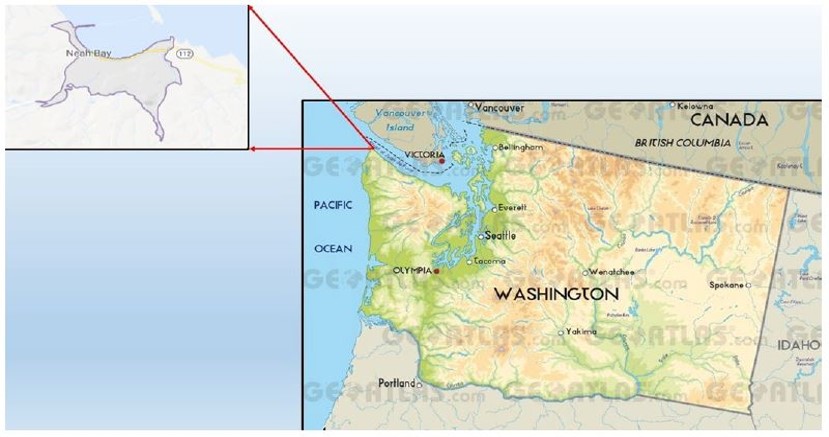
Neah Bay Dredging will improve Strait of Juan de Fuca, Salish Sea oil spill response

Some of the most significant oil spills in Washington State’s history happened in the Strait of Juan de Fuca and Salish Sea. Rescue tugs were stationed around 1999 during winter only months to protect the Strait. During the late 2000s, environmental activists led by People For Puget Sound pushed for a permanent rescue tug to be stationed at Neah Bay (and also at the East end of the Strait). With the support of then Representative Keven Van de Wege the State finally approved the tug at Neah Bay. The East end of the Strait still remains extremely vulnerable.

 Neah Bay Emergency Response Towing Vessel – Photo: Saltchuk Marine Shared Services

The Port of Neah Bay plays a pivotal role as a harbor for Emergency Response Towing Vessels (ERCivTVs) responding to distressed or disabled vessels, and as a designated harbor of refuge. The heavily trafficked Strait of Juan de Fuca sees various types of vessels passing through: cargo, passenger cruise, oil tankers, vehicle, fishing, and privately owned.

Neah Bay Marina

From 1999 to 2016, the stationed Neah Bay rescue tugs responded to 57 disabled vessels or those with reduced maneuvering ability. These incidents could have resulted in accidents or groundings leading to oil spills. The rescue tug is important to preventing spills, which would be extremely damaging to the area’s environment, economy and cultural resources, according to the Washington Department of Ecology.

This (ERTV) stands ready 24/7 on the northwestern Olympic Peninsula point in the Port of Neah Bay to quickly respond. However, challenging tides affect its readiness and the ability of this deep-draft vessel to navigate the channel.

Map courtesy of Army Corps of Engineers

That’s about to change with a U.S. Army Corps of Engineers project to make navigation improvements by deepening the harbor entrance channel. A hydraulic pipeline dredge will deepen the 4,500-foot entrance channel to -21 feet from its current depth, allowing unrestricted access for ocean-going tugs, barges, and larger ships transiting Neah Bay during low tide.

The Corps of Engineers is expected to remove up to 30,000 cubic yards of never-before-dredged sediment material from the channel that’s expected to take two months to complete, pending weather conditions.

“This project will help to ensure that the rescue tug based at Neah Bay is ready to respond to marine emergencies on Washington’s coast,” said Rich Doenges, Southwest Region director for the Washington Department of Ecology. “We think the channel deepening represents a necessary step to prevent impacts to our state’s sensitive coastal environment and preserve our Pacific shorelines.”

The project falls under the Corps of Engineer’s civil works mission’s Continuing Authority Program (CAP) Section 107. It authorizes the Corps of Engineers to make navigation improvements for the non-federal sponsor, in this case the Makah Tribe. The $3.3 million project is mostly federally funded due to a cost-share waiver for Native American Tribes.

Seattle District Project Manager and biologist Juliana Houghton emphasized how the dredged material is perfect for reuse and will help fortify a nearby beach.

“We’ll place the beneficial use dredged material in an area along the shoreline that needs rehabilitation because of a lack of naturally occurring stream sediment,” she said. “The goal is to restore intertidal habitat by depositing the dredged material as beach nourishment.”

A Duwamish Services, LLC dredging crew connects a dredge pipe in Neah Bay, Dec. 8, 2023.
(Photo courtesy of Duwamish Services, LLC)

Deepening the Neah Bay entrance channel will reduce the emergency response tugs operating costs by minimizing the need for vessels to remain outside the bay in deeper waters during low tide. This will save an estimated $81,000 annually in fuel by reducing transit time during tidal changes.

The project first gained traction in the early 2010’s when the non-federal sponsor Makah Tribe contacted the Corps of Engineers Seattle District requesting a study to determine if navigation improvements for the Port of Neah Bay entrance channel were feasible.

“This project has been a long collaborative partnership with the U.S. Army Corps of Engineers, and we’re thrilled to see these improvements enhance the protection of the valuable Neah Bay ecosystem and improve safety for larger commercial and fishing vessels entering the port,” said Makah Tribe Chairman Timothy Greene, Sr.

Throughout the planning process Corps of Engineers officials coordinated, consulted and worked with federal, tribal and state agencies, including Environmental Protection Agency, National Marine Fisheries Services, U.S. Fish & Wildlife Service, Makah Tribe, Washington’s State Department of Ecology, State Historic Preservation Office and Clallam County.

For more information about the US Army Corps of Engineers Seattle District, visit the district’s website at https://www.nws.usace.army.mil/ and follow on Facebook at https://www.facebook.com/USACENWS/ and on X (previously Twitter) at https://twitter.com/SeattleDistrict.

Thanks to Louis.R.Velasco@usace.army.mil for the Press Release on this topic. Feel free to reach out to him for additional information as needed.

The Chehalis Watershed In Peril

A Tale of Floods, Droughts, Forest Practices, and Climate Change
Environmental Speaker Series
Thursday, November 30, 2023  |  4:30-5:20pm PT
In-Person at WWU: Academic Instructional Center West, Room 204
and Online on Zoom
The Chehalis Watershed In Peril : Western Washington University (wwu.edu)

The Chehalis watershed has been in crisis for decades. Additionally, misguided farmers along the river have taken it on their own to “address” the problems, causing even more destruction. This should be an interesting discussion. I talked to Senator Van De Wege years ago about bills to open up gravel mining on the river, thankfully stopped by the Tribes.

About the Event

The Chehalis watershed is the second largest watershed in Washington State. From its headwaters in the Willapa Hills, it runs about 130 miles in a circuitous path to the Chehalis River estuary. It is a rain-fed watershed that has been heavily logged since the 1850s. Tree plantations, both privately and publicly owned, dominate the watershed. Only 14,000 acres of older, structurally complex forests remain in the watershed, where there are no National Parks or other protected areas.

In the summer of 2023, the Chehalis River experienced the lowest water levels in 94 years – since recordkeeping began. Clear-cut logging of old forests has a huge impact on stream and river hydrology, with flows reduced by as much as 50% in summer as water is sucked up by young plantation trees. Clear-cut logging also has a clear connection to the devastating floods that dominate the watershed in the last 30 years.

In this talk, Lee will give a general overview of environmental issues in the Chehalis watershed, as well as highlight the connection between forest practices and water quality. She will highlight the importance of preserving the last of the older, structurally complex and diverse forests that remain in the watershed.

The Environmental Speaker Series is free and open to the public. Talks are held each Thursday at 4:30pm in Academic Instructional Center West, room 204. Join us at WWU or online on Zoom!
Brought to you by:
College of the Environment
The Foundation for Western Washington University & Alumni

Event Speaker

Lee First

Twin Harbors Waterkeeper
Lee First has a BS in Environmental Studies (Western Washington University) and a Professional Certificate in Wetland Science and Management (University of Washington). She has worked in the Waterkeeper movement for almost 20 years. As the Twin Harbors Waterkeeper, she works to advocate for, protect, and prevent pollution in the Chehalis, Willapa watersheds, as well as watersheds on the west coast of the Olympic Peninsula. Her past job experience includes managing environmental controls at a Superfund Cleanup Site, collecting water quality data for cities and counties, delineating wetlands and developing mitigation plans for Tribal governments, and controlling aquatic invasive species. Her passion for canoeing and kayaking (especially exploring new waterways) has led her to completing 17 sea kayak expeditions on the Inside Passage.

EVENT: The Sierra Club North Olympic Group’s October Presentation

Hear Why We Need to Protect the Miller Peninsula
Thursday October 19, 7PM on Zoom
In the 1980s, Sierra Club leader Darlene Schanfald became a whistleblower when she learned of a secret deal between Washington State and the multinational firm, Mitsubishi, to develop land that had been set aside for a state park. Outraged citizens were able to keep the land for a state park.

Over the years, with no state funds for developing the park, the park became a day use site for hikers, non-motorized bikers and equestrians, one of only 17 day-use parks in State Parks’ system.  But now, State Parks has taken a page from Mitsubishi and plans to intensively develop the parkland, destroying its natural and ecological features.

Join our monthly presentation for a walk through of this park and the threats it faces.

RSVP Here

https://act.sierraclub.org/events/details?formcampaignid=7013q000001rnTbAAI

Interactive Timeline of The Hottest Summer in Human History.

The Guardian has published a sobering look at a planet in runaway climate change. There is not a lot of time left to make the serious changes needed while our politicians take half measures at best. Could you live in 130 degree heat? It’s been happening this year in many places.

www.theguardian.com/environment/ng-interactive/2023/sep/29/the-hottest-summer-in-human-history-a-visual-timeline

EVENT: Meet Lorna Smith Commissioner Dept of Fish & Wildlife Sept 21 online

Well worth an hour to hear from a key State Commissioner. Click anywhere on the photo below to be taken to the signup page. The RSVP link does not work in the image.

ACTION item: Stopping the industrialization of the Dungeness Wildlife Refuge

Time after time, citizens have had to sue the U.S. Fish and Wildlife Service (USFWS) for failing to protect the animals and their habitat as required by law, in areas that the nation has recognized as critical to preserve as habitat and for public recreation. Now USFWS is willing to allow, for private profit, the industrialization of refuge lands for shellfish operations. 


>>Tell the U.S. Fish and Wildlife Service and U.S. Secretary of Interior Deb Haaland that the Dungeness National Wildlife Refuge lease for industrial aquaculture must be rescinded.


In spite of demonstrated harm to birds, salmon, forage fish, and shellfish, and a recommendation by the National Marine Fisheries Service that “an alternative site be identified in a location that results in less potential impacts to wildlife that is more appropriate for aquaculture and meets the goals of the tribe,” USFWS approved a lease for an industrial oyster farm inside the Dungeness National Wildlife Refuge. This decision, which is in violation of the Clean Water Act and the Migratory Bird Treaty Act, must be reversed. 


In the words written of an October 2022 USFWS internal memorandum, “Forgoing a compatibility determination in order to facilitate incompatible commercial activities by any entity would be a subversion of the fundamental requirements in the [USFWS] Improvement Act.” 


We are targeting the most recent case of the USFWS’s permissiveness in one of the country’s most pristine nature lands, the Dungeness National Wildlife Refuge in the small rural town of Sequim Washington, just below the Olympic National Park. In this case, the shellfish corporation raises shellfish on other sites. They do not need to operate in a national refuge and deny wildlife their feeding and breeding grounds. 


The Dungeness National Wildlife Refuge was created by Executive Order in 1915 by Woodrow Wilson, directing the area to be set aside as a “refuge, preserve and breeding ground for native birds and prohibits any disturbance of the birds within the reserve.” The front page of the Refuge website states: “Pets, bicycles, kite flying, Frisbees, ball-playing, camping, and fires are not permitted on the Refuge as they are a disturbance for the many migrating birds and other wildlife taking solitude on the Refuge.” With this level of concern, it is counterintuitive to allow destructive industrial aquaculture.  


Industrial shellfish aquaculture is known to reduce or eliminate eelgrass with the use of pesticides. Shellfish aquaculture also involves large-scale use of plastics—PVC tubes and plastic netting—that are hazardous to marine organisms and can trap and entangle wildlife. Commercial shellfish aquaculture is a major industry in Washington state that has significant impacts on the nearshore marine environments, which provide essential habitat for many species, including invertebrates, fish (including herring and salmon), and birds (migratory and shorebirds). 


Among the negative impacts of this project are: 50% reduction in bird primary feeding grounds; plastic oyster bags that exclude the probing shorebird flocks from feeding deeply into the substrate, entrap fish and birds, add macro- and micro-plastic bits to the sediment throughout the refuge, and shift the benthic community composition; diminishing of the ecological benefits provided by eelgrass to threatened fish and birds, such as nourishment and cover from predators; and increased algal blooms that will leave a graveyard of dead oysters. These detrimental effects to the Dungeness National Wildlife Refuge are NOT minimal. Decisionmakers should not place financial benefits to the corporation above the long-term and cumulative impacts to the refuge. Half of the world’s 10,000-odd bird species are in decline. One in eight faces the threat of extinction. 2.9 billion breeding adult birds have been lost from the United States and Canada in only 50 years. 


Let’s raise our national voice and try and stop this refuge destruction with public persuasion. This is a public space we pay to protect. For more information, check out the Daily News post from last August, “Groups Sue U.S. Interior Department to Protect the Dungeness National Wildlife Refuge from Industrial Aquaculture.” 


This action follows a lawsuit filed by three environmental organizations against the U.S. Department of Interior for failing to protect the Dungeness National Wildlife Refuge from industrial aquaculture. The groups, including Protect the Peninsula’s Future, Coalition to Protect Puget Sound Habitat, and Beyond Pesticides, filed their complaint in the U.S. Western District Court of Washington State. The complaint states that the U.S. Fish and Wildlife Service (USFWS), U.S. Department of Interior, must “take action that is required by the Refuge Improvement Act and conduct a compatibility determination and require a special use permit for a proposed industrial aquaculture use” that will abut and impact the Refuge. The plaintiffs are represented by the Seattle, WA law firm of Bricklin and Newman LLP. 


>>Tell the U.S. Fish and Wildlife Service and U.S. Secretary of Interior Deb Haaland that the Dungeness National Wildlife Refuge lease for industrial aquaculture must be rescinded.


We are focusing this Action against the U.S. Environmental Protection Agency and the U.S. Secretary of State.  


Thank you for your active participation and engagement!


Please take this ACTION and circulate it to your family, friends and colleagues.

https://secure.everyaction.com/WMJxQmNjDUqarx4FmLzUrA2

also, to support the lawsuit, you can send checks to:

Send a check to: PPF, POBox 421, Sequim WA 98382 or through PayPal: https://www.protectpeninsulasfuture.org/donate/

        PPF is a federal recognized 501c3 non-profit.