Northwest just finished warmest fall on record, scientists report and NCAR Research shutdown

The Washington State Standard is reporting that not only did we finish the year with the warmest year on record but our recent rain will not do much to help the ongoing drought in central and eastern Washington. Why? Because it’s falling as rain and not as snow.

This record warm spell includes all temperature data going back to 1880. These floods, this warming, is exactly what scientists have been predicting for decades. Now we reap what we have sown in fossil fuel use. So what is the government doing? It’s shutting down research on the atmosphere.

The Trump Administration has announced the closing of the greatest atmospheric research lab in the world, at National Science Foundation’s National Center for Atmospheric Research (NCAR), the largest federal climate research lab outside Boulder in Colorado. This cynical ploy to rob of us global climate data is directly linked to the fossil fuel industry that underpins this administrations every action. Every drop of gas one buys is funding this destruction of our most valuable commodity, the scientific research to understand the processes of our planet. The announcement was made by OMB chair Russell Voight, the author of Project 2025. His statement said, “This facility is one of the largest sources of climate alarmism in the country…” without providing any evidence except his own opinion.

The Governor of Colorado stated, “Climate change is real, but the work of NCAR goes far beyond climate science,” Polis said. “NCAR delivers data around severe weather events like fires and floods that help our country save lives and property, and prevent devastation for families. If these cuts move forward we will lose our competitive advantage against foreign powers and adversaries in the pursuit of scientific discovery.”

If you supported Trump and the politicians who make up his sycophant society you are helping support these disastrous decisions that continue to destroy our country and turn us into something resembling the Soviet Union or worse. Clearly our Senators and House members do not support this shut down of NCAR Colorado. Is this the kind of country you want to leave to your children and grandchildren?

This is not Making America Great Again, it’s an attempt to create a totalitarian government based on the beliefs of the fossil fuel industry. Better rethink your support of this maniac and act now to stop him before it’s too late. Send your donations to the ACLU and other organizations fighting for out rights. Contact friends in Red states to make sure they have heard this news and tell them to contact their Federal representatives to overturn this insane dictate.

You can support a green economy now by buying or leasing electric vehicles, walking and biking whenever possible, donating to the national organizations fighting the administration in court and supporting local farmers who strengthen our resilience to the effects of climate change .

Our hope is when this administration is finally out of office, that we can rebuild better the destroyed institutions that they have worked to eliminate in the name of the gas station of yours down the street. But that will take more than words on a blog. It takes every one of us doing something to change the direction of this out of control ship of state.

https://www.nbcnews.com/science/climate-change/trump-administration-break-climate-research-center-ncar-rcna249668

EVENTS, GRANTS ETC

From Angela at the Puget Sound Partnership’s Strait Ecosystem Recovery Network (ERN)


Here’s the good news in a very soggy week: In less than two weeks, the days will start to get longer! I tell myself this every morning when I open the blinds to darkness. 

In this newsletter, you will find news about funding, volunteer opportunities, events, training and conferences, jobs, and more! As always, we welcome your events and successes for our website and future newsletters:

  • Submit events for the newsletter and our calendar of events HERE
  • Submit your successes so we can celebrate them on our website HERE 

   Funding   

The Puget Sound Partnership (Partnership) gathers public and private funding opportunities in the Recovery Acceleration Funding Tool (RAFT). The National Wildlife Federation hosts a database for Nature-Based Solutions Funding. If you see an opportunity that feels too big to do alone, contact us! Strait ERN can help coordinate and write regional grant applications. The Partnership also has grant-writing assistance available.

Estuary and Salmon Restoration Program Grants – RFPs RELEASED NOV 19th

This grant program, administered by the Recreation and Conservation Office (RCO) provides grants and technical assistance for projects that restore and conserve near-shore areas in Puget Sound. Match requirements have been eliminated for 2026 grants! There are multiple grant areas and application dates vary. Learn more and see RFPs as they are released HERE.

Temper of Times Foundation

Small grants can fund production of advertising or materials and distribution that will lead to measurable outcomes for wildland ecosystem conservation and restoration. Learn more HERE

Date: Proposals due December 15th

MJ Murdock Charitable Trust Strategic Grant Program

The Trust funds conservation, environmental education, natural resource protection, and wildlife preservation projects. The grants can fund capital projects, equipment and technology, or staff. Learn more and apply HERE.

Date: Applications are due December 26th

National Fish Passage Program

This program aims to improve habitat for federal trust species and support infrastructure improvement for communities nationwide. Eligible projects provide benefits to aquatic habitats and infrastructure resiliency. Expected to fund $10M in awards. Learn more HERE.

Date: Proposals due December 31st

Western WA Fish and Wildlife: National Fish Passage Program

This funds projects outside of the Columbia River Basin. Project Summary Forms are due by January 16th. Learn more and apply HERE.

Date: Project Summary Forms due January 16th

Floodplains by Design

Floodplains by Design grants are targeted at reducing flood risks and restoring river functions along Washington’s rivers. The pre-application period for the new grant round opens November 1st and closes January 23rd, 2026. Learn more about the grants HERE.

Date: Pre-applications due January 23rd

Brian Abbott Fish Barrier Removal Board Grants

This grant program supports work to identify and remove barriers for salmon and steelhead migration. Learn more about this program HERE.

Date: Applications due January 26th

ESRP Pre-Design (Learning) Program

Regional Pre-Design (Learning) Proposals support restoration of complex ecosystems or improve effectiveness/efficiency of restoration projects. Learn more about this opportunity and apply HERE.

Date: Proposals due February 9th

Streamflow Restoration Competitive Grants

The application period for these grants will be January 15th to March 17th, 2026. Learn more about the grant program and register for a January informational workshop for applicants HERE.

Date: Applications due March 17th

National Sea Grant Law Center

Letters of Interest for small projects that address legal questions related to ocean or coastal laws. Learn more and apply HERE.

Date: LOIs accepted on a rolling basis through August 1st, 2026

   Volunteer Opportunities   

PSEMP CalendarDo you collect data about the Puget Sound? The Puget Sound Ecosystem Monitoring Program (PSEMP) provides a forum for consolidating data-gathering efforts and conversation. Check out their calendar HERE to see their committee schedules. All are welcome at their meetings!

Stormwater Work Group SurveyThe Stormwater Work Group and PSEMP are collecting information on successes and needs for stormwater monitoring. Fill out the 10-15 minute survey HERE.Date: Survey closes December 17th

Volunteer Your Expertise!

The Habitat Strategic Initiative Lead (HSIL) is seeking input for the updates to the Land Development and Cover Implementation Strategy and the Floodplains and Estuaries Implementation Strategy. You can provide feedback via Google Form: Land Development  |  Floodplains and Estuaries.

Date: Land Development Form closes December 19th

Date: Floodplains and Estuaries Form closes January 9th

Provide Feedback to the Jefferson Land Trust

The Jefferson Land Trust is working on a new five-year Strategic Plan and is seeking community input. Take a 10-minute survey HERE to share your priorities.

   Community Events & Learning Opportunities   

Sequim-Dungeness Christmas Bird CountJoin Olympic Peninsula Audubon Society for their 50th annual Sequim-Dungeness Christmas Bird Count! Track the birds in our neighborhoods. Learn more HERE.Date: December 15th

Wednesday Morning Bird WalksEvery Wednesday, join a band of birders on a 3/4-mile bird survey along the Olympic Discovery Trail. Bring your binoculars and meet in the Dungeness River Nature Center’s parking lot.

Date: December 17th and every WednesdayTime: 8:30 amPlace: Dungeness River Nature Center, Sequim

Native Plant Sale

The Clallam County Conservation District’s Native Plant Sale is currently open for plant orders. See the selection and place your order HERE.

Date: Pre-orders end January 20th

Shoreline Management Act Open House(s)The Department of Ecology is hosting one more virtual Open House to discuss changes to the Shoreline Management Act. Translation services available. Learn more and register HERE.

Date: December 16thTime: 6:00 to 7:00 pmPlace: Virtual; register for link

North Olympic Land Trust’s Open HouseCelebrate NOLS’s 35th Anniversary at their Annual Open House! Enjoy a celebratory slice of cake and swap stories of 35 years of land conservation. Learn more HERE.Date: December 30thTime: 2:00 to 5:00 pmPlace: NOLS Office, Port Angeles

Winter Birding and IllustrationLearn more about the birds of the Salish Sea with the Port Townsend Marine Science Center. Practice scientific illustration, then head outside to look for birds. Learn more and RSVP HERE.Date: January 10thTime: 10:00 am to 12:00 noonPlace: PTMSC Aquarium classroom, Fort Worden

Floodplains and Estuaries LIO/LE Coffee ChatThe Habitat SIL is hosting a coffee chat to talk about the Floodplains and Estuaries Implementation Strategies. This virtual chat is open to members of LIOs and LEs. Register HERE.Date: January 13thTime: 9:00 am to 12:00 noonPlace: Virtual; register for link

Land Development and Cover LIO/LE Coffee ChatThe Habitat SIL is hosting a coffee chat to talk about the Land Development and Cover Implementation Strategies. This virtual chat is open to members of LIOs and LEs. Register HERE.Date: January 15thTime: 1:00 to 4:00 pmPlace: Virtual; register for link

Alternatives to BulkheadsThis self-paced online course is part of Ecology’s Coastal Training Program. Learn about shorelines and stabilization in this 101 offering. Register HERE.Date: January 13 to February 25Place: Virtual

Blueprints for Community-Led Blue CarbonThe focus for this Blue Carbon Collaborative meeting is small-scale blue carbon restoration projects focused on key single-species efforts. Learn more and register HEREDate: February 5thTime: 10:00 amPlace: Virtual; register for link

   Training and Conferences   

Forestry 101 Workshop

Come learn about forest stewardship and health with the Jefferson County Conservation District. Learn more and register HERE.

Date: December 13th

Time: 2:30 to 4:00 pm

Place: Jefferson County Library, Port Hadlock

Roads and Resilience: Integrating State Transportation, Hazards, and Nature-Based Solutions

Join the Shoreline and Coastal Planners Group for a webinar on natural hazard impacts to state roads. Learn more and register HERE.

Date: December 16th

Time: 10:00 am to 12:00 noon

Place: Virtual

NW Land Camp

NW Land Camp brings together land trust leaders and conservation partners for networking and training. In June 2026, Land Camp will be in beautiful Florence, OR. Mark your calendars and watch for more information!

   Jobs   

Natural Resources Program AssistantThe Jamestown S’Klallam Tribe is hiring an administrative program assistant for their Natural Resources Department. Learn more HERE.

LIO Program ManagerThe Puget Sound Partnership is hiring a Local Integrating Organization Program Manager to lead the Partnership’s LIO Program. The position is largely remote, with some on-site work required. Learn more HERE.   News   2025 State of the Sound ReleasedThe Puget Sound Partnership has released the 2025 State of the Sound report. This is an assessment of the results of all our work around the Puget Sound towards ecosystem protection, restoration, and recovery. There is, of course, both celebration of success and the sobering reality of how much more still needs to be done. Read the report HERE.

2024 Puget Sound Marine Waters OverviewThe PSEMP Marine Waters Workgroup has released it’s 14th annual Marine Waters Overview, collecting data from across the greater Puget Sound. Read about and download the report HERE.

The future of inner urban and suburban delivery emerges

While it is easy to get depressed by the current fossil fuel funded federal government and presidential positions on transport, the future is arriving, as it usually does, without any help from the powers that be. The rise of the cargo bike portends a future city with far less gas powered delivery vehicles, less air pollution, and a reduction in vehicles on the roads, which likely will make even car drivers happy!

Goodbye to Bob Lynette

I knew Bob as a dedicated environmentalist who fought to protect rather than just restore. There are so few like him anymore. So many environmentalists have just gone to being restoration specialists and seem to refuse to actually fight to protect the environment. Many have teamed up with the very industries that are continuing to exploit the environment for profit.

From the Washington Wild obit of Bob.

A win for saving Dungeness Spit


The battle over keeping industrial aquaculture out of our National Wildlife Refuges, is still being played out in the courts. Recently three environmental organizations have successfully sued to get the US Fish & Wildlife Service to complete a “compatibility determination (CD)” for the industrial operation. The court has ruled that a CD must be performed. It is not clear whether the company must now stop any work in the refuge.

Here is the press release from the plaintiffs. Please consider donating to any of them to help offset the costs of the lawsuit. It’s *our* wildlife refuge at stake.


In 2023, Protect the Peninsula’s Future, Coalition to Protect Puget Sound Habitat, and Beyond Pesticides sued the US Fish and Wildlife Service (USFWS) for its failure to conduct a compatibility determination (CD) for a proposed industrial shellfish operation at the Dungeness National Wildlife Refuge (DNWR). The case is being reviewed by the U.S. Federal District Court in Tacoma. 

USFWS regulations state that for any project on or near one of its refuges, a CD must be written.  These cases are not unusual, and the Dungeness case is especially important because if the case is lost, industrial shellfish operations might be free to open at other Refuges. 

Last year the Court ruled the case should proceed because it is clear the USFWS must write a CD.  

The industrial shellfish operator – the Jamestown S’Klallam Tribe (JST) – sought to moot the plaintiffs’ case due to potential financial impact to the JST.  The JST received various agency permits to plant 80,000 non-native oyster spat (larvae) in large plastic bags to be anchored to the substrate in the refuge area on 34 acres. The then manager of the DNWR had determined the shellfish operation was incompatible with the mission of the refuge, but higher ups in the agency overruled her and refused to write a CD. In the meantime, the JST started planting oyster spat. 

The federal court allowed the JST to present arguments against the plaintiffs’ suit.   

On 15 May 2025, the court responded in our favor.  The case will not be mooted; the USFWS must follow its regulations.   

From the Court documents:

“Compliance with the statutory procedures in the Refuge Act is undoubtably a  public right that safeguards environmental protection. 

Only the public right to administrative compliance with the Refuge Act procedural requirement to complete a compatibility determination and/or require a special permit are ripe for adjudication. 

Drawing all reasonable inferences in favor of plaintiffs, Jamestown appears to have planted seeds after it was aware that it was probable the Service would conduct a compatibility determination. 

Therefore, it is hereby ORDERED that Jamestown’s motion to dismiss, Dkt  44, is DENIED. “

The plaintiffs now wait for the Court’s final ruling against the USFWS, ordering it to write a CD. 

Update from the Strait Ecosystem Recovery Network

From the Strait ERN newsletter.


Hello friends!

I hope you are all enjoying our beautiful spring weather and finding reasons to be outside as often as possible. My native plant garden – planted a little under two years ago – is thriving, with Oregon grape, huckleberries, red-flowering currants, twinberry, and tiny bleeding hearts all in bloom, with more on the way. I’ll confess here my great love for the non-native daffodil, which I keep in the front yard. Those cheery blooms are almost done for the year, but my neighbors have stopped by to say how happy they are to see them. Whatever your plant preferences are, this is a great time of year!

Along with the abundance of new life springing up, there is an abundance of news and information to share. Much of it is time-sensitive, so we’re not waiting a month in between newsletters. In this newsletter, you’ll find:

  • Funding opportunities
  • Volunteer events
  • Community/education events and training
  • News and information
  • Jobs and board openings

Funding Opportunities

Department of Ecology 6PPD Funding WA Department of Ecology is excited to announce a funding opportunity to support stormwater research projects that help to better understand how to manage 6-PPDQ in stormwater and prevent salmonid deaths. Ecology can fund projects with public organizations through Interagency Agreements (IAAs) and are prioritizing projects that partner with Tribal Nations and/or benefit overburdened communities. There is $2.9 million of funding available which can fund 5-15 contracts, and the duration of the projects will be from July 2025 – June 2027. There is no application or deadline for this funding. 
Please contact madison.bristol@ecy.wa.gov to learn more and apply.
Catalyst Fund RFP for 2025 Funding Round | Network for Landscape Conservation

The Catalyst Fund strives to accelerate the pace and practice of collaborative landscape conservation and stewardship across the United States by investing in Landscape Partnerships. The Fund couples financial support (through a competitive grant program) with capacity-building support (through in-depth Peer Learning) to catalyze Partnership efforts to achieve long-term conservation and stewardship goals. A portion of the Fund is reserved specifically to advance Tribal-led Partnerships. Grants are for one or two years, up to $25,000. Learn more here.
Date: Proposals due Friday, May 16thRCO Outdoor Learning Grant This is a collaborative program between RCO and the Washington Office of Superintendent of Public Instruction that supports federally recognized Tribes and outdoor education providers who partner with Washington public schools to create outdoor learning experiences for students. Find more details here

Date: Application period is April 9 through June 3NOTE: This program is temporarily on hold pending finalization of the state budget.
Stormwater SIL RFP to be Released May 7

Neighborhood Stormwater Assistance and Education Projects – $1 million available. The Stormwater SIL is looking for projects that support neighborhood-scale stormwater improvements, including:* Developing tools, resources, or programs to educate landowners and influencers (real estate agents, Homeowners Associations (HOAs), land use consultants, contractors, and others) about stormwater practices  
* Providing technical assistance such as pre-application and compliance support and incentives to implement and maintain green stormwater infrastructure  
* Community outreach events, such as restoration plantings or Low Impact Design (LID)/Green Stormwater Infrastructure (GSI) educational seminars and trainings
* Developing long-term plans, agreements, and funding mechanisms for developing and maintaining stormwater infrastructure within local individual catchments; or  
* GSI training and/or certification programs aligned with community affordable housing, workforce development, and environmental justice goals.  

If you are considering an application under one or more of these opportunities, please submit this short Interest in Applying form as soon as possible to help the team connect you with resources to develop a strong application!

Date: RFP to be released May 7th with proposal deadline of July 9thVolunteer Events

Potting Up Plants with the North Olympic Salmon Coalition

Join us as we pot up plants for future riparian restoration projects. We will be stocking up our nursery with trees and shrubs that will eventually become future forests along our local creeks and rivers. Our nursery is located in Chimacum at the Finnriver Farm & Cidery. Gloves and tools will be provided, but if you have your own bring ’em.

Date: April 29th 

Time: 10am-2pm

Place: Finnriver Farm & Cidery, Chimacum

RSVP here!DNR Stewardship Planning for Kelp & Eelgrass Elwha Unit Priority Area Volunteer your time and knowledge at this in-person workshop about how to best leverage and prioritize key implementation actions to protect and conserve kelp and eelgrass habitat in the Elwha Unit. Contact Cynthia Harbison for more information.

Date: June 3rd

Place: Port Angeles

Community/Education Events and TrainingRCO City Nature Challenge 2025City Nature Challenge (CNC) is an annual international event to collaboratively record as many wildlife observations as possible during a four-day challenge. People from all over the world explore nature in their neighborhoods and cities to find and document wildlife. Every year, they record how many observations of nature are gathered, how many different species are documented, and how many people help this global scientific community better understand nature all over the world. With this data we can better protect urban nature globally. This year, three near-by cities are participating, but there’s already information about adding your city for next year on their 

website.

Date: Friday, April 25th to Monday, April 28

Time: 24/7

Place: Olympia, Seattle, Victoria BC – next year in your town/city?!

10th Annual Puget Sound Day on the Hill 2025 Puget Sound Day on the Hill is an annual event organized by the Puget Sound Partnership and the Northwest Indian Fisheries Commission that supports effective policy and continued federal investment in Puget Sound restoration and salmon recovery efforts. Representatives from tribes, state agencies, local governments, nonprofits, and businesses, along with concerned residents, lend their voices in support of action to restore Puget Sound and uphold tribal treaty rights. Register here!

Date: Week of April 28th

Time: Various

Place: Washington, DC

Birding by Ear with the Jefferson Land TrustHave you ever heard a bird in the forest but couldn’t see it and wondered what it was? Join ornithologist Dr. Jackie Canterbury as she leads tours through Quimper West Preserve in the protected Quimper Wildlife Corridor, and shows how, by training your ear, you can identify birds through their unique songs. There is no cost to attend, but space is limited to 15 people each session, and you must register in advance
Date: May 1st
Time: 8:30 – 10amPlace: Register to receive location

Spring Bloom Walk at Kah Tai Prairie PreserveThe Olympic Chapter of the Washington Native Plant Society is leading a walk to see/identify spring blooms at Kah Tai Prairie Preserve. The walk will start at the prairie kiosk and include a longer route to visit other emerging prairie sites and Hastings Pond riparian habitat. For more information send email
Date: May 4th
Time: 2pmPlace: Kah Tai Prairie Preserve, Port Townsend

May Chumsortium Meeting

Come join the conversation about all things salmon in eastern Jefferson County. This virtual meeting will take place via Zoom.

Date: May 7th

Time: 10:00 to 11:30

Ready, Set, Grant! Getting Your Organization Grant Ready

Join Rural Development Initiatives (RDI) for this 5-session virtual grant-writing and fund preparedness training targeted to small, rural nonprofits in the Pacific Northwest. See the website for session descriptions and registration information.

Date: May 8 through June 5 (one day per week)

Time: 10 am to 12 noon

Place: Virtual 

Cost: $75.00Forest Shomer Presentation: Olympic Peninsula PrairiesThe Kul Kah Han Native Plant Garden is excited to present a bi-monthly speaker series focusing on the importance of planting native plants in your garden. The speaker for this installment is Forest Shomer, owner of Inside Passage Seeds. All talks will be in the Salmon Shelter – some seating available, but feel free to bring a lawn chair! Rain or shine!

Date: May 10thTime: 1 – 2pmPlace: Salmon Shelter, Kul Kah Han Native Plant Demonstration Garden, H.J. Carroll Park , Chimacum

Salish Sea Science Roundtable: Transboundary Threats: European Green Crab in the Salish Sea (via Zoom)

Drs. P. Sean McDonald (University of Washington) and Thomas Therriault (Fisheries and Oceans Canada) bring nearly 50 years of combined expertise in the science and management of invasive European green crab (EGC). Their presentation will delve into the challenges posed by EGC in the transboundary waters of the Salish Sea, highlighting ongoing science into the species’ detrimental effects on native species and habitats, as well as threats to cultured and wild shellfish resources.

Date: May 13th

Time: 10:30

Place: Via Zoom – learn more and register here!News and Information

Puget Sound Legislative Wrap-up: What Was and Was Not Funded in Olympia

The 2025 Session of the Washington State Legislature has adjourned Sine Die on April 27. A robust budget deficit and debates about state spending and revenue dictated the session’s flow and outcomes, especially in the final weeks. Due to concerns about implementation costs, many bills aligned with Puget Sound recovery failed to pass and many more were trimmed back to reduce the associated workload. And the final budget included a series of budget cuts that will slow the work of Puget Sound recovery. At the same time, several new policies and budget items survived the legislative process and will provide benefits to Puget Sound recovery. Read the full review of the budget session as it affects funding for Puget Sound recovery efforts. 

Olympic Coast National Marine Sanctuary Poster Released!During the National Marine Sanctuary System’s 50th anniversary celebration in 2022, a commemorative poster series was launched to capture the beauty and diversity of each site in the system.  On April 17, 2025, Olympic Coast National Marine Sanctuary and NOAA’s Office of National Marine Sanctuaries announced the release of the 12th poster featuring iconic species and features of this west coast sanctuary. The poster can be downloaded (and admired)  at Olympic Coast National Marine Sanctuary Poster | Office of National Marine Sanctuaries. OOCNMS thanks all of the artists and partners who contributed to this effort!Jobs and Board Openings

Clallam MRC Seeks New Members and Alternates

The Clallam Marine Resources Committee has several openings to fill, including a Community at Large member and a representative for Conservation and Environmental Interests. You can find the full list at the bottom of this page.If you’re interested in any of these roles, please apply via the Clallam County website or contact MRC Coordinator Cathy Lear for more information. 

Call for Applications – Puget Sound Partnership (PSP) Science Panel

PSP’s Leadership Council is seeking applications to join the Science PanelCall for applications here. For questions, please contact Amber Raney, Boards Program Coordinator at Amber.Raney@psp.wa.gov.

Date: Application materials are due June 20th

Strait Ecosystem Recovery Network

See what’s happening – Strait Eco Events Calendar!

Email: coordinator@straitern.org

Website: www.straitern.org

Local Environmental Volunteer Opportunities

Trees are blooming or budding out. Frogs are calling to each other. Lots of green is emerging from the ground. Spring is here and, with it, lots of opportunities for volunteering and connecting, both locally and regionally. Amy and I will do our best to wrangle the overflowing inbox into organized information-sharing!

With Earth Day coming up, please send us your Earth Day events information so we can share it out on our calendar and newsletter! We have been updating our calendar, so please remember to check it out in between newsletters and to send us your events to add.

Enjoy the vibrant greens of the season,

Angela of the Strait ERN

____________________________

Local Volunteer Opportunities

North Olympic Salmon Coalition is seeking volunteers. Sign up here.

As part of our Salmon in the Schools program, students have spent the last couple months raising coho salmon from eggs and now will get a chance to release them into a local waterway. They will also participate in several other activities such as macroinvertebrate studies, salmon life cycle games, art, and habitat tours. Volunteers help NOSC staff lead activities, set-up and take-down supplies, and ensure students rotate through activity stations safely. 

Dates: April 15th, 17th, 25th & May 1st, 8th, 9th Tentative timing is from 8:30am-1:30pm

Location: Lower Elwha Klallam Tribe House of Salmon Hatchery on the Elwha River

Dates: April 10th and 22nd Tentative timing is from 10am-2pm

Location: HJ Carrol Park on Chimacum Creek


Earth Day Beach Cleanup – Sun, Apr 19th
The PTMSC annual Earth Day beach cleanup brings volunteers together from far and wide to clean the beaches and roadways in our area. For more information, visit the event listing or contact Mandi Johnson at 360-385-5582 ext115.
Time: 9am-1pm Location: Meet at Fort Worden State Park or Chimacum Corner FarmstandEarth Day:  Make a Direct Impact – Sat, Apr 26thThis Earth Day weekend, dedicate your time to meaningful, hands-on activities that directly benefit the environment at Fort Flagler State Park. Participate in two impactful volunteering opportunities: Invasive Species Pull: Join a community effort to remove invasive plants that threaten our ecosystems. Beach Clean-Up: Take part in a shoreline cleanup to remove trash and plastic debris from our beautiful beaches. Specific locations will be provided via email after registration on Eventbrite.
Time: 10am-2pmLocation: Fort Flagler Historical State Park, 10541 Flagler Road NordlandLocal Events (Educational and Fun)

Olympic BirdFest: April 10-13

Four days of birding education, field trips, and more, centered at the Dungeness River Nature Center. Learn more and register here.

Celebrating Cougars! – Sun, Apr 13th Join Cedar Root School for a family-friendly afternoon celebrating local cougars. Learn about ecology and natural history from biologists, enjoy speed talks on cougars and conservation projects, and enjoy an excerpt from the upcoming film “Heart of a Lion,” which highlights work conducted by the Olympic Cougar Project.

Time: 3pm-8pmLocation: Finnriver Cidery, 124 Center Road, Chimacum, WA 98325
Class: Soil Care and Water-Wise Routines – Thu, Apr 10th or Sun, Apr 20th
What is soil? How can I care for it? How does it affect my plants? This class will explore basic soil science, how healthy soil grows healthy plants, and soil’s connection to water-wise habits. You’ll leave this class with answers to the above questions and a basic plan for how you can care for your own soil throughout the entire year. Registration is requiredSend email for more information.
Time: Apr 10th, 4-6pm or Apr 20th, 10am-12pmLocation: The Hedgerow by Cruising Climate, 3059 7th Street, Port Townsend
Ancient Tribal Stewardship, Contemporary Relations to the Land – Thu, Apr 10th 
The Jefferson County Master Gardener Foundation presents this timely topic sponsored by the JCMGF and WSU Master Gardener Program. Loni Greninger, vice chair of the Jamestown S’Klallam Tribal Council, will speak about the relationship between S’Klallam people and the land and how land stewardship has changed over time.  Learn examples of land stewardship tools, traditional foods, tribal values, and how those values inspire contemporary land management practices. It is free and open to the public. For more information, go to the JCMGF website.
Time: 3 – 4pmLocation: WSU Extension classroom, Kivley Center, 97 Oak Bay Road, Port Hadlock
Jefferson WSU Extension Beach Naturalists Training – Apr 15th through May 15th

The Beach Naturalists training provides Jefferson and Clallam County residents with the opportunity to turn environmental knowledge into action! Through this multi-day training, participants will learn about Salish Sea habitats and species, conservation efforts, and ways to get involved in local marine stewardship. This training is taught by regional experts and includes Zoom classroom sessions and in-person guided beach explorations.
This year’s training includes 6 live Zoom classes and 5 optional field trip days, held Tuesdays and Thursdays, April 15 through May 15, 2025. For exact dates, registration, and further information, please visit our Eventbrite pageContact Katie by email with any questions.
Friends of the East Jefferson Trails Connections Public Meeting – Thur, Apr 10th Linda Berry-Maraist, President of the North Kitsap Trails Connection (NKTA), will describe the land acquisitions now amounting to 5,000 acres, including the Sound to Olympics (STO) Trail route. This is an opportunity to get better acquainted with our neighbors as we coordinate efforts to build the trail connecting the STO with the Olympic Discovery Trail (ODT) between Hood Canal and Discovery Bay.
Time: 9 amLocation: Finnriver Farm and Cidery, 124 Center Road, ChimacumAround the Sound

PSP Action Plan Update: You’ve been seeing and will see lots of invitations to workshops for various parts of the PSP’s Action Plans. We’re in the middle of reviewing and updating Action Plans for 2026-2030. You can see the timeline and learn more about the overall process here. I try to share upcoming workshop info (see below, for example), but please let me know if you want information about additional opportunities for comments, review, etc, and I will create a separate email list that goes out more frequently.

PSP Science Panel Meeting: The agenda and meeting materials for the April 10 Science Panel meeting are now available. This meeting will be held in-person at the Center for Urban Waters, Commencement Bay Room, 326 E D St., Tacoma, WA 98421. The meeting will also be livestreamed (view only) through TVW. The link can be found on the agenda. You can also use the TVW link to view a recording of the meeting later.

Webinar: Planners’ Briefing For Puget Sound Parcel-Scale Sea Level Rise Vulnerability Assessment

Learn more and register here: https://www.coastalplanners.org/upcoming-webinars

Time: Friday, April 18, 2025, 10-11am New Marine Vegetation Strategy Workshops, Virtual, April 23-24The Habitat Strategic Initiative Lead (HSIL) is developing the Marine Vegetation Implementation Strategy. The Implementation Strategy will build off a foundation established through two regional plans, the Puget Sound Eelgrass Recovery Strategy and the Puget Sound Kelp Conservation and Restoration Plan and coalesce the priorities and needs from both plans into a comprehensive strategy. The Marine Vegetation Implementation Strategy will describe priority strategies and approaches to protect and recover marine vegetation in Puget Sound. The Strategy will also help guide Puget Sound investments and align recovery opportunities across agencies and programs. 

Learn more and register here.

Puget Sound Salmon Recovery Hub: The Puget Sound Partnership is launching a new Puget Sound Salmon Recovery Hub, an innovative, interactive online platform designed to centralize and share vital information about Chinook salmon recovery efforts in the Puget Sound Region.Other News and Events

Local Prairies, North Olympic Land Trust: Learn about the North Olympic Land Trust’s work with native prairies in this short video.Recording: The Habitat Strategic Initiative Lead (HSIL) Subrecipient Summit brings together HSIL-funded project leads, HSIL staff, Habitat Strategic Initiative Advisory Team, and partners to enhance connections across the diverse and critical work to implement the Habitat Implementation Strategies. Summit recording includes welcome remarks from WDFW and DNR leadership, 3 deep dive presentations and 22 4 minute lightning talks from HSIL grant recipients. Summit recording
The Quileute Tribe is hiring a Fish Passage Biologist. See job description for more information about the position and how to apply.Coastal Hazards Resilience Network Annual Meeting, June 9, Lacey, WA

Join coastal decision-makers, planners, resource managers, researchers, and other practitioners for a day of knowledge sharing and partnership-building around the exciting and important work that is currently happening in Washington’s coastal resilience space. This event is targeted towards coastal hazards and climate resiliency practitioners from local, state, and federal government agencies, tribes, academic institutions, consulting firms, and nonprofit organizations, and other relevant organizations.
Learn more and register at: CHRN Meeting Registration

Strait Ecosystem Recovery Network

See what’s happening – Strait Eco Events Calendar!

Email: coordinator@straitern.org

Website: www.straitern.org

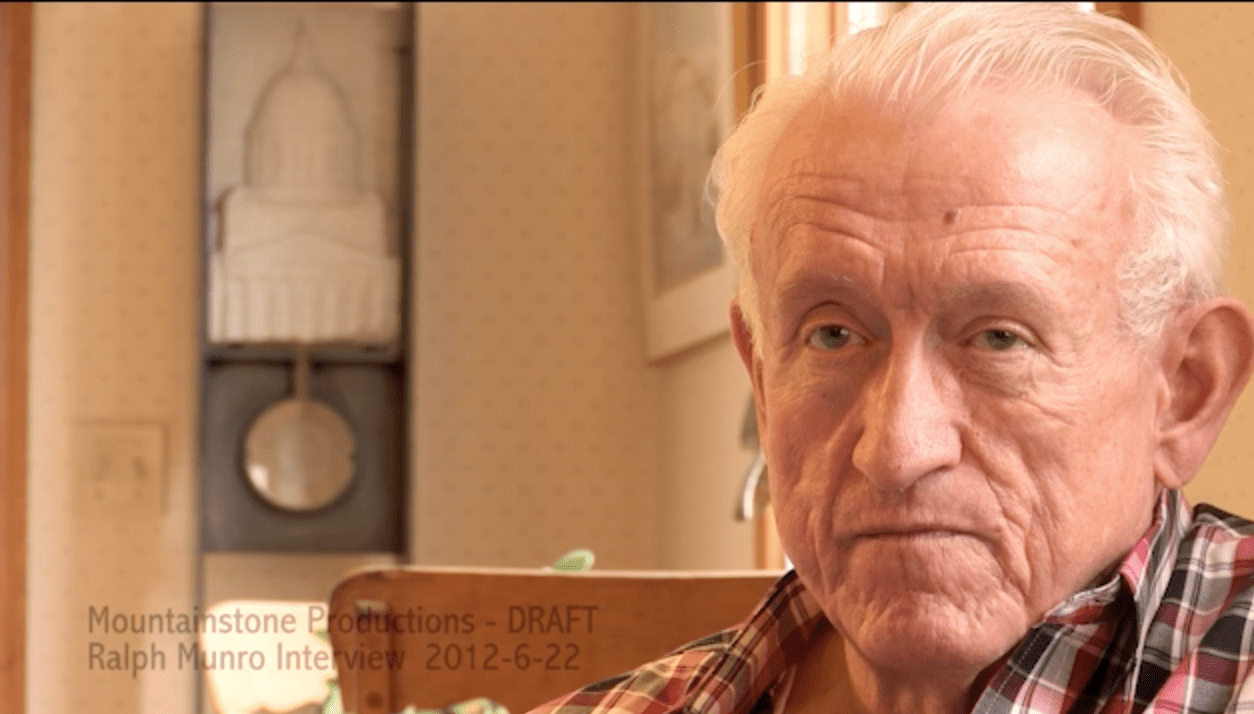
Ralph Munro walks on

The master of bi-partisan politics and perhaps the greatest politician this state ever had the honor to call one of its own, Ralph Munro, passed yesterday at the age of 81.

I had the good fortune to interview Ralph and spend a few hours with him a decade ago. He was a gentle, always upbeat and positive person. But his accomplishments are one of the greatest list of public service achievements we have ever seen.

Ralph was Secretary of State for five terms. During that time, he instituted vote by mail and voter registration (Motor Voter) when getting a drivers license or renewal.

But Ralph was also the person that Governor Dan Evans called on to go down to California and see about the Vietnamese refugees after Democratic governor Jerry Brown did not want them relocated there. Munro helped to bring them here to resettle in Washington State.

He was a champion of developmentally disabled children and helped get the first law in the country passed to support their needs, called the “Education for All” act. He befriended a 7 year old with developmental disabilities, eventually becoming his legal guardian.

He was a champion of environmental causes. He personally was responsible for ending the Orca hunt and capture in Puget Sound.

He was well respected by Puget Sound tribes. He allowed the tribes to do archeological digs on his property and was honored by them.

And on a personal note, he was the only Republican that I have ever voted for.

My sincere condolences to his family and friends. We will miss him. I doubt, given the current political system that we will ever see anyone like him again in Washington politics.

https://www.kuow.org/stories/remembering-ralph-munro-5-term-washington-secretary-of-state-and-statesman

Governor Ferguson throws environmentalists under the bus

Governor Ferguson has had his first major controversy, over a relatively little known agency called the Fish and Wildlife Commission. While this commission is small and not well known, it is crucial in setting the direction for the department of Fish and Wildlife. As their web site states: The Commission establishes policies to preserve, protect, and perpetuate fish, wildlife, and ecosystems while providing sustainable fish and wildlife recreational and commercial opportunities compatible with healthy and diverse fish and wildlife populations. The Commission consists of nine governor-appointed members that serve six-year terms, hold meetings and hearings around the state and offer opportunities for the public to weigh in on fish and wildlife issues.

What just happened? The issue revolves around a surprising decision by Governor Ferguson to remove Dr. Timothy Ragen from the Washington Fish and Wildlife Commission without justification after he was reappointed by outgoing Governor Inslee. Dr. Ragen is respected around the world for his expertise in marine mammals and marine science and served as the former Executive Director of the U.S. Marine Mammal Commission. Most recently, he has been serving as a pivotal expert on Washington’s Fish and Wildlife Commission that oversees decision making on numerous statewide fish and wildlife policies, including Washington’s approach to killer whale recovery. Despite his expertise and strong backing from the public, no public explanation has been provided for his removal. 

The question this raises of course is who wanted Dr. Ragen off the commission and why? Perhaps we need to look no further than Dr. Ragens’ support for science that calls into question the benefit of hatchery salmon and how they impact native species. Or perhaps even just “follow the money”. This issue has been at the forefront of the debate over hatcheries for over a decade. This blog has reported on it for many years. Simply search on “hatchery salmon” and look through the search results.

In a letter from the Wild Fish Conversancy to the Governor, they stated: “To date, there has been no public rationale provided for why Tim Ragen was removed from the Commission. Given the strong support for his nomination, we believe it is important for the Governor’s office to offer clarity on this decision and the requests for Tim’s reappointment. A public response would help ensure transparency and provide those who signed the letter with a clear understanding of how decisions are being made.

The two groups who could want his removal are the sports fishermen and the Tribes. Both have fought to have the state ignore the mounting science that shows that hatchery salmon are detrimental to the native stocks.

In defense of Dr. Ragen, an open letter, signed by 74 noted scientists, addressed to Governor Ferguson, stated the following:


So in one of his first acts, Governor Ferguson has chosen to side with anti-science forces rather than support wild salmon recovery based on science.

We’ll see if the letter changes anything. As the song goes, “Same as it ever was.”

ExxonMobile Lobbyist Caught Hacking Climate Activists

As reported in Bruce Schneier’s Crypto-gram

[2025.01.29] The Department of Justice is investigating a lobbying firm representing ExxonMobil for hacking the phones of climate activists:

The hacking was allegedly commissioned by a Washington, D.C., lobbying firm, according to a lawyer representing the U.S. government. The firm, in turn, was allegedly working on behalf of one of the world’s largest oil and gas companies, based in Texas, that wanted to discredit groups and individuals involved in climate litigation, according to the lawyer for the U.S. government. In court documents, the Justice Department does not name either company.

As part of its probe, the U.S. is trying to extradite an Israeli private investigator named Amit Forlit from the United Kingdom for allegedly orchestrating the hacking campaign. A lawyer for Forlit claimed in a court filing that the hacking operation her client is accused of leading “is alleged to have been commissioned by DCI Group, a lobbying firm representing ExxonMobil, one of the world’s largest fossil fuel companies.”

Political Suppression of Science: Lessons from Canada – Hakai Magazine

Eight years ago I published this piece. Now unfortunately, I’m republishing it for the exact same reasons. Did Trump’s administration destroy data? Yes. That article will come next.


Not sure how bad it could get for science under Trump? You only have to look north of the border. For 10 years Canadians scientists were literally combing dumpsters to save their priceless history of climate science in Canada. No kidding. I was reporting on this as it happened back then here in this blog. This is well worth reading. From Hakai. Erica Gies reports.

During the 10-year term of Canadian Conservative prime minister Stephen Harper, some government scientists were unable to publish their research or talk to the public without minders; research was defunded or blocked; and invaluable data archives dating back a century were destroyed in acts dubbed “libricide.” Reports were literally tossed into dumpsters.

https://hakaimagazine.com/news/political-suppression-science-lessons-canada/

Dabob Bay conservation area expands by nearly 4,000 acres

Peter Bahls and his organization the NW Watershed Institute, have pulled off another successful land transfer that they’ve been working on for years in the waning days of public lands commissioner Hilary Franz’ administration. But the agreement may also find itself strapped for funds if the Climate Commitment Act (CCA) is reversed in the next election or a Republican takes office to replace Franz. Your vote is important to passing this . Our website is supporting King County Commissioner and former State Representative Dave Upthegrove as the next land commissioner because of issues such as this.

QUILCENE — The Dabob Bay Natural Resources Conservation Area has been expanded by 3,943 acres to include more than 11,000 acres around the bay.

Hillary Franz, the state Commissioner of Public Lands, signed an order on Sept. 23.

“Dabob Bay is a unique and special landscape, and I am incredibly happy to protect and preserve public lands there so that future generations get to enjoy its beauty and ecological importance,” Franz said. “This further expansion is a testament to years of hard work from stakeholders and staff to find a solution that protects these rare ecosystems while still supporting local services in east Jefferson County.”

To read the whole story, go to:

https://www.peninsuladailynews.com/news/dabob-bay-conservation-area-expands-by-nearly-4000-acres/

support local journalism subscribe to the Peninsula Daily News.

Tribe poised to co-manage Dungeness National Wildlife Refuge

In a move that comes as environmentalists sue the Department of Fish & Wildlife Service (FWS) for not doing a “compatibility determination” on potential impacts to allowing an industrial aquaculture farm (run for profit by the Jamestown S’Klallam Tribe), FWS appears ready to ink an agreement to co-manage the Wildlife Refuge with the tribe.

Does it make sense for an entity that seeks to financially profit from the use of a federal resource, to be given co-management powers of that resource?

While this blog recognizes the importance of the work that the Jamestown have done for environmental restoration projects on the north Olympic Peninsula, there has been sustained concern from environmental watchdogs about the idea of turning the waters of the refuge into an industrial site, with subsequent conversion of the benthic layer and the waters above it into essentially a shellfish farm. Once this is done, there is no returning it to the way it is, as the profit motive will make it virtually impossible to end the work, as we have seen across the south Sound as shellfish aquaculture has turned numerous virgin bays into net covered shores with diesel engines dredging the geoduck farms at all hours of the night (low tides usually are late at night in the winter when harvesting would be easiest).

It is worth noting that the Refuge was established with the following goals, delineated on the front page of its web site:

Recognizing the importance of the fertile habitats, President Woodrow Wilson established the Dungeness National Wildlife Refuge on January 20, 1915, as a refuge, preserve, and breeding ground for native birds. Many of these birds feed by diving into the shallows for fish. Today the graceful arc of Dungeness Spit continues to protect nutrient-rich tide flats for migrating shorebirds in spring and fall; a quiet bay with calm waters for wintering waterfowl; an isolated beach for harbor seals and their pups; and abundant eelgrass beds for young salmon and steelhead nurseries.

Dungeness National Wildlife Refuge | Visit Us – Activities | U.S. Fish & Wildlife Service (fws.gov)

It is hard to understand how commercial shellfish aquaculture could coexist into preserving native birds who dive into these same waters to feed. Currently the FWS bans even frisbees or kites on the spit as it apparently is not good for the birds. There is a long list of banned behavior that seems innocuous elsewhere.

In 2018, this blog reported on the concerns that were being raised by the staff of the refuge itself, in it, we reported that the applicants have asked for permission to place approx. 150,000 of “on bottom” oyster bags on the central west side of the bay, in approximately 34 acres of the tide flats 1141 acres of the inner spit. While I understand that current numbers of this amount are not at these levels, the long-term goal of this number likely has not changed. This is not the small scale subsistence aquaculture that currently exists in Sequim Bay by tribal members. This will require machinery, boats and staff to harvest these amounts. This could be viewed as the proverbial “camel nose in the tent” which likely will be expanded over time with very little discussion. The applicants propose to raise non-native oysters. To be clear, a significant number of cultivated oysters in the Salish Sea are non-native, so this was not a surprise, nor is it an issue of great concern.

Also noted in that earlier blog entry, as stated by the Department of Interior letter, “The shores and tidelands in this area provide some of the most important wildlife habitat and supports the highest density of waterfowl and shorebirds within the refuge….These shorelines also support one of the largest Brandt haul out sites in the state of Washington….Shorebird densities are highest within the action area and the adjacent lagoon on Graveyard Spit.”

“Human-caused wildlife disturbance and habitat loss are two of the most pervasive threats to shorebird and waterfowl use of the Salish Sea…. very little information is available on entrapment resulting from aquaculture structures.”

The letter also referenced that, “In 2016, a die-off of approximately 1000 Rhinoceros Auklets on Protection Island coincided with a significant reduction in the abundance of sand lance in the Strait of Juan de Fuca.” 

Herring also spawn at the west end of Dungeness Harbor and the Department of Interior raised questions about protecting Strait of Juan de Fuca herring, which have been designated “critical” (as in critically low).  Sand Lance and Surf Smelt spawning grounds are also found in the area of the application. These species have been identified as “Washington Species of Greatest Conservation Need within the State Wildlife Action Plan (WDFW 2015).” A worry related to this is that these spawning fish will be competing with the oysters for plankton. A failure to find enough food could lead to a significant reduction in the survival rates. There is no known mitigation for this, other than limiting the size and scope of the project.

Additionally, Interior pointed out that a 1996 scientific study found that some shorebirds significantly avoided areas used for aquaculture in a California bay.

This shoreline has also been designated “Natural” in the Critical Areas Ordinance, as far back as 1976. That designation limits activities to those that preserve the national features unchanged. One would assume that the tidelands are also part of that designation. But of course, the waters of the Wildlife Reserve are apparently not part of the county shoreline ordinance.

It is important to note that the applicants themselves have noted in a 2003 report that “wild birds are the second most important source of FC on a year-round basis. It is especially important in winter, when their load approaches 1/2 of the measured marine water input.” It would seem to the average person that putting aquaculture into a bird reserve is by its very nature going to create a tension between the animals that are present and creating the problem and the desire to harvest shellfish for profit.

It is certainly reasonable for the applicants to want to return to aquaculture in the Bay, however the scale is being significantly increased. And now the applicants themselves are being given co-management of the very location that they intend to make a commercial farm. If it wasn’t the Tribe but some standard for-profit company, I’m sure that every environmental organization in the country would be joining in to stop this, but since it is the Tribe, only a couple of environmental organizations have been bold enough to challenge the FWS in court. And they appear to be winning. Years ago, I had a drink with the head of the Western Region of NOAA. I asked him why they kept doing things that required environmental groups to sue them, and why they just didn’t do the right thing to begin with. He laughed and told me that NOAA was a big government organization and had many different perspectives inside it. He welcomed lawsuits that forced them to do the right thing as he couldn’t possibly hope that all his employees were in line with its goals.

The FWS has a problematic role with regards to the Refuge. According to a 2022 article written by Kevin Washburn and N. William Hines, Dean and Professor of Law at the University of Iowa College of Law:

“The congressional direction in the Fish and Wildlife Act is to ensure “the fish, shellfish, and wildlife
resources of the Nation make a material contribution to our national economy and food supply . . . [and] the health, recreation, and well-being of our citizens.”

Congress recognized “that such resources are a living, renewable form of national wealth that is capable of being maintained and greatly increased with proper management, but equally capable of destruction if neglected or unwisely exploited.” (emphasis mine)

As a practical matter, however, one of the most significant challenges for FWS is meeting the
significant demands of the Endangered Species Act.”

The co-management of the reserve can only legally include the following:

“…Endangered Species Programs, Education Programs, Environmental Contaminants Programs, Wetland and Habitat Conservation Restoration, Fish Hatchery Operations, and National Wildlife Refuge Operation and Maintenance. See List of Programs Eligible for Inclusion in Funding Agreements Negotiated with Self-governance Tribes by Interior Bureaus Other than the Bureau of Indian Affairs and Fiscal
Year 2016. Microsoft Word – [14] Washburn – Camera-Ready (case.edu)

The rather ill defined “Northwest Wildlife refuge operations…” in the above paragraph is a concern. The document referenced above goes into considerable detail on the issues raised in co-management of FWS and other agencies. It is beyond the scope of this blog to identify all of them.

Science has learned a lot about the environment since the time when the State originally allowed the use in this location. In many other locations we have decided that the tradeoff of commercial activity is outweighed by a newer appreciation of the value of the natural landscape for a variety of species.  It is up to all of us to question our elected officials and bureaucrats, not the applicants, as to why they believe that this is in all our best interests, when we so clearly have set this aside this location for wildlife protection and enhancement. The applicants have every right to apply. It is up to our elected and bureaucratic staffs to make the call for the lands and species we all enjoy and want to protect.

This blog has long supported the work of the JamesTown S’Kallam as they have led environmental protection on the Olympic Peninsula for many decades. We have supported their right to industrial geoduck operations, small scale oyster farming, their rights to their share of the salmon of the state. In this one instance we are questioning whether putting this farm inside a tiny refuge that has decades of protection, as we all struggle to save our seabirds, is the right call. It is not about their rights, it is about the location. Can the State not find and trade suitable other locations for the Tribe to establish, especially since the tribe itself has raised concerns about the viability of the location for aquaculture on the scale they are planning? Then the issue of co-management is a non issue. Then they would be imminently qualified to co-manage the refuge.

Net Pens, Dead? Don’t count on it. Thank Hilary Franz

From coastalwatershedinstitute.org: There’s been a bit of buzz about the status of steelhead net pens in the US/Washington state Salish Sea over the last three months or so. Most recently, Cooke Aquaculture withdrew their appeal of the recent decision upholding Washington state DNR’s ban of net pens on state aquatic lands. This has been touted as, quote, ‘the end of the fight’ against net pens in Washington waters (DNR March 2024).

Except? It absolutely *isn’t* the end of the fight. While Hillary Franz, the current Washington state Department of Natural Resources (DNR) Public Lands Commissioner, made the decision to ban net pens over a year ago, the DNR hasn’t taken any action to codify this rule into agency law (DNRa). Codifying the decision is a three-step process (DNR b). And while other DNR rules have sailed thru this codifying process over the same time period, the net pen decision? Hasn’t budged.

Hillary Franz is not running for re-election. She will no longer be DNR Lands Commissioner after the November elections.

In it’s current state, the net pen ban can be rescinded with a literal stroke of a pen by the next Lands Commissioner. Industry is laying plans for just this. At least one Commissioner candidate has made very clear statements supporting net pens. And Cooke Aquaculture and the Jamestown Tribe, collaborators on a steelhead net pen plan for the central Strait of Juan de Fuca/ Port Angeles Harbor, are now giving ‘informal’ presentations to local groups to try and garner support of future in water net pen projects-including Port Angeles harbor. This isn’t a ‘proposal’. It’s a *plan*. And they’re not asking-they are *telling* folks what is going to happen. They’re doing so quietly now-but will be full throttle after the Washington State DNR Commissioner election is over, and the new Commissioner is in place.

What can you do?

1. PUSH Washington DNR to codify the current net pen ban rule immediately;

2. Confirm early and repeatedly the position of prospective future incoming Washington State Lands Commissioner on in-water net pens, and make sure they also have your input and a clear position on net pens, and;

3. Make sure to let local aquaculture leaders and resource agency managers and officials know that upland contained is the only farmed salmon alternative for our country and state (one very successful operation is already in full swing in BC-link to their information is below).

For those that are new to the topic, here is an excellent link summarizing truth about open net pens https://www.youtube.com/watch?v=p4fVPt1V3sw .

More information, links, and key citations are here:

DNR a. netpen rulemaking https://www.dnr.wa.gov/publications/em_rule_netpen_cr101.pdf

DNR b.https://www.dnr.wa.gov/rule-making….

DNR 2024. https://www.dnr.wa.gov/…/commissioner-franz-fight…

Mapes 2022. https://www.seattletimes.com/…/state-supreme-court-oks…/

Blue Star Foods model farm module designed to grow 100 Tonnes of Steelhead Salmon per year: https://bluestarfoods.com/little-cedar-falls/

Upland Net Pens get fish into tanks out of the sea.

https://olyopen.com/2018/02/01/norwegian-company-to-build-large-land-based-salmon-farm-in-belfast-maine-republican-journal/?amp=1

Department of Justice Asked to Investigate Big Oil Misconduct

Yesterday — taking a necessary and historic step — Rep. Jamie Raskin (Maryland) and Sen. Sheldon Whitehouse (Rhode Island) formally recommended that the United States Department of Justice open an investigation into Big Oil’s deceptive actions.

Here’s what David Arkush, director of Public Citizen’s Climate Program, told the national media:

“It is essential that the Department of Justice investigate the fossil fuel industry’s misconduct. Strong evidence already in the public domain suggests that Big Oil has likely violated a number of federal laws. And … there is ample reason to think the industry is hiding even worse wrongdoing.”

Holding Big Oil accountable for decades of misconduct that have brought the world to the brink of climate catastrophe is a goal of a number of environmental organizations and politicians.

Whitehouse: “What we found is that the well-known campaign of the Big Oil companies to deny climate change, to treat it as a hoax, to question the science, all of that nonsense has morphed into a new campaign in which they pretend they care about climate”

https://www.budget.senate.gov/chairman/newsroom/press/new-joint-bicameral-staff-report-reveals-big-oils-campaign-of-climate-denial-disinformation-and-doublespeak

Cooke Aquaculture gets $2B lawsuit alleging violated U.S. Fishing Laws

The company that ran the net pen aquaculture in this state for years has now been sued for allegedly violating U.S. fishing laws. The $2B lawsuit “False Claims Acts” alleges that Cooke violated U.S. rules for U.S. ownership of fishing fleets by creating taking over an American fishing company and creating a shell company to hide its ownership. These actions occurred on the Atlantic coast, not here.

The article is behind a paywall for National Fisherman magazine unfortunately but likely other sources will soon emerge. I’ll update this article as I get new information.

Black Point Update: Statesman Group may not get water for project

The never ending project at Black Point by the Statesman Group (aka Pleasant Harbor Development) appears to have run into another snag. The Pleasant Tides Property Owners Association (PTPOA) originally was asked by Statesman to provide supplemental water through their water district. However, according to their latest newsletter, the PTPOA lawyers cannot find a legal way to provide that without jeopardizing their non-profit status and federal IRS status as a Home Owners Association (HOA).

The Statesman group is apparently attempting to find other, legal ways for them to accomplish this, but it increasingly looks like Statesman is going to come up short on their plans for providing relatively low cost water, or any supplemental water, to their project.

As many know, this project has been challenged by a number of residents and groups in our county since the very beginning, and despite that, our County Commissioners (Democrats at that too), went along with the highly controversial project plan. None of those former commissioners say they would do it again. And yet, here we are, almost 20 years down the road, with many unanswered questions about how this project will ever successfully come to completion.

In February, the Hood Canal Enviromental Council requested a denial of the project by Jefferson County. They stated, in a letter to the Board of County Commissioners and James Kennedy (prosecuting attorney) that: The plan for 216 single-family residential lots, without the required MPR project features, is inconsistent with the 2019 Development Agreement amendments. That is still a developing story.

Hood Canal Environmental Council Requests Denial of Black Point Project

The Hood Canal Environmental Council (HCEC) has requested that Jefferson County deny the current subdivision proposal by the Statesman for Pleasant Harbor Development. They also request that the County prevents any further sales of properties until all terms are met.

This project, which has been contested for almost 20 years, has seemed to be an ever changing situation. Lawsuits by the developer, counter suits, years of negotiation over payment for services by the county, then the county settling for far less than their billed services. One would have to ask when the citizens of this county will ever see the promised outcomes that Statesman put forward back in the mid 2000s. Certainly if the opponents to it have there way, never, but even if Statesman gets their way, when are we expected to see anything more than a clearcut in this location?

Let’s remember that two full cycles of County Commissioners have moved this forward, against the wishes of many in this county. Is it time for them to admit that this is never going to happen and kill it? One way or another all of us in Jefferson County are paying for the lawsuits that this has incurred on us. Pretending that it’s a zero sum game is just not reality. Anyway, read it and make up your own mind. If you have strong feelings, one way or the other, now seems a good time to throw your thoughts into the disucussion at the County Commissioners meeting.

Here is the letter from the HCEC.


Cristina Haworth, AICP
Jefferson County Board of Commissioners
Josh D. Peters, AICP
Jefferson County Community Development Director
James Kennedy -Jefferson County Prosecuting Attorney

RE: Master Planned Resort at Black Point

Greetings:

For more than 50 years the Hood Canal Environmental Council (HCEC) has been active in protecting Hood Canal. As part of this legacy, we have offered input on Jefferson County plans for a Master Planned Resort (MPR) at Black Point. We share the concerns of the Brinnon Group expressed in the February 2, 2024, letter from attorney Richard Aramburu to you (attached).

We hope that Jefferson County intends to follow statutory law, court decisions and its own agreements in matters dealing with land use and protecting Hood Canal. Recent plans submitted to the county to develop the Black Point MPR do not comply with the 2018 Kitsap Superior Court decision or the 2019 Amended Development Agreement.

HCEC endorses the recommendations in the recent letter from attorney Aramburu, that Jefferson County should take the following actions:

1.                  Decline to review the current subdivision proposal submitted by Statesman for Pleasant Harbor development. The plan for 216 single-family residential lots, without the required MPR project features, is inconsistent with the 2019 Development Agreement amendments because it approves residential development without any permits, plans or showing of financial ability to fund or deliver the fanciful amenities, such as a “tea house in the trees” and a full-size NHL hockey rink.

2.                  Return any proposed subdivision plans to the applicant and decline further review until the submittal of plans is consistent with the Amended Development Agreement and Jefferson County codes.

3.                  Determine the subdivision application is not complete because it does not contain all required features and documentation.

4.                  Prevent sales or advertisement for sales of properties within the Pleasant Harbor MPR, through the Jefferson County Prosecuting Attorney, until all terms of the Development Agreement and Jefferson County platting ordinances are met.

HCEC welcomes dialogue with you over these concerns.

Sincerely, Phil Best – President
Hood Canal Environmental Council

Open Letter to the Jefferson County Commissioners regarding Shoreline Master Program

Commissioners:
Having spent eight years in the Jefferson County Marine Resources Committee including a number of years as it’s chairman, along with volunteering hundreds of hours in helping write the existing SMP, I am urging you to require standard conditional use permits for future geoduck applications.

There is currently no real permitting nor oversight on geoduck operations in the county, with the county relying on the State and Federal Government to do whatever it feels necessary to manage and control these operations. We have no idea how much shoreline is being handed over to commercial operations, what damage is being done, nor do we as tax payers of this county have the opportunity to speak in favor or not of new operations that will lock up our shorelines for generations to come. It’s really an outrageous situation.

I join the residents of Squamish Harbor and Discovery Bay in calling for a fair process for evaluating future geoduck proposals. We urge the Board of County Commissioners (BOCC) to require, in its update of Jefferson County’s SMP, a standard Conditional Use Permit (CUP) process for all future applications for geoduck cultivation, whether for “new,” “expanded,” or “converted” tideland.

I personally, along with others in this county have seen many consequences of geoduck operations, including: illegal harvesting (documented and admitted); unauthorized expansions; hundreds of loose tubes strewn in shallow water and on beaches; hazards to recreation; underwater loose tubes of unknowable quantity; marine life trapped in nets; harvest operations in native eelgrass; vanishing eelgrass and sand dollar populations; beaching a boat in and trampling a fish stream; and many more practices of environmental concern.

The late Michael Adams, who chaired the MRC for years and was a small time commercial oyster farmer, documented numerous illegal intrusions onto his beaches. Often these were done at night and he told me he had been threatened by the people engaged in it.

Previous legal cases have gone against the industry time and time again.

For over two decades, citizens have been ignored by Washington State Agencies and most Counties as shellfish aquaculture lobbying paved the way for the unlimited proliferation of this industrial conversion of our shorelines. Citizens have had to go to court to get their voices heard. Many of the cases against Taylor, for example were won by the plaintiffs.

A case in 2019 brought against the Army Corp of Engineers was very instructive on this issue. The Corps lost the case. Federal Judge Lasnik stated in his findings that the Army Corps of Engineers in our Corp district, “The Court finds that the Corps has failed to adequately consider the impacts of commercial shellfish aquaculture activities authorized by NWP 48, that its conclusory findings of minimal individual and cumulative impacts are not supported by substantial evidence in the record, and that its EA does not satisfy the requirements of NEPA and the governing regulations.”

While citizens have been pointing out the limited scientific findings that the Corps and the shellfish industry have used to gain permitting, the Judge noted: “There is no discussion of the impacts on other types of aquatic vegetation, on the benthic community, on fish, on birds, on water quality/chemistry/structures, or on substrate characteristics. There is no discussion of the subtidal zone. There is no discussion regarding the impacts of plastic use in shellfish aquaculture and only a passing reference to a possible side effect of pesticide use.”

So a Federal Judge has found that the ’science’ being presented to you the county representatives, is apparently a fraud. Internal records surfaced during this court case actually showed that the Corps had purposely removed key findings supporting the plaintiff’s case from their documents before sending them to the court in discovery.

This is a map of existing shellfish farms in other counties to the south of us. The number, I understand, is over 700. Is this what we want Jefferson County to look like?

Why A Standard CUP is Important

The three most important features of a standard CUP are: 

• The decision is made by a neutral hearing examiner;

• The decision is made only after a public hearing before the hearing examiner; and

• The decision is made based only on the record, both written and testimonial.


These features ensure that all parties are treated fairly and that all parties can see and contest the information presented. A standard CUP avoids the suspicion that decisions are influenced by private conversations and unsupported assertions.


For more than two years, the requirement for a standard CUP for all future geoduck applications was in the Planning Commission’s draft, which was preliminarily approved by the state Department of Ecology (ECY). The same CUP requirement is in Kitsap and Clallam county SMPs, as approved in final form by ECY. Jefferson lies in close shoreline-proximity to these counties, sharing Hood Canal, Discovery Bay, and other waters of the Salish Sea. Notably, all of Hood Canal, including its tidelands and shoreline, and most of Puget Sound and the Strait of Juan de Fuca are Shorelines of Statewide Significance, under the state Shoreline Management Act. By adopting the standard CUP process, Jefferson County will harmonize with Kitsap and Clallam counties in how they review commercial geoduck operations in our common waters.

Why the Planning Commission Recommendation is Misguided

In late October 2023, a new recommendation was proposed, which, after an initial stalemate, was adopted by the Planning Commission in November (by a 5-4 vote). It requires a standard CUP only for “new” geoduck operations. It prescribes a “discretionary” CUP for “expansions” and “conversions” of existing shellfish tidelands. A discretionary CUP allows county staff to make the decision, after public comment but with no public hearing. Alternatively, staff, in its sole discretion, may (but need not, for any reason) refer the case to the hearing-examiner process.


This scheme is arbitrary and discriminatory. It favors existing shellfish farmers over newcomers and over the citizenry, even though the environmental effects are identical. It is subject to evasion, for example by first farming oysters on a new plot and then converting to geoducks. Also, of great concern: all (or possibly nearly all) existing shellfish farmers in Jefferson County are operating with no county shoreline permit whatsoever, so there is no baseline. The County simply doesn’t know how many acres might be converted or expanded under a discretionary CUP.


Advocates for the Planning Commission recommendation like to argue that the industry is already subject to federal, state, and local oversight, so the need for county regulation is lessened. I and others have first-hand experience with federal oversight, and it is entirely lacking. A citizen can’t even get basic information about a shellfish farm without filing a FOIA request, which can take a year for a response. It took more than two years to find out what happened to very well documented harvesting violations. (Answer: the violations were admitted but there was no consequence.) Other state and other local regulations relate to different subjects.

As County Commissioners, you need not decide whether commercial geoduck farms are “good” or “bad.” Rather, it’s the job of the BOCC to adopt a fair process for making such a decision on a particular application for a particular site. That process is the standard CUP process, and we urge you to require it for all future applications for geoduck cultivation.

Al Bergstein
Former Chair of the Jefferson County Marine Resources Committee and former member of the SMP citizens advisory committee for Jefferson County
Port Townsend

Jefferson County shorelines needs your help now

Jefferson County is updating its Shoreline Master Plan and is being heavily lobbied by the shellfish industry to allow for the approval of additional geoduck farms in our tidelands without public input.  Neighboring counties–Kitsap and Clallam–allow for public input but Jefferson hasn’t yet committed to this.  Find out what’s at stake as this multimillion dollar export business looks to expand here.   Local environmental activists will talk about their work and how you can get involved.

With a growing multimillion dollar marked in Asia, the shellfish industry is eyeing Jefferson County’s tidelands for increased geoduck cultivation. Geoduck cultivation involves the intense use of plastics—some seven miles and eleven tons of tubing per acre.  Each tube fosters a wholly unnatural density of the large clams that are then “harvested” using hydraulic hoses to liquify the tidelands down to three feet.  Then the whole process starts over again.  Geoduck cultivation raises many environmental concerns, among them: competition for marine nutrients, displacement of tideland marine life, and plastics pollution.  Sierra Club is asking the Jefferson County Commissioners to require a thorough review and public input before issuing any permits to farm geoducks.  A standard “Conditional Use Permit”, as is required in neighboring Kitsap and Clallum counties, should be the norm.  

 When:  Thursday January 18, 7PM on Zoom

https://act.sierraclub.org/events/details?formcampaignid=7013q000002Hy4YAAS