Good news! E-Bike Rebates continue!

Washington State Department of Transportation (WSDOT) are relaunching WE-bike on March 30. This e-bike rebate program makes e-bikes and certain cycling accessories more affordable for people in Washington state.

People living in Washington ages 16 and up can apply for rebates between March 30, 2026, and March 29, 2027. The program will randomly select applicants monthly starting April 13. Applicants only need to submit one application to be considered for the monthly selections.

Rebates alone will likely not fully cover e-bike purchases. Recipients can reduce the overall cost of e-bike purchases at participating bike shops by $300 or $1,200, depending on income eligibility. They can put rebates toward qualifying models of all three classes of e-bike.

To apply for a $300 rebate, you need to live in Washington state, be at least 16 years old, and have a working email address.

To apply for a $1,200 rebate, you also need to have an income at or below 80 percent of the median for your county. In Jefferson County the Median income is $74,048. 80% of that is $59,238. So many younger people likely could apply for this rebate here in the county.

Qualifying e-bike types

The rebate can be used for qualifying e-bikes, e-cargo bikes, and adaptive e-bikes.

E-bikes have batteries, working pedals and a motor. E-cargo bikes are for carrying cargo or multiple people. Adaptive e-bikes provide extra support or stability.

WE-Bike helped nearly 3,000 Washingtonians purchase e-bikes and related safety accessories in our 2025 pilot program.

University of Washington researchers learned rebates motivated people to buy e-bikes they couldn’t or wouldn’t have otherwise, especially people in lower-income households. Nearly half of rebate recipients surveyed said they used e-bikes to travel to new destinations. In all, we offered rebates to 6,861 out of 37,751 applicants from all 39 Washington counties.

Program funding

This grant program is entirely funded through Climate Commitment Act revenues. The CCA supports Washington’s climate action efforts by putting cap-and-invest dollars to work reducing climate pollution, creating jobs and improving public health.

Other ways to try e-bikes

E-bike lending library pilot program

While many people are interested in e-bikes, not everyone will be able to receive a rebate through the WE-Bike program. People also may not be ready or able to purchase e-bikes for various reasons.

Programs like e-bike lending libraries can help more people try out e-bikes.

Eligible organizations and businesses in Washington state may apply for funding to create lending library programs for employees or communities.

Here’s the website:

Upcoming Events from Friends Fort Flagler

Common Garden Pests and their Prevention/Curative Strategies Via Zoom

February 25, 2026  2 – 3:30 PM 

Registration:  Friends of Fort Flagler

Common garden pests can challenge even the most experienced gardeners, but effective management doesn’t have to come at the expense of our environment. This online presentation explores common garden pests found in the Puget Sound region and highlights prevention and curative strategies that protect plants while keeping waterways clean and healthy. Attendees will learn environmentally responsible approaches that reduce chemical use, safeguard soil and pollinators, and help preserve the health of Puget Sound for generations to come.

Brandon Hudson is a respected agronomist with KIS Organics. He has been an agronomist for nearly four decades of cultivation experience. Raised in a farming family in East Tennessee, he grew up immersed in sustainable agriculture and plant science from an early age. Over the course of his career, he has worked across a wide range of cultivation systems—from hydroponics to fully organic living soil—ultimately dedicating himself to soil-based, biological growing methods that allow plants to reach their fullest natural expression.

Today, Brandon resides on Marrowstone Island, Washington, where he consults with organic farmers, gardeners, and commercial cultivators throughout the country. At KIS Organics, he provides soil testing, plant diagnostics, and farm-system guidance, drawing on years of hands-on experience including his previous role managing propagation and greenhouse operations at a large commercial hemp farm. Through education, research, and personalized consulting, he continues to help growers transition to regenerative, data-driven practices that improve soil health, crop quality, and long-term sustainability.

Discover the World of River Otters@WWII Rec Center

March 7, 2026  2:00 – 3:30 PM

Registration:  Friends of Fort Flagler

Playful, intelligent, and endlessly curious, river otters are among the most captivating residents of Puget Sound. Join us for an engaging program that explores the hidden world of these remarkable mammals — from their family life and denning habits to their hunting strategies, play behaviors, and the ways they communicate with one another.

Our speaker, Sara Penhallegon, will share stories from the field and provide a behind-the-scenes look at what happens when otters face challenges in the wild. Learn how injured, sick, or orphaned otters are cared for and rehabilitated, and how community members can help these incredible animals thrive.

🎙️ About the Speaker: Sara Penhallegon

Sara Penhallegon is the Founder and Executive Director of Center Valley Animal Rescue (CVAR) in Quilcene. She has worked with licensed wildlife rehabilitators since 2000 and became a licensed Wildlife Rehabilitator herself in 2012 — the same year CVAR became a fully permitted wildlife rehabilitation facility.

Under her leadership, CVAR has become a trusted resource for caring for injured and orphaned wildlife, with special expertise in the rehabilitation of wild mammals and wild birds. Animals arrive at CVAR for many reasons — vehicle strikes, domestic animal attacks, habitat disruption, or early separation from their parents — and Sara’s team works tirelessly to provide safe recovery, proper housing, and eventual release back into the wild.

To learn more about Center Valley Animal Rescue, visit: https://centervalleyanimalrescue.org/

Fort Flagler State Park, WWII Rec Center

————————————————————————————————-

Earth Day – Beach Clean-up and Invasive Grass Pull 11:30-3:30

April 4, 2026  11:30 – 3:30

Registration:  Friends of Fort Flagler

Join us to help remove debris and invasive sea grass from our beach. This will help protect our marine life and native species grasses and enhance the health of our park. Your contribution makes a tangible difference!

Fort Flagler State Park, Lower

—————————————————————————————————————

Easter Egg Hunt at Fort Flagler Lower Campground @ 10am

April 4, 2026 10:00 AM – 11:00 AM

Registration:  Friends of Fort Flagler

Join the fun and bring your children aged 2 to 14 to FoFF’s Easter egg hunt. We’ll meet at the Lower Campground by the bathroom. Children will be grouped into three age groups so the young ones have better odds (no child will come away empty-handed). Please feel free to bring baskets for the egg hunt.

Fort Flagler State Park, Lower Campground by playground

Discover How Your Backyard Composting Helps Our Parks – Zoom Presents

April 8, 2026  2:00 – 3:15 PM

Registration:  Friends of Fort Flagler

Join us for a special virtual presentation with Laura Tucker from Jefferson County Environmental Health, a knowledgeable educator who has led composting classes across the county. Laura will share simple, effective ways that individual composting can make a big difference—not only in your own garden, but throughout our state parks and surrounding natural areas.

Learn how composting reduces landfill waste, cuts harmful greenhouse gases, and builds healthy soil that supports native plants. Healthy soil, in turn, creates stronger habitat for pollinators, birds, insects, and the wildlife that depend on them. Laura will also explain how home composting helps limit invasive species, protects water quality, and reduces the pressure on fragile park ecosystems.

Whether you’re a seasoned composter or just curious about getting started, this session will show how small actions at home contribute to a healthier environment for everyone—including the beaches, forests, and wildlife we all enjoy in our Washington State Parks.

Bats of Washington State and Marrowstone Island – Zoom Presentation

April 22, 2026  2:00 – 3:30 PM

Registration:  Friends of Fort Flagler

Are you curious about the bats of Washington and the species that live right here at Fort Flagler and on Marrowstone Island? This introductory talk will explore Washington’s native bat species, with a special focus on those most likely to be found in and around Fort Flagler State Park. Learn where local bats roost and forage, how the park’s forests, open fields, and shoreline support bat habitat, and why bats are such an important part of the island’s ecosystem. We’ll also discuss current conservation challenges facing bats in Washington and what FoFF members and park visitors can do to help protect these often-misunderstood nocturnal neighbors.

Nick Moore (He/Him) is the Assistant Species Lead in the Wildlife Division at the Washington Department of Fish and Wildlife, where he supports science-based species conservation and recovery efforts across the state. He works closely with agency staff, partners, and stakeholders to advance effective wildlife management and habitat protection. Nick has an educational background in wildlife biology and natural resource management, which informs his collaborative, data-driven approach to conserving Washington’s native wildlife for current and future generations.

_________________________________________________________________________________

Native Bee Habitat Walk

May 2, 2026  8:00 AM

Registration:  Friends of Fort Flagler

Timing is everything for native bees. Observing them during the period in which they construct nests, mate, and provision natal cells can be the most illuminating time to observe them. Kris, a native bee enthusiast with the Washington Native Bee Society, will lead a tour of some of Fort Flager’s most active bee habitats. With a little luck, she hopes to share them while they exhibit some of these fascinating behaviors, helping to inspire your future observations, in the wild or your backyard.

Kris Ethington is a citizen scientist, native bee enthusiast, and photographer. Her curiosity for the natural world began with learning to garden for butterfly habitat in southern California. She has participated in Monarch parasite and migration citizen science studies and led environmental outreach programs. She pursued a certificate in landscape design before leaving CA and served as a garden ambassador for the California Native Plant

Society after designing and re-planting her landscape with mostly native plants. It was in this garden that she became a garden naturalist, photographing plant/pollinator interactions and documenting her observations through iNaturalist.org for expert identification and scientific research. After retiring to Port Townsend in 2021, she applied these skills to gain knowledge of Washington’s wild bee populations and explore their nesting habitats. Her bee surveys have covered over 16 sites in east Jefferson County spanning three years. As an active member of the Washington Native Bee Society, Kris contributes to its advocacy and conservation efforts by creating regional awareness through educational outreach.

Fort Flagler State Park, Beachcomber Cafe

Explore the Layers of Time: Geology Beach Walk at Fort Flagler

May 17, 2026  8:00 – 11:00 AM

Registration:  Friends of Fort Flagler

Join us for a fascinating geology talk followed by a beach walk of 2 miles round trip at Fort Flagler State Park, timed perfectly with a minus tide to reveal hidden natural features and ancient stories embedded in the land. Led by Professor Ralph Dawes and assisted by Carol Serdar and Scott Minor from the Quimper Geological Society (QGS). This walk begins at the lower campground and proceeds to Marrowstone Point and follows the beach trail westward along the base of the bluff.

This walk is a unique opportunity to witness Fort Flagler’s geologic wonders up close and to learn how tides, glaciers, and time have sculpted the landscape we see today. Be sure to wear sturdy shoes suitable for uneven, rocky beach terrain, and bring your curiosity for this one-of-a-kind coastal adventure!

Ralph Dawes: Originally from Edmonds, Washington, he has a degree in literature from Antioch College in Yellow Springs, OH, and degrees in geology from WWU (BS) and the UW (MS, Ph.D.). He taught at Wenatchee Valley College for 26 years and now lives at Cape George with his wife, Cheryl Dawes. He is passionate about sharing how the geologic history of the Pacific Northwest gives insight into the landforms, landslides, floods, volcanic eruptions, and earthquakes. In recent years, he has been involved in research on volcanic rocks near Wenatchee and glacial landforms in north central Washington. Keeping it local, he is now transferring his focus to unanswered questions about the geology of the Olympic Peninsula and Puget Sound.

Carol Serdar Tepper: Born and raised in southern Puget Sound, Carol’s master thesis included a description and analysis of a large landslide and related salmon impacts. She is a Licensed Geologist; retired from Washington State regulatory work (surface mine reclamation, landslide mapping, forest practices regulatory, and water quality compliance); and formerly WA State Secondary Science Teacher, 10 years which included developing a middle-school science curriculum based on Pacific Salmon life history and habitat. Carol gleefully retired from state service with 32 fun-filled years in February 2022.

Scott Minor: BSc at UC Santa Barbara and MSc in Geology at the Univ. of Colorado. Retired Research Scientist at USGS—Denver. Focus on geologic framework, fault kinematic and paleostress histories of strain transfer and accommodation zones of the Rio Grande rift. Experience with fault-related fluid flow within poorly consolidated sediments as well as geologic mapping and geologic framework characterization.

Fort Flagler State Park, WWII Rec Center

Decode Your Plants: A Hands-On Guide to Visual Plant Diagnosis

May 30, 2026  2:00 – 3:30 PM 

Registration:  Friends of Fort Flagler

Decode Your Plants: A Hands-On Guide to Visual Plant Diagnosis 5/16@4PM

Learn how to use a dichotomous key to visually diagnose plant health issues by observing leaf color, growth patterns, and other tell-tale signs. This practical, easy-to-follow approach empowers growers to identify nutrient deficiencies and plant stress with confidence. The session will also cover trusted sources for organic nutrients and soil amendments, giving you tools to correct problems naturally and keep your plants thriving.

Brandon Hudson is a respected agronomist with KIS Organics. He has been an agronomist for nearly four decades of cultivation experience. Raised in a farming family in East Tennessee, he grew up immersed in sustainable agriculture and plant science from an early age. Over the course of his career, he has worked across a wide range of cultivation systems—from hydroponics to fully organic living soil—ultimately dedicating himself to soil-based, biological growing methods that allow plants to reach their fullest natural expression.

Today, Brandon resides on Marrowstone Island, Washington, where he consults with organic farmers, gardeners, and commercial cultivators throughout the country. At KIS Organics, he provides soil testing, plant diagnostics, and farm-system guidance, drawing on years of hands-on experience including his previous role managing propagation and greenhouse operations at a large commercial hemp farm. Through education, research, and personalized consulting, he continues to help growers transition to regenerative, data-driven practices that improve soil health, crop quality, and long-term sustainability.

Fort Flagler State Park, WWII Rec Center

Anji Scalf launches campaign for county commissioner in district 3

Anji Scalf is going to run for Greg Brotherton‘s seat. Anji one of the good ones. She’ll be a great replacement for Greg . Looking forward to supporting her in the campaign.

Sportsmen Fight Trump Plan To Log Roadless Headwaters on Olympic Peninsula Public Lands

Another day, another threat from the Trump administration to open public lands, revoke roadless areas to open them to cutting on Federal forests. This press release is from the Sportsmen for Wild Olympics.


FOR IMMEDIATE RELEASE September 8th, 2025

QUILCENE, WA—September 8th, 2025: Today, Sportsmen for Wild Olympics released a new map with photos illustrating the devastating impacts that developing key roadless backcountry public lands on Olympic National Forest could have on critical headwaters of prime trophy fishing rivers and public access on the Olympic Peninsula. The group is calling on Congress to pass the Wild Olympics Act as a proactive solution to permanently protect these lands.

“This map tells Congress and the Administration: protect the Olympic Peninsula’s public lands—don’t privatize or develop them,” said Ashley Nichole Lewis, a Quinault Indian Nation fishing guide and spokesperson for Sportsmen for Wild Olympics. “It gives our fellow sportsmen and women something to fight for, not just against—a lasting solution to threats we are confronting right now.”

The urgency comes as the Trump Administration announced a shortened comment period ending September 19th on their plans to rescind the Roadless Rule in order to log & develop sensitive spawning habitat on public lands, a key federal safeguard for undeveloped backcountry areas across national forests, including Olympic National Forest. The new map with photos highlights & names the critical ancient forest roadless headwaters & salmon streams on Olympic National Forest that are now threatened by the Trump Administration’s plan to lift protections for these backcountry public lands prized by Olympic Peninsula sportsmen for the clean water, critical habitat & access they provide.

What is the Roadless Rule?

The Roadless Rule, established in 2001, protects undeveloped areas of national forests from new road construction and logging. These “roadless” areas are often rugged backcountry landscapes that provide crucial habitat for fish and wildlife, protect water quality, and offer remote hunting and angling opportunities. Removing these protections opens the door to industrial development in some of the last remaining intact, healthy forest lands in the country.

“Rescinding the Roadless Rule is yet another attempt to hand over our essential public resources to special interests—at the expense of salmon, clean water, and future generations,” Lewis said.

The coalition—comprising thousands of local and regional hunters and anglers, and over 30 leading sportsmen organizations—has already punched well above their weight earlier this year playing an outsized role in the national backlash opposing the unprecedented threats to public lands coming from both Congress and the Administration. Lewis says these threats highlight exactly why the group supports the Wild Olympics Wilderness & Wild and Scenic Rivers Act, recently reintroduced by Senator Patty Murray and Representative Emily Randall.

“The different public land sale efforts in Congress and the new plan to strip protections from 59 million acres of core forest headwaters nationwide—including lands on the Peninsula—show that they will use any tactic to privatize or exploit our public lands,” Lewis said. “This map shows what that would actually look like. Congress & the White House must reverse course and pass Wild Olympics to permanently protect these critical salmon streams instead.”

The Wild Olympics Act, developed with years of local input, would enhance hunting and fishing access while permanently protecting some of the last, best intact salmon-spawning habitat left in the Lower 48. Importantly, it would not close existing roads or cost timber jobs. It has broad local support with over 800 local endorsements.

The new map & photos show how the Wild Olympics proposal would protect key areas such as South Quinault Ridge, Moonlight Dome, and other core ancient forest headwaters & rivers vital for hunting & fishing on the Peninsula —areas the Administration now plans to open for logging by rescinding the Roadless Rule.

(The steep forested slopes of the Moonlight Dome Roadless Area forms the critical headwaters for both the East and West Forks of the Humptulips River (seen ok the left), one of the top ten Trophy Fishing Rivers in Washington State).

The map also reveals that 300,000 acres of Olympic National Forest have been identified as eligible for sale under different plans by the Administration and some members of Congress during earlier drafts of the budget bill passed earlier this year. While the land sale provision was struck from the budget, proponents continue to push this idea forward.

The unprecedented threats to public lands recently sparked Senator Murray to throw down the gauntlet in the Senate, announcing she will block any public lands legislative package that comes out of Utah Senator Mike Lee’s Senate Energy & Natural Resources Committee unless it includes her Wild Olympics bill, a move that galvanized local supporters to pull out all the stops to get it done this Congress.

Lewis hopes the map inspires more hunters and anglers to join the thousands who have already signed their petition.

“The outdoor community is powerful. Our fishing and hunting guides are pillars of this community. The same places we work the hardest are the ones we return to after the day is done—because we love them. Let’s use that collective power to ensure a single pen stroke can never take our public lands away. Let’s pass the Wild Olympics Act.”

###

HOW TO FIGHT BACK. 

1) Sign the WildOlympics.org/wild-olympics-petition/ telling Congress ancient temperate rainforests of the #WildOlympics aren’t for sale & to permanently protect Olympic Peninsula #publiclands & rivers against travesties like this in the future. 

2) Those who can afford it PLEASE WildOlympics.org/DONATE to fuel our fight. We helped defeat this four years ago. Help us defeat it again & pass the Wild Olympics Wilderness & Wild & Scenic Rivers Act to permanently protect ancient forests & salmon streams once & for all. 

3) SUBMIT A COMMENT AT PORTAL LINK Comment Period Ends Sept 19th. Tell USDA to uphold the Roadless Rue to protect Olympic Peninsula Ancient Forests & critical salmon nurseries that were already centuries-old when our nation was born. 

For more information, including a rolling list of articles from sportsmen outlets covering the threats to public lands, visit: SportsmenForWildOlympics.org/threats


Sportsmen For Wild Olympics Members Include:

Waters West Guide Service (Montesano)

Bad Ash Outdoors (Tahola)

Northwest Sportfishing Industry Association

Northwest Guides & Anglers Association

The Washington Wildlife Federation,

Izaak Walton League (Gr. Seattle Chapter) Backcountry Hunters and Anglers, (Washington Chapter)

Association of Northwest Steelheaders,

The Gray Wolf Fly Fishing Club (Sequim)

SAGE Fly Rods

Doug Rose Fly Fishing (at request of family)

Bad Ash Fishing (Tahola)

Washington Council of Trout Unlimited

Little Stone Fly Fisher (Port Townsend)

Johnson Guide Service (Sequim)

Olympic Peninsula Skagit Tactics (Forks)

Able Guide Service (Seiku)

Mike Z’s Guide Service (Forks)

Brazda’s Fly Fishing

Angler’s Obsession (Forks)

Sea Run Pursuits

Peninsula Sportsman Guide & Outfitting Service (Port Townsend)

Waters West Fly Fishing Outfitters (Port Angeles)

The Wild Steelhead Coalition

Piscatorial Pursuits (Forks)

Able Guide Service (Sekiu)

LimbSaver

Oly Women On The Fly

WA Council of Fly Fishers International

Puget Sound Fly Fishers

Coastal Cutthroat Coalition

Port Ludlow and Mats Mats Bay closed for shellfish harvest

Jefferson County, WA. Recent shellfish samples tested by the Washington Department of Health (DOH) have found high levels of the biotoxin that causes Paralytic Shellfish Poisoning (PSP). Therefore, DOH has closed Port Ludlow and Mats Mats Bay for the recreational harvest of all species of molluscan shellfish including clams, oysters, mussels and scallops. Jefferson County Public Health has posted Danger signs at public access points in the area. Crab and shrimp are not included in the closure. Even if the crab meat is safe, toxins can accumulate in crab gut and butter (the white-yellow fat inside the back of the shell). Clean crab thoroughly and avoid eating the crab butter and guts. 

Paralytic Shellfish Poisoning can be fatal. Illness is caused by eating shellfish contaminated with toxins from the naturally occurring marine plankton Alexandrium. The biotoxin is not destroyed by cooking or freezing. Symptoms of PSP can appear within minutes or hours and usually begin with tingling lips and tongue, moving to the hands and feet, followed by difficulty breathing and paralysis. Anyone experiencing any of these symptoms after consuming shellfish should contact a health care provider immediately. For extreme reactions, call 911.

To find out which areas are safe to harvest shellfish in Washington and the Washington Department of Fish & Wildlife (WDFW) harvesting seasons and rules, please check the map at www.doh.wa.gov/ShellfishSafety.htm or call the Biotoxin Hotline at 1-800-562-5632. For the latest information on regulations and seasons, visit wdfw.wa.gov/places-to-go/shellfish-beaches or call WDFW Fish Program customer service at 360-902-2700.

Port Townsend City Council Election- Vote for Fred Obee

There is only one voting choice to be made on the primary ballot: city council. My choice is Fred Obee. Fred has a long history in this community and has a lot of experience following the City Council.

The fact that Dylan Quarles is a young, inexperienced person in local politics along with some of the city council members and mayor coming out in favor of him, make me wonder if he is simply being viewed as a rubber stamp for their ongoing spending habits, which have been called into question by many people in this city.

Fred did very well in the recent League of Women Voters debate. (listen to it on KPTZ.ORG)

Fred will be a critical voice on the council and will stand up against the go along, get along nature of the current city council.

I look forward to Dylan spending more time around the politics of this city and continuing to participate in the issues.

Vote for Fred Obee.

This just in from the Puget Sound Partnership’s Strait Ecosystem Recovery Network (ERN). Want to create a rain garden? Or other neighborhood storm water program? Get together with your town or county peeps and apply!

The RFP for the Neighborhood Stormwater Education and Assistance grants will open on May 7th and there are informational webinars on the horizon. These funds can support projects including:

  • Developing tools, resources, or programs to educate landowners and influencers (real estate agents, Homeowners Associations (HOAs), land use consultants, contractors, and others) about stormwater practices; 
  • Providing technical assistance such as pre-application and compliance support and incentives for landowners, developers, and residents to implement and maintain green stormwater infrastructure; 
  • Community outreach events, such as restoration plantings or Low Impact Design (LID)/Green Stormwater Infrastructure (GSI) educational seminars and trainings; 
  • Developing long-term plans, agreements, and funding mechanisms for developing and maintaining stormwater infrastructure within local individual catchments (including systems owned by HOAs); or 
  • GSI training and/or certification programs aligned with community affordable housing, workforce development, and environmental justice goals

Cold Water Connection Campaign Reopens Rivers for Olympic Peninsula Salmon and Steelhead

From a NOAA Press Release:


With $19 million in NOAA funds, nonprofit and tribal partners plan to remove 17 barriers blocking fish passage on critical spawning rivers originating in Olympic National Park, Washington.

The cold water rivers of Western Washington descend from the glaciers and snow-capped mountains of Olympic National Park. They hold some of the last, best freshwater habitat for salmon and steelhead in the lower 48 states. Despite a warming climate, their high-elevation headwaters are predicted to remain cool enough for salmon and steelhead for at least the next 50 years.

However, the region’s roads—some a legacy of the logging industry—crisscross the watersheds. They often force streams to flow underneath them through small, poorly designed tunnels called culverts that block fish passage. There are more than 4,000 culvert barriers on the Olympic Peninsula. Salmon and steelhead are often unable to reach the historical habitat they need to spawn and produce the next generation.

In response to declining fish populations on the Olympic Peninsula, NOAA’s Office of Habitat Conservation is supporting the Cold Water Connection Campaign. This partnership will reopen 125 miles of critical spawning and rearing habitat over the next 10 years. With $19 million in funds through the Bipartisan Infrastructure Law and Inflation Reduction Act, project partners plan to:

  • Remove 12 high-priority barriers in the Hoh, Quillayute, and Quinault watersheds
  • Finalize designs for 5 additional culvert replacements
  • Expand the ability of tribes to perform restoration work 
  • Inject money into the regional economy by hiring local and tribally owned contracting companies
  • Mitigate flood damage risks by installing culverts built to handle high flows from the region’s increasingly heavy rain storms

“We are running out of time to recover and protect these salmon and steelhead populations,” says Luke Kelly, Western Washington Program Director for Trout Unlimited. “We need to pull out all the stops now, so it’s been great to see all of our government, tribal, nonprofit partners, and private landowners coming together to get this done.”

Cold Water Connection Campaign partners include:

The campaign has support from local, state, and federal agencies including NOAA. In past years(PDF, 8 pages) project partners have also repaired instream and riparian habitat damaged by road building and destructive logging practices.

Also;a new short video looking at the Cold Water Connection Campaign on the Olympic Peninsula . It really celebrates the extensive work the partners have done to make sure they are prioritizing the most impactful barriers for removal, and the benefits this work provides to local communities above and beyond the important benefits to fish and coastal watersheds.

You can watch it here:  https://www.youtube.com/watch?v=9YhmFosupPM

Read the whole press release here before the Trump administration pulls it down:

https://www.fisheries.noaa.gov/feature-story/cold-water-connection-campaign-reopens-rivers-olympic-peninsula-salmon-and-steelhead

PT Marine Science Center Job Opening

Volunteer Program Coordinator Job Opening

Dabob Bay conservation area expands by nearly 4,000 acres

Peter Bahls and his organization the NW Watershed Institute, have pulled off another successful land transfer that they’ve been working on for years in the waning days of public lands commissioner Hilary Franz’ administration. But the agreement may also find itself strapped for funds if the Climate Commitment Act (CCA) is reversed in the next election or a Republican takes office to replace Franz. Your vote is important to passing this . Our website is supporting King County Commissioner and former State Representative Dave Upthegrove as the next land commissioner because of issues such as this.

QUILCENE — The Dabob Bay Natural Resources Conservation Area has been expanded by 3,943 acres to include more than 11,000 acres around the bay.

Hillary Franz, the state Commissioner of Public Lands, signed an order on Sept. 23.

“Dabob Bay is a unique and special landscape, and I am incredibly happy to protect and preserve public lands there so that future generations get to enjoy its beauty and ecological importance,” Franz said. “This further expansion is a testament to years of hard work from stakeholders and staff to find a solution that protects these rare ecosystems while still supporting local services in east Jefferson County.”

To read the whole story, go to:

https://www.peninsuladailynews.com/news/dabob-bay-conservation-area-expands-by-nearly-4000-acres/

support local journalism subscribe to the Peninsula Daily News.

Water reserves low in Olympics – Sequim Gazette

Our snow pack is not in great shape to provide us fresh water this year.

Support local journalism. Subscribe to the Sequim Gazette.

Washington SNOTEL Snow/Precipitation Update Report (usda.gov)

Hood Canal Environmental Council Requests Denial of Black Point Project

The Hood Canal Environmental Council (HCEC) has requested that Jefferson County deny the current subdivision proposal by the Statesman for Pleasant Harbor Development. They also request that the County prevents any further sales of properties until all terms are met.

This project, which has been contested for almost 20 years, has seemed to be an ever changing situation. Lawsuits by the developer, counter suits, years of negotiation over payment for services by the county, then the county settling for far less than their billed services. One would have to ask when the citizens of this county will ever see the promised outcomes that Statesman put forward back in the mid 2000s. Certainly if the opponents to it have there way, never, but even if Statesman gets their way, when are we expected to see anything more than a clearcut in this location?

Let’s remember that two full cycles of County Commissioners have moved this forward, against the wishes of many in this county. Is it time for them to admit that this is never going to happen and kill it? One way or another all of us in Jefferson County are paying for the lawsuits that this has incurred on us. Pretending that it’s a zero sum game is just not reality. Anyway, read it and make up your own mind. If you have strong feelings, one way or the other, now seems a good time to throw your thoughts into the disucussion at the County Commissioners meeting.

Here is the letter from the HCEC.


Cristina Haworth, AICP
Jefferson County Board of Commissioners
Josh D. Peters, AICP
Jefferson County Community Development Director
James Kennedy -Jefferson County Prosecuting Attorney

RE: Master Planned Resort at Black Point

Greetings:

For more than 50 years the Hood Canal Environmental Council (HCEC) has been active in protecting Hood Canal. As part of this legacy, we have offered input on Jefferson County plans for a Master Planned Resort (MPR) at Black Point. We share the concerns of the Brinnon Group expressed in the February 2, 2024, letter from attorney Richard Aramburu to you (attached).

We hope that Jefferson County intends to follow statutory law, court decisions and its own agreements in matters dealing with land use and protecting Hood Canal. Recent plans submitted to the county to develop the Black Point MPR do not comply with the 2018 Kitsap Superior Court decision or the 2019 Amended Development Agreement.

HCEC endorses the recommendations in the recent letter from attorney Aramburu, that Jefferson County should take the following actions:

1.                  Decline to review the current subdivision proposal submitted by Statesman for Pleasant Harbor development. The plan for 216 single-family residential lots, without the required MPR project features, is inconsistent with the 2019 Development Agreement amendments because it approves residential development without any permits, plans or showing of financial ability to fund or deliver the fanciful amenities, such as a “tea house in the trees” and a full-size NHL hockey rink.

2.                  Return any proposed subdivision plans to the applicant and decline further review until the submittal of plans is consistent with the Amended Development Agreement and Jefferson County codes.

3.                  Determine the subdivision application is not complete because it does not contain all required features and documentation.

4.                  Prevent sales or advertisement for sales of properties within the Pleasant Harbor MPR, through the Jefferson County Prosecuting Attorney, until all terms of the Development Agreement and Jefferson County platting ordinances are met.

HCEC welcomes dialogue with you over these concerns.

Sincerely, Phil Best – President
Hood Canal Environmental Council

Open Letter to the Jefferson County Commissioners regarding Shoreline Master Program

Commissioners:
Having spent eight years in the Jefferson County Marine Resources Committee including a number of years as it’s chairman, along with volunteering hundreds of hours in helping write the existing SMP, I am urging you to require standard conditional use permits for future geoduck applications.

There is currently no real permitting nor oversight on geoduck operations in the county, with the county relying on the State and Federal Government to do whatever it feels necessary to manage and control these operations. We have no idea how much shoreline is being handed over to commercial operations, what damage is being done, nor do we as tax payers of this county have the opportunity to speak in favor or not of new operations that will lock up our shorelines for generations to come. It’s really an outrageous situation.

I join the residents of Squamish Harbor and Discovery Bay in calling for a fair process for evaluating future geoduck proposals. We urge the Board of County Commissioners (BOCC) to require, in its update of Jefferson County’s SMP, a standard Conditional Use Permit (CUP) process for all future applications for geoduck cultivation, whether for “new,” “expanded,” or “converted” tideland.

I personally, along with others in this county have seen many consequences of geoduck operations, including: illegal harvesting (documented and admitted); unauthorized expansions; hundreds of loose tubes strewn in shallow water and on beaches; hazards to recreation; underwater loose tubes of unknowable quantity; marine life trapped in nets; harvest operations in native eelgrass; vanishing eelgrass and sand dollar populations; beaching a boat in and trampling a fish stream; and many more practices of environmental concern.

The late Michael Adams, who chaired the MRC for years and was a small time commercial oyster farmer, documented numerous illegal intrusions onto his beaches. Often these were done at night and he told me he had been threatened by the people engaged in it.

Previous legal cases have gone against the industry time and time again.

For over two decades, citizens have been ignored by Washington State Agencies and most Counties as shellfish aquaculture lobbying paved the way for the unlimited proliferation of this industrial conversion of our shorelines. Citizens have had to go to court to get their voices heard. Many of the cases against Taylor, for example were won by the plaintiffs.

A case in 2019 brought against the Army Corp of Engineers was very instructive on this issue. The Corps lost the case. Federal Judge Lasnik stated in his findings that the Army Corps of Engineers in our Corp district, “The Court finds that the Corps has failed to adequately consider the impacts of commercial shellfish aquaculture activities authorized by NWP 48, that its conclusory findings of minimal individual and cumulative impacts are not supported by substantial evidence in the record, and that its EA does not satisfy the requirements of NEPA and the governing regulations.”

While citizens have been pointing out the limited scientific findings that the Corps and the shellfish industry have used to gain permitting, the Judge noted: “There is no discussion of the impacts on other types of aquatic vegetation, on the benthic community, on fish, on birds, on water quality/chemistry/structures, or on substrate characteristics. There is no discussion of the subtidal zone. There is no discussion regarding the impacts of plastic use in shellfish aquaculture and only a passing reference to a possible side effect of pesticide use.”

So a Federal Judge has found that the ’science’ being presented to you the county representatives, is apparently a fraud. Internal records surfaced during this court case actually showed that the Corps had purposely removed key findings supporting the plaintiff’s case from their documents before sending them to the court in discovery.

This is a map of existing shellfish farms in other counties to the south of us. The number, I understand, is over 700. Is this what we want Jefferson County to look like?

Why A Standard CUP is Important

The three most important features of a standard CUP are: 

• The decision is made by a neutral hearing examiner;

• The decision is made only after a public hearing before the hearing examiner; and

• The decision is made based only on the record, both written and testimonial.


These features ensure that all parties are treated fairly and that all parties can see and contest the information presented. A standard CUP avoids the suspicion that decisions are influenced by private conversations and unsupported assertions.


For more than two years, the requirement for a standard CUP for all future geoduck applications was in the Planning Commission’s draft, which was preliminarily approved by the state Department of Ecology (ECY). The same CUP requirement is in Kitsap and Clallam county SMPs, as approved in final form by ECY. Jefferson lies in close shoreline-proximity to these counties, sharing Hood Canal, Discovery Bay, and other waters of the Salish Sea. Notably, all of Hood Canal, including its tidelands and shoreline, and most of Puget Sound and the Strait of Juan de Fuca are Shorelines of Statewide Significance, under the state Shoreline Management Act. By adopting the standard CUP process, Jefferson County will harmonize with Kitsap and Clallam counties in how they review commercial geoduck operations in our common waters.

Why the Planning Commission Recommendation is Misguided

In late October 2023, a new recommendation was proposed, which, after an initial stalemate, was adopted by the Planning Commission in November (by a 5-4 vote). It requires a standard CUP only for “new” geoduck operations. It prescribes a “discretionary” CUP for “expansions” and “conversions” of existing shellfish tidelands. A discretionary CUP allows county staff to make the decision, after public comment but with no public hearing. Alternatively, staff, in its sole discretion, may (but need not, for any reason) refer the case to the hearing-examiner process.


This scheme is arbitrary and discriminatory. It favors existing shellfish farmers over newcomers and over the citizenry, even though the environmental effects are identical. It is subject to evasion, for example by first farming oysters on a new plot and then converting to geoducks. Also, of great concern: all (or possibly nearly all) existing shellfish farmers in Jefferson County are operating with no county shoreline permit whatsoever, so there is no baseline. The County simply doesn’t know how many acres might be converted or expanded under a discretionary CUP.


Advocates for the Planning Commission recommendation like to argue that the industry is already subject to federal, state, and local oversight, so the need for county regulation is lessened. I and others have first-hand experience with federal oversight, and it is entirely lacking. A citizen can’t even get basic information about a shellfish farm without filing a FOIA request, which can take a year for a response. It took more than two years to find out what happened to very well documented harvesting violations. (Answer: the violations were admitted but there was no consequence.) Other state and other local regulations relate to different subjects.

As County Commissioners, you need not decide whether commercial geoduck farms are “good” or “bad.” Rather, it’s the job of the BOCC to adopt a fair process for making such a decision on a particular application for a particular site. That process is the standard CUP process, and we urge you to require it for all future applications for geoduck cultivation.

Al Bergstein
Former Chair of the Jefferson County Marine Resources Committee and former member of the SMP citizens advisory committee for Jefferson County
Port Townsend

Jefferson County shorelines needs your help now

Jefferson County is updating its Shoreline Master Plan and is being heavily lobbied by the shellfish industry to allow for the approval of additional geoduck farms in our tidelands without public input.  Neighboring counties–Kitsap and Clallam–allow for public input but Jefferson hasn’t yet committed to this.  Find out what’s at stake as this multimillion dollar export business looks to expand here.   Local environmental activists will talk about their work and how you can get involved.

With a growing multimillion dollar marked in Asia, the shellfish industry is eyeing Jefferson County’s tidelands for increased geoduck cultivation. Geoduck cultivation involves the intense use of plastics—some seven miles and eleven tons of tubing per acre.  Each tube fosters a wholly unnatural density of the large clams that are then “harvested” using hydraulic hoses to liquify the tidelands down to three feet.  Then the whole process starts over again.  Geoduck cultivation raises many environmental concerns, among them: competition for marine nutrients, displacement of tideland marine life, and plastics pollution.  Sierra Club is asking the Jefferson County Commissioners to require a thorough review and public input before issuing any permits to farm geoducks.  A standard “Conditional Use Permit”, as is required in neighboring Kitsap and Clallum counties, should be the norm.  

 When:  Thursday January 18, 7PM on Zoom

https://act.sierraclub.org/events/details?formcampaignid=7013q000002Hy4YAAS

Brinnon Pleasant Harbor Update

The never ending saga of the proposed but never built Pleasant Harbor Master Planned Resort. The Brinnon Group, the main local organization opposing this planned community, recently published this on their web site: 

Our attorney has written a letter to the county commissioners about an agreement they have signed with the developer. The agreement includes the developer’s payment of past due fees and a new arrangement for the developer to pay for a county planner to process MPR county permits. The letter points out that the developer has not done the things legally required to be able to apply for county permits.

EXERPT from the County Agreement“…no residential development in this MPR can proceed without construction of the recreational facilities described above, in particular the construction of the golf course, recreational center with hotel rooms, community center, a pool, water slides and other such facilities. It is notable that in the 4 1⁄2 years since the Superior Court’s decision, there has been little or no progress on the required recreational features of the Master Planned Resort. As far as we known, no permit applications have been submitted for the golf course, recreation center, hotel, or any of the other required recreational elements. These features must be built out prior to the construction and sale of residential lots, finished homes or condominium units.

The question has to be asked at this point, now over 15 years since the Canadian developer started applying for this project, that other than clear cutting areas of the site, (from which they likely made money selling the timber), why has there  been no movement that is visible to uphold their end of the contract. They were contractually supposed to build out infrastructure before building residential development. It certainly seems that the county commissioners of that era, who were warned by many in the community, failed in their duties to protect the county. It appears all the county has got for this agreement is a costly long running lawsuit. Should the county rescind the agreement for breach of contract? It would be an interesting question. 

It is hard to understand what the Canadian developer actually wanted to do with this property. They claimed they wanted to develop it, but were they ever financially capable of doing that? It’s not like the county has not given them time and resources to get this underway. 

Background from the Brinnon Group website: 

“Before land sales can take place, infrastructure and recreational amenities must be complete. Four years ago, the developer attempted to move forward with its plans without committing to completing facilities that would qualify it for an MPR, but the Brinnon Group successfully sued in Superior Court to require that infrastructure must be complete before land sales can occur.  Now the developer is once again promoting sales of property in the MPR without completing any of the work required by its terms of approval. Sales brochures have been sent through the US mail to local residents in Western Washington, including referencing advertising on various internet sites.The Brinnon Group has filed complaints with the Washington State Attorney General’s Consumer Protection Division and the US Consumer Financial Protection Bureau seeking orders to cease deceptive sales activity until site work and amenities are complete. The full complaint is on the Brinnon Group website. Though the sale material conveys the impression the MPR is move-in ready, in fact there are not even permit applications, much less completed facilities for any of the elements required for the MPR. Indeed, the essential of development, sewer and water facilities, are not even in the planning stage, though Stateman promises ”indoor pools, hockey and skating, indoor soccer and other training facilities” to prospective owners. It also fancifully promises a “health center” offering “an approved surgical operatory” for various procedures including “plastic surgery, urology and gynecology.” The developer appears to lack basic financing for this substantial venture; indeed, it asked local and state governments for some $37million in grants and loans for the project a few years ago.

Pat Neal again denounces fish restoration projects.

The Peninsula Daily News mentions that the Kiwana’s of Port Angeles invited fishing guide, columnist and long time “salmon restoration industry” critic Pat Neal to speak at their recent meeting. We have long documented Neal’s rants against any and all efforts to restore the rivers he claims to love.

Neal blames virtually all parties, the Federal government, State government, and Local Governments for spending millions of dollars and having nothing (in his mind) to show for it. The article says that he ended by saying the Tribes should be running fish restoration, as if they haven’t been for decades. He clearly has been out of touch with what has been happening all around him.

Having done volunteer environmental work on the Peninsula for 20 years, along with producing films for the Jamestown S’Klallam and my film “Voices of the Strait” in 2010 for the Puget Sound Partnership, which was a documentary on the “old timers” that grew up fishing and hunting here, I can state that what Neal conveniently leaves out, is as important as what he says.

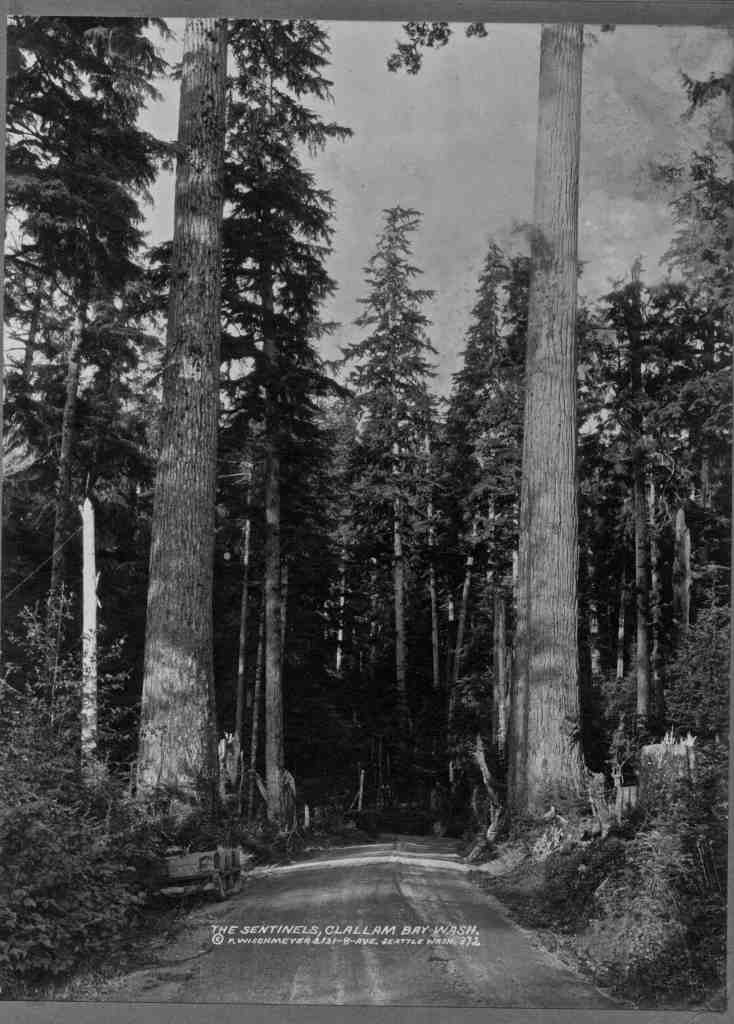
This image has an empty alt attribute; its file name is Clallam-Bay-Roads-1920s-734x1024.jpg
1930s roads in Clallam Bay

First off, Neal does not seem to understand that the efforts of restoration will take far longer and far more than the little we have already done. Why? Because we are dealing with 150 years of rampant exploitation of the Peninsula and it’s environment by a variety of people and companies operating with a worldview of “unlimited resources.” They were people of a very different time, legal framework and perspective.

Logging companies commercially cut over 95% of the old growth timber here. While doing that, they destroyed the 12,000 year old forest floors right down to the streambeds. A recovery from this destruction will take over another 100 years, if ever. This ecosystem was where the salmon (and numerous other unique species) thrived. They couldn’t and can’t live without it. There is no “blame” here, these people did not have a scientific understanding of how the ecosystem worked. They simply thought there was so much abundance, it could never end. The last “one log” truck went out on this peninsula as late as the early 1970s, while the Congress allowed raw logs to go out to Japan without using our sawmills. I watched as the ships were loaded with giant cedar and fir. Who profited from those decisions? Yet many still want to blame the Spotted Owl or the Boldt Decision for the end of the logging era and the almost simultaneous collapse of the salmon runs. The Spotted Owl fiasco was an outcome, not a cause. The Boldt Decision simply recognized that our neighbors indeed had “Treaty Rights” and they were going to be asked to help manage a fishery they had historically successfully managed for centuries.

One Log Truck c1960s. Photographer unknown.

Additionally, well meaning farmers gutted the rivers for irrigation, especially in the Sequim/Dungeness basin. One long time fisherman named Vince Cameron I interviewed for “Voices of the Strait”, told me that as a young boy, growing up on the Dungeness, he witnessed a tractor come into the river and cut a channel to create an irrigation ditch, during the middle of a salmon run, stranding thousands of fish as they moved upstream to spawn. He also discussed that channelizing the river, to end the flooding of the valley, created a high pressure hose effect, essentially scouring the banks where the salmon spawned.

Vince Cameron on the Dungeness River. Photo by Al Bergstein

The reversal of this entire mess has taken hundreds of millions of dollars, decades of the efforts of the Jamestown S’Klallam and the collaborative work of the Dungeness River Management Team, which included the Tribes, fishermen, hunters and farmers. It has been a successful effort. But it will likely take many more decades before we see significant numbers of salmon, especially the runs of Chinook. Neal would apparently rather sit on the sidelines and complain than take part in these efforts.

Another old timer told me that once the Hood Canal Floating Bridge came in, he noticed that the fishing in Hood Canal seemed to collapse. Since that comment to me, we have scientifically found out he was right, that the bridge is contributing to deaths of millions of fry on their way out to sea. Efforts to understand how we can keep the bridge and yet make it safe for salmon fry are ongoing.

Alexandra Morton in Canada scientifically proved that net pens were contributing to sea lice that were killing and weakening salmon as they passed by on their way to the sea. I witnessed the PR people employed by major aquaculture companies we all love here in Puget Sound, denounce her and her work over and over again. She was finally, after decades of work, successful in getting the Canadian Government to remove these farms. The runs this year, the first year that returns came back having not passed the farms, were spectacular. The people who denounced her have continued to be members of influential committees here on the Peninsula and continue to denounce efforts to reign in their ongoing takeover of our beaches.

We also have witnessed extensive construction of homes and businesses along the banks of salmon streams, destroying the natural habitat for a mixture of concrete and lawns. The reversal of that is taking decades as homes are bought out, removed and flood plains put back in place. Flood plains are the “lungs” of the river, and our destruction of them was incredibly bad news for salmon. Now we are on a path to restoration with best available science helping guide decisions being made by large groups of representatives from our cities, counties and environmental organizations.

I interviewed men who ran sports fishing boats out of Sekiu and other places. Herb Balch told me how he and other sports fishing fleet owners begged the Department of Fisheries to put limits on the salmon fishing during the 50s and 60s because they felt it was wasting the resource. He mentioned to me he would take out a boat of Boeing executives who would want to fish the “limit” and would come back with a boat of 30 to 50 fish. The customers might take one or two leaving him needing to gut and give away the rest. He could never find high school kids to be ready to do the work and in disgust, would dump the remaining fish over the side. This went on, day in and day out during fishing season.

Herb Balch, photo by Al Bergstein

Dick Goin, the late long time fisherman who was the spark for removing the Elwha dam, also documented the dramatic decline in salmon from the 1930s, when he arrived, to when he ended his fishing career. I have a copy of his legendary document, “Roll Call of the Lost” if anyone would like to see it.

Dick Goin photo by Al Bergstein

Ray Hunter, who grew up in Dungeness Bay, recalled the day that the boats came in and swept across the bay, dragging nets that destroyed the bottom and brought an end to many of the fisheries that he experienced growing up in the 40s and 50s.

Ray Hunter photo by Al Bergstein

Peter Becker told me of being on fishing boats in the late 70s with the latest fish finders and him and the crews wondering who would catch “the last salmon”.

Peter Becker photo by Al Bergstein

None of these men were environmental radical activists. They were simple fishermen, paper mill workers, truck drivers and businessmen that were appalled by the destruction they watched. They watched the ‘baseline’ as it’s called in science, move, and understood what was happening. From a baseline of virgin forests to a pillaged clear cut, from dozens of dead salmon floating away in the Strait, it was clear to them what was happening. Dick worked hard to reverse it, and the removal of the Elwha Dam and the return of the chinook and other fish to the upper reaches is now being seen. It’s not yet to a place where river guides can make a living, but we are headed that way. Unfortunately, it is not likely to be done in Pat Neal’s lifetime. It just isn’t that simple.


You can watch my film, “Voices of the Strait” on YouTube. Unfortunately, I was requested at the time to keep the running time short, and had to cut many interviews. I’m hoping to return to the film someday and make the running time long enough to include much of what was left “on the cutting room floor”.

You can watch my film, “Working for the River” about the Dungeness recovery efforts, on Vimeo.

September 2023 Events at Fort Flagler

Friends of Fort Flagler

Wednesday, Sept. 6th @ 9:00am 10:30am

Program: River Otter Beach Walk/Talk

Registration: https://www.eventbrite.com/e/616275967007Location: East Beach past Wansboro BatteryJoin us to learn about these cute and curious creatures that live throughout the Puget Sound.  We’ll be taking a beach walk on East Beach past the Wansboro Battery and discussing the river otter’s life cycle, behavior and where you might find them.  If we’re lucky, we may even see one!  Bring comfortable shoes, warm clothes and a rain jacket. Presenter: Jennifer Riker has a deep passion and love for the Pacific NW and all the beauty and wildlife that can be found here. She is a social worker that has also volunteered as a mountain steward with the Mt Baker/Snoqualmie National Forest and volunteered at the zoo in Seattle Jennifer loves learning everything she can about her beautiful home and all the wildlife that she is fortunate to co-exist with and continues her education taking many classes at North Cascade Institute on plants, birds, dragonflies and is a naturalist for the Mountaineers.  

Saturday, Sept. 16th @ 9:00am – 1:00pm

Program: International Beach Clean Up – Beach Grass Removal

Registration: https://www.eventbrite.com/e/691931254007Location: Lower Campground, upper part of spit next to playground.Join us to help restore our beach to a natural state.  Protecting our beaches includes removing invasive species that are choking out our natural grasses.  Friends of Fort Flagler is organizing an invasive beach grass removal on September 16th from 9am and 1pm. The Park will be giving free day passes to any volunteer who does not have state park passes. Please bring garden or work gloves and come ready to pull grass.  If you have garden hand forks and shovel, please bring as well.Naturalist Lead: Lynn Schwarz For more information about future events, volunteering, members or donations visit: //friendsoffortflagler.org/

Rat Island experiencing an outbreak of highly pathogenic avian influenza (HPAI)

Bad news for the Caspian Terns on Rat Island

Friends of Fort Flagler has been sponsoring trained docents to help protect the Caspian Tern population that is currently nesting on Rat Island. Recently a number of dead birds have been sighted and test results provided to Fish and Wildlife have confirmed that the birds are carrying Avian flu.

Here is the press release from Friends of Fort Flagler

Avian Flu in Jefferson County

Keep your dogs on leash and away from the shoreline! We are experiencing an outbreak of highly pathogenic avian influenza (HPAI), commonly known as bird flu, and the Washington Department of Fish and Wildlife (WDFW) is closing public access to Rat Island near Fort Flagler State Park. Dozens of Caspian terns have died in the area and there are more that appear sick. Samples from bird carcasses were collected and have tested positive.

The HPAI virus occurs naturally among wild aquatic birds worldwide and can infect poultry and other bird and animal species. The virus is contagious among birds through saliva, nasal secretions, feces, and contaminated surfaces.

WDFW is asking the public to avoid contact with sick or dead birds and/or seals as a preventative measure. Also do not attempt to transport them to a veterinarian or a private property for treatment. Moving sick animals can spread the virus to areas where it did not exist before. Please keep pets away from bird carcasses or sick birds to avoid exposure to HPAI.

Public access to Rat Island had recently been discouraged to reduce disturbance to the tern colony and harbor seal pups present there, and shellfish harvest is closed around the island, but extreme low tides have led to more foot traffic to the island from Fort Flagler State Park. Staff are posting “closed” signs and information on HPAI around the island, the campground, and the boat launch. Keeping humans out of the area is a preventative measure and helps prevent the spread of the virus.

Please help spread the word about this closure and not touching sick or dead wildlife.

Friends of Fort Flagler

PT Marine Science Center- ED Bee Redfield resigns, Diane Quinn chosen as replacement

From PTMSC: We are both sad and happy to report some important news about PTMSC. As you may know, Bee Redfield, our executive director, assumed a more limited role in February in order to prepare for her final PhD requirements at Purdue University. While this plan for a temporary hiatus was in place since her hire last spring, Bee more recently made the decision for personal reasons not to return to the ED position and asked the board to seek a replacement. She says, “I am fully dedicated to supporting PTMSC through this transition and beyond. I love PTMSC, the team, and the Port Townsend community, and I am so grateful for the time that I spent with you all.” The board appreciates Bee’s exemplary performance as ED and is grateful for her many accomplishments. And Bee’s achievements are many. Her biggest legacy will probably be what we think will become an iconic landmark in Port Townsend: a gray whale skeleton on Union Wharf which is scheduled to be installed this summer. She also expanded the Future of Oceans lecture series, oversaw new programming at the Flagship Landing building downtown, and strengthened the internal systems of the organization.Upon receiving the news, the board carefully assessed the organization’s evolving needs and prioritized the talents, skills, knowledge, and experience that the ideal ED candidate would bring to the job at this time. They recognized that this talent existed within the organization and were delighted when Diane Quinn, our Program Director of over six years, accepted the position. 
Diane Quinn, PTMSC's new Executive DirectorQuinn brings extensive leadership experience from her two decades at the Burke Museum in Seattle. As Director of Education, she helped to expand the scale, budgets and impacts of school and public programs. She nurtured innumerable community partnerships, contributed to the development of major exhibitions and participated in long-term, new museum planning resulting in a major capital campaign.Quinn’s long relationship with PTMSC started in 1998 when the Burke and PTMSC collaborated on a new exhibit at Fort Worden. She remembers, “In working with Libby Palmer, Judy D’Amore, and Anne Murphy, the founders and founding executive director, it was clear that the organization has a unique role in the local community, that community marine science centers have a critical role in the broader community of practice, and that change for the better happens in communities and in the world through sustained effort and commitment.”Besides her track record of successful regional collaborations, and her pre-existing relationships with many community leaders, Diane has developed a deep mutual trust between herself and the PTMSC staff over the past six years in her role as Program Director. Her comprehensive knowledge of the organization, especially in terms of program and operations, as well as her experience with creative program design and organizational transformation, makes her an ideal fit for the top leadership position at this time in PTMSC’s journey. We are all very excited about the future of PTMSC and thank you for your part in making that future possible.

Event: Northern Elephant Seals in the Pacific Northwest virtual program

Northern Elephant Seals in the Pacific Northwest virtual program on January 25th@7pm

Registration: https://www.eventbrite.com/e/northern-elephant-seals-in-the-pacific-northwest-tickets-483953085707

Please join the Friends of Fort Flagler to learn more about Northern elephant seal natural history and distribution. We will also discuss common causes of stranding in Northern elephant seals, field assessments and our recent hospital cases.

Presenters:

Casey Mclean has over 12 years’ experience working with marine animals, and is the Executive Director of SR3, Washington’s first dedicated marine animal hospital.  SR3 is a nonprofit organization that focuses on response, rehabilitation and research of local marine wildlife. The hospital opened the summer of 2021 and immediately started helping harbor seals. is fall they will be opening a marine animal hospital in the Des Moines marina, just south of Seattle. To learn more about SR3, visit https://www.sealifer3.org/

Michelle Rivard is the veterinarian for SR3.  Dr. Michelle Rivard is an aquatic animal veterinarian focused on clinical medicine, pathology, and health of free-ranging marine mammals. In her role at SR³, Michelle provides medical management and care of stranded aquatic wildlife, performs postmortem examinations, and participates in ongoing research projects.  Michelle attended veterinary school at Michigan State University. 

Friends of Fort Flagler is a non-profit organization dedicated to the restoring, preserving and protecting the natural and historic resources of Fort Flagler State Park. Please support our state park by becoming a member, volunteering or donating to our organization. To learn more, visithttps://friendsoffortflagler.org/.