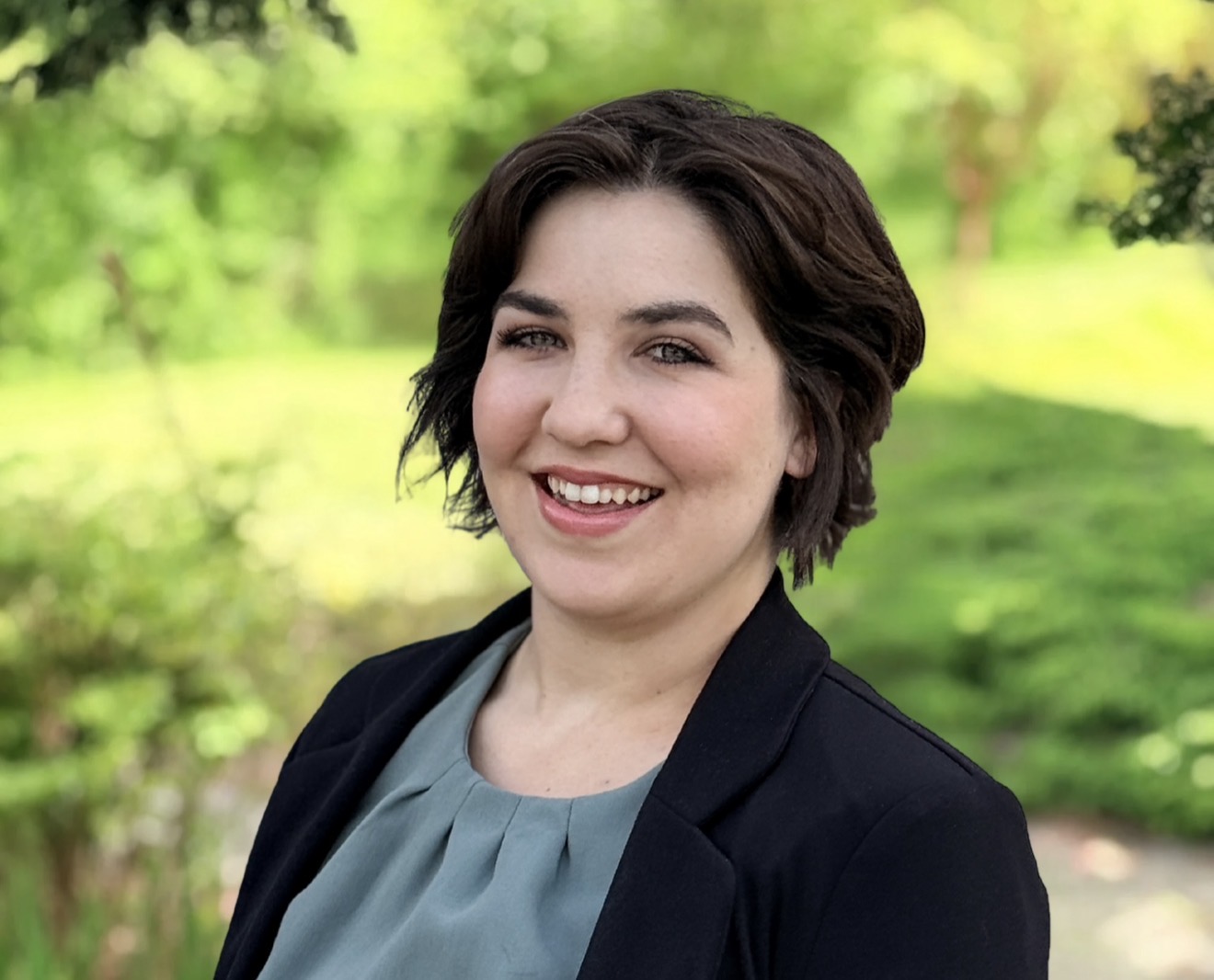
A talk with Kaylee Kuehn

Photo provided by the campaign.

I sat down over coffee in Port Townsend with the Democratic candidate for the 24th District Position 2, Kaylee Kuehn. We had a candid talk on a wide range of issues. The following interview was edited for brevity.

Kaylee Kuehn (pronounced Keen) is running for the open seat vacated by long time Olympia powerhouse Steve Tharinger. Kuehn was raised in Sequim, attended Evergreen college, and has a Masters in Education from Grand Canyon University. She is a mother and her husband is a former prosecuting attorney and now serves as an Assistant Attorney General for Clallam and Jefferson counties. She beat out two other Democrats and one Democratic Socialist of America for her place in the fall elections.

The defining factor in her running is her youth. At 28, she does not bring huge range of experience to the position, but does bring a youthful energy and has worked in education as a high school teacher and as a volunteer for a regional union, the Association of Western Pulp & Paper Workers in partnership with Pacific Northwest Regional Strategies. She is the first to admit that she does not have a lot of background on the issues facing the Peninsula.


KK: When I decided to run for this seat I wasn’t spending years of my life planning and prepping for doing this. I’m not trying to sell myself as more knowledgeable or experienced than I am. I can ask questions gather all the information and hopefully make the right decisions. That’s what I’m hoping to bring to this seat. I understand that a lot of people want a politician to come in and make all these sweeping changes and solve everything, and I just don’t view politics that way. I think that is very rare. I think there is a lot of value in pragmatism and balance to decision making about really important things that affect all of us.

Q: Steve Tharinger has been there for a long, long time. Where do you see your differences from Steve? Do you feel like you just take over where he left off, or do you see some, you see some differences between what you bring versus what Steve brings?

K.K: I’ve had the pleasure of meeting Steve several times, talking with him, and getting to know him a little bit more, and now that I’ve made it through the primary, he’s now gotten involved in the race. I see that we’ll be similar in a lot of ways, how we treat people.

I think where we differ is just our perspectives. I think the biggest difference will be that I am a young working mom. I’ve been riffed from a union job before. I know what that feels like. I know what it’s like to move every single year because of the rising costs of rent. But I would also like to bring my voice to this because I think that in the 24th, we’ve had nobody liked me before. With so many more working families living throughout the district, I think it’s good to have someone who actually has experience with the challenges that we face.

Q: What committees are you wanting to be assigned to if you win?

KK: I don’t have specific committees I am targeting. I think what’s important as a legislator is understanding how the process works. I would like to be on a fiscal committee, maybe on a policy committee. I was thinking about education, coming from that world. Adam (Bernbaum, the other Representative in the 24th) is going to be on healthcare and transportation, they don’t put freshmen on appropriations, so the capital budget makes sense for me. And perhaps housing. I think that would be a really impactful way that I could make a difference for our district, because it does come up so much.

Q: What do you think that you can actually address in housing?

KK: I do think we get very focused on process over outcome. So with housing in particular, I talked to so many people who said, I want to be able to make my property livable for somebody. I want to be able to rent it out. But the financial and timeline barriers are too much for virtually every person I talked to. And I think at the state level, we can ease those requirements. There’s probably something in between that just gets people housed and gets people into a situation where they can work towards.

Q: That sort of circles to the Growth Management Act (GMA).What do you think that needs to be fixed or changed in it?

KK: It’s pretty important. I’m not a planner. I don’t have those answers right now. I would like to understand it. There are definitely areas where I am not there yet about knowing the specifics of what I would like to propose or change, but I will learn it, and do what’s right for folks.

OPEN: What are your priorities?

KK: Number one, I would like to talk to the cost of living, affordability. I know that it’s a very big area. I am supporting the millionaire’s tax. I do think that it’s horrific that we have the second most regressive tax system in the United States. I don’t want to push business out. I feel like I want to be a friend to business and to understand the issues and want to keep them here. I also think that there have to be decisions that ultimately level the playing field. We need to be a lot more open to embracing just everyone having an equitable share so the burden isn’t more on working folks.

Q: The Climate Commitment Act (CCA) has been very controversial. We’re using the money (from the CCA) to build new electric ferries. That great. But I thought that the goal was to reduce carbon? And it’s causing the state to add more taxes to gas for blue collar people. So what do you say to those people?

KK: I was one of the only ones in the primary other than Marcia to be critical of the CCA. With the CCA, this is something that people have very strong feelings about. I just think that we have to look at, like, practical outcomes. It would benefit us politically, to not keep raising regressive taxes. We say there are benefits, but actually, a lot of people, especially out here, don’t see them. They feel they get hurt by them.

Q: So where do you cut the budget?

KK: I’ll bring up a kind of controversial thing, you know? One of the best things that we’ve done in Washington, I think, is implement paid family medical. It’s also a massive part of our budget. People say, why did the budget get so, so much higher? It’s because of things like this that are really good. I got a benefit from that (law), to stay home with my daughter for a long time and my husband did also.

But that’s a giant part of our budget. I think we shouldn’t be cutting from anything that has to do with children. Cutting the budget, it’s not just numbers to me, it’s real outcomes.

Q: So where do you cut? I mean, you have a pie that’s just so big. Right? We just don’t have the revenue stream to be able to do everything that we used to do or want to do, and so where do you see yourself supporting cuts? Former Governors Gregoire and Locke along with Ferguson say you have to cut. Would you support an across the board 5% of everything? Or only a specific cuts?

KK: I think I think it would come down to what makes the least direct impact? So unfortunately, if there’s some type of subsidy or something, or a decision like taking away spots that kids would have had to transition into kindergarten. I would not want to cut there. I am obviously not against kids getting school lunches. In an ideal world, we just would have all kids get free lunches all the time. But we probably need means testing. I work and I can afford to give my child lunch and pack their lunch for school. I think most people, that are lower middle class can do that. And I’m gonna piss some people off, saying that, but why not?

Q: On the environment, there is this whole issue of forest cutting. Out in Port Angeles right now there’s many environmentalists I know fighting for saving these small older growth parcels. $40,000, I think, is what Port Angeles would have gotten or will get, whatever, from that cut. So that’s something that they needed to budget for, and now that’s $40,000 out of their budgets for schools and police and all the rest. That’s mainly handled by the Department of Natural Resources (DNR) but I would assume that the legislature has some impact in being able to talk to DNR about budgeting issues.

KK: I think that one thing that’s kind of misunderstood is that a lot of this land, when it’s being sold, was already designated as needing to be sold. I’m kind of unsympathetic, because I understand that people want to protect these old growth trees. I would also like to, but to what extent, to what end? And what are we missing by doing that?

Q: Have you talked to those folks that are opposing the cut out there?

KK: You mean has every side has been talking to me? Yes. I had lunch this past weekend with Dave UptheGrove (the director of DNR). It was a great chance to sit down, ’cause I’m getting pressured on both sides. I agreed not to take timber money, and now I’m getting timber folks saying, can we send you campaign money? You know, for me, the funding thing. I’ll take all the campaign contributions I can get because now I’m not bought and I don’t care what anybody thinks. My vote is not bought by anybody. Someone wants to help me pay for my childcare (by donating to my campaign). They can. They get a meeting just as much as any other constituent would get a meeting and small business owner. Nothing comes above my constituency, if I’m elected.

Q: So have you made a decision yet on this issue?

KK: I just haven’t made up my mind yet. This is probably the biggest area out of any other policy area where I feel like I cannot, in good conscience, make a firm decision right now about what type of policy I’m gonna make, because I want to look it. I with talked with our mills and the industry and union were very aligned. because they’re concerned we’ve had so many mill closures.

Q: What are your thoughts about the Protection Island / Dungeness Spit Land transfer. Have you come down, one way or another, on what’s going on with this possible land transfer, that U.S. Representative Emily Randall is promoting?

KK: I know. I heard her talk about it at the little recent meeting. Yeah very contentious right now. I understand that.

I haven’t got the tribal perspective from it. I was hoping to sit down with Ron Allen but we haven’t managed to get together yet. The biggest concern is that it’s their sovereign status. Once they get the land they get to make their own decision and we don’t have any way to have input. Emily Randall said that there’s going to be a lot of conversations before this happens. It is not going to pass for several years if it even does, and we’re really going to work on it and get a lot of public comment. And at the end of the day, it is just the fact that it’s transferring it over and we’ll have no say. The US government would have no say in it.

I’m interested to hear different perspectives. I’m not saying I don’t have an opinion on it. One issue that I really do understand, and I take it very highly right now. is that I don’t I don’t trust the Trump administration.

Q: No, I don’t either.

KK: I don’t trust them (the Trump Administration) to manage it properly. What is great is that, like you said, it’s a co-management right now.

OPEN: What are your thoughts about your opponent, Marcia Kelbon?

KK: I really respect her independence. But to do this job, to be effective, to be able to secure funding for, is it a department or a district, to be able get in the majority caucus room and have be a voice for our district. You have to play the system. You have to. You have to understand it.

Last night (at the Marrowstone debate) she was very optimistic. That whole thing (about having a voice in Olympia) came up, and she said, “Well, I think that I can build a relationship with people.” I don’t doubt that. But Olympia is a machine. It’s serious. I mean no disrespect to my opponent. But no one cares about one person’s agenda. They really don’t. They have stuff to get done. Everyone’s got their own little game. And it’s sad, I think, but that that’s how it works.”

An Independent Challenges Democrats On The Olympic Peninsula

Over coffee in Port Townsend, I met with Marcia Kelbon, the independent candidate for State House of Representatives in Washington’s 24th Legislative District. The district spans the liberal stronghold of Port Townsend, the retirement community of Sequim, blue-collar Port Angeles, multiple Tribal reservations, and the economically struggling region of Grays Harbor County. She arrived on her Harley, from her home in the small town of Quilcene along Hood Canal. The Harley is not the only unusual thing about Mrs. Kelbon. She is a former Republican who has left the party to challenge for a State House seat that has been solidly in Democratic control for a couple of decades.


Mrs. Kelbon has an extensive professional background which includes work as a civil engineer, senior executive for a biopharmaceutical company and as a patent attorney. Her law degree is from the University of Washington. She currently serves as Fire Commissioner in Quilcene. She describes her family home as a “tree farm” located next to Rayonier forests whose clear cutting has raised concerns from her about the herbicides used after harvest.


Kelbon left the Republican party over platform disagreements in order to launch an independent bid for the open seat vacated by retiring Representative Steve Tharinger. She won a spot on the November ballot primarily because the Democrats split their vote between three candidates and a Democratic Socialist of America.


Q: What caused your split from the Republican party”


MK: “Well, I always disagreed with a number of issues, including hard-right stances by some in the party on abortion and marriage, and the party’s enthusiasm for Donald Trump. Contrary to what some claim, I did not vote for Donald Trump as a candidate in the primaries of 2016, preferring instead John Kasich of Ohio. I am dissatisfied with party extremes on both sides. As an independent I aim to bring a moderate point of view to the race and the legislature.”


Q. I understand that you support abortion access and LGBTQ+ rights. Those are positions usually thought of as Democratic positions. Are there other issues related to this that are not aligned with the Democrats?”


MK: “I don’t support minors undergoing gender-affirmation surgeries. I believe children are too easily swayed into irreversible decisions before knowing who they truly are.”


Q. What is your position on immigration?


MK: “I support closing the borders to stop illegal drug and human trafficking. But I don’t support the deportation of immigrants who aren’t criminals – we should instead create paths to green cards. We need immigrants in many sectors.” She named high tech and medicine as areas needing more immigrants to fill roles.


Her position on healthcare comes from personal experience.
MK: “I raised three children, all of whom were adopted including one through the foster care system. Two of our adult children have used the Affordable Care Act.”


She advocates the idea of a base support of government provided healthcare without insurers making profit in the mix, allowing everyone to get some coverage. She believes that would save a huge amount of money while obtaining better outcomes by getting insurance companies out of the job of providing basic healthcare insurance. While a great goal, that has proven to be almost impossible for either party to get close to doing.


Q. “What new ideas would you bring to the issue of criminal justice and the linked issue of addiction?”


MK: “Some people on the streets, not all – truly have had a stroke of bad luck or bad experience. But for many, there are issues of addiction and mental illness. Our current approaches… don’t appear to be effective in stabilizing people and preventing them from getting worse. Sheriffs and police chiefs tell me that the current gross misdemeanor penalty is not enough. I would like to restore a felony penalty for knowing possession of hard drugs – not so we can lock people up and throw away the key, but so that we can convince people to get into drug court and treatment rather than jail. I would also like to fund adequate facilities for addiction and mental health treatment.”


Q. “We have a lot of people wanting solutions to entry level homes for lower income people. What concrete ideas do you have for helping get more homes built here on the Peninsula?”


MK: “My father-in-law was a union electrician, and we have completed several builds, including with solar, so I do understand the issues facing the building trades. I would support revising the latest energy code applying to residential construction based more on a cost/benefit analysis. We have to lower the cost of buying homes for young buyers. I would also like to modify the Growth Management Act to make it easier to build in village centers.”


Q. “Taxes are something that Republicans always are complaining about, wanting to drive down taxes. What’s your position on taxation. What makes you different?”


MK: “Our current tax structure is inequitable, but layering an income tax on top of the current regressive sales tax system is not the answer. While voters have time and again rejected an income tax, I suspect they might support a comprehensive restructuring of state taxes that does not increase the overall tax burden. I am willing to collaborate with either party on meaningful tax changes.”


Kelbon remains opposed to the proposed land transfer of Protection Island and Dungeness Spit to the Jamestown S’Klallam Tribe.

Mk: “I am not in favor of that transfer at this time,” she explained. “I am concerned about commercial oyster farming and potential herbicide applications on Protection Island.” She also wondered about whether the Elwha and Port Gamble S’Klallam are supporting this land transfer.


Her path to victory is uncertain. She is banking on the fact that while Jefferson County remains solidly Democratic, Clallam and Grays Harbor counties are more conservative.

Even if she does win, it is unclear what she can accomplish in Olympia. Committee assignments are assigned by the two main parties. With the Democrats holding a large majority, it could be very hard to find an assignment. But that’s a long ways off. Until November, she needs to convince independents, disillusioned Republicans, as well as the people who never vote to turn out for her in this huge geographic district. She is trying to do that with a minimal campaign staff. That is not a small challenge. But if she can win and bring an ability to force the Democrats to modify positions to accommodate her vote, it could see some new policies that bring change to the Peninsula.

Anji Scalf launches campaign for county commissioner in district 3

Anji Scalf is going to run for Greg Brotherton‘s seat. Anji one of the good ones. She’ll be a great replacement for Greg . Looking forward to supporting her in the campaign.

Event: Meet the Candidate! Dave Upthegrove

Dave is running for Washington State Lands Commissioner, filling the position that is being vacated by Hilary Franz. I’ve know of Dave Upthegroves’ work in the legislature on behalf of environmental concerns since the mid 2000’s when he was a keynote speaker at People For Puget Sound’s Environmental Lobby Days. Dave has been a staunch supporter of environmental legislation. One of the great things about living here on the Peninsula is you get a chance to actually meet and talk to candidates for significant statewide office. Olyopen supports Dave. He’ll make a great Lands Commissioner.

Hope you can make it or at least donate to Dave’s campaign.

Meet Dave Upthegrove!

February 3, 2024 | 3-5 pm

Sons of Norway – Port Angeles

131 W 5th St

Port Angeles, Washington 98362

RSVP Here

Donate in Lieu of Attendance

Elections 2015 – Some surprises Some not.

Off Year elections are always hard. Low voter turnout is a problem. Here’s some of the wins.

Jefferson County

  • The hotly contested Port Commissioner – Diana Talley defeated by Steve Tucker. Diana did a great job as a newcomer to the political scene but some of her supporters did not do their homework in attacking the Port.
  • Jefferson County Hospital Commissioner – Kees Kolf is now another voice for change on the Commission. A good thing.
  • Hospital Commissioner Dist. 2 – Marie Dressler trounced Paul Stafford. The Status Quo wins here.
  • Port Townsend City Council – The young and the restless win. It will be interesting to see how they do as they learn the craft of politics in a small town. Just remember, you will always make enemies when you take a position, so do it with kindness, but take it anyway. And keep an open mind, so many of us were so convinced of our positions when young, only to find out later how much we didn’t know. Some of us still don’t!

Clallam County

  • Mark Ozias trounces Jim McEntire for County Commissioner!  While this won’t change the balance of power at the Clallam County Commissioners offices, it will add a voice of reason to extreme views of the other commissioners, who are doing their best to roll back all environmental efforts of the County.

Seattle Port Commissioner

  • Fred Felleman – An outsider wins a seat at the Port, which matters because of Shell Oil wanting to use the Port as a pit stop to Alaska North Slope Oil. Fred has been laboring for years on oil spill prevention in Puget Sound. He likely will be a strong voice for environmental concerns.

Initiative 1366 – 2/3rds for Tax Hike

  • Tim Eyman’s latest attempt to hobble the State to collect new taxes is currently winning, and likely headed for the Supreme Court, where we can only hope it gets thrown out. This  initiative that played on the voter sentiment of no new taxes  and would likely  lead to more toll roads, higher ferry fees, less taxes for infrastructure and other desperate state needs, was accepted by voters in all counties but Jefferson, Thurston and King. The opponents of Eyman’s initiatives should hire better consultants to help them get their message out next time.

The Elections and the Changing Environmental Landscape

The outcome of the national mid-term elections yesterday is going to blow an ill-wind towards those working to protect our environmental resources. While I did not get any sense of environmental issues being at the heart of the sea change to Republican wins, like Canada, the outcome is likely to be a weakening across the board to anything that might help us stave off the problems that are mounting on land, sea and air.

The failure of the national Democratic party and it’s head, President Obama, to capitalize on their positive work over the last six years, to me, appears to be more marketing and campaign consulting issue than actual anger by the voters at negative things they have done. The New York Times had statistics two weeks ago that showed that Obamacare was helping the very people voting against the Democrats the most, the poor and lower middle class across the South and Southwest. The influence of big money by CItizens’ United is now showing as well. Many elections were close. So it was only a landslide when you view the overall picture. Certainly no blame can be assigned to the environmental political orgs, who blanketed my inbox with pleas for money on an almost daily basis. Friends told me they had stopped emails from MoveOn for example because of daily ‘begging’ mail. It shows there is only so far you can push email pleas before the voters tune you out.

With the Congress firmly in their control, look for the Republicans to use the budget as it’s whip. Defunding environmentally oriented agencies, like EPA, will be high on their list. Judges will be put forward who support business over the environment, as seen by the makeup of the Federal Supreme Court. Legislatively, they will be working to reverse any laws standing in the way of oil and gas development, as if there were any left standing after 6 years of Bush and his Congress from 2001 to 2007. Also look for repeal of the law banning the export of oil and gas to foreign countries. It’s been bad enough that we have plundered our land by fracking for our own needs, but now it will be for the benefit of world markets rather than our own. If you aren’t active, now is the time to do more than just read blogs. Don’t count on Obama to help us, he has shown himself to be very capable of appeasing foes, rather than using FDR like tactics to demonize them to the public, the way the Republicans have very effectively done of him.

Is there any positive light at the end of this dark tunnel we are entering, it’s that local elections, both here and elsewhere in our state, have supported positive actions. 58% of eligible voters voted in Jefferson County, while a dismal 38% voted in Clallam. Our local legislators were returned to office, both nationally and state wide. In Jefferson County we elected a new County Commissioner who is very willing to support environmental progress.  Judges at the State Supreme Court level who have supported McCleary to boost education funding (like science funding) are back.  And voters continue to allow the the legislators to do their job, rather than show their distaste with the use of  advisory votes.

Also, recently, data has surfaced that shows that solar energy costs for panels and the like have now plummeted below the cost of oil, gas, coal and other electrical generation costs, for the first time. This means that across the US, (and world) the decision to install solar will not need to be funded by government action (or hampered by inaction). While we don’t benefit greatly from solar here in the Pacific NW (due to low hydro electricity costs and lack of high intensity sun), those locations that do, all over the US, will see the economic decision to choose local solar made much easier.

So don’t despair, political change has never been easy. But don’t take this election as a gift to sit in front of computer and tune out the bad news that’s sure to show up in the next two years. Get out and do something positive locally to show you care. See you in the trenches.

This week…VOTE

Have you sent in your ballot? Time to get it done! And help a neighbor remember too!

The primaries are on. For Jefferson County, there is a bit of confusion as the Republicans have vanished and “independents” are now the label that they are taking.  But let’s look at some of the races.

US. House of Representatives.  Derek Kilmer 

Derek has done an admirable job of navigating the House of Representatives, which are currently controlled by a radically anti-environmental group of Republicans who insist on trying to overturn key legislation, or open more locales to mining, fracking and the like.

The League of Conservation Voters has a good overview of his voting record here.

http://www.lcv.org/elections/environmental-facebook/derek-kilmer.html

Derek has teamed up with Republicans to create a bi-partisan Puget Sound Recovery Caucus, to continue to fight for funding to promote Sound cleanup.

Vote backgrounds

http://votesmart.org/candidate/key-votes/51516/derek-kilmer/30/environment#.U8075OZdXhA

While I applaud the idea of the Green Party coming to the field with Doug Milholland, I would not recommend voting out a successful and proven Congressman with an unproven candidate, no matter what his promises might be. If the current position was filled by an anti-environmental legislator, then I would be seriously considering Mr. Milholland’s candidacy. I attempted to get an interview with Mr. Milholland but apparently we were unable to connect in the last two weeks.


State of Washington House of Representatives.  Steve Tharinger and Kevin Van De Wege

Both these candidates have proven themselves to support environmental law and policy. I have met them over the years, and witnessed them working. I fully support their return to office over any of the possible other candidates.

Jefferson County Commissioner District 3 – Kathleen Kler. 

Ms. Kler is the hand picked replacement for a very supportive environmentally oriented Commissioner, John Austin. While I have only interviewed two of the other candidates, their lack of depth and experience in environmental issues, and their focus on jobs over all other issues, leaves me coming back to the fact that Ms. Kler has worked closely on a number of issues throughout the County as documented on her  web page:

http://kathleenkler2014.com/about-kathleen/

She is endorsed by the Jefferson County Democrats, which also means that she has proven herself adept at working with large diverse groups. With the County Critical Areas Ordinance up for revision during the next term, it’s important to have  a clear environmental supporter on the Commissioners, along with the current two.

Public Utility District #2       Ken Collins

I think it’s time to swap out Mr. McMillan  after the disaster of the switch over to the PUD. Low income people have had their power cut during winter, billing was poorly executed, and support of environmentally friendly power generation is put on the back burner. A lack of sensitivity to the customer permeates the current PUD, and  Mr. Collins brings experience dealing with other power and energy companies, and also a commitment to help serve low income population, which comprises a large percentage of the county.


North Olympic Sierra Club weighs in on PUD race

Received from the S.C.

The North Olympic Group of the Sierra Club is following closely the race for  Jefferson County PUD Commissioner, District 2. Recently, the PUD has assumed the
role of an electric utility but has fallen far short of what citizens had hoped for when  Jefferson County voted to establish its own pubic electric utility and to end its
longstanding relationship with Puget Sound Energy (PSE).For this reason we think it’s time for new PUD leadership. We encourage Sierra Club
members to support candidates in the primary who understand the importance of  environmental and conservation issues and the important role the PUD can play in
developing a long-range strategy that emphasizes affordable and environmentally  sustainable energy for Jefferson County. After the Sierra Club North Olympic
Peninsula Political Committee Chairs interviewed all three candidates, we felt both  challengers–Tony DeLeo and Kenneth Collins–are worthy of your support in the
primary.

Since taking on the responsibility of a power utility, the PUD has sent hundreds of disconnect notices to lower-income citizens because it failed to continue the
financial assistance programs PSE had in place for helping people pay their winter heating bills. Additionally, the PUD is faced with the prospect of turning back
hundreds of thousands of dollars earmarked for conservation by the Bonneville Power Administration because of a failure to publicize and aggressively market
these programs. Finally, despite the fact that Jefferson County has one of the highest solar adoption rates in the state, the PUD has failed to make solar one of its
priorities. This is particularly important in light of the fact that, depending on the year, from 10-20% of the PUDs electricity comes from nuclear and coal sources that
need to be phased out. It’s time for a change.

Tony DeLeo’s blogspot provides more voter information. You can view his profile and where he stands on local issues by clicking on this link:
http://deleo4pud.blogspot.com/. Kenneth Collins has provided more voter information at his website. You can view
his profile and where he stands on local issues by clicking on this link:
http://kennethcollinspud.com/