$1B up for grabs to help salmon get to where they’re going – KUOW

Continued funding of efforts to reverse 100+ years of destruction of our salmon streams. Removal of culverts is critical to any hope of restoring wild salmon. These are real jobs for blue collar people on the Peninsula. Much better use of our federal funds than funding many other non critical issues.


U.S. Transportation Secretary Pete Buttigieg announce a $1 billion program to help save the region’s salmon while visiting Washington state Thursday…Salmon need to travel up rivers to spawn. A lot of them don’t make it because culverts get in the way. Culverts are like tunnels that let streams pass under roadways. Many were installed decades ago. While they allow water to pass through, they don’t work as well for salmon. The new program will help pay to improve or replace culverts in the region. A total of $1 billion is available over five years thanks to the “National Culvert Removal, Replacement and Restoration-Culvert Aquatic Organism Passage Program.” Applications are open for tribal, state, and local governments. David Hyde reports. 

(KUOW) 

Can kelp farming help save our marine environment? -Salish Sea Current

This is an echo of both the race to open the Sound up to salmon farms in the late 70s (a failure both financially and environmentally) and the race to open beaches across the Sound to commercial aquaculture, including geoducks (a financial boon but an environmental disgrace). Our tendency to ignore the possible downsides of new aquaculture plays into a narrative that all aquaculture is “good” and “sustainable”. Part of the issue here is that NOAA is looking to continue to support the conversion of our waters and beaches into commercial companies, which end up making it impossible to access more and more of our public beaches. Part of NOAAs efforts is to put a “stacked” farming plan into effect, looking at each depth as a possible source of revenue for businesses. Shellfish on the bottom, kelp in the middle with hopefully some fish along the way. Where recreational users fit into this is ignored. Proof? try kayaking in many of the bays in the South Sound, where geoduck nets straddle much of the waters. Is there any real debate going on about kelp farming at the state level or will we simply open the waters to another industry that we can never again reign in. There rarely is any ability to stop or better regulate it once it’s in place.

To be clear, I am not against the idea of this industry taking hold, I’m against the blind race to simply permit this without really debating the long term consequences of our actions.

Thirteen Washington counties ring the Salish Sea; a kelp farm would have to meet the requirements of each county’s shoreline master plans, which regulate shoreline uses. Tribal governments would likely want to review applications to ensure a kelp farm wouldn’t interfere with tribal fishing in their usual and accustomed areas.

Can kelp farming help save our marine environment? – Salish Current (salish-current.org)

West Coast gray whale population continues to decline but scientists remain cautiously optimistic -KNKX

The story points out the possibility of this being part of a natural population swing, but…they aren’t sure.


U.S. researchers say the number of gray whales off western North America has continued to fall over the last two years, a decline that resembles previous population swings over the past several decades. According to an assessment by the National Oceanic and Atmospheric Administration Fisheries released Friday, the most recent count put the population at 16,650 whales — down 38% from its peak in 2015-16. Associated Press and Bellamy Pailthorp report. (KNKX)

West Coast gray whale population continues to decline but scientists remain cautiously optimistic | KNKX Public Radio

Do Protests Actually Help Climate Action?

Fascinating 30 minute audio segment on the BBC about whether mass protests help promote the public to action on climate change. Answer? Not likely. Why? Politics and our modern social media are altering the very reality of people. Political hallucination as I would call it. Check it out.

“As pandemic restrictions ease in many places, street protests are starting up again. But what happens when the public takes climate action into their own hands, from sticking themselves to diggers to bunking off school? Mass protests and demonstrations can be an effective way to gain media attention but do they lead to lasting change?”

https://www.bbc.co.uk/sounds/play/w3ct3kjk

New Research Shows Innovative Commercial Fishing Technique Can Aid Wild Salmon Recovery & Support Sustainable Fisheries – Wild Fish Conservancy

Very good news.

OCTOBER 6, 2022— A new study evaluating alternative commercial fishing techniques further demonstrates the critical role commercial fish traps can play in recovering wild salmon and steelhead, improving fisheries management, and providing new sustainable fishing opportunities for coastal fishing communities. The publication confirms the ability of fish traps (or pound nets) to nearly eliminate unintended mortality of threatened salmon and steelhead encountered in commercial salmon fisheries of the Columbia River.

Researchers at Wild Fish Conservancy, alongside Dr. John Skalski of the University of Washington Columbia Basin Research Lab, published a new open access paper in the international journal of Fisheries Research evaluating survival of wild adult salmon after being released from two commercial fish trap sites in the lower Columbia River. The results demonstrated post-release survival at or near 100% for spring and summer-run Chinook salmon and coho salmon released from passively operated fish traps between 2019 and 2021.

“The new publication provides the most clear-cut and irrefutable evidence to date that fish traps can nearly eliminate unintended mortality of threatened and endangered salmon and steelhead during harvest, allowing for sustainable and resilient commercial fisheries that can enjoyed for generations to come,” says Emma Helverson, Executive Director of the Wild Fish Conservancy. “It is rare to find a win-win solution with such widespread benefits for wild fish, orcas, resource managers, and coastal fishing communities.”

In conventional fisheries, a major barrier impeding recovery is the accidental harvest and mortality of threatened and endangered populations by fishers targeting other wild or hatchery fish. Using ancient fish traps as a basic model, Wild Fish Conservancy biologists began evaluating contemporary fish traps in 2016 in efforts to develop a sustainable, alternative fishing practice to conventional gillnetting. The goal was to safely release wild salmon and steelhead in need of recovery, while allowing fishers to selectively harvest those healthier, abundant runs, such as the Columbia River’s hatchery fish. Passively operated traps are engineered to allow fish to remain free-swimming at all times and to eliminate mortality effects commonly associated with conventional fishing methods, including injury from nets, overcrowding, human-handling, and air exposure.

The new publication builds on and validates the results of previous studies evaluating passively operated fish traps on the Columbia River that have consistently shown survival near 100% for adult fall-run Chinook salmon, coho salmon, sockeye salmon, and summer-run steelhead released as bycatch. No other commercial fishing method studied on the Columbia River has demonstrated survival results as encouraging for wild salmon recovery and fish traps are the only gear to be rigorously evaluated through the scientific peer-review process.

The results of this new study also corroborate growing scientific consensus demonstrating that the most sustainable commercial salmon fisheries are those that occur in or near rivers where wild salmon return and use selective fishing techniques like fish traps that are proven to limit or eliminate harm to threatened and endangered bycatch.

“Our research team was completely blown away. When we analyzed the genetic and tag datasets for upriver populations of Chinook salmon heading to spawning grounds or hatcheries above Bonneville Dam, literally every adult Chinook passively captured and released from the fish trap survived the 167 km, 7-day journey to the dam,” said Wild Fish Conservancy biologist Adrian Tuohy. “The study was straightforward and the findings are irrefutable.” 

In comparison to results for the fish trap, the commercial gillnet—the primary tool for harvest on the Columbia River—is known to cause ~49% mortality of threatened wild Chinook salmon encountered in the fishery. The lethal effects of the gillnet are also known to be severe for other fish species that become entangled as fishers target hatchery Chinook salmon, however the true impact of the gillnet to these other threatened salmonid stocks in the Columbia River remains unknown as no post-release mortality data have been collected by state or federal management agencies.

“Few data, if any, have been collected for the gillnet and other alternative salmon fishing methods to understand post-release mortality of bycatch… and hardly any of this work has undergone scientific peer-review,” says Tuohy. “Given the information that is available, it is clear that no other salmon fishing gear has come remotely close to achieving the peer-reviewed results we’ve seen for fish traps when it comes to releasing wild salmon unharmed and allowing for selective harvest of hatchery fish in Columbia River fisheries.”

Findings from this new publication are expected to help guide the Washington Department of Fish and Wildlife (WDFW) as the agency establishes rules for the alternative gear commercial fishery that will legalize fish traps at a localized scale on the lower Columbia River. In 2021, both the Governors of Washington and Oregon made policy and funding commitments to advance selective harvest practices like fish traps as alternatives to nontribal gill nets in the Columbia River. Washington state is currently implementing a voluntary gillnet license buyback program with the objective of redirecting those allocation impacts to alternative gears like fish traps or wild fish escapement.

Beyond the Columbia River, this research is also serving as an important working model to inspire other Pacific Northwest communities seeking sustainable harvest solutions. Wild Fish Cosnervancy is currently partnering with First Nations in British Columbia where the Canadian government has implemented unprecedented fishery closures in 2021 and 2022 out of conservation concerns.

“The situation facing the Columbia River is not unique. Throughout the Pacific Northwest coastal communities and resource managers are facing difficult decisions whether to close or further limit commercial fishing opportunities in order to protect our region’s most imperiled wild salmon,” says Helverson. “These new results could not have come at a better time and we are proud to play a role in advancing much needed solutions that we hope will benefit communities and recovery efforts coastwide.”

More at

Event: Dana Lyons Concert Oct 9

A benefit for the Global Earth Repair Summit

What’s at stake if the Columbia River Treaty were to end

Under the Trump administration, this agreement was at risk. Now, less so. An important treaty, you likely never knew existed.

In the mid-20th century, Canada and the U.S. collaborated together to form the Columbia River Treaty. This agreement meant both countries would jointly develop, manage and regulate the Columbia River. The treaty was intended to last for 60 years which means it expires in 2024. Earlier this month, 32 Pacific Northwest groups sent a letter to U.S. officials urging them to modernize this treaty as that deadline approaches. Rolando Hernandez reports. (OPB)

New study finds chemical contaminants in Salish Sea seaweed

A new study raises concerns about levels of chemical contaminants in edible seaweed in the Salish Sea. As mentioned in “The Fish Site”

A new study just published by researchers at Western Washington University (WWU) reports concentrations of up to 162 chemical contaminants in three species of edible seaweeds gathered in the Salish Sea.

From the article’s abstract:

Despite growing interest in edible seaweeds, there is limited information on seaweed chemical contaminant levels in the Salish Sea. Without this knowledge, health-based consumption advisories can not be determined for consumers that include Tribes and First Nations, Asian and Pacific Islander community members, and recreational harvesters. We measured contaminant concentrations in edible seaweeds (Fucus distichus, F. spiralis, and Nereocystis luetkeana) from 43 locations in the Salish Sea. Metals were analyzed in all samples, and 94 persistent organic pollutants (POPs) (i.e. 40 PCBs, 15 PBDEs, 17 PCDD/Fs, and 22 organochlorine pesticides) and 51 PAHs were analyzed in Fucus spp.

We compared concentrations of contaminants to human health-based screening levels calculated from the USEPA and to international limits. We then worked with six focal contaminants that either exceeded screening levels or international limits (Cd, total Hg, Pb, benzo[a]pyrene [BaP], and PCBs) or are of regional interest (total As). USEPA cancer-based screening levels were exceeded in 30 samples for the PCBs and two samples for BaP. Cadmium concentrations did not exceed the USEPA noncancer-based screening level but did exceed international limits at all sites. Lead exceeded international limits at three sites. While seaweed was the focus, we did not consider contaminant exposure from consuming other foods. Other chemicals, such as contaminants of emerging concern (e.g., PFAS, pharmaceuticals and personal care products), should also be considered.

The whole study can be found here:

Chemical contaminant levels in edible seaweeds of the Salish Sea and implications for their consumption | PLOS ONE

Program: River Otter Beach Walk

Wednesday,10/19/22 @ 10am

Registration: https://www.eventbrite.com/e/river-otter-beach-walk-tickets-411776112437

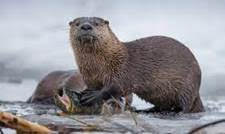
Join us to learn about these cute and curious creatures that live throughout the Puget Sound.  We’ll be taking a beach walk on East Beach past the Wansboro Battery and discussing the river otter’s life cycle, behavior and where you might find them.  If we’re lucky, we may even see one!  Bring comfortable shoes, warm clothes and a rain jacket.

Meet: East Beach past Wansboro Battery

Presenter: Jenn Riker

Program: Southern Resident Orcas

Registration: https://www.eventbrite.com/e/southern-resident-whales-update-tickets-411781919807

A southern resident Killer whale (Orcinus orca) leaping out of the waters of Haro Strait, British Columbia, Canada

Saturday, 10/29 @7pm

Join us to learn about our Southern Resident Orcas, now they are doing, and recent research.  Join Friends of Fort Flagler for an in-person presentation at the Fort Flagler hospital and learn about the Southern Resident Orcas at the Hospital.

Meet: Hospital behind the Museum.

Presenter: Brad Hanson, Ph.D., Wildlife Biologist,

Brad is an ecologist with the Northwest Fisheries Science Center and is currently studying foraging and habitat use of Southern Resident killer whales and health assessment of harbor and Dall’s porpoises.  Previously, Brad worked as a Wildlife Biologist at the National Marine Mammal Laboratory in Seattle, WA. Brad received a Ph.D. from the University of Washington where he worked on the development of improved tag attachment systems for small cetaceans. He also holds an M.S. in Fisheries from the University of Washington and a B.A. in Zoology also from the University of Washington.

Friends of Fort Flagler is a non-profit organization dedicated to the restoring, preserving, and protecting the natural and historic resources of Fort Flagler State Park.  Please support our state park by becoming a member, volunteering, or donating to our organization.  To learn more, visit https://friendsoffortflagler.org/.

Over-the-counter pesticides found in islands’ forage fish-San Juan Journal

Very troubling findings in a recent research on pesticides found in Sand Lance which are fish eaten by many higher level predators. Please do not use pesticide sprays like this for carpenter ants and other insects. You likely are poisoning yourself and the environment.

An intriguing sidelight of the Kwiaht study is a finding that sand lances collected closest to Admiralty Inlet, the entrance to Puget Sound, were on average twice as contaminated with pyrethroid pesticides as sand lances collected on the north side of San Juan County closest to the Fraser River plume.

https://www.sanjuanjournal.com/news/over-the-counter-pesticides-found-in-islands-forage-fish/

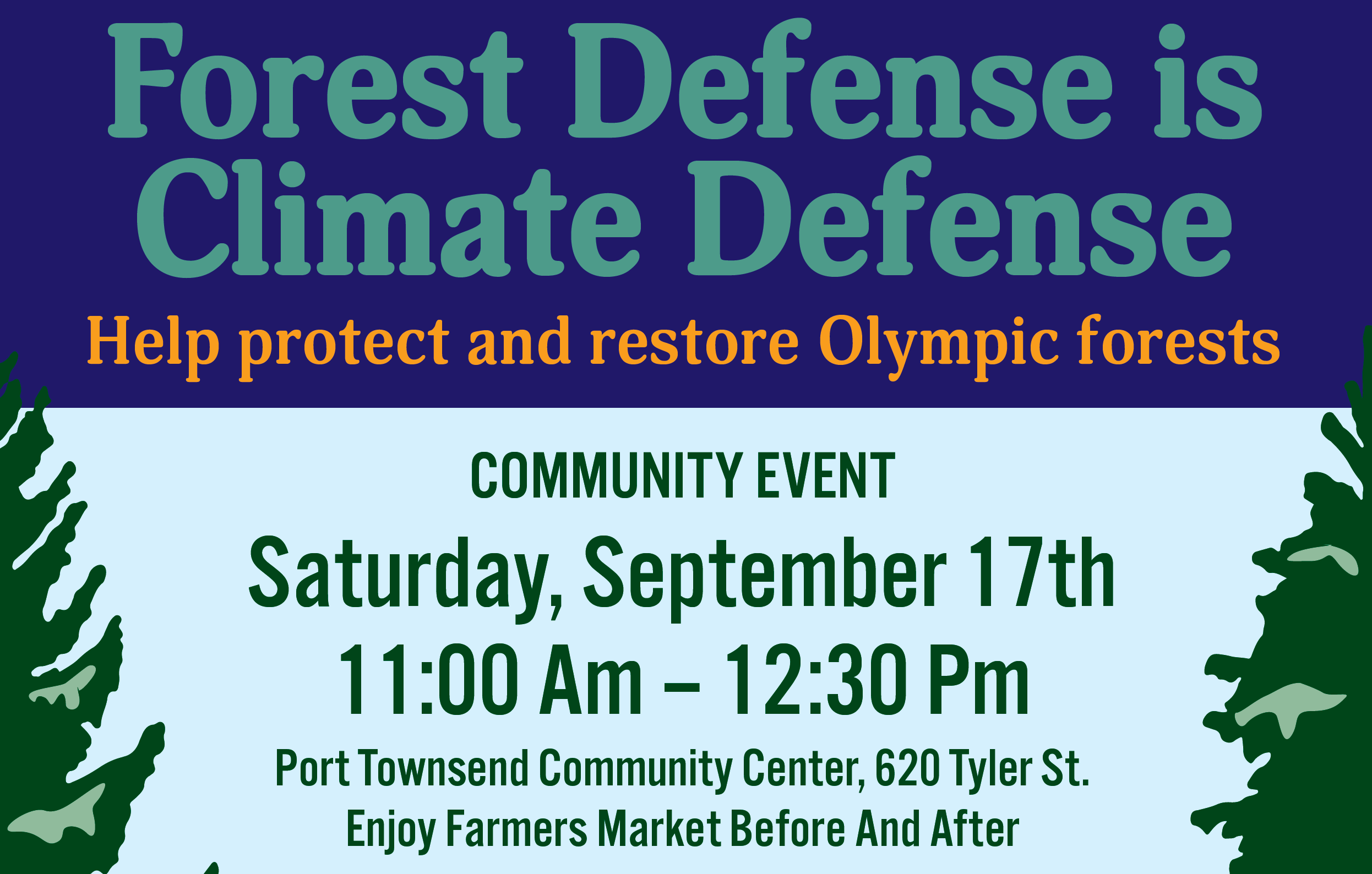
Event: Forest Defense is Climate Defense – Port Townsend 9-17

Please join Center for Sustainable Economy, Center for Responsible Forestry, and the Emergency Conservation Committee PNW on September 17th, 11:00 AM to 12:30 PM at the Port Townsend Community Center (right next to Farmers Market)  for a panel discussion on the climate impacts of industrial logging activities and what decision makers at the federal, state, and local level can do to scale up climate smart alternatives that represent a win-win-win for climate, communities, and workers. More information about the event can be found here. Please share the event on Facebook here. The panel will feature former Commissioner of Public Lands (2009-2017) Peter Goldmark, Dr. John Talberth, and Jessica Randall speaking about the scientific and economic case for protecting Olympic forests for their climate benefits and what strategies are in play to accomplish that goal. A lively discussion will follow, so please be prepared to share ideas on what you think needs to happen. See you then!

Study raises questions about using ‘woody debris’ to restore streams -Salish Currents

Some of the woody debris projects work, some don’t. The reasons why are not yet known.


“Efforts to improve salmon streams damaged by past logging and other human activities commonly include the addition of carefully placed logs, tree roots or “woody debris” to mimic this natural system. But a new report raises questions about the value of adding wood to streams — at least in the way it has been done in many restoration projects.”. Chris Dunagan reports. (Salish Sea Currents)

Judge: Sustainable Salmon Harvest isn’t Sustainable – Post Alley


King salmon that you might have eaten recently apparently might not be available much longer. I know when I saw them in the fish-market two weeks ago I wondered if whether it had been legal to catch it. I assume it had as our fish market is very good at making sure that the only buy a sustainably caught fish .But here’s the background on it.

Those sustainably harvested Chinook salmon seemingly legally caught by trollers off Southeast Alaska aren’t “sustainably harvested.” So ruled U.S. District Judge Richard A. Jones, adding that the plan that has allowed them to be harvested there violates the federal Endangered Species and National Environmental Policy acts. On August 10, the federal judge granted Duvall-based Wild Fish Conservancy (WFC) summary judgment against the National Marine Fisheries Service (NMFS), its parent Department of Commerce, various officials of both agencies, and the Alaska Trollers Association and the State of Alaska, which had intervened. Dan Chasen writes.

https://www.postalley.org/2022/08/31/judge-sustainable-salmon-harvest-isnt-sustainable/

New film about spring Chinook delves into history, culture and science in unique habitats – PSI

Worth a watch!


A new film, titled “The Lost Salmon,” opens with a video montage that takes us through some wondrous scenes: A wide aerial shot of California’s majestic Salmon River, moving to an underwater view of salmon swimming through the clear water and then to an action spectacle of wild salmon practically flying through the air to surmount a rushing cascades. Christopher Dunagan reports. (Puget Sound Institute) 

Singer Carole King on Olympic Trees – NY Times

Singer/Songwriter and environmental activist Carole King wrote an opinion piece on why the Biden Administration should sign an executive order immediately…

“…directing his secretaries of the interior and agriculture to take all steps available to them to stop commercial logging on public land. We can’t wait a year…..Forest preservation is a climate solution. That’s why we need action to safeguard the forests on the public lands we all share. Federal law requires that most public lands be managed for multiple uses, such as recreation, gas and oil development, mining and logging. But this longstanding policy is running headlong into efforts to slow the warming of our planet.“

Read the whole opinion piece here:

Opinion | It Costs Nothing to Leave Our Trees as They Are – The New York Times (nytimes.com)

138K green crabs pulled from Washington waters … so far in 2022 – KUOW

The battle to rid our waters of the invasive European green crabs is making some headway. Losing this battle could mean the end of Dungeness Crab and many other creatures in the Salish Sea. Luckily the State and Tribes are taking this very seriously, as they should.


So far this year, Washington’s Department of Fish and Wildlife says more than 138,000 European green crabs have been removed from Washington waters. It’s a considerable increase in green crabs captured locally than previously reported this year. A total of 85,000 were captured near Bellingham last year. (KUOW) 

Washington to phase out new gasoline-powered cars by 2035 -AP

Washington Gov. Jay Inslee says the state will phase out the sale of new gasoline-powered cars by the year 2035. Inslee announced the move in a tweet on Wednesday and said a new rule will be finalized by the end of the year. John Ryan reports. (KUOW)  

California poised to phase out sale of new gas-powered cars California is poised to set a 2035 deadline for all new cars, trucks and SUVs sold in the state to be powered by electricity or hydrogen, an ambitious step that will reshape the U.S. car market by speeding the transition to more climate-friendly vehicles. (Associated Press)  

Chinese province plans ban on sale of gasoline cars Hainan island in the South China Sea says it will become China’s first region to ban sales of gasoline- and diesel-powered cars to curb climate-changing carbon emissions. (Associated Press) 

The move away from fossil fuels can come none too soon. Rivers supplying critical water for cooling nuclear power plants and providing dams with water are running dangerously low across China, the U.S. and Europe. We have no time to waste. The assumptions that we have enough time to wait until the mid-30s are likely to be unrealistic. Many climate scientists warned us years ago that if we did not hit global warming targets the world would reach a tipping point by the end of this decade. What will it look like if we don’t have electricity production to meet the needs of the electric cars? Or even to heat our homes and provide drinking water.

Seeking Environmental Educators for 2022-2023 AmeriCorps Term

From the PT Marine Science Center

Inspire students, visitors, and the whole community to explore, experience, connect with, and take action to protect and steward the unique ecosystems of the Salish Sea.

The Port Townsend Marine Science Center (PTMSC) is seeking three Marine Stewardship Educator AmeriCorps Members to join our team dedicated to conserving the Salish Sea. These are full-time 10 ½ month positions starting October 17, 2022. These stipend-supported positions are sponsored by the Washington Service Corps AmeriCorps program. These positions are contingent upon funding.

PTMSC is a non-profit marine conservation, science and education organization located in Fort Worden State Park and downtown Port Townsend, Washington. Our two park facilities house a small vibrant aquarium featuring life from the nearshore habitats of the Salish Sea, a museum with a fully-articulated orca skeleton and natural history collections, and classrooms. (The new downtown facility is currently being developed.) Our exhibits also explore how human impacts such as climate change stress the fragile ecosystems in the Salish Sea, and what people can do, through their collective actions, to affect positive change. Based in a rural community with limited access to high quality science programming, PTMSC provides valuable, science-based learning opportunities for all ages. We do this through hands-on educational activities, public programs, social media, and citizen science projects. As a long standing part of our community (40+ years) we prioritize and model the positive actions being taken to steward these lands and waters for future generations. 

AmeriCorps members will be recruited and interviewed in August and September, 2022. Primary activities shift seasonally, with an emphasis on school programs in the winter/spring and exhibit interpretation and day camps in the summer. Throughout the term, members help to coordinate and participate in a range of on-site and field-based citizen science projects with staff, volunteers, and our partners. Additionally, team members will learn about and assist with animal collection, animal care, and aquatic life support. And they coordinate volunteers to assist with research and outreach events, and collaborate with staff in developing new programs. There is a lot happening at PTMSC! Visit www.ptmsc.org to learn more.

DUTIES: All AmeriCorps positions will conduct activities within the following focus areas in order to inspire conservation of the Salish Sea:

1) Education (30%): Provide hands-on, inquiry-based K-12 science programs to students in economically disadvantaged schools.

2) Exhibits (40%): Provide meaningful informal science education through the operation, interpretation, and upkeep of our two exhibit halls and engage the public through tours and educational programs.

3) Volunteers/Outreach (15%): Provide meaningful volunteer opportunities for people of all ages and backgrounds utilizing effective volunteer management strategies, such as training, coordinating, and recognizing volunteers. Provide outreach to the community through programs such as citizen science research, beach cleanups, tabling events, and social media.

4) Research (15%): Assist and coordinate citizen science research projects, collect and enter data both in the field and in the lab for projects that include identifying harmful marine phytoplankton (SoundToxins), surveying intertidal organisms, collecting data on stranded marine mammals, or hosting an iNaturalist BioBlitz.

OPPORTUNITIES:

● Serve with a team of educators developing and delivering state-of-the-art science education, programs, and exhibits

● Support current research through projects in citizen science

● Receive training in natural history, marine biology, ecology, teaching and interpretation techniques, and care of cold water marine animals

SKILLS AND QUALIFICATIONS:

● College degree or background in marine biology, natural history, environmental education, citizen science, or a related field; or equivalent experience

● Familiarity with concepts and methods of scientific research

● Energetic, self-motivated team player and willing to learn

● Ability and willingness to interact with people of all ages and diverse backgrounds

● Excellent verbal and written communication skills

● Must be over 18 years old

● Must be able to serve a 10 ½ month term of service, and at least 1,700 hours

● Must have a current CPR and First Aid certification

● Must pass required federal background check

● Must be a U.S. Citizen or U.S. National or Permanent Resident Alien of the United States

PHYSICAL DEMANDS: The physical demands below are representative of those necessary to successfully perform the essential functions of this position. Reasonable accommodations may be made to enable individuals with disabilities to perform the essential functions.

● Ability to walk on uneven terrain for up to two miles carrying up to 30 pounds

● Ability to lift 40 pounds from the floor

● Ability to climb and work from ladders and climb stairs

● Ability to reach, use, lift and move 20 pounds from shoulder height

● Ability to work in small and awkward spaces,

● Ability to work outside in inclement weather conditions

● Ability to stand or sit for up to 8 hours with one 30 min break and two 15 min breaks

BENEFITS:

● Monthly stipend of $1,571 per month (pre-tax)

● Medical insurance coverage

● Education award of $6,495 (for college tuition or loans) upon successful completion of service term

● Workers compensation coverage

● Child Care Assistance if income-eligible

● Loan forbearance on qualifying student loans

● Eligible for Washington State Food Assistance program

● Visit the Become A Member page to learn more about WSC program benefits 

TO APPLY: Applications consist of a letter of interest, resume, two letters of recommendation and three references; email submissions are preferred. Recommendations may be sent separately, but incomplete applications will not be considered. Please make sure your references will be available for contact. Applicants will also need to register on the MyAmeriCorps website to be considered for these service positions.

Submit applications via email to:

americorpsapplication@ptmsc.org

Port Townsend Marine Science Center 532 Battery Way Port Townsend, WA 98368

PRIORITY DEADLINE: Aug. 21, 2022 

FINAL DEADLINE: October 1, 2022
— 

Tracy Thompson
Volunteer Program Coordinator

Bombshell Court Victory: Chinook Harvest Harms Southern Resident Killer Whales and Wild Chinook Recovery

From the Wild Fish Conservancy:

AUGUST 10, 2022— A bombshell ruling from Seattle’s federal Court landed Monday evening calling out the federal government for failing to protect endangered Southern Resident killer whales (SRKWs) and wild Chinook by approving unsustainable Chinook harvest at levels that are harming the recovery of both federally protected species.

On Monday, U.S. Judge Richard A. Jones issued summary judgement in a lawsuit brought by Wild Fish Conservancy in March 2020 challenging NOAA Fisheries for authorizing commercial salmon harvest in Southeast Alaska’s Chinook troll fishery at levels that the federal agency admits in their most recent analysis of the fishery are pushing federally protected SRKW’s and wild Chinook closer to extinction. The Court’s order overwhelming agreed that NOAA violated the law by improperly relying on undeveloped and uncertain future mitigation to offset this ongoing harm to species protected under the Endangered Species Act (ESA).

“We applaud Judge Jones ruling that is finally calling into question decades of unsustainable Chinook harvest management in Southeast Alaska and marks a watershed moment for the recovery of Southern Resident orcas and wild Chinook,” says Emma Helverson, Director of Wild Fish Conservancy. “To date, reducing overharvest on the whale’s primary prey is the only scientifically-proven recovery action moving forward that promises immediate access to Chinook for these starving orcas and which will help to recover and restore larger and more diverse wild Chinook these whales evolved to eat which are fundamental for their long-term recovery.”

“While our entire region has been searching for a solution to this extinction crisis, federal fishery managers and our region’s representatives to the Pacific Salmon Treaty have been approving harvest at levels they acknowledge are pushing orcas and wild Chinook closer to extinction,” says Kurt Beardslee, co-founder and Director of Special Projects of WFC. “What’s worse, the only solution they’re willing to consider to solve this problem is producing more hatchery fish which will further harm wild Chinook recovery and which these managers well-know will largely be absorbed by commercial fisheries under a management paradigm that offers zero allocation to orcas.”

In the Southeast Alaska Chinook troll fishery at issue, many people are unaware that only 3% of all Chinook harvested originate from Alaskan rivers, while the majority 97% originate from rivers throughout British Columbia, Washington, and Oregon. As an example, over half of the fish harvested would return to the Columbia River and its tributaries, including the Snake River. If given the opportunity, these Chinook will migrate back down the coast serving as the primary prey for the SRKWs as the Chinook pass through the whale’s key forage areas. Instead, these Chinook are being harvested outside of the range of the whales, regardless of their status under the ESA, and at levels that federal fishery managers acknowledge are unsustainable for the long-term survival and reproductive success of both wild Chinook and the Southern Resident population.

“This is unbelievable news, yet so long in coming,” said Wild Orca’s Science and Research Director, Dr. Deborah Giles who filed a declaration in the lawsuit. “Most fish caught in the Southeast Alaska Chinook fishery are from home rivers in the Southern Resident killer whales’ critical habitat—areas designated by NOAA Fisheries as essential to their survival. The government’s own research has shown that Chinook from Washington State rivers are vital prey in winter, and yet they have permitted these fish to be caught when they’re feeding in Alaska, depriving the whales of the vital nutrition needed to sustain healthy pregnancies, and grow this population.”

“NOAA has failed fishers, salmon, and orcas for decades,” emphasized Beardslee. “Alaskan fishers who follow the rules are not to blame here, the fault lies with fisheries managers and NOAA for consistently approving unsustainable harvest plans. The Court’s order will finally hold NOAA accountable for following the law and adhering to best available science, while shining a light on the systemic failure of the Pacific Salmon Treaty— a win-win for wild salmon, orcas, and coastal communities alike.”

The Court further found NOAA violated the ESA by relying on the supposed benefits to SRKWs from increasing hatchery production, without fully evaluating the harm those same hatchery increases will cause to native Chinook salmon populations in Puget Sound, the Columbia River, the Snake River, and the Willamette River. NOAA recognizes hatcheries and associated impacts as one of the top four factors contributing to the decline of wild salmon, along with overharvest, habitat loss, and hydroelectric dams.

Finally, the Court held that NOAA Fisheries violated the National Environmental Policy Act (NEPA) by approving the Southeast Alaska Chinook salmon harvest levels, and by implementing increased hatchery production in Puget Sound and Columbia River to offset those harvests, without any NEPA procedures, which would include opportunities for public input and an evaluation of alternatives.

In October 2021, Wild Fish Conservancy filed a separate lawsuit against the Washington Department of Fish and Wildlife for implementing massive expansions in hatchery production purportedly to increase prey for SRKW without undergoing legally required State Environmental Policy Act (SEPA) environmental review and procedures.

Four years after Tahlequah’s journey, the legal and ethical debates over orca protection continue to evolve

Salish Sea Currents looks back and forward on the game changing plight of Tahlequah, the mother who lost her young orca.

It has been four summers since a mother orca’s dramatic vigil brought worldwide attention to the plight of Puget Sound’s southern resident killer whales. A recent gathering of legal experts, conservationists, and academic scholars looked at how perceptions of the whales have changed since then and whether laws and policies should reflect new thinking about ethical responsibilities to orcas and other animals. Sarah DeWeerdt reports. (Salish Sea Currents)

Salish Sea Currents