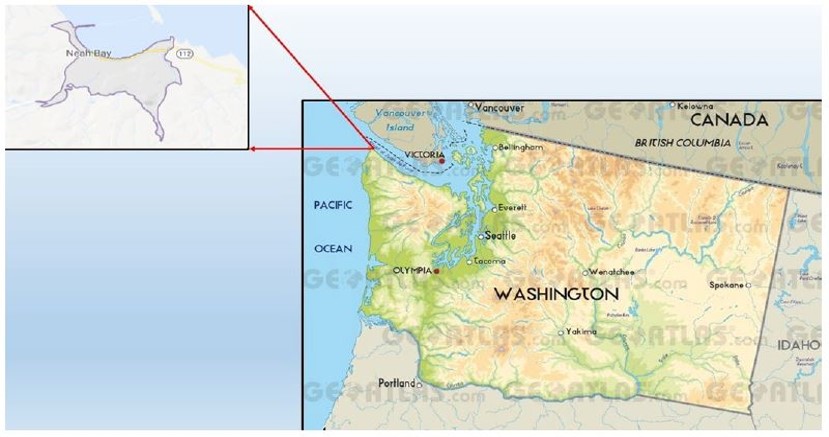
Rat Island experiencing an outbreak of highly pathogenic avian influenza (HPAI)

Bad news for the Caspian Terns on Rat Island

Friends of Fort Flagler has been sponsoring trained docents to help protect the Caspian Tern population that is currently nesting on Rat Island. Recently a number of dead birds have been sighted and test results provided to Fish and Wildlife have confirmed that the birds are carrying Avian flu.

Here is the press release from Friends of Fort Flagler

Avian Flu in Jefferson County

Keep your dogs on leash and away from the shoreline! We are experiencing an outbreak of highly pathogenic avian influenza (HPAI), commonly known as bird flu, and the Washington Department of Fish and Wildlife (WDFW) is closing public access to Rat Island near Fort Flagler State Park. Dozens of Caspian terns have died in the area and there are more that appear sick. Samples from bird carcasses were collected and have tested positive.

The HPAI virus occurs naturally among wild aquatic birds worldwide and can infect poultry and other bird and animal species. The virus is contagious among birds through saliva, nasal secretions, feces, and contaminated surfaces.

WDFW is asking the public to avoid contact with sick or dead birds and/or seals as a preventative measure. Also do not attempt to transport them to a veterinarian or a private property for treatment. Moving sick animals can spread the virus to areas where it did not exist before. Please keep pets away from bird carcasses or sick birds to avoid exposure to HPAI.

Public access to Rat Island had recently been discouraged to reduce disturbance to the tern colony and harbor seal pups present there, and shellfish harvest is closed around the island, but extreme low tides have led to more foot traffic to the island from Fort Flagler State Park. Staff are posting “closed” signs and information on HPAI around the island, the campground, and the boat launch. Keeping humans out of the area is a preventative measure and helps prevent the spread of the virus.

Please help spread the word about this closure and not touching sick or dead wildlife.

Friends of Fort Flagler

Coalition Takes Legal Action to Stop Logging in the Elwha River Watershed

Commissioner Franz continues to work against the concerns of the local constituents. And this woman wants to be governor?


Timber Sale threatens drinking water access, wildlife habitats, and biodiversity – Washington DNR ignores community requests to pause logging. 

FOR IMMEDIATE RELEASE: June 30, 2023

Contacts: Elizabeth Dunne, Esq., Director of Legal Advocacy, Earth Law Center edunne@earthlaw.org

Port Angeles, WA – On June 30, 2023, a coalition of groups–Earth Law Center, the Center for Whale Research, and the Keystone Species Alliance–filed a notice of appeal to challenge the “Power Plant” timber sale, currently set to be auctioned on July 26th, 2023, by the Washington Department of Natural Resources. The proposed “Power Plant” timber sale is a 126-acre timber sale that borders popular recreation routes such as the Olympic Adventure Trail, the Colville MBT, the trail to access the old lower dam site, and nearby climbing areas.

The forest is in close proximity to the Elwha River with a diverse mix of Douglas fir and Western redcedar, many at least a hundred years old, and a diverse, naturally regenerated understory. This timber sale is incompatible with the restoration of the iconic Elwha River, which underwent the largest dam removal in US history, completed in 2014. $327 million of federal funding has been invested in the river’s restoration to date. The legal action alleges that DNR has systematically engaged in extensive logging of older legacy forests in the Elwha River Watershed without studies or consideration of impacts to instream flows, groundwater recharge, and water temperature. Past, current, and future planned timber sales will remove hundreds of acres of forest.  

The lawsuit also alleges that DNR failed to consider how the logging could impact this critical riverine wildlife corridor, soil health, salmon and orca populations, and ongoing Elwha river restoration. The Elwha River is City of Port Angeles’ residents only source of drinking water

The forest is in the headwater area for Colville Creek and small tributaries of the Elwha River, areas critical for the recharging of groundwater to feed these streams. The Forest, its streams, and the rejuvenating Elwha River work together to support two keystone species: returning salmon populations and the critically endangered Southern Resident Orcas, who depend upon consuming salmon for their survival. Given their proximity to the Elwha River, these older forests provide critical habitat for endangered and threatened species, including Southern Resident orcas, Chinook salmon, and the Marbled murrelet. In fact, a juvenile Marbled murrelet was recently found just miles from the proposed harvest.

The legal action specifically identifies Public Lands Commissioner Hilary Franz’ pattern of skirting community input to push through unlawful timber sales, including the Power Plant sale. This forest could be saved today if Public Lands Commissioner Hilary Franz directed the harvest to stop. 

Community groups launched an ambitious campaign today to raise funds to negotiate for the protection of the forests from imminent logging. Pledged funds from the “Elwha Forest Fund” will go solely to replace the revenue that would have come from the extractive timber harvest auction. 

This legal action is by no means the first action taken by community groups in opposition to timber sales in the Elwha watershed. In addition to public comments formally submitted to DNR, community members have come out in droves to DNR’s meetings to speak during the open comment periods in opposition to this timber sale. Additionally, on March 5, 2023, over a hundred community members, largely from Port Angeles, the lower Elwha Klallam Tribe, the Jamestown S’klallam Tribe, the Lummi Nation, and surrounding areas in the Olympic Peninsula, joined together in a peaceful rally at the Elwha River Observation Area near an active timber harvest site called “Aldwell.” Aldwell was logged earlier this year by the DNR. 

The Port Angeles City Council in particular submitted letters to DNR to plead for the “Aldwell” auction to be put on hold. Despite community advocacy, DNR and Commissioner Hilary Franz did not adhere to local concerns and logged “Aldwell” without meaningfully considering community input. The city once again wrote to Franz to request delaying the auctions for “Power Plant” and “TCB23,” along with letters from many concerned local residents. For example, see the Mayor’s June 1, 2023 letter about the Power Plant sale. 

Forest Protection Advocates Banner Port Angeles

This morning, Clallam County residents joined forest & climate activists across the PNW in hanging banners calling for forest protection as key to mitigating the worst impacts of climate change.

A local hike in Clallam County took place on Saturday as part of the region-wide Week of Action for Forests & Climate.

On the Anniversary of the 2021 Heat Dome, PNW Communities Mobilize for Massive Week of Forest and Climate Action

PORTLAND, OR – Today, on the two year anniversary of the 2021 Heat Dome, communities throughout the Pacific Northwest are mobilizing a massive week of action to shine a spotlight on the significance of forest defense as climate defense. From the Rogue Valley in southern Oregon, to Bellingham, Washington and out east to the Rockies, communities are holding events to call on elected officials — from the White House and Forest Service to governors and state forestry agencies — to protect PNW forests as a vital strategy to mitigate the worst climate impacts, create jobs restoring lands and waters, and ensure forests and communities thrive for generations to come. The week of action comes just days after Multnomah County filed Multnomah v. Exxon, a bold lawsuit seeking to hold the fossil fuel industry accountable for the Heat Dome which caused more than 100 deaths in the state of Oregon.

Brenna Bell, Forest Climate Manager for 350PDX says, “It is beyond time for all levels of government to treat the climate crisis like the emergency it is. I am heartened by Multnomah County’s bold action last week to hold Big Oil accountable for their role in creating the climate crisis. Now, governments need to recognize that Big Timber has also massively profited off clearcutting Oregon’s best defense against climate chaos and act quickly to protect and restore our forests.”

To kick off the week of action, today activists hung 20 banners that called for forest protection over highway overpasses across Oregon, Washington, Idaho, and Montana in a coordinated action to highlight the growing grassroots movement to protect forests for climate mitigation. This action coincided with the release of an open letter from more than 30 organizations to the Biden Administration and federal leaders, calling on them to:

Protect federally-managed old-growth and mature forests in the Pacific Northwest as foundational to protecting our communities and a livable climate;

Listen to, resource, and support communities on the frontlines of the climate crises;

Support rural economies by redirecting federal subsidies away from the extractive timber industry and towards sustainable restoration and reforestation jobs;

Start acting like the climate crisis is the emergency that it truly is, and be a bold and decisive leader in protecting both the current and future generations.

“Protecting our remaining mature and old growth forests is crucial to mitigating the climate crisis and creating thriving climate-resilient communities,” says Madeline Cowen, Steering Committee member with the PNW Forest Climate Alliance. “Our forests have tremendous capacity to absorb and store carbon — we must prioritize safeguarding them for community benefit over short-term corporate profit.”

“We’re calling on our elected officials–from the White House and Forest Service to our Governor–to stand with our communities and protect our forests as a core part of meaningful climate action,” says David Perk, of 350 Seattle. “In Washington, we call on the Commissioner of Public Lands to follow through on her commitment to propose and implement an improved policy for the preservation of our remaining mature forests.”

Residents and organizations from around the region see a significant need to raise awareness around the need to protect PNW forests – some of the most carbon-rich in the world – as a key pillar of climate action and connect the dots between destructive logging and catastrophic climate impacts. They believe that these must be managed for community benefit, not to maximize profits for Wall Street corporations and shareholders. The actions will focus on the climate, water, wildfire, biodiversity, and economic impacts if their elected do not act now to protect PNW forests.

Dozens of actions are planned in 18 towns and cities across the PNW.

For the full list of actions visit: forestclimatealliance.org/weekofaction

The PNWFCA is a network of organizations and activists working at the intersection of forest defense and climate justice.

Opinion: A national wildlife refuge at risk of industrialization

This article originally was published in Environmental Health News. We use it with permission of the author.


SEQUIM, Wash.—Jutting out into the Strait of Juan de Fuca is a fragile, slender spit of sand and glacial till leftover from the Pleistocene Epoch nearly 1.2 million years ago.

It is the longest spit in North America, a refuge and protective barrier for marine mammals and some 250 breeds of shorebirds, several of whom stop on their way between South America, Alaska and beyond to build up fat to fuel their long journeys.

And it is also about to become commercialized for private profit by an industrial oyster corporation.

The Dungeness Spit, part of the Dungeness National Wildlife Refuge, extends for five miles. Declared a refuge in 1915, its lush eelgrass beds are a pantry for waterfowl and a nursery for salmon that eventually feed whales and other wildlife. The Dungeness Bay itself is considered an important bird area by Audubon, for its significance for bird population conservation.

The refuge attracts birders and other recreationists from around the world. Territory enjoyed and cherished and serving as a nursery and refuge for wildlife that literally span the globe, will be subsumed for private gain. It is like a war on our marine ecosystem.

The Washington State Lands Commission, the Washington State Department of Ecology and the U.S. Army Corps of Engineers (Corps) issued permits for the Jamestown S’Klallam Tribe to commercially grow non-native oysters in Dungeness Bay. These will be sold to restaurants, consumers and exported to other countries.

The operator will initially anchor 20,000, with a buildup to 80,000, on-bottom toxic plastic bags of non-native oyster spat over tens of acres smack dab in the primary mudflat bird feeding area – an area that today is off-limits to human access. Tens of thousands of shorebirds from across the Western Hemisphere depend on the mudflat as a critical feeding stop during migration.

The bags will be anchored into the sediment, smothering the intertidal zone benthic life underneath, and will affect the nearby eelgrass. This plastic is a type of PFAS, the group of chemicals also known as forever chemicals, able to contaminate the water that the filter-feeding oysters will ingest. This chemical could then move up the food chain to unsuspecting consumers.

The plastic nets are known to have ensnared birds and fish at other industrially-operated shellfish farms.

The Corps refused to conduct an environmental impact study, yet in an internal 49-page Memorandum to Record, the Corps admitted to the destruction the shellfish operation will have, but still permitted it.

The U.S. Fish and Wildlife Service (USFWS), a division of the U.S. Interior Department, with authority to protect its refuges, withdrew its opposition to the operation. To protect the birds and their primary breeding and feeding grounds, this section of the refuge is closed six months of the year to human activity. Now the USFWS is permitting the industrial shellfish operator access to this protected area year-round, day and night.

As well, the USFWS is circumventing its own mandatory step of writing a compatibility determination.. Since this operation is incompatible, to write the determination would force the agency to publicly disallow the shellfish operation.

Violated, as well, are the Migratory Bird Treaty Act, the Endangered Species Act and the Clean Water Act. Organizations and individuals throughout the United States submitted comments, spoke out and petitioned to stop this shellfish operation. No agency acknowledged the public outcry.

The Dungeness National Wildlife Refuge industrial operation will be precedent-setting for our nation’s refuge system – and bodes poorly for what can happen in other protected areas.

Public funds upkeep national refuges. We have seen this sad song repeated over and over: When private corporations destroy public lands, the public is taxed to clean up the damage.

Today we are spending millions of dollars annually to clean up Washington state’s Puget Sound, the second largest estuary in the United States. Yet our state and federal agencies are opening these wildlife intertidal zones to more pollution and industrial activity. One third of Washington state’s coastal waters are filled with industrial shellfish aquaculture and plastic, leaving wildlife to forage elsewhere.

“In wilderness is the preservation of the world,” Henry David Thoreau wrote in 1862.

We should heed his words and protect rather than pollute our natural world. The state and federal governments should get back to protecting our wildlife refuges rather than acquiesce to their destruction.

Darlene Schanfald

Darlene Schanfald, Phd, has been active in environmental campaigns for more than three decades and is a board member of Protect the Peninsula’s Future.

Supreme Court shrinks definition of the Clean Water Act

Well I’m sad that this case ended this way. But I really think that there is a silver lining in this. For too long the EPA has decided what could be protected under the Clean Waters Act and frankly I understand though I don’t agree with the Supreme Court decision.

Congress ultimately ought to be the arbiter of putting into the law specific protections rather than having some vague understanding of wetlands somehow being connected to navigable waters of the United States. I’ve never understood exactly what that definition is and thought that it was being quite lenient or overly protective, perhaps Republicans would say overreaching, for the EPA to make those decisions rather than to have them baked into law. I have always thought that navigable waters meant rivers, lakes and ocean areas that would be usable by commercial boats. I don’t know that I would consider Priest Lake, a “navigable water” if it was my decision to make. Apparently, the justices felt the same way, given that there was no dissent, just differences of opinion on the decision. It is hard to imagine on this Supreme Court a 9 to nothing decision but that was what this was. So I don’t know that I would necessarily blame conservative judges though it’s so easy to do so given their recent uncovered flaws.

ALITO, J., delivered the opinion of the Court, in which ROBERTS, C. J., and THOMAS, GORSUCH, and BARRETT, JJ., joined. THOMAS, J., filed a concurring opinion, in which GORSUCH, J., joined. KAGAN, J., filed an opinion concurring in the judgment, in which SOTOMAYOR and JACKSON, J.J., joined. KAVANAUGH, J., filed an opinion concurring in the judgment, in which SOTOMAYOR, KAGAN, and JACKSON, JJ., joined.

The justices wrote,

The uncertain meaning of “the waters of the United States” has been a persistent problem, sparking decades of agency action and litigation. Resolving the CWA’s applicability to wetlands requires a review of the history surrounding the interpretation of that phrase.

21-454 Sackett v. EPA (05/25/2023) (supremecourt.gov)

There are many other areas where agencies determine what is the proper law for an industry. Thinking specifically about NOAA and the Army Corps of Engineers in their decision making processes that the court has over and over again found flawed. In fact the Army Corps of Engineers was one of the agencies that was specifically called out in this decision by the court.

I’m hoping that out of this fiasco, that allows homeowners to build homes out over wetlands, that we can come to some new type of laws that will actually regulate our waters properly.

Supreme Court shrinks definition of the Clean Water Act — High Country News – Know the West (hcn.org)

Cooke Aquaculture leaves Puget Sound

(From Wild Fish Conservancy) -Cooke Aquaculture, is pulling up stakes, hitting the road, and leaving Puget Sound forever. All week, local residents and members of the public stood on the shores of Bainbridge Island watching workers operating loaders and cranes packing up nets, removing debris, and pulling up anchors and chains that have been holding the industry’s net pens in place for over forty years.  Across the Sound, in Kiket Bay, local landowners watched as the Hope Island net pen was rigged up to a towboat and pulled out of sight and away from the waters it polluted daily at the mouth of the Skagit River. Below is a photo taken on Wednesday immediately after the Hope Island net pen was removed, showcasing the bay’s first moments free of commercial net pens.

In November, Commissioner of Public Lands Hilary Franz made clear she heard the voices of the nearly 10,000 individuals and hundreds of organizations and businesses working together under the Our Sound, Our Salmon coalition when she issued her groundbreaking decision that the Department of Natural Resources was taking bold action to protect Puget Sound from commercial net pen aquaculture. Not only did Commissioner Franz deny the industry’s request for new decade-long leases to operate in our public waters, but she took an even bolder step by enacting a new policy banning commercial net pen aquaculture in Washington marine waters indefinitely. 


Whether this will hold up to the court challenge being brought by some Tribes remains to seen. Franz, running for Governor against Attorney General Bob Ferguson and facing criticism by some environmental organizations for her forestry policies, needed to bolster support from the environmental wing, while deciding that alienating tribes like the Jamestown S’Klallam would not cost her much in the way of votes. Certainly this will play well on “The eastside of the Sound” where her fundraising will be primarily done, as Seattleites rarely understand the subtleties of the issues raised by those on the Peninsula. Why? The Jamestown have been working with Cooke on changing the net pens to native Black Cod (Sablefish). So they are not happy about this decision. Other tribes have supported this decision, once again highlighting that the Tribes of the Salish Sea are not a single entity in their decision-making, but a coalition of individual political entities with unique needs. It is unclear of how this may play out as the State works with the Tribes on future negotiations around fishing regulations.

Years ago, I interviewed a local elderly fisherman, who had fished the areas around Agate Pass. His belief was that after the net pens came in, he noticed a significant drop in wild salmon the following years. Of course, this could have been coincidental, given the amount of destruction happening through rampant development about the same time to the spawning streams of Puget Sound and overfishing off the coast. But I was also hearing similar things from other older fishermen about the Hood Canal Floating Bridge, which then turned out to be true. A large sum of money is being spent right now to mitigate what has only lately proved out to be the correct assumption of that “old timer” regarding Hood Canal. We’ll get to see if salmon numbers recover in the Agate Pass area, now that Cooke is gone.

EVENT: Heroes of Our Time May 6th

The Northwest Toxic Communities coalition is proud to present our annual Summit 

 “Heroes of Our Time”

Hear the challenges they have faced along the way to success

Saturday May 6  –  9 AM – 3 PMJoin us virtually to celebrate Dr. David Carpenter, public health champion for communities v. Monsanto Attorney Marc Zemel on the Spokane River PCB cleanup against the USEPA Attorney 

Charlie Tebbutt, author and public advocate for cleaning up CAFOs

RSVP here: https://nwtoxiccommunities.org/event/annual-summit-2023-heroes-of-our-time/  (And see an enlarged flyer)

Option:  If the RSVP Google.doc link above does not work for you; email me your name and email address:  darlenes@olympus.net

The URL to the meeting will be released Friday, May 5.

WA Dept of Ecology & Rayonier Port Angeles Superfund Site

The Washington State Department of Ecology recently mailed out the first report in a long time to residents near Ennis Creek in Port Angeles. This report covers the update to the work that has been going on for over a decade to try and restore the superfund site at Ennis Creek. There has been feedback from concerned citizens on the issue.

Status Update: Port Angeles Cleanup Sites and Natural Resource Damage Assessments

It’s the first report we’ve seen from Ecology since 2019 about what’s happening at the Rayonier site, Port Angeles Harbor and several other contaminated sites in the PA area that are being cleaned up, or will supposedly be cleaned up.

Here is the reply from the Friends of Ennis Creek.

ECOLOGY MAILING PROMPTS QUESTIONS, COMMENTS.

You may have recently received a 4-page mailing titled “Status Update: Port Angeles Cleanup Sites and Natural Resource Damage Assessments.”

It was sent out to North Olympic Peninsula residents and other interested parties by the state Department of Ecology (ECY) the first week of April.

The mailing came as a result of requests from Friends of Ennis Creek and others concerned about how long it’s taking to deal with toxic contaminants at the Rayonier mill site and in Port Angeles Harbor and impacts on Ennis Creek, our last best chance of a salmon stream in Port Angeles.

Here’s a link to the 4-page mailing Ecology sent — https://apps.ecology.wa.gov/cleanupsearch/document/123269.

The mailer provides a great deal of information — but it’s also concerning.

Robbie Mantooth, co-founder of Friends of Ennis Creek, found the Ecology mailing wanting in several areas:

“The city of Port Angeles, area tribes, Friends of Ennis Creek and many other governmental and non-governmental entities have told ECY leaving a toxic landfill on the Port Angeles waterfront is unacceptable.

“Public concerns have included how contaminants are likely to spread on water and land because of sea level rise and extreme weather.

“This mailing doesn’t provide enough detail to make the public’s overwhelmingly consistent demands clear.

“We have asked for speeding up actions, including doing cleanup and restoration whenever possible.”

Your comments about the mailing would be appreciated.

Please post them in this post’s comments section, below, and also email them to Barry Rogowski, program manager of state Ecology’s Toxics Cleanup Program. His email is brog461@ecy.wa.gov.

You also can email Robbie at ennis@olypen.com.

Here is Robbie’s reaction:

The public needs information about negotiations with Rayonier to restore land and water harmed by the company’s mill operations. If they must be confidential, the public deserves an explanation.

The public needs assurance that the change in property ownership, from Rayonier Properties LLC to Rayonier Advanced Materials (AM), will not affect the company’s financial responsibilities to pay for cleanup and restoration.

The public needs clarification of such subjective terms ECY is using — such as “maximum extent practicable” — and assurance this doesn’t mean a limit to the company’s responsibilities.

The public needs assurance that ECY is responsive to concerns expressed in more than 160 comments sent to ECY during the last public comment period.

Almost every comment demanded the removal of ALL contaminants from the former Rayonier mill site — but the ECY Model Toxic Control Act (MTCA) team’s most recent preferred alternatives would continue to cover and leave toxic wastes in our community rather than removing them.

We are also concerned that existing signage on the Rayonier fence does not adequately inform the public about the level of contamination and about toxic exposures to human health.

(Darlene Schanfald of the Olympic Environmental Council would like new signs at the Rayonier site and along the Olympic Discovery Trail that parallels it: “Eye-catching, informative signage is needed on the fences around the Rayonier site to inform the public why they should not enter the site.”)

The city of Port Angeles, area tribes, Friends of Ennis Creek and many other governmental and non-governmental entities have told ECY leaving a toxic landfill on the Port Angeles waterfront is unacceptable.

Public concerns have included how contaminants are likely to spread on water and land because of sea level rise and extreme weather.

This mailing doesn’t provide enough detail to make the public’s overwhelmingly consistent demands clear.

We have asked for speeding up actions, including doing cleanup and restoration whenever possible.

ECY has reported dissatisfaction with Rayonier’s failure to include some of the agency’s proposals into what is called the Interim Action Plan.

We have asked ECY to make those concerns available to the public as well as what Rayonier has proposed.

Ecology says 30,000 tons of contaminated material have been removed — but doesn’t describe the amount or contents of what remains.

When will the cleanup be finished?

A report to the federal Environmental Protection Agency (EPA) included a revised timeline much more specific than what was in the ECY mailing this month.

The timeline is especially concerning since the mailing says ECY doesn’t “yet know how far the contamination from the mill spreads.”

We have asked ECY to focus on land and water affected by the Rayonier mill — even though we share interest in the Port Angeles Harbor to the west.

Although we commend the agreement among those who have agreed to pay for the western harbor cleanup and restoration, we want to be sure that progress doesn’t detract from what remains be done for people, fish and all other life continuing to be affected by what Rayonier left behind.

We also need to clarify how the cleanup under Washington State’s Model Toxics Control Act (MTCA) is related to the federal EPA.

Darlene Schanfald, who has led public involvement efforts with a grant under MTCA through the Olympic Environmental Council, provided some history of what happened after the Rayonier mill closed in 1997.

“The U.S. Environmental Protection Administration considered a Superfund designation for the land and water impacted by Rayonier Pulp Mill operations.

“EPA agreed to let the state Department of Ecology lead the cleanup under the state’s Model Toxics Control Act, but EPA would oversee actions and would have to sign off on a delisting.”

Friends of Ennis Creek and others have asked for copies of the annual report EPA requires from Ecology.

We’ve received only the one for October 2022 but have asked to be notified when others are made available, as we were told they would be, on the ECY website ( https://ecology.wa.gov/Rayonier ).

We have asked our congressman, Derek Kilmer, who grew up in Port Angeles, to help us meet with an appropriate EPA representative.

Canada Shuts Down 15 Fish Farms in B.C., Citing Risks to Wild Salmon – Maritime Executive

The pressure is building on Canada to end the use of net pens that effect wild salmon runs. A huge win for Alexandra Morton and her supporters, but more importantly, for the wild salmon runs which, as the article points out, are in serious decline.

After years of concerns over the impact of aquaculture on wild sockeye salmon, Canada’s fisheries department has decided not to renew the operating permits of 15 Atlantic salmon farms in an environmentally sensitive area of British Columbia. 

Canada Shuts Down 15 Fish Farms in B.C., Citing Risks to Wild Salmon (maritime-executive.com)

How a River Breathes

Filmmaker John Gussman caught two views of the new levee project on the Dungeness River recently. This is what is also known as a floodplain. By allowing the river to “breathe” and overflow it’s banks, without endangering manmade structures like homes and farms, you save the river and the ecosystem that it exists in. As you can see, this is less than one month apart. Allowing home development in such a location is asking for problems, and problems were what the Dungeness valley had for many decades after white people attempted to tame the river. This is a compromise. The river is allowed to breathe, a few farms and homes are paid to relocate, and moving forward, the likelihood of more salmon coming back to a habitat that they can survive and reproduce in is given a much higher probability of success. In addition to fish, this promotes a wide array of flora and fauna, including ducks, geese, and many others. The Dungeness River Management Team (DRMT), which includes farmers, duck hunters, and with help from the Jamestown S’Klallam Tribe worked for decades to make this possible, with millions in help from the federal and state government and our State and Federal representatives. For a more detailed look at this issue, you can watch my 2010 film, “Working for the River” that covers the issues in recovering the Dungeness. https://vimeo.com/80651319

Thanks to John Gussman for use of the drone photos. John is available for video and still work. Check out Doubleclick Productions – Photography-Video Production-Stock Imagery-UAV Drone Services located on the Olympic Peninsula (dcproductions.com) for his other projects.

Newest round of clean-water funding focuses on small communities including Jefferson County

State Ecology is handing out funding to many organizations around the state for clean water initiatives. Here’s the Jefferson County proposals.

Jefferson County Public Health is proposed to receive a $500,000 grant, $7.5 million loan, and $2.5 million in forgivable-principal loans to establish a watershed-conservation fund, providing a scalable loan fund for acquisition of land critical to improving water quality in high-priority watersheds. This innovative program will provide nimble funding, so nonprofit land trusts and other public entities can purchase properties for conservation and sustainable stewardship as land becomes available, rather than being tied to the government funding cycle. This pilot project will complete a feasibility assessment, program design, and purchase of two properties to establish the program

The battle of sea lice and salmon goes on

An update on the battle to remove fish farms from Canada. The industry denies it’s a problem here, 100 miles south…

  • Increased sea lice infestations, scientists say are caused by salmon farms, threaten the already-vulnerable wild Pacific salmon populations in western Canada, worrying conservationists and First Nations.
  • Three First Nations in the region are now deciding on the future of open net pen Atlantic salmon farms dotting the channels and waterways in and around their territories. They hope their decisions will pave the way to protect wild salmon, a culturally important species.
  • So far, ten farms have been closed and the future of seven farms are to be decided this year, in 2023.
  • The impact of the closure of the farms on sea lice and wild salmon populations is still unclear, say scientists, and more time to monitor the data is needed.

As sea lice feast away on dwindling salmon, First Nations decide the fate of salmon farms (mongabay.com)

Court Recommends Halting Alaska’s Unsustainable Harvest to Protect Wild Chinook and Southern Resident Killer Whales

Yesterday, The federal court in Seattle issued a landmark decision. The outcome of this is still to be determined. But it likely means an end to Chinook harvest in Alaska. NOAA has been losing in court due to their lack of rigorous science behind their decisions. This lawsuit was brought by the Wild Fish Conservancy, one of the most effective environmental organizations in the Pacific Northwest. If you want to support their work, it’s a good time to donate.

More to come on this. 

December 16, 2022— In a massive international and coast-wide decision for wild Chinook and Southern Resident killer whale recovery, Seattle’s federal Court issued a landmark opinion on Tuesday that recommends terminating unsustainable commercial salmon harvest that has persisted for decades until new environmental reviews of those fisheries occur. Overfishing was found in a previous ruling to illegally harm the recovery of both endangered Southern Resident killer whales and wild Chinook salmon across the Pacific Northwest.


On Tuesday, U.S. Magistrate Judge Michelle Peterson issued a report and recommendation on Wild Fish Conservancy’s lawsuit, agreeing that halting the summer and winter seasons of the Southeast Alaska Chinook troll fishery is the most appropriate remedy. Simultaneously, the judge found the federal government’s inadequate biological opinion should be remanded back to NOAA in order for the agency to address violations of environmental law.


In August, U.S. District Court Judge Richard A. Jones issued a stunning summary judgment based on a previous report and recommendation by Magistrate Peterson confirming that NOAA violated the law by improperly relying on undeveloped and uncertain future mitigation to offset ongoing overfishing authorized by NOAA.


In their most recent analysis of this fishery’s impact on threatened and endangered species, NOAA admits that over the last decade and continuing today, Chinook harvest is occurring at levels that are unsustainable for the long-term survival and reproductive success of both threatened wild Chinook populations and endangered Southern Resident killer whales. The overharvest of the whales’ prey has been ongoing for decades.


“The benefits to wild Chinook and Southern Resident killer whale recovery from the Court’s action cannot be overstated,” says Emma Helverson, Executive Director of Wild Fish Conservancy. “If adopted by the District Judge, this recommendation will result in the first scientifically-proven recovery action in the Pacific Northwest to immediately provide Chinook for starving killer whales. The decision will also recover and restore the larger and more diverse life histories of wild Chinook these whales evolved to eat, which are fundamental for rebuilding both populations.”


While these Chinook are harvested in Southeast Alaska marine waters and currently certified by major U.S. seafood certifiers as ‘sustainable wild caught Alaskan Chinook’, approximately 97% of all Chinook harvested in the Southeast Alaska troll fishery actually originate from rivers throughout British Columbia, Washington, and Oregon. Currently, these Chinook are harvested prematurely, before they can migrate back into southern waters where the Southern Resident killer whales encounter them. In 2021, the fishery of concern harvested approximately 150,000 Chinook, many of which were listed as threatened under the Endangered Species Act.
For the first time in decades, Magistrate Peterson’s recommendation to terminate this fishery would finally allow these Chinook to migrate back down the coast and pass through the Southern Resident killer whales’ key foraging areas. Similarly, this action would support the coastwide recovery of wild Chinook stocks by allowing far more wild Chinook to return and spawn in rivers in B.C., Washington, and Oregon.


“I want to emphasize that Alaskan fishers are not to blame for NOAA’s chronic mismanagement of this fishery, and we are sympathetic to the burden this decision may pose on Southeast Alaskan communities,” says Emma Helverson, Executive Director of Wild Fish Conservancy. “However, it’s critical to also acknowledge that for decades this fishery has harvested majority non-Alaskan Chinook at unsustainable levels with cascading and coastwide consequences for fishing communities throughout British Columbia, Oregon, and Washington. In addition to the unparalleled benefits to killer whale and Chinook recovery, the Court’s decision will restore more control to communities over the recovery of their local Chinook salmon populations, particularly tribal people and First Nations.”


Southern Resident killer whales were listed as Endangered in 2005. Currently, there are only 73 individuals in the population, an alarming decrease from nearly 100 only 25-years ago. Reduced prey availability, specifically large and abundant Chinook, has been identified by killer whale experts and NOAA as the primary cause of their decline.


“With less fishing in Alaskan waters, more Chinook can return to spawn in their home rivers in British Columbia, Washington, and Oregon,” said Dr. Deborah Giles, Science and Research Director at Wild Orca. “An increase in larger, mature fish is essential—not just for the whales— but for the survival of these imperiled Chinook populations, whose future also hangs in the balance. A recovery for Chinook benefits all fishers, whales, and humans alike.”


“Despite the clear evidence, for too long government agencies, certifiers, and the media have been unwilling to acknowledge and address the unsustainable salmon harvest management in this fishery and others that is harming the recovery of the Southern Resident killer whales and the wild Chinook they depend on,” says Helverson. “The Court’s finding is playing an important role in bringing science and policy closer together for the benefit of wild salmon, killer whales, and coastal communities.”


In the coming months, the Magistrate Judge’s report and recommendation and any objections from the defendants will be considered by the District Judge presiding over the case for a final ruling.
### 

Port Townsend City Council recognizes rights of whales in WA

On Monday night, the Port Townsend mayor and city council took the step to declare that the Southern Resident Orcas have inherent rights. Port Townsend is the first county in Washington State to take this step, in a growing movement known as the Rights of Nature. The “Rights of Nature” framework is the recognition that Nature is a living being and rights-bearing entity. Rights recognition takes Nature out of the realm of property.

Mayor David Faber, Patrick Johnson of QUUF and members of the North Olympic Orca Pod

Patrick Johnson of the Green Sanctuary Environmental Action Team from Quimper Unitarian Universalist Fellowship read the following:

On behalf of Legal Rights for the Salish Sea, Earth Law Center, and our friends and supporters at the Green Sanctuary Environmental Action Team from Quimper Unitarian Universalist Fellowship, and the North Olympic Orca Pod, we’d like to extend our heartfelt thanks and appreciation to Mayor Faber and the members of the Port Townsend City Council for supporting this proclamation recognizing the inherent rights of the Southern Resident Orcas. We have been asking our decision makers to take BOLD action to save these unique and critically endangered orcas, and tonight YOU have done that! Your leadership and compassion for Nature will be a model for other city/county councils to follow. This is historic! 

Central to a “Rights of Nature” framework is the recognition that Nature is a living being and rights-bearing entity. Rights recognition takes Nature out of the realm of property. It reflects an inseparable human-Nature relationship rooted in mutual enhancement and holism rather than dominion, subjugation, and exploitation. Rights of Nature, therefore, offers a framework in line with natural law and science, allowing us to properly respect and value Nature (intrinsic values) as decision making occurs. Over twenty countries already embrace Rights of Nature concepts at some level of government.

In 2018, the Affiliated Tribes of Northwest Indians (comprised of American Indians/ Alaska Natives and tribes in Washington, Idaho, Oregon, Montana, Nevada, Northern California, and Alaska) passed Resolution #18-32 recognizing a sacred obligation to the Southern Resident Orcas, “our relatives under the waves.” The Resolution explains that the sacred obligation “to ensure all our relations are treated in a dignified manner that reflects tribal cultural values that have been passed down for countless generations” is to be understood in the context of “an inherent right and a treaty right, and in terms of indigenous ways of knowing the natural law” as embodied in their relationship to the Southern Residents. 

At a more fundamental level, recognizing the Southern Residents’ inherent rights shows that we as a society value them as living beings. It shows that when we say we want to prevent their extinction, we mean it. This will undoubtedly require changes in the way we do business; opening space for innovations so that we can have a future with clean rivers, ocean and seas, and healthy habitats for humans, animals and plants alike. 

We would not be here without the pioneering work and commitment to Ocean Rights by Michelle Bender and Elizabeth Dunne at the Earth Law Center. Many thanks to our friends at the Center for Whale Research, especially Ken Balcomb; Dr. Debra Giles at Wild Orca; and Howard Garrett, Susan Berta and Cindy Hansen, and everyone at the Orca Network. 

The following is the proclamation of the city of Port Townsend:

Press Release from the Earth Law Center

Port Townsend, WA (December 6th, 2022)—Yesterday evening, Port Townsend’s Mayor David J. Faber signed a Proclamation describing the City of Port Townsend’s support for action by local, state, federal and tribal governments that secure and effectuate the rights of the Southern Resident Orcas.

The Southern Resident Orcas (“the Orcas) are culturally, spiritually, and economically important to the people of Washington State and the world. However, despite federal legal protections for nearly two decades, the population continues to decline and is critically endangered, with only 73 individuals left in the wild.

The Proclamation states that the Southern Resident Orcas possess the inherent rights to: “life, autonomy, culture, free and safe passage, adequate food supply from naturally occurring sources, and freedom from conditions causing physical, emotional, or mental harm, including a habitat degraded by noise, pollution and contamination.”

Kriss Kevorkian of Legal Rights for the Salish Sea (LRSS), with the help of Patrick Johnson, of the Green Sanctuary Environmental Action Team from Quimper Unitarian Universalist Fellowship, introduced the idea of the Proclamation. “We are so grateful to the Mayor and City Council of Port Townsend for taking bold action to save these unique and critically endangered Orcas.” says Kriss Kevorkian, founder of LRSS.

Legal Rights for the Salish Sea partnered with Earth Law Center (ELC) in 2018 and are working to educate local communities on a new legal tool to protect Nature and communities – Rights of Nature. Together, they are leading a campaign to gain support for recognizing the rights of the Orcas at the local and Washington State level, and to take immediate actions to protect and restore the Orcas’ rights by addressing their main threats to survival.  “Recognizing the Southern Residents’ legal rights means that we must consider their wellbeing and needs in addition to human interests in decision making, and that they will have a voice in a variety of forums, including courts. Through their human guardians acting on their behalf and in their best interests, the Orcas will be able to express what they need to exist, thrive, and evolve,” explained Elizabeth Dunne, ELC’s Director of Legal Advocacy. “When structures such as the lower Snake River dams interfere with the Southern Residents’ ability to obtain prey (salmon) crucial for their survival, then to realize their rights we must find solutions to remedy the problem,” said Dunne. 

Legal rights for species and their habitats is not new. Hundreds of Rights of Nature laws exist in approximately 30 countries. Both San Francisco and Malibu passed resolutions protecting the rights of whales and dolphins in their coastal waters in 2014; New Zealand’s Government legally recognizes animals as ‘sentient’ beings; the Uttarakhand High Court of India ruled that the entire animal kingdom are legal entities with rights; and the United Kingdom now recognizes lobsters, crabs, and octopus as sentient beings.

Howard Garrett, co-founder of the Orca Network, supports this effort because he sees recognizing the Southern Residents’ inherent rights as “essential to the orcas’ survival and well-being. Without this recognition, people will continue to put economic and self-interest above the Southern Residents’ very survival.”

“Over the past few years, we have continued to see the population decline, and actions to recover the population have been slow and piecemeal. Business as usual is not working” says Michelle Bender. “We thank the leadership of Port Townsend and hope more local communities support a call for policies that give the Orcas, and all Nature, a voice in decision making and a seat at the table.”

This effort is also supported by an online change.org petition and declaration of understanding, of which over 10 organizations have signed onto.

Earth Law Center created a toolkit to help advocates introduce a resolution to their local communities, share the campaign on social media and other helpful talking points. You can take action and view the toolkit here.

#         #         #

Earth Law Center (www.earthlawcenter.org) works to transform the law to recognize and protect nature’s inherent rights to exist, thrive and evolve. ELC partners with frontline indigenous people, communities and organizations to challenge the overarching legal and economic systems that reward environmental harm, and advance governance systems that maximize social and ecological well-being.

Legal Rights for the Salish Sea (LRSS- http://legalrightsforthesalishsea.org/) is a local community group based in Gig Harbor, WA, founded by Dr. Kriss Kevorkian, educating people to recognize the inherent rights of the Southern Resident Orcas. Under our current legal system humans and corporations have legal standing but animals and ecosystems don’t. We believe that animals and ecosystems should also have legal rights, not just protections that can be changed by different administrations.

Net Pen Aquaculture Industry Targets DNR’s Hilary Franz

In a series of articles across multiple platforms, the net pen aquaculture industry and their allies have targeted Washington State’s Department of Natural Resources (DNR) Commissioner Hilary Franz for attack and lawsuits after her controversial decision to end net pen aquaculture of Atlantic salmon in Puget Sound and Hood Canal.

Posts on LinkedIn (which does not allow critical rebuttal) by Jeanne McKnight, a PR specialist that works for the aquaculture industry, along with articles in SeaWestNews about the benefits of net pen aquaculture point to a new attack on Franz by the industry. Past Chairman of the Pacific Aquaculture Caucus Peter Becker also weighs in with his opinion in a long reply to McKnight’s original post.

The articles and posts point out that Franz came from a law degree background and not the “fisheries science industry”, so as not to be capable of deciding for an industry that has long been in the driver’s seat regarding influencing the regulators charged with regulating them. Cooke did an excellent job in the past of dividing to conquer the regulators by helping legislate multiple agencies to regulate multiple aspects of each farm, ending in a fiasco of collapsing nets due to poor maintenance and escaped fish. Franz rightly decided that Cooke should be banned from the near shore waters and shorelines of the State because of that incompetence. Her agency is charged with protecting those wild stock resources (along with other agencies).

The articles also raise smear tactics based on her decision by saying she ‘cherry picked’ the tribes in support of her decision (not even notifying the Jamestown S’Klallam Tribe who are partnering with Cooke Aquaculture for a sable fish net pen in Port Angeles harbor). This blog believes that Franz will exempt the Jamestown in the near future and allow them to create net pens for black cod as long as Cooke is not part of the business model.

All these are desperate tactics by an industry under attack both here and in Canada. The long-time work of Dr. Alexandra Morton in Canada, raised scientifically valid hypothesis and proofs over and over again that the industry is partially if not fully responsible for the collapse of wild stocks in many rivers in Western British Columbia while the industry takes credit for 97% of Canadian salmon produced being farm raised (as reported in an article in the industry journal SeaWestNews.) That statistic can also be read to mean that since farmed salmon have arrived 97% of wild salmon have vanished. The question is why is that statistic true? Alexandra Mortons’ research, among others such as Dr. Lawrence Dill, point to the reasons that the industry would rather ignore. Viruses from the farms as well as sea lice coming from the pens that are co-located in passages that the wild salmon have to traverse. The industry here claims that sea lice are not the problem that they are in B.C.

The reality is that this issue is not over yet, though Commissioner Franz’ decision (political though it may be) is not without the possibility of challenge in the courts. Washington State Dept. of Fish & Wildlife (not DNR) having lost a limited case ruling in the Washington State Supreme Court in a unanimous decision that only dealt with whether or not the permit for Cooke had met SEPA standards, the industry believes DNR may not be on the most solid ground to uphold this new decision. Can they argue that the decision was arbitrary and capricious? The industry also sees this as a test to save the geoduck aquaculture industry from a similar fate, as many of the same issues raised in this case could be applied by environmentalists to the near shore. Actually, they already have been but have not yet found the political support to stop the ongoing destruction of our shorelines by geoduck aquaculture illegally supported by both DNR and the Army Corps of Engineers (as decided in recent court battles lost by both agencies. )

Don’t go popping champagne bottles just yet, as we have not seen the end of the industry as it relates to this issue. The arc of justice may be finally bending in the way of environmental protection as it relates to the problems of net pen aquaculture, but the industry will do its best to bend it back to profit over wild stocks.

What you should know about Industrial Raised Shellfish Aquaculture: An overview

Kristina Sinclair gave a presentation to the Protect the Peninsula’s Future’s (PPF) meeting last night. I share her presentation with you with her permission. The questions that this presentation raises are many. What is the limit to these operations on our beaches? How much of the Sound and Hood Canal do we the people of this State want to see turned into the images in this presentation? Since 2000 the State has engaged in a promotion of commercial geoduck aquaculture for the profit of a small number of companies selling almost entirely to China. Do we want this to continue unabated? Can we expect local state and federal legislators who receive significant political contributions from these businesses to make changes on our behalf? Without considerable public outcry this will continue. Watch this slideshow, look at the map and you make up your mind.


Kristina Sinclair is an Associate Attorney at the Center for Food Safety (CFS), where she focuses on environmental cases challenging industrial agriculture, including commercial shellfish.

Kristina earned her J.D. from the University of California, Berkeley, School of Law. While in law school, Kristina was an Articles Editor for the California Law Review. She also participated in the Environmental Law Clinic, served on the steering committee for Students for Economic and Environmental Justice, and worked as a teaching assistant for Appellate Advocacy. Upon graduation, she received recognition for her pro bono work and a Certificate of Specialization in Environmental Law.

Since joining CFS, Kristina has been working on a lawsuit challenging highly disruptive industrial shellfish operations in Washington. In this case, CFS and Coalition to Protect Puget Sound allege that the U.S. Army Corps (USACE) failed to properly consider the potential risks before reissuing the nationwide permit for commercial shellfish activities in January 2021, in violation of the Clean Water Act, National Environmental Policy Act, and Endangered Species Act. In addition, USACE has authorized over 400 commercial shellfish operations without any public notice or environment review. Consequently, these operations have significant adverse effects on Washington’s local environment and wildlife.  In this presentation Kristina provides an overview of USACE’s shellfish permitting requirements, as well as the ongoing litigation challenging USACE’s unlawful shellfish permitting actions. She also shares some insights from this legal work and potential opportunities for future advocacy.  

  • Background on USACE’s Permitting Requirements
  • History of USACE’s Unlawful Permitting Actions in Washington
  • Previous Case
  • Current Case
  • Future Opportunities

Interactive map of Industrial Shellfish Aquaculture in Puget Sound & Hood Canal.

Below is the PDF of the Slideshow. It is over 4MBs so it might load slow on a slow link.

Dept. of Nat. Resources Bans Future Net Pen Aquaculture – Major Win for Environmentalists, Tribes, Salmon & Orcas.

Today, Washington’s Commissioner of Public Lands Hilary Franz made history when she announced a new groundbreaking executive order that will prohibit commercial net pen aquaculture in Washington state marine waters. During the press conference, a question about the net pen proposed by the joint business venture of the Jamestown S’Klallam Tribe and Cooke Aquaculture to create a net pen to farm Black Cod (Sablefish) was deflected with a mention that Commissioner Franz had been in discussions with them on this issue. It was not clear whether they were not going to be allowed to put the pen in under the Tribe’s name or not. Franz also mentioned that upland farming of salmon would likely be approved by DNR. The industry has long stated that this method is not commercially viable at this time.

This ends a long history of industry “spokespeople”, who have been involved with Marine Resources Committees both in Clallam and Jefferson Counties, touting the benefits of these pens and disrupting anyone coming forward to raise concerns, such as when Professor Dill, a researcher from a distinguished Canadian University came to Port Angeles a few years ago to discuss his scientifically based concerns and was shouted down by industry representatives.

While Commissioner Franz’ concerns about ending destruction of the near shore by these farms could easily be carried over to the nearshore beach destruction by industrial geoduck operations over thousands of acres of beaches throughout the Sound and Hood Canal, there was no discussion of that issue today.

This blog has been a long time critic of Commissioner Franz, due to her seemingly lack of concern over industrial aquaculture in our waters. We welcome and thank her for finally taking strong legal action on this issue. It has been viewed both here on the West Coast, nationally and internationally as a major step towards recovering and protecting our waters.

Press Release from the Wild Fish Conservancy, the major group working to end this policy.


“This new policy was announced earlier today by Commissioner Franz at a press conference on Bainbridge Island overlooking the Rich Passage net pens alongside leaders from Wild Fish Conservancy and Suquamish Tribe. The news comes on the heels of another long-awaited and widely-supported decision announced earlier this week by Commissioner Franz that DNR has refused new decade-long leases to global seafood giant Cooke Aquaculture to continue operating commercial net pens in Puget Sound.

“After the incredible news announced earlier this week, it is almost impossible to believe we are now celebrating an even bigger, groundbreaking victory for our wild salmon, orcas, and the health of Puget Sound,” said Emma Helverson, Executive Director of Wild Fish Conservancy. “By denying new leases to Cooke and bringing forward this comprehensive, bold new policy to prevent commercial net pens from ever operating in Washington marine waters again, Commissioner Franz is ensuring Puget Sound will be protected, not just now, but far into the future for the benefit of generations to come.”

Together, the lease denial and executive order will require Cooke to remove all of their net pen facilities from Puget Sound before the end of year, marking the end of the commercial net pen industry that has operated in Washington state for over 40 years. The benefits of these actions for the recovery of wild fish, water quality, and the greater health of Puget Sound cannot be overstated. Immediately, this action will cease chronic untreated pollution that has been discharged daily at these aquatic sites for over forty years. Finally, these heavily polluted and degraded sites will have the opportunity to heal and begin the process of natural restoration as part of the largest passive restoration project in Washington State.

The decision will also eliminate many major risk factors that harm the recovery of wild salmon and steelhead, including ending the risk of exposure to viruses, parasites, and diseases that are amplified and spread at unnatural levels by massive densities of farmed fish and the risk of future catastrophic escape events in which farmed fish could compete with, attempt to interbreed, or spread pathogens to threatened and endangered wild fish.


DNR’s decision will also restore the public and Tribal access to over 130 acres of Puget Sound that have been restricted by this industry for over forty years. More broadly, Washington’s decision will unite the entire U.S. Pacific Coast in excluding this industry from marine waters. Combined with Canada’s recent commitment to transition open water net pens out of British Columbia waters, this decision also has the potential to eliminate a major limiting factor to wild Pacific salmon recovery at a coastwide, international scale.


“After the news earlier this week, we’ve heard from colleagues all around the world in places like Chile, Tasmania, Scotland, and so many others working to protect their own public waters from the environmental harm of commercial net pen aquaculture,” says Helverson. “Today’s historic decision is setting a new standard that will serve as a model and rallying cry to bolster the efforts of communities and governments around the world working toward this same end and we stand committed to leveraging our massive success to support their efforts.”


Cooke is the same company found at fault for the catastrophic 2017 Cypress Island net pen collapse that released over 260,000 nonnative and viral-infected Atlantic salmon into Puget Sound. Cooke purchased all of Washington’s net pen facilities in 2016 with plans to expand exponentially in Washington waters.

In response to this expansion plan, Wild Fish Conservancy launched the Our Sound, Our Salmon (OSOS) campaign in April 2017 to raise public awareness about the environmental impacts of commercial net pen aquaculture. In 2018, a coalition of over 10,000 individuals and hundreds of businesses and organizations under the banner of OSOS, worked in concert with Tribal efforts, to advocate for Washington’s landmark law banning nonnative Atlantic salmon aquaculture.

In July 2020, in response to Cooke avoiding the ban by transitioning to native species, the OSOS campaign launched a new initiative, Taking Back Our Sound, with the goal of preventing Cooke from receiving new leases. Through this effort, 9,000 individuals and 127 business and organizations called on DNR’s Commissioner of Public Lands Hilary Franz through a petition and direct actions, which included a Bainbridge Island city resolution, to deny new leases to Cooke and to restore Puget Sound for the benefit and use of all. In making her decision over Cooke’s lease request, DNR was required by statute to issue a decision in the best interest of the public.
“It’s clear this victory for wild salmon, orcas, and Puget Sound belongs to no one person or group. Without the separate actions of thousands of individuals, Washington’s Tribal Nations, businesses, organizations, chefs, fishing groups, scientists, elected officials, and so many others working together over the last five years, this would never have been possible,” says Helverson. “It is truly inspiring to see what is possible when the public unifies their voices and works together with the law and science on their side toward the shared goal of a healthier Puget Sound.”

Reducing collisions between ships and whales? There’s apps for that, but they need work – NW News Network

The ability to give ships captains a reliable source of information on location of orcas is a work in progress.

Fortunately, it doesn’t happen very often in the Pacific Northwest that ships collide with whales. But when it does, it’s upsetting, tragic and the whale probably dies. Three separate teams have developed smartphone-based systems that can alert commercial mariners to watch out, slow down or change course when whales have been sighted nearby. A recent ride-along on a big container ship demonstrated that real-time whale alerts are still a work in progress.

Reducing collisions between ships and whales? There’s apps for that, but they need work | Northwest News Network (nwnewsnetwork.org)

EVENT: Join Protect the Peninsula’s Future for its 49th Year Celebration (Virtual) 

The PPF has been spearheading environmental challenges to the most difficult problems we have faced: a nuclear power plant on Miller Peninsula, Northern Tier pipeline that would have gone in right off Protection Island, and more recently, the ever-growing industrial shellfish industry and their often illegally permitted farms, as proven in a court case against the Army Corps of Engineers.

Thursday, November 17, 7:00 PM        RSVP to PPF@olympus.net to receive the Zoom connection*

Our featured speaker this year is Kristina Sinclair, Associate Attorney at the Center for Food Safety

Topic: “What You Should Know About Industrial Raised Shellfish

*Space is limited to 100.

Kristina Sinclair is an Associate Attorney at the Center for Food Safety (CFS), where she focuses on environmental cases challenging industrial agriculture, including commercial shellfish.

Kristina earned her J.D. from the University of California, Berkeley, School of Law. While in law school, Kristina was an Articles Editor for the California Law Review. She also participated in the Environmental Law Clinic, served on the steering committee for Students for Economic and Environmental Justice, and worked as a teaching assistant for Appellate Advocacy. Upon graduation, she received recognition for her pro bono work and a Certificate of Specialization in Environmental Law.

Webinar: Since joining CFS, Kristina has been working on a lawsuit challenging highly disruptive industrial shellfish operations in Washington. In this case, CFS and Coalition to Protect Puget Sound allege that the U.S. Army Corps (USACE) failed to properly consider the potential risks before reissuing the nationwide permit for commercial shellfish activities in January 2021, in violation of the Clean Water Act, National Environmental Policy Act, and Endangered Species Act. In addition, USACE has authorized over 400 commercial shellfish operations without any public notice or environment review. Consequently, these operations have significant adverse, effects on Washington’s local environment and wildlife.  In this webinar, Kristina will provide an overview of USACE’s shellfish permitting requirements, as well as the ongoing litigation challenging USACE’s unlawful shellfish permitting actions. She will also share some insights from this legal work and potential opportunities for future advocacy.  

  • Background on USACE’s Permitting Requirements
  • History of USACE’s Unlawful Permitting Actions in Washington
  • Previous Case
  • Current Case
  • Future Opportunities

Enforce Sen. Magnuson’s ‘little amendment’ to protect Salish Sea – Seattle Times

One of the best things that Magnuson ever did was to get this amendment passed. Since the 70s, we have minimized our risks with this law. As the article points out, environmental groups like Friends of the Earth and Friends of the San Juans have been fighting hard for years over the lack of enforcement by the Army Corps of Engineers and others. The Corps, as long-time readers of this blog know, are hell bent to do whatever industry asks of them, including hiding key documents in lawsuits and not upholding the laws when it suits industry. They have proven themselves unworthy of public trust.

A good article that summarizes where we are at with the Magnuson Act some 45 years later.

Enforce Sen. Magnuson’s ‘little amendment’ to protect Salish Sea | The Seattle Times