By donating to the News you help us bring more news to you! We will use the donations to pay additional reporters, and spend more time on stories! Want to donate more than $10? Under the $10 is a dropdown box, choose multiples of 10. (i.e. Qty 3 at $10)
*DataGovArchive
archive of data.gov on Source Cooperative. The 16TB collection includes over 311,000 datasets harvested during 2024 and 2025, a complete archive of federal public datasets linked by data.gov. It will be updated daily as new datasets are added to data.gov.
-Alexandra Morton's Web Site (NEW)
The new web site for the work of Canada’s leading researcher in to farmed Atlantic Salmon and it’s effects.
-The Cove
One of the most important environmental documentaries ever created. If you value dolphins, then you must see this film.
North Olympic Peninsula Skills Center Natural Resources
To provide a program that provides hands-on, relevant natural resources research experience while meeting the needs of and building capacity within individual students and the North Olympic Peninsula region.
openchannels.org
OpenChannels is designed to become a comprehensive source for news, guidance, and community discussion on sustainable practices in ocean planning and management.
River of Kings – Video
Part 1 of 2 part series by Carl Safina on the Nisqually River Restoration.
Salish Magazine
Salish Magazine is a free online magazine that takes inquisitive readers outdoors with visually rich storytelling about features people can see firsthand in our public forests and beaches.
Victoria Sewage Project
The official city site on the project. The latest scoop on the Canadian poop!
WA State Family Forest Fish Passage Program
The Family Forest Fish Passage Program provides funding to small forest landowners to repair or remove fish passage barriers. Download the film.
Green Acre Radio on KBCS
Green Acre Radio on KBCS — Sustainability, local food production, restoration & environmental talk radio.
NW Indian Fisheries Commission
The Northwest Indian Fisheries Commission (NWIFC) is a support service organization for 20 treaty Indian tribes in western Washington.
Brinnon Group
Local group opposing Black Point resort
Clam Gardens
Network of researchers exploring First Nation gardening of clams in history, and it’s relationship to today.
Coastal Watershed Institute
“To promote long term, ecological, community based stewardship of marine and terrestrial ecosystems thru scientific research and local partnerships.”
League of Women Voters – Clallam County
a nonpartisan political organization, encourages the informed and active participation of citizens in government, and influences public policy through education and advocacy.
League of Women Voters – Jefferson County
The League of Women Voters, a nonpartisan political organization, encourages the informed and active participation of citizens in government, and influences public policy through education and advocacy.
Local Food Access Network
North Peninsula local food org with an emphasis on developing and supporting increased and sustainable capacity for production, distribution, and consumption locally.
North Olympic Salmon Coalition
The mission of the North Olympic Salmon Coalition is to restore, enhance, and protect habitat of North Olympic Peninsula wild salmon stocks and to promote community volunteerism, understanding, cooperation and stewardship of these resources.
Northwest Watershed Institute
NWI’s mission is to provide scientific and technical support to protect and restore fish and wildlife habitats and watershed ecosystems of the Pacific Northwest.
Olympic Environmental Council
The Olympic Environmental Council works on issues related to the environment and health that affect our North Olympic Peninsula communities.
Olympic Park Associates
If you share with us a passion for Olympic National Park, a concern for the Park’s future, and a vision that Olympic National Park should always be a wild and natural place, we invite you to join Olympic Park Associates.
Washington Environmental Council
WEC has been working for a couple of decades on environmental activism. A great group of people actually getting things done.
Whale Trail
Signs along the way to take you to great whale viewing locations
Wild Fish Conservancy
Wild Fish Conservancy seeks to improve conditions for all of the Northwest’s wild fish
Interesting that a regional court with no native tribal peoples on it should have the last word on a treaty definition. I was under the opinion that only Congress could define treaties.
With the United States Supreme Court declining to hear the case, a protracted legal battle between two Indigenous communities has nowhere to go. ….For the past 30 years two groups, the Lummi Nation and the S’Klallam nations—represented today by the Jamestown S’Klallam, Port Gamble S’Klallam, and Lower Elwha Klallam Tribes—have been fighting in the courts about a contested slice of the Salish Sea: the waters west of Whidbey Island in northwestern Washington. Involved in this dizzying dispute are no fewer than four tribes, two treaties, and four appellate court decisions. The issue was recently brought to the United States Supreme Court for consideration, though the court declined to hear the case, leaving the Lummi and S’Klallam without an obvious legal path forward. Ashley Braun reports. (Hakai Magazine)
So Cap and Trade fees have helped us put an extra $3B into public transit along with good news for pedestrians and bicycles. But is it actually reducing CO2? To be determined.
Washington legislators keep calling this year’s $16.8 billion transportation budget proposal “unprecedented.” And in many ways it is. There’s $3 billion for public transit, a huge increase over previous packages. And a lot more money for pedestrian and bicycle improvements — $1.3 billion— all paid for by the carbon cap-and-trade fee approved last session, also unprecedented for the state. But what’s missing from the budget is perhaps the most unusual of all. This year’s transportation budget does not include an increase in the state’s gas tax. Liz Giordano reports. (Crosscut)
The Lorraine Loomis Act named in honor of the late Swinomish tribal leader, failed in the Legislature this year. . The bill focused on protecting, restoring and maintaining habitat along salmon-bearing streams and drainages. Here’s a bit of why it did, despite the Governor’s backing.
Salmon recovery is a priority for many in Washington who see vegetated streamside buffers as important to salmon-friendly habitat. But some in the state’s agricultural community see the threat of loss of productive farmland from proposals such as the Lorraine Loomis Act discussed earlier in this year’s legislative session. Lauren Gallup reports. (Salish Current)
A measure advancing in Washington’s Legislature would ban the use of perfluoroalkyl and polyfluoroalkyl substances, or PFAS, in cosmetics. These chemicals are often used to make beauty products — such as mascara, foundation, and lipstick — water-resistant and longer lasting. Melissa Santos reports. (Crosscut)
Washington State Senators Van de Wege (D) and Salomon (D -32) have put forward a bill (SB 5721) along with Representatives Chapman (D) and Tharinger (D) (HB2027) to either consolidate or study the idea of consolidating the Department of Fish and Wildlife and the Parks Department into the Department of Natural Resources and give the current head of DNR, Commissioner of Public Lands (CPL) Hilary Franz, total control over our parks, fish and wildlife as well as DNR.
How did this bill get put out into the legislature? What was the impetus for this? ( In the past, sometimes these efforts were snuck in so as to get new proposals by the leadership into the public view.) Who actually is behind getting these bills to rural Democratic legislators? Why did they support this without consulting with environmental organizations and their members that contribute to their campaigns? Why has there been zero coverage on an issue of this magnitude in the Olympia and Seattle press? There are far more questions than answers.
The House bill, to be clear, it’s not advocating the same thing as the Senate Bill, but calls for a task force to look into the possibility of changing the structure of WDFW. While it is not technically a companion bill it opens the door to some kind of compromise that might start the process if they sneak out of committee.
Some of what this may be about, could be the legislature attempting to insert itself into the ongoing controversy at the wildlife commission and WDFW in specific. This news outlet has reported about that controversy in the last month.
DNR exists to make money off our forests for public schools, fights fires, and leases our shorelines to aquaculture. Currently out of 78% of timber sales, DNR only funnels a small fraction for school construction. Hilary Franz has done a very good job of fighting fires in the last two years, but has done a terrible job at leasing public shorelines. Just in the last year, she allowed a commercial aquaculture business to lease and expand into the Dungeness National Refuge, a move opposed by environmentalists (and the Refuge management) here on the Peninsula. Her leases to aquaculture have lost in court battles in the last two years, as environmental groups have successfully fought to show that the leases were made without a clear understanding of the damage being done to the shoreline. DNR is currently being sued by prominent environmental organizations. When a reporter asked her about the Dungeness lease, she claimed she did not even know what he was talking about. Is this the kind of oversight that we want for our Parks and Fish and Wildlife department? While there is plenty to criticize in WDFW and also many dedicated employees and programs that do good works, this proposal seems to be something to kill before it gets to be a bigger problem.
The hearing on the Senate bill is Tuesday at 1:30. You can weigh in yourself right now, at the following link.
Here’s the link to sign up: https://app.leg.wa.gov/CSI/Senate When you get to the page, select the first committee “Agriculture, Water, Natural Resources & Parks”. Then select January 25th and then SB 5721. Unless you want to testify as an individual, select “I would like my position noted for the legislative record” – when you click on that link, it will take you to the page to select your position “Pro, Con, Other” and then type in your name, address, etc.
The hearing on the House Bill is on Wednesday the 26th at 10 AM. This is sponsored by Representative Tharinger and Chapman. The link to weigh in is also on the state website.
Follow the instructions for the Senate bill above.
The Clallam County Democrats are holding a “Let’s Talk” meeting on Wednesday evening. Part of this is meeting is to discuss re-electing Democrats. This would likely be a very good time to bring this issue up. Sign up by checking back here for the Zoom link: http://www.clallamdemocrats.org/calendar.html
The Jefferson County Democrats meet on Thursday night at 6PM. It would be an appropriate time to make your voice heard there as well.
This is very poor timing because the governor will be appointing 3 new commissioners on Monday – all three are very conservation-minded. Unfortunately, the Senate can take up to a year to approve the appointments (for instance, several appointees on the commission have still not been approved by the Senate, even though they sit on the committee and have already made decisions on behalf of the department/state). In addition, it is a very bad precedent to consolidate these agencies. If this bill goes through, CPL Hilary Franz would appoint the director of WDFW/Parks and also the commissioners, who would then serve in an “advisory” roles. It would give way too much power to current and future CPL. Can you imagine what would happen if Republicans take back the position of DNR (an elected position) and put in someone who has an agenda to commercialize the Parks? Given her background in giving up the Refuge to aquaculture, could we rule out that Hilary would not do such a thing either?
This newsletter is not alone in it’s point of view. Long time Olympic Forest Coalition board president Connie Gallant, who has promoted the highly popular Wild Olympics legislation, is strongly opposed to this move.According to Connie, the board of OFCO has also taken an official stance against the bill. We have also been told that the Washington Environmental Council has also decided to take a stand against the bill(s) and will be adding this to their “Hot List” this week.
Sallie Harrison a long time local environmentalist, summed it up as follows:
“DNR cannot even do their own job correctly. Most all of their logging projects result in short-term disasters ( landslides, habitat loss in both land and aquatic settings) and long-term produce a shocking amount of problems with ecosystem degradation and associated wildlife demise. There is no way such a plan (i.e. the Senate Bill) could result in anything but a gigantic, moribund State Agency with no coherent means of carrying out the missions of the two absorbed agencies mentioned, yet alone correct it’s own long-standing deficiencies.
If reform is felt to be needed at WDFW and/or the State Parks, then the State Leg and the Gov’s office can deal with those existing agencies. DNR has it’s own desperately needed reform issues, as current lawsuits against it illustrate. “
Thanks to Connie Gallant for her initial work on bringing this issue to our attention and others who have sent in information clarifying these bills in the last few hours.
OFCO’s president Connie Gallant and Executive Director Patricia Jones will discuss the historic “All the People” case (Conservation Northwest, Washington Environmental Council, Olympic Forest Coalition, et. al. v. Franz), now before the Washington Supreme Court. The case challenges DNR’s narrow interpretation of Washington’s Constitution and federal law in managing trust forest lands. Central to this is whether DNR’s sole fiduciary responsibility is to generate revenue from timber sales or whether it has other obligations to Washington citizens not now being met (e.g., mitigating the adverse effects of climate change).
Kelp is a critical part of the marine habitat. Kelp has been in decline across the Salish Sea, with few exceptions. Now, after a number of years monitoring the kelp beds (some done by the local volunteers of the Marine Resources Committees) a new bill has been put forward to the legislature this year to protect it. Worth weighing in with your support at the State web site. https://app.leg.wa.gov/billsummary?BillNumber=5619&Year=2021&Initiative=false
Marine Resources Volunteer surveying kelp bed. Photo by Al Bergstein
It’s Senate Bill 5619 (sponsored by Senators Lovelett, Conway, Das, Hasegawa, Nobles, Pedersen, Randall, Rolfes, Saldaña, Stanford, Van De Wege, and C. Wilson; by request of Department of Natural Resources.
House bill is 1661 sponsored by Representatives Shewmake, Ryu, Berry, Fitzgibbon, Ramel, Springer, Duerr, Walen, Callan, Goodman, Paul, Peterson, Ramos, Rule, Simmons, Slatter, Tharinger, Kloba, Pollet, and Harris-Talley; by request of Department of Natural Resources
Here’s an edited version of the bill.
AN ACT Relating to conserving and restoring kelp forests and eelgrass meadows in Washington state; adding a new section to chapter 79.135 RCW; and creating a new section.
BE IT ENACTED BY THE LEGISLATURE OF THE STATE OF WASHINGTON:NEW SECTION. Sec. 1. (1) The legislature finds that coastal ecosystems and marine vegetation provide an array of valuable ecosystem goods and services to deep water and nearshore environments in Puget Sound and along the coastline. In particular, kelp forests and eelgrass meadows act as three dimensional foundations for diverse and productive nearshore ecosystems, supporting food webs and providing important habitat for a wide array of marine life, including orcas and threatened and endangered salmon and salmonid species. These marine forests and meadows play an important role in climate mitigation and adaptation by sequestering carbon and relieving ocean acidification. Marine vegetation can sequester up to 20 times more carbon than terrestrial forests, and therefore represent a critical tool in the fight against climate change.(2) Washington state is home to 22 species of kelp and is a global hotspot for kelp diversity. However, these kelp forests are under threat and have declined in recent decades.
A 2018 study conducted by the Samish Indian Nation on the bull kelp beds in the San Juan Islands found a 305-acre loss of kelp beds from 2006 to 2016, a 36 percent decline in one decade. A statewide study published in 2021 by the department of natural resources found that compared to the earliest baseline in 1878, the amount of bull kelp in 2017 had decreased by 63 percent in south Puget Sound, with individual areas showing up to 96 percent loss.(3) The legislature also finds that kelp and eelgrass have important cultural value to northwest tribal nations and have provided diverse marine resources that have sustained and inspired indigenous traditions over generations. In particular, bull kelp has played a prominent role in traditional knowledge and technology and is used in fishing, hunting, and food preparation and storage.
Decline in kelp forests threatens these uses, and the cultural livelihoods of coast Salish peoples.(4) Washington state’s eelgrass meadows also provide vital habitat for many organisms, including nursery habitat for juvenile salmon and feeder fish. Eelgrass also helps prevent erosion and maintain shoreline stability by anchoring seafloor sediment with its spreading roots and rhizomes. Eelgrass is used as an indicator of estuary health, because of its fast response to changes in water quality.
Examples of rapid eelgrass loss include Westcott Bay in San Juan county, where in 2000 there were 37 acres of eelgrass meadows and 20 years later less than one acre remains. Changes in the abundance or distribution of this resource are likely to reflect changes in environmental conditions and therefore are key species to monitor and protect to ensure marine ecosystem health.
Kelp forests and eelgrass meadows also provide and enhance diverse recreational opportunities, including productive fishing and picturesque kayaking and diving. These activities are important for local economies and for promoting strong senses of place and overall human well-being in communities. There is a need for greater education and outreach to communities to promote sustainable recreational practices in and near kelp forests and eelgrass meadows.
Existing regional plans for conservation of kelp forests and eelgrass meadows, including the Puget Sound kelp conservation and recovery plan (2020) and the Puget Sound eelgrass recovery strategy (2015), identify the need to prioritize areas for conservation and restoration based on historical and current distributions.
The legislature further finds that our terrestrial and marine ecosystems are interlinked and the state must be proactive in conserving our resources from trees to seas by protecting and restoring our marine forests and meadows in concert with conservation and reforestation of terrestrial forests. Therefore, it is the intent of the legislature to conserve and restore 10,000 acres of kelp forests and eelgrass meadows by
2040.NEW SECTION.
Sec. 2. A new section is added to chapter 79.135 RCW to read as follows:
(1) The department shall, consistent with this section, and subject to available funding, work with partners to establish a kelp forest and eelgrass meadow health and conservation plan that endeavors to, by the year 2040, conserve and restore at least 10,000 acres of kelp forests and eelgrass meadows. The plan should proactively and systematically address:(a) The potential loss of kelp forest and eelgrass meadow habitat throughout Puget Sound and along the Washington state coastline; and(b) Potential current and future stressors related to the decline of kelp forests and eelgrass meadows.
(2) The department shall develop the plan, in collaboration with partners, to assess and prioritize areas for coordinated conservation and restoration actions. The plan must consist of the following elements: Assessment and prioritization; identifying coordinated actions and success measures; monitoring; and reporting.(a) The department shall, together with partners, develop a framework to identify and prioritize kelp forest areas in greatest need of conservation or restoration. The framework must incorporate:(i) Conservation of kelp forests and eelgrass meadows. Utilize and build on existing research to map and prioritize areas of kelp forests and eelgrass meadows throughout Puget Sound and along the coast that are at highest risk of permanent loss, or contribute significant environmental, economic, and cultural benefits to tribal nations and local communities, including salmon recovery and water quality, and where opportunities for partnership and collaboration can accelerate progress towards the goal, and develop criteria by which an acre of kelp forests and eelgrass meadows can be considered to be conserved or restored;(ii) Map and prioritize kelp forest and eelgrass meadow areas throughout Puget Sound and along the coast where they were historically present, identifying priority locations for restoration, and where opportunities for partnership and collaboration exist that will accelerate progress towards the goal. This should include identification of sites where restoration may be possible and would most benefit nearshore ecosystem function, including where restoration could also support healthy kelp forests and eelgrass meadows, salmon recovery, water quality, and other ecosystem benefits;(iii) Identify potential stressors impacting the health and vitality of kelp forests and eelgrass meadows in prioritized areas in order to specifically address them in conservation and restoration efforts.(b) The department shall collaborate with impacted tribal nations, and other local and regional partners, to address conservation and restoration needs in the priority areas and the appropriate tools and partnerships to address them. In developing coordinated actions and success measures, the department shall:(i) Conduct an assessment and inventory of existing tools relevant to conserving and restoring kelp forests and eelgrass meadows and reducing stressors related to their decline;(ii) Identify new or amended tools that would support the goals of the plan created under this section; and(iii) Identify success measures to track progress toward the conservation and restoration goal.
(3)(a) By December 1, 2022, the department must submit a report in compliance with RCW 43.01.036 to the office of financial management and the appropriate committees of the legislature, that includes a map and justification of identified priority areas, determines an approach to monitoring the kelp forest and eelgrass meadow areas that are meeting the criteria for conservation or restoration established in the plan, and describe activities to be undertaken consistent with the plan. The kelp forest and eelgrass meadow health and conservation plan must be finalized and submitted to the office of financial management and the appropriate committees of the legislature by December 1, 2023.(b) Subsequently, each biennium, the department shall continue to monitor the distributions and trends of kelp forests and eelgrass meadows to inform adaptive management of the plan and coordinated partner actions. The department shall submit a report to the legislature that describes the kelp forest and eelgrass meadow conservation priority areas, and monitoring approaches and findings, including success measures established in the plan. Beginning December 1, 2024, and by December 1st of each even-numbered year thereafter, the department shall provide the appropriate committees of the legislature and the office of financial management with:(i) An updated map of distributions and trends, and summary of success measures and findings, including relevant information from the prioritization process;(ii) An updated list summarizing potential stressors, prioritized areas, and corresponding coordinated actions and success measures. The summary must include any barriers to plan implementation and legislative or administrative recommendations to address those barriers;(iii) An update on the number of acres of kelp forests and eelgrass meadows conserved by region, including restoration or loss in priority areas; and(iv) An update on consultation with impacted tribal nations and local communities by region.
(4) In developing the plan, the department shall:(a) Consult impacted communities using the community engagement plan developed under RCW 70A.02.050; and(b) Invite input from federally recognized tribal nations on kelp forests and eelgrass meadows with important cultural and ecological values that are threatened by urbanization or other disturbances.
Also there is a parallel and somewhat overlapping set of bills followed by the Environmental Environmental Priorities Coalition. They are a coalition of over twenty leading environmental groups who lobby in Olympia on a regular basis and organize around a set of priority bills each legislative session. They established four to be their highest priorities for the 2022 Legislative Session, they are listed below. As in the past, they will be sending out a weekly “Hot List” to assist in your efforts to promote this common agenda.
The key priorities for the environmental caucus, as defined by the Washington Environmental Council and other allies:
2022 Priorities
Lorraine Loomis Act for Salmon Recovery (SB 5727 / HB 1838): Across the state, salmon are on the brink of extinction. Some Puget Sound salmon species have declined by 90% compared to historical populations. In the Columbia River basin, returns are as little as 2% of historical levels. The Governor is proposing habitat legislation as a tribute to Lorraine Loomis (Swinomish Tribe, and Chair of the Northwest Indian Fisheries Commission) longtime champion for the salmon. The Act requires tree buffers tall and wide enough to shade rivers and streams. The Act also requires shifting to a standard of improving ecological conditions rather than habitat loss mitigation.
Transportation for All: We need to fund a transportation system that reduces pollution and can support a range of transportation solutions including improving multimodal transportation choices, such as biking, driving, and public transit. Transportation dollars must be used in ways that deliver the best investments possible to help build a more efficient, affordable, and clean transportation system for all.
GMA Sprawl Loophole (SB 5042): The current sprawl loophole undermines the intent of the Growth Management Act (GMA) by allowing counties to subvert the Growth Management Hearing Board (GMHB) appeals process to illegally build sprawling developments that devours farmlands, forests, and critical habitats. The loophole locks in outdated rules, and puts a financial strain on jurisdictions to provide adequate infrastructure, facilities, and services to new developments.
RENEW Act (SB 5697): All across Washington, plastic waste litters Washington’s shorelines and waterways, filling landfills to capacity, and harming wildlife. Our recycling system needs to be modernized so packaging can actually be recycled, composted, or reused. The Renew Recycling Act addresses this waste by creating a set of graduated fees on packaging manufacturers based on how readily reusable, compostable, or recyclable their products are. These fees will be used to fund improvements in infrastructure, uniform access for residents across the state, and a clear list of what people can recycle. This bill will have the added benefit of shifting recycling costs away from ratepayers and onto the manufacturers.
The Puget Sound Partnership Agenda
Buy Clean & Buy Fair (HB 1103 / SB 5366): Washington has an important role to play through investing in locally sourced materials, manufactured in facilities with high labor standards and minor environmental impact. The policy creates a reporting system with vital information on the environmental and labor impacts of structural materials used in state-funded infrastructure projects. During the 2021 session, the legislature funded the creation of a publicly accessible database to enable reporting and promote transparency. Passing Buy Clean and Buy Fair legislation sends a clear market signal of the growing demand for ethically-made low-carbon goods. (Partner: Blue Green Alliance)
Energy for All (HB 1490): Secure access to energy is crucial to keeping Washington residents healthy, safe, learning, working, and thriving, and will facilitate a Just Transition to clean energy. The Governor and Utilities and Transportation Commission moratoriums on shut-offs helped sustain residential energy service in Washington and protected the public. But these protections are temporary and utilities are already seeking to collect on debt. This legislation establishes access to home energy as a basic need and an essential resource that should be accessed in full dignity without uncertainty about affordability and threats of disconnection. (Partner: Front & Centered)
This has been an known ongoing issue with the Navy base, poisoning water supplies on Whidbey Island. The $500 million should help identify where this is happening and what can be done about it. The hidden costs of our “sound of freedom” as some promoters of the base would like to call it, creates poisoned ecosystems, ear splitting noise even inside insulated classrooms for children, and many other costs. Another sound of freedom is also the roll call in Congress to fund this activity.
By Jonah Brown
The National Defense Authorization Act for Fiscal Year 2022 (“FY22 NDAA”), signed by the President on December 27, 2021, directs the Department of Defense (“DoD”) to test for per- and polyfluoroalkyl substances (also known as “PFAS”) at military sites throughout the country. A map of formerly used defense sites can be found here: Former Sites https://www.usace.army.mil/Missions/Environmental/Formerly-Used-Defense-Sites/FUDS-GIS/. A map of current military installations can be found here: Active Sites https://militarybases.com/. DoD must begin its assessment with a report to Congress on the status of 50 priority current and former sites within 60 days of the effective date, meaning the end of February. A map showing the locations of these sites can be viewed at the end of this article.
Groundwater contamination from use of PFAS-containing aqueous film-forming foam (“AFFF”) has already been discovered at hundreds of current and former DoD facilities, including military airports, National Guard bases, and installations controlled by the Army, Navy, Air Force, and Marine Corps. The FY22 NDAA provides $500 million in funding to DoD to fulfill Congress’ direction to test for PFAS. Read More
Join the 350 WA Network, Our Climate, Re-Sources, Climate Reality Project, Environmental Priorities Coalition and hundreds of activists to push for key environmental health and justice legislation in 2022. During lobby days, you will team up with other activists from your district to speak up for the environmental health and justice and gain the skills to be a persuasive constituent. You’ll have the opportunity to attend online issue briefings, learn how to lobby, hear from environmental champions, and meet virtually with your elected officials to advance important environmental legislation. Stay tuned for more details and pre-register here: https://us02web.zoom.us/…/tZItce… Email kat@wcvoters.org with questions
Back to the battle lines in the courthouse to make the Army Corps. of Engineers live up to the law. They were found guilty of not doing diligence in the last year, and yet they reissued the same permits in the last days of the Trump administration with no changes by sending out “Letters of Permission” to get around the ruling. A truly cynical move. What can you do about this? Donate to either CFS or the Coalition to Protect Puget Sound Habitat. From the press release today:
SEATTLE—Today, Center for Food Safety (CFS) and Coalition to Protect Puget Sound Habitat filed a lawsuit in federal court to stop the U.S. Army Corps of Engineers (Corps) from continuing the excessive expansion of industrial shellfish operations without considering the cumulative impacts to Washington’s rich and diverse coastal waters. Industrial shellfish operations adversely affect Washington’s shorelines and estuaries by destroying critical habitat for numerous species, including endangered and threatened salmon and killer whales. These operations harm Washington’s aquatic and nearshore areas by increasing plastic netting and debris, micro-plastics, pesticides, and disturbances in the environment.
“Despite clear statutory mandates and a previous court decision requiring the government to fully consider the potential impacts of proposed shellfish operations, the Corps continues to ignore its duties by allowing industrial shellfish operations to degrade important aquatic habitats, including through the use of plastics and pesticides, endangering Washington’s shorelines, biodiversity, and surrounding communities,” said Amy van Saun, senior attorney at CFS.
In the complaint filed today in the U.S. District Court for the Western District of Washington, plaintiffs argue that the nationwide permit (NWP 48 of 2021) authorizing commercial shellfish operations in Washington violates several federal environmental protection laws, including the Clean Water Act (CWA), National Environmental Policy Act (NEPA), Endangered Species Act, and Administrative Procedure Act. The complaint also challenges the Corps’ unlawful use of “Letters of Permission” (LOP) to approve industrial shellfish operations without public notice or comment and without considering their overall cumulative impacts.
The new lawsuit comes on the heels of a previous lawsuit against the Corps, where CFS and allies successfully suedthe Trump administration for issuing a similar nationwide permit (NWP 48 of 2017). The court found the previous 2017 permit unlawful under CWA and NEPA, stating that the Corps had failed to adequately consider the impacts on Washington’s shorelines and wildlife habitat, including the cumulative effects of expanding or continuing operations in sensitive areas. In a victory for plaintiffs, the Ninth Circuit Court of Appeals subsequently affirmed the lower court’s decision.
In January 2021, during the last few days of the Trump administration, the Corps finalized the new nationwide permit for commercial shellfish aquaculture activities. In rushing to issue the permit, the Corps ignored comments from plaintiffs and stakeholders urging the agency to fix problems with its impact analysis before issuing the new permit. For example, neither the 2017 permit nor the 2021 reissuance include any restrictions on pesticide or plastic use. Much like the unlawful 2017 permit, the 2021 permit authorizes commercial shellfish aquaculture activities in Washington without full consideration of the potential adverse effects to aquatic ecosystems and wildlife, prompting CFS and allies to launch another lawsuit to vacate the permit.
“The Coalition is outraged that the Corps would try to avoid doing what is necessary as a bare minimum under the law to protect orcas, salmon, and marine life in Washington from the toxic and physical impacts of the massive number of industrial-scale aquaculture operations that have been proposed,” said Laura Hendricks, director of the Coalition to Protect PugetSound Habitat. “This is precisely the sort of agency action that gives ‘government’ a bad name.”
The Corps has already relied on the 2021 NWP 48 to approve thousands of acres of industrial shellfish activities in Washington’s coastal areas, and the LOPs to approve thousands more without public input. Many of the acres authorized for shellfish aquaculture are located near critical spawning, breeding, and feeding habitats for forage fish, threatened and endangered species of salmon and green sturgeon, birds, whales, and other wildlife species. Additionally, operations authorized under the new permit destroy eelgrass and other aquatic plants that provide habitat to wildlife and other essential ecosystem services, such as carbon sequestration, sediment stabilization, and nutrient balancing, which help mitigate the effects of climate change.
The plaintiffs in the lawsuit are CFS and Coalition to Protect Puget Sound. CFS is represented by counsel from CFS and Coalition to Protect Puget Sound is represented by the Law Office of Karl G. Anuta and Law Office of Mike Sargetakis.
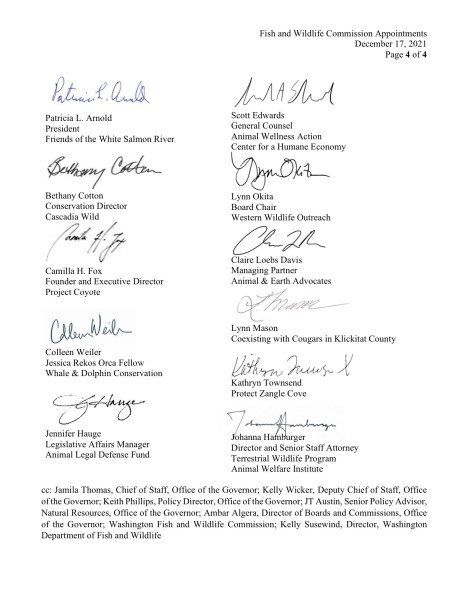
In a startling development, 30 key leaders of environmental organizations around the state have sent a letter urging Governor Jay Inslee to fill the vacant seats on the fish and wildlife commission with commissioners who will emphasize conservation science and reform.
The commission has been in turmoil for the last year partially because Governor Inslee has not filled 2 vacancies on it. He has left a 3 to 3 tie with commissioners who support extreme hunting ideas not based in peer reviewed science unwilling to compromise whatsoever with more moderate commissioners who had to seek independent science because they could not trust the data that was presented in key meetings with WDFW staff. It turned out their concerns were well founded.
Just this week one of the wildlife commissioners, Fred Koontz, resigned saying that the commission was “stuck in a political quagmire”. The dysfunction in this Commission mirrors a recent state audit that found that the Department of Fish and Wildlife itself is in in a state of crisis, with management bullying “rampant” and unethical behavior normalized. The Commission is supposed to be supervising this department. If ever there was time for a top to bottom overhaul of the Department, it is now.
This state of affairs is one of the Governor’s own making, since there have been two vacancies unfilled for the last year that he could’ve easily have filled with people who want to support science and the environmental goals that he has stated he supports for his entire career. Why has he not done that?
The mess is detailed in the letter below. In decades spent covering environmental issues I have never seen anything like the current situation at WDFW. It needs attention by the Governor now.
Port Angeles Netpen managed by Cook Aquaculture – Photo provided by Wild Fish Conservancy
Cook loses another one. Very good news.
Media Contacts: Kurt Beardslee, Executive Director, kurt@wildfishconservancy.org
DECEMBER 17, 2021—In another legal defeat for Cooke Aquaculture, a second Washington state court has rejected efforts by the seafood giant to sue Washington state over the termination of the company’s lease for their Port Angeles netpen operation. On Tuesday, the Court of Appeals issued an opinion affirming a lower court ruling upholding the Department of Natural Resources’ (DNR) decision to terminate the lease.“
The Court’s decision represents another major step forward in the public’s hard-fought efforts to remove this dirty industry from Puget Sound waters,” says Kurt Beardslee, Executive Director. “I applaud the Courts for putting our natural resources and the interest of the public ahead of this powerful corporate interest.”
The court said:
We hold that the superior court properly applied the arbitrary and capricious standard of review because DNR’s decision to terminate the lease was administrative, and that DNR’s decision to terminate the lease was not arbitrary and capricious. Accordingly, we affirm the superior court’s final order upholding DNR’s lease termination decision.
This week’s decision concludes a nearly four-year appeal process that began in early 2018 when Cooke filed suit against DNR, arguing the agency had wrongfully terminated the lease ahead of the 2025 expiration date. In 2020, a Thurston County Superior Court Judge rejected Cooke’s challenge and the company appealed the decision to the Court of Appeals which issued the opinion this week.
DNR terminated the lease in December 2017 after an investigation revealed various violations at the Port Angeles facility,including operating outside of its boundaries, failure to pay rent timely, and not operating the facility in a safe condition.Shortly following the termination, the net pens were completely removed from Port Angeles Harbor.This week the Court overwhelming rejected Cooke’s opinion that the decision to terminate the lease was arbitrary and capricious, finding DNR’s decision “was based on facts supported by substantial evidence, pursuant to plain terms of the contract, was well reasoned and made with due regard to the facts and circumstances.”Cooke is also suing DNR in a separate ongoing lawsuit over the early termination of the company’s Cypress Island lease.The lease was terminated following the 2017 catastrophic collapse of a Cooke net pen that released over 260,000 nonnative Atlantic salmon infected with an exotic virus into Puget Sound. A comprehensive investigation by Washington agencies found Cooke at fault for the collapse and Cooke was also required to pay $2.75 million in Clean Water Act violations in a lawsuit brought by Wild Fish Conservancy. The collapse also resulted in Washington passing a landmark and widely celebrated law banning all nonnative Atlantic salmon finfish aquaculture, Cooke’s only enterprise at the time.“I hope the public will join me in thanking Commissioner of Public Lands Hilary Franz and her department for their unwavering commitment to protecting Puget Sound in the face of Cooke’s meritless, costly, and time-consuming lawsuits,” says Beardslee. “Under Commissioner Franz’s leadership, DNR has a proven record as the only regulatory agency in Washington willing to take bold action to hold this dangerous industry accountable.”In a controversial decision, the Washington Department of Fish and Wildlife permitted Cooke in 2020 to begin rearing steelhead in their Puget Sound net pens where the company holds valid leases. With the Cypress Island and Port Angeles leases terminated by DNR, Cooke only holds valid leases for two net pen sites in Puget Sound. Both leases will expire next year and Cooke will need to apply and secure new leases from DNR to continue operating in Washington. In a letter to Cooke earlier this year, DNR warned the company that the agency has not yet decided if they will issue Cooke new leases.“This week’s Court decision could not have come at a more important time. With Cooke’s only existing leases set to expire next year, DNR is in a critical decision-making period that will determine the future of this industry in Puget Sound,” says Beardslee. “
The Court’s decision removes any opportunity for Cooke to try and recover millions in lost revenue from DNR, which would have provided Cooke important leverage to potentially negotiate their future and new leases in our public waters.”
In July 2020, Wild Fish Conservancy submitted official applications to DNR requesting to lease all of the sites used by Cooke for commercial net pen aquaculture. This alternative proposal, the Taking Back Our Sound Restoration Project,seeks to hold these waters in public trust for the sole purposes of restoring these polluted sites to their natural state and restoring the public’s access to over 130 acres of Puget Sound that have been restricted for private profit for over three decades. This proposal is supported by a broad-based coalition of over 100 businesses and organizations and over 6,000 individuals who have signed onto an ongoing petition to Commissioner Franz calling on DNR to not extend, renew, or reissue leases for commercial net pen aquaculture in Puget Sound and to instead lease these waters for this unprecedented restoration project.“The expiration of these leases comes only once in a decade and offers the public a rare opportunity to work together to take back our sound from the net pen industry, “says Beardslee. “Cooke’s first lease will expire in March 2022, there foreit’s critical at this time that we continue to work together to call on DNR to make the right decision for wild fish and the health of Puget Sound.
The proposed act follows the recommendations of a state-tribal workgroup created after the 2019 Centennial Accord meeting when Inslee directed state agencies to develop a uniform, science-based management approach to make sure salmon have the cool, clean water they need to survive.
Good news on the state wide climate legislation front. Beyond helping finance electric bikes and cars for couple under $500k in income and $250k for singles, the legislation would provide economic pathways towards installing solar panels for a variety of state, local, tribal and NGOs.
Governor Inslee at COP26 (photo by Governor’s Press Office)
There has been some confusion about whether or not the state has *forced* the ending of natural gas heat in new construction. This legislation would give incentives for ending natural gas use, and proposes to end it’s use by 2034. Previous legislation to end natural gas use by 2030 died in committee last session. Nothing is certain at this point, as this is just a proposal and if readers are being told differently, I would love to see the source of that information. I have been unable to find anything saying differently, even on right wing news outlets.
“The amount of carbon emissions that we will have to reduce to meet that legally binding commitment is equivalent to the emissions of taking 1.3 million vehicles off the road,” said the governor. “We have some real work to do starting today.”
If you are following the recovery efforts of the Puget Sound Partnership and care about what the next steps in the long running restoration of the Sound are going to be for 2022, this is likely one of the most important meetings of the year.
A presentation for discussion about legislative and budget priorities for the 2022 Washington State legislative session. This session will include a presentation of the Partnership staff’s ranking of 2022 supplemental budget requests, Project Olga legislative recommendations, and input received from boards and advisory groups. Presentation by Don Gourlie, legislative policy director at the Puget Sound Partnership.
A presentation for discussion about the Washington State Academy of Sciences (WSAS) study on Net Ecological Gain. WSAS is advising the state legislature on a net ecological gain standard for state land use, development, and environmental laws to achieve a goal of better statewide performance on ecological health and endangered species recovery. Presentation by Ron Thom, member of the Washington State Academy of Sciences, staff scientist emeritus at the Pacific Northwest National Laboratory, and senior science advisor for the Puget Sound Partnership.
A presentation for discussion on cumulative effects evaluation and case study application to Puget Sound recovery. A cumulative effects evaluation is a tool to evaluate recovery progress and effectiveness by analyzing the cumulative benefits of recovery actions across large spatial and temporal scales. This presentation will include discussion of how the peer-reviewed methodology for a cumulative effects evaluation can be applied in Puget Sound. Presentation by Elene Trujillo, effectiveness monitoring analyst at the Puget Sound Partnership, Annelise Del Rio, monitoring performance analyst/salmon scientist at the Puget Sound Partnership, Ron Thom, staff scientist emeritus at the Pacific Northwest National Laboratory and senior science advisor for the Puget Sound Partnership, and Gary Johnson, retired research scientist, Pacific Northwest National Laboratory.
A presentation and discussion about the Science Panel’s 2022 work plan and the shared priorities of the Partnership’s boards. This session will include discussion of existing topics and new topics for the Science Panel’s 2022 work plan and a review of the board’s 2021 priorities. Presentation by Jillian Reitz, boards policy advisor at the Puget Sound Partnership.
A presentation and discussion about identifying actions to include in the 2022-2026 Action Agenda. Partnership staff will update the Panel on the process to identify actions to include in the 2022-2026 Action Agenda update. Partnership staff will also invite the Panel to continue discussing its role in implementing this Action Agenda. Presentation by Dan Stonington, planning manager at the Puget Sound Partnership.
A presentation for discussion about the application of econometric cost models to fish passage barriers. This session will include an overview of a report on using econometric and machine learning methods to project the restoration costs for 27,000 barrier culverts documented in state inventories. Presentation by Braeden Van Deynze, postdoctoral research associate with the University of Washington’s School of Marine and Environmental Affairs, and Robby Fonner, economist at NOAA’s Northwest Fisheries Science Center.
If you need special accommodations to participate in this meeting, please notify Boards Policy Advisor Jillian Reitz at 360.742.2936.
About the Science Panel
The Science Panel’s expertise and advice are critical to the Puget Sound Partnership’s efforts to develop a comprehensive, science-based plan to restore Puget Sound. The members, appointed by the Leadership Council, are chosen from the top scientists in Washington State.
About the Puget Sound Partnership
The Puget Sound Partnership is the state agency formed to lead the region’s collective effort to restore and protect Puget Sound. Working with hundreds of government agencies, tribes, scientists, businesses, and nonprofits, the Partnership mobilizes partner action around a common agenda, advances Sound investments, and tracks progress to optimize recovery.
In a dramatic conclusion to a long running court battle over the expansion of the Whidbey Island Naval Base, the District Court of Washington Judge Richard Creatura has forced the Navy to sit down with State’s Attorney General office and the environmental groups led by Citizen’s of the Ebey’s Reserve (COER) and Paula Spina, to forge an agreement to satisfy some of the issues raised by the environmental groups. The judge was scathing in his findings against the Navy’s work in their Environmental Impact Statement (EIS). His language could not be more clear,”the Navy appears to have used certain statistics “‘much like a drunk uses a lamppost: for support, not illumination.’ “
Whidbey Island Naval Base
While the groups did not win all their demands, they won what likely will be the most critical issues. Here is a condensed version of the judge’s findings. I cannot improve on his language.
Plaintiffs challenge the Navy’s 2018 final environmental impact statement (“FEIS”) and 2019 record of decision authorizing t he expansion of EA-18G “Growler” aircraft operations at the Naval Air Station Whidbey Island (“NASWI”) under the National Environmental Policy Act (“NEPA”), the National Historic Preservation Act (“NHPA”), These statutes mandate a procedure that an agency must follow before taking an action as significant as the Growler expansion at NASWI.
Under NEPA and the APA, the Navy’s decision may be overturned if the Navy acted “arbitrarily and capriciously” and failed to take a “hard look” at the consequences of the proposed action.
Here, despite a gargantuan administrative record, covering nearly 200,000 pages of studies, reports, comments, and the like, the Navy selected methods of evaluating the data that supported its goal of increasing Growler operations. The Navy did this at the expense of the public and the environment, turning a blind eye to data that would not support this intended result. Or, to borrow the words of noted sports analyst Vin Scully, the Navy appears to have used certain statistics “much like a drunk uses a lamppost: for support, not illumination.”
When reporting on the environmental impact of Growler fuel emissions, the Navy underreported the true amount of Growler fuel emissions and failed to disclose that it was not including any emissions for flights above 3,000 feet. Even after receiving a comment on the issue, the Navy failed to disclose its underreporting and dismissed the issue with broad generalities.
With respect to the impact of this increased operation on childhood learning, the Navy acknowledged numerous studies that concluded that aircraft noise would measurably impact learning but then arbitrarily concluded that because it could not quantify exactly how the increased operations would interfere with childhood learning, no further analysis was necessary.
As to the impact of increased jet noise on various bird species, the Navy repeatedly stated that increased noise would have species-specific impacts on the many bird species in the affected area but then failed to conduct a species-specific analysis to determine if some species would be more affected than others. Instead, the Navy simply concluded that certain species were not adversely affected and then extrapolated that all the other species would not be affected, either.
Regarding evaluating reasonable alternatives to the Growler expansion at NASWI, which the Navy was required to do, the Navy rejected moving the Growler operations to El Centro, California out of hand, summarily concluding that such a move would cost too much and that moving the operation to that location would have its own environmental challenges. The Navy’s cursory rationale was arbitrary and capricious and does not provide a valid basis to reject the El Centro alternative.
For these reasons, the Court recommends that the District Court find the FEIS violated the NEPA and grant all summary judgment motions in part and deny them in part. Also, the Court grants plaintiffs leave to submit extra record evidence to address certain issues. Assuming the District Court follows this recommendation, it should order supplemental briefing regarding the appropriate remedy for the NEPA violations described herein.
This blog has argued for years that the only way to stop environmental degradation is with lawsuits. Once again, as we have seen against the aquaculture industry and the Army Corps of Engineers, the legal system continues to be the last bastion of hope against the flood of money, hubris, greed and incompetence that continue to attempt (and sometimes succeed) and permeate many of our public funded agencies. Our politicians so rarely step up and stand up to these agencies, leaving it up to us to fund and fight them. To those supporters of the Navy base, including both Democrats and Republicans, it’s clear that the Navy did not do it’s job, nor did it consider moving the base, which the judge said should have been considered. The environmental argument is not anti-navy, it’s pro environment.
Thanks to Attorney General Bob Ferguson for taking a very hard stand against a very large foe. And thanks to COER for their never ending optimism in this battle. They have not won the war, but a significant battle for protection of our environment.
An update based on the Sierra Club’s Peter Guerrero’s take on this. And also my thoughts at the end.
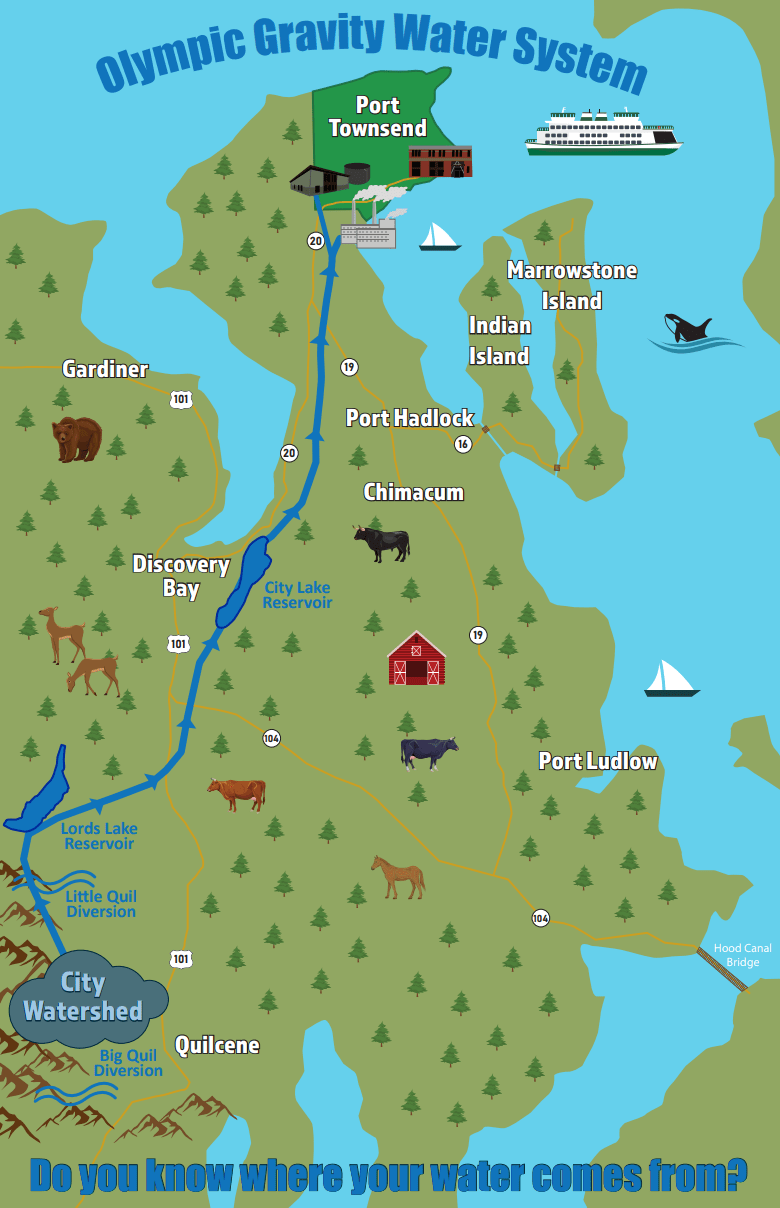
On Monday, the City Council voted unanimously to approve the new water agreement that includes raises in the cost of water to city residents, along with a new contract with the PT Paper Mill and improvements to the pipeline infrastructure. The agreement incorporates the Sierra Club’s recommendations for charging the mill for water used ($4.5 million/year) and for increasing these charges, over time, to encourage conservation. Unfortunately, the agreement establishes the current mill water usage of 11MGD/day as the baseline without seeking any reductions, resulting in the mill continuing to account for over 91% of all water consumed from the Quilcene watershed.
Both the mill and the city got what they wanted: The mill was assured of being able to continue using up to 11MGD while the city was able to put together a “partnership” that avoided having to go to the bond market and that was of a sufficient duration (20 years), avoiding draconian residential rate increases. It was more important for the city to get the mill to offset the steep capital costs of the Olympic Ground Water System (OGWS) than to achieve the kind of conservation gains the Sierra Club and other environmental activists would have liked to see.
Unfortunately, it is likely to be an unstable agreement given the past economic history of the mill and its aging infrastructure. Both suggest the mill may not be around for the full 20-year term of the agreement, leaving the city having to pay tens of millions for infrastructure improvements anyway. Knowing this, the city also voted last night to unanimously to create an industrial water rate, allowing it to sell water to another entity (industrial, PUD, etc.) if needed.
The next debate will be over increases to residential rates required by the agreement. Residential ratepayers have already expressed concern that they are “paying” for the mill’s excessive water use. Unfortunately the city doesn’t see a viable alternative at this time.
Environmentalists will have a second opportunity come 2025-2029 when the USFS will be reconsidering the city’s special use permit allowing it to withdraw water from the Quilcene Watershed.
I would also like to add that one thing I learned by listening to the discussion and reading the agreement is that we are extremely vulnerable to the impending climate changes that are unfolding around us. One issue that was mentioned was that the city looked into substituting well water for the water coming from the mountains and found that there is not nearly enough to supply our needs, let alone the mill. My personal take on the agreement is that it could have been set to a 10 year renewal, given the changing climate. It was also odd that there is no mention of the impact of our taking of significant water from the rivers, given the efforts to restore salmon in those streams. It certainly was never considered in the original setup of the water system.
It also brings up the issue of growth of the city. As new housing developments continue at the roundabout on Discovery Road and also on Cook Avenue there will be a need for more water for the city. The mill is guaranteed 11 MGD. But if the city increases water use, there is more revenue for the OGWS. This is a perverse reversal of conservation, the built reward to grow the city’s water use by greater development in order to lower water costs for all. But the caveat is that if there’s drought conditions and the water is not at the level needed, and does not replenish the holding lakes, we could be in for greater conservation and higher rates.
The water is stored in two holding lakes and we usually end up shifting to drawing from them exclusively by mid summer. As the planet warms and the snow packs become lessened, we will be drawing on those lakes sooner and sooner in the year. That day is coming in the next two to five years, once those large scale developments are built out. That was not discussed by the City Council. Not even a question on it, unless I missed it.
What could this have to do with the Olympic Peninsula? Well, just a few months ago, our Department of Natural Resources decided that putting 80,000 bags of oysters inside a National Wildlife Reserve was a good idea, regardless of the scientific opinions of the biologists at the Reserve. Perhaps a court challenge could call into affect the “Rights of Nature” to safeguard the Spit from commercial exploitation?
QUITO, ECUADOR— In an unprecedented ruling, the Constitutional Court of Ecuador has applied Ecuador’s constitutional provision on the “Rights of Nature” to safeguard Los Cedros Protected Forest from mining concessions. The Court voted 7 in favor and 2 abstentions.
With the ruling, published on December 1st, the Constitutional Court ordered that activities that threaten the Rights of Nature should not be carried out within Los Cedros Protected Forest, thereby prohibiting mining and all types of extractive activities. Water and environmental permits to mining companies will now also be denied.
Two-thirds of the reserve is covered by mining concessions granted to the Ecuadorian state mining company, ENAMI, and its Canadian partner, Cornerstone Capital Resources. The Constitutional Court agreed to hear the case in May 2020.
The Court’s decision also imposes a series of orders on the Ministry of the Environment, Water and Ecological Transition to comply with the decision. These include orders for the Ministry to help construct a participatory plan for managing the Los Cedros Protected Forest and to ensure respect for the Rights of Nature and the right to a healthy environment. The Court also ordered the government to adopt regulations so that the future issuance of environmental records and licenses and the use of water for extractive activities avoid violating the Rights of Nature, as in the case of Los Cedros.
Overall, this decision clearly details the effects of the Rights of Nature for administrative authorities in a way that was unprecedented.
“This case is emblematic not only for Ecuador but also for the international community,” said Alejandro Olivera, senior scientist and Mexico representative at the Center for Biological Diversity. “This progressing and innovative ruling protects the imperiled wildlife, such as the endangered brown-headed spider monkeys and endangered spectacled bears, from mining companies.”
In September 2020, Earth Law Center, the Global Alliance for the Rights of Nature, the Center for Biological Diversity, International Rivers, and the Great Lakes Environmental Law Center (“Coalition”) filed an amicus curiae (friend of the court) brief (Spanish; English) before the Ecuadorian Constitutional Court. The brief asked the Court to protect Los Cedros and robustly enforce constitutional provisions that establish the Rights of Nature, or “Pachamama,” including the rights to exist, to restoration, and the unique rights of rivers, especially the Magdalena River.
“This is a historic victory in favor of Nature. The Constitutional Court states that no activity that threatens the Rights of Nature can be developed within the ecosystem of Los Cedros Protected Forest, including mining and any other extractive activity. Mining is now banned within this amazing and unique protected forest. This sets a great juridical precedent to continue with other threatened Protected Forests. Today, the endangered frogs, the spectacled bears, the spider monkey, the birds, and Nature as a whole have won an unprecedented battle”, says Natalia Greene from the Global Alliance for the Rights of Nature.
“It is undoubtedly good news, but the situation of Los Cedros Protected Forest is not an isolated event in Ecuador,” said Constanza Prieto Figelist, Latin American Legal Director at Earth Law Center. “This is a problem of the forests throughout the country. In recent years, many mining concessions that overlap with Protective Forests have been awarded.”
The brown-headed spider monkey, found in Los Cedros, has lost more than 80% of its original area of distribution in northwest Ecuador. In 2005, it was estimated that there were fewer than 250 brown-headed spider monkeys globally, granting the species a place among the top 25 most endangered primates in the world.
The groups note that the case is of great significance, both for Ecuador and the world, because it has the potential to establish important and influential “Earth jurisprudence” that will help guide humanity to be a benefit rather than a destructive presence within the community of life. The proposed mining is unlawful, the Coalition say, because it violates the rights of the Los Cedros Protected Forest as an ecosystem as well as the rights of the many members of that living community.
# # #
Earth Law Center (https://www.earthlawcenter.org) is a non-governmental organization based in the United States of America, Mexico, and Canada that promotes the application of the Rights of Nature at the local and international levels. The organization creates alliances with local organizations to recognize and promulgate laws that recognize the inherent rights of rivers, oceans, and coastal and terrestrial ecosystems. Thus, it seeks to make a paradigm shift, fighting for the formal recognition of the rights of nature to exist, prosper and evolve. Earth Law Center aims to grant ecosystems the same rights recognized to people and corporations, allowing them to defend their rights before national and international courts, not only for the benefit of people but also for nature itself.
In the first part of our short series, we explored the issue of the Statesman Group, an international developer out of Canada, and it’s unpaid bills to Jefferson County for work the county did for them on behalf of approving the Pleasant Harbor Resort. The resort, a large Master Planned Resort (MPR), has been the issue of contention since it was unveiled back in the early 2000s. The County gave a green light to develop, with numerous requirements to be met. In exchange, the County, because of the lack of employees due to the financial aftermath of the real estate crash of 2008-09 offered to do a great deal of work to expedite the approvals in exchange for being paid agreed upon sums for the work. It was a reasonable thing to do, given the financial situation the County was in at that time. Though the County did do a great deal of work it was paid for between 2008 and 2016, starting in 2016 Statesman started challenging the invoices. For some reason, this dispute has gone on for 6 years, totaling over $190,000, money the County can ill afford and a situation most of us would never be allowed to do as individuals or small time developers.
Since this dispute started, Statesman has received permission by the Department of Natural Resources to log the property, and according to my sources, they have. This logging activity most likely generated revenue for Statesman.
The County has been involved in negotiations with the Statesman group for many months now, records revealed through Public Records Act requests have shown that County attorney Philip Hunsucker and County officials have been going back and forth for years seeking to receive payments from Statesman. Mr. Hunsucker has stated the following in letters to Stateman’s attorney in May of 2021:
“Your client previously paid without question invoices with the same sort of detail in the so-called “block bills” he is now complaining about.”
“…when the County tried to get your client to pay invoices in January 2017, he refused”
“Some of the work the County did with tribes also was necessary to address your client’s missteps with the Port Gamble S’Klallam Tribe (PGST).”
“Significant work was required by the County to ensure that all MOU’s and environmental reports required by Ordinance No. 01-1028-08 were completed, including the Water Quality Management Plan and the Wildlife Management Plan. This issue also coincides with the need to coordinate with tribes. The PGST provided detailed and substantive comments to Water Quality Management Plan and the Wildlife Management Plan that had to be addressed”
Mr. Hunsucker also offered a 5% discount on the bill if they paid immediately.
The question that has been asked by many in the opposition to this MPR, is “What other business in Jefferson County would be allowed to not pay hundreds of thousands of dollars owed to the County for work done over six years and then offered a discount to pay these late bills?”
A logical follow up to this question is, “Why can’t the County issue a stop work order to Statesman until these bills are paid?
This reporter reached out to former County Commissioner John Austin, who was one of the commissioners that approved this MPR in the first place. His comment was, “It’s very distressing to me that they have not followed their agreement with the County.” He went on to state that he would likely have been reluctant to approve this MPR if he knew that this would have been the outcome.
It would be informative to get an official statement from the County as to why they have not issued a stop work order on this development until bills are paid. On Page 62 of the 2017 agreement with Statesman, it states:
(11) Violations and Penalties. The administrator is authorized to enforce the provisions of this article whenever he or she determines that a condition exists in violation of this article or permit issued hereunder. All violations of any provisions of this article, incorporated standard or permit issued. pursuant to this article are made subject to the provisions of Chapter 18.50 JCC, which provides for voluntary correction, notice and orders to correct the violation, stop work and emergency orders, and assessment of civil penalties (emphasis added).
Additional investigations by the Brinnon Group have found the following brochure put out by Statesman. It raises the specter that Statesman does not have the financial resources to complete this project.
A redflag on Statesman finances was raised back in August, 2016, when the company distributed a flyer that proposed public financing of the Pleasant Harbor development…. Statesman proposed a $2,000,000 “Recreational Community Grant” from Jefferson County. A transfer of about 30 acres of the Pleasant Harbor site to the state for another Recreational Community Grant in the amount of $9,250,000 was proposed (a cost of over $308,000/acre of undeveloped, vacant land), as well as a $26,500,000 loan from the state. These requests totaled almost $38,000,000 in corporate welfare to Statesman. During this time in 2016, while Statesman was asking for public money for its project, it was not paying its bills to Jefferson County.
From email provided by The Brinnon Group
Additionally, according to a letter sent earlier this month to the County, raises the issue of whether the County is crossing a legal line by allowing this situation to continue. And at what point is it considered bad debt and written off?
Article 8, Section 7 of the Washington Constitution states: “No county, city, town or other municipal corporation shall hereafter give any money, or property, or loan its money, or credit to or in aid of any individual, association, company or corporation . . .” (emphasis added).
From email provided by The Brinnon Group
The Brinnon group is asking that the County take steps to ensure that Statesman can finance this project. They ask, quite reasonably it would seem to most individuals here, that the County require financial security or a bond for payment to the County, such as an irrevocable line of credit from an established financial institution. The question also might be asked, “Why hasn’t the County already done that?”
How much longer are the taxpayers of this county expected to wait before the bills that are due them are paid? Who else would get this kind of kid glove treatment by county officials?
A great deal more background on this can be found on the website of The Brinnon Group, the citizens who have been opposing this development since the beginning. http://www.brinnongroup.org/
The focal point for environmental news & perspective on the news. Our goal is to help educate and connect the public on the Peninsula. We are not a non-profit so donations are not tax deductible. Maybe someday with your help!
This site is based on news and my opinion on that news. I come with over 50 years of experience in various environmental and tribal involvement. You may not agree with my POV. At my age, I am willing to listen to your POV and put it in comments. But I might not agree with you and that's the way it works.
HOTLINES FOR REPORTING SPILLS
WA State Emergency Management Division: 1-800-258-5990
National Response Center: 1-800-424-8802
Pacific States & British Columbia: 1-800-OILS-911 (1-800-645-7911)
Local Events
Add your local event here. Contact us to include your next event.
—————————————————
TSUNAMI DEBRIS HOTLINE:
1-855-WACOAST (1-855-922-6278)
—————————————————
Event Date:
NATURE NOW
A Program About the Natural World.
KPTZ.ORG 91.9
WEDNESDAYS AT 12:05
REPEATS: SATURDAYS 12:30 AND WEDNESDAYS
PODCASTS AT KPTZ.ORG