Filed under: education, Environmental Activism, environmental education, Events, Port Angeles, Puget Sound | Tagged: Clallam County, Port Angeles, Puget Sound | Comments Off on EVENT: Day of Science in Port Angeles – APRIL 22nd.
Filed under: education, Environmental Activism, environmental education, Events, Port Angeles, Puget Sound | Tagged: Clallam County, Port Angeles, Puget Sound | Comments Off on EVENT: Day of Science in Port Angeles – APRIL 22nd.
Great aerial photography of the new Elwha river and a wonderful story with illustrations. While the jury is still out on the long term viability of the returning salmon runs, it does appear, at this early point, that the project is a success. But we won’t know for sure for probably at least 30 years. In the meantime, enjoy the view, and give thanks to the Lower Elwha Tribe, and the individuals and politicians of both parties here on the Peninsula that supported this effort, funded it, and are helping to restore it. The whole world is really watching this one.
ELWHA RIVER — The Elwha watershed is booming with new life, after the world’s largest dam removal.
The first concrete went flying in September 2011, and Elwha Dam was out the following March. Glines Canyon Dam upriver tumbled for good in September 2014. Today the river roars through the tight rock canyon once plugged by Elwha Dam, and surges past the bald, rocky hill where the powerhouse stood. The hum of the generators is replaced by the river singing in full voice, shrugging off a century of confinement like it never happened. Nature’s resurgence is visible everywhere.
http://projects.seattletimes.com/2016/elwha/
Filed under: Environmental Protection, Olympic Peninsula, Straits of Juan de Fuca | Tagged: Clallam County, elwha dam, elwha river, Environmental Protection, Olympic Peninsula | Comments Off on Elwha Roaring Back to Life – Seattle Times
The battle to protect remaining stands of timber, that are home to the endangered marbled murrelet, continues. The State has decided to log off the stand, which are home to some pairs. A lawsuit is imminent. This is another good example of the environmental battle that happens as resources dwindle and we don’t have a proper modern taxing mechanism to fund our schools. The idea of cutting timber to fund schools was once a simple one, but now, it’s become a trade off of rare species vs. schools. It will take a brave legislator(s) to really end this practice and come up with a funding mechanism that properly funds our schools. It’s ironic, because the very district (Jefferson County) that probably thought this was a great idea once a 160 or so years ago, now is the one that brought the lawsuit demanding proper funding. And we are one of the most environmentally supportive counties in the state. I don’t see any legislators of the calibre to offer a new way forward. In fact, in conversations with them, they feel like they are unwilling to do anything more for the schools than they already have. Would love to be proven wrong.
SEATTLE — The Washington Board of Natural Resources voted unanimously Tuesday to approve the sale of 200 acres of the Olympic Peninsula that are home to the threatened marbled murrelet. The money from the timber sale will go to the University of Washington.
Filed under: Jefferson County, Olympic Peninsula | Tagged: Clallam County, marbled murrelett, North Olympic Peninsula, Olympic Peninsula, timber | Comments Off on Controversial Olympic Peninsula Timber Sale Pits Environment Against Education – Earthfix
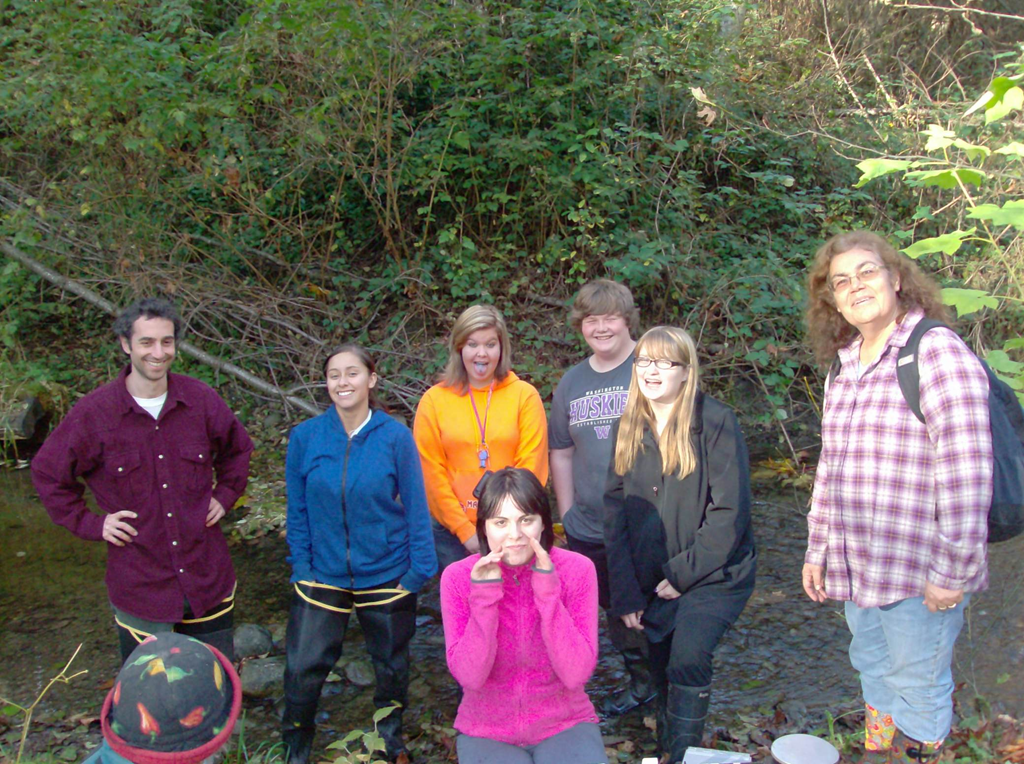
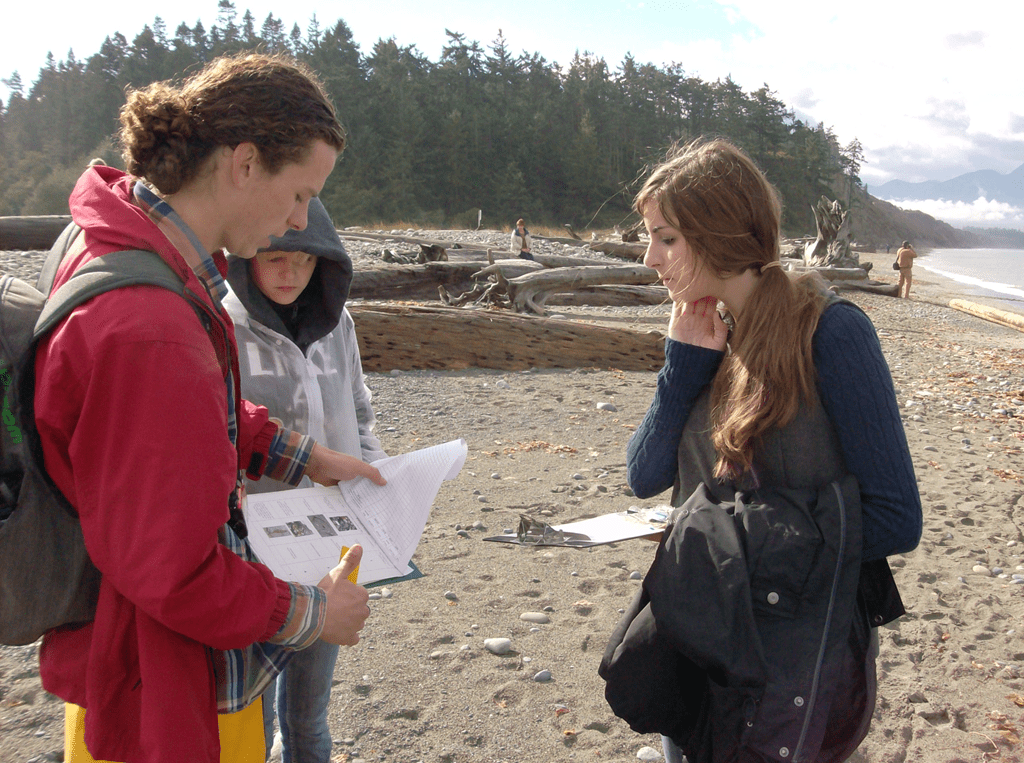 The Skills Center Natural Resources program gets you outside doing real work in the environment. We offer project-based classes to high school-aged students (up to 21 years old without a diploma) across the North Olympic Peninsula. All classes include hands-on field work, offer high school and college credit, and help students transition to the next step of internship, college or career.
Enrollment is open now for second semester, which starts at the end of January.
Classes in Port Angeles include the new ‘Cultural and Natural Resources 1’ class, which meets after lunch daily, and 5 different ‘Natural Resources Options’ that meet after school one day per week. Sequim and Forks each have three different ‘Natural Resources Options’ that meet after school one day per week.
For more information or to enroll, please contact teacher Dan Lieberman at 360-565-1892, dlieberman@portangelesschools.org, or www.nopsc.org/naturalresources.
Filed under: Olympic Peninsula, Places, Port Angeles, Projects | Tagged: Clallam County, Classes, North Olympic Peninsula, Olympic Peninsula, Port Angeles, skills | Comments Off on Enrollment now open for environmental project work for high school to 21 year olds
Lots of good projects that are going to give jobs to folks here on the Peninsula, and help restore salmon habitat. The work is far from being completed, but it’s good to see these projects and land purchases get funded. Tying this together with the work described by Earth Economics over the weekend on this site, it’s worth it to note that there is value in these ecosystem renewal projects. Slowing the rivers by putting in log jams, for example, do not just provide scientifically proven habitat for salmon (especially young salmon migrating downstream), but they also aide in flood protection among other benefits. Flood plain protection is a value that lowers the cost to repairing damage from floods over multiple decades.
The state has awarded $4.5 million in grants for new salmon restoration projects on the North Olympic Peninsula. ….
Rob Ollikainen reports.
There’s quite a bit more to the story at:
Support local journalism, subscribe to the Peninsula Daily News.
Filed under: Around the Sound, Government, Jefferson County, Olympic Peninsula, Salmon | Tagged: Clallam County, clallam county, dungeness river, elwha river, grants, Jamestown Tribe, Jefferson County, lower elwha tribe, North Olympic Peninsula, Olympic Peninsula, projects, restoration, Salmon | Comments Off on Peninsula salmon projects get $4.5 million – PDN
Washington State is in the forefront of the impacts of climate change around the world. In addition to actually feeling the effects, in alarming problems emerging in our waters that are impacting shellfish, we have a state legislature and governor that have demanded and funded serious scientific study along with a feedback loop to the lawmakers from the Governor’s directives, as well as State law.
It is difficult to collate all the scientific efforts of this funding into a neat package, but once or twice a year, we get a window into that work. The Northwest Straits Initiative, which for over 15 years has brought together scientists, business interests, tribes and volunteer citizens, holds their annual conference. These people belong to the Marine Resource Committees (MRCs) of seven counties, from Snohomish to the Canadian border, and west through the Strait of Juan de Fuca (along with non-NW Straits Initiative managed counties along the Coast). The MRC representatives come together to share the stories of their work, and hear a unified program of science efforts that support or influence that work.
This year, the conference attendees, were treated to an update on many of the various climate change issues that they face. As part of our coverage of this important conference, and because the NW Straits does not have the financial capabilities to hold a large public forum, we at the Olympic Peninsula Environmental News present a series of presentations to you over the next few weeks, to allow the general public to hear what was told to the attendees. Given that the attendees are mainly volunteers (there are a few part time staff members in each jurisdiction to help in project management and grant writing), and come forward from the local communities, for those who are interested in volunteering, or cannot afford the time and money to attend the conference, we will post audio of all the presentations we were able to cover, which was all but two, and in addition, as time allows, we will also post the powerpoint presentations of those speakers who used it.
Washington State Senator Kevin leads off the presentations. Hailing from San Juan County, Senator Ranker has been instrumental in providing support with funding and legislation to scientific research and policy guidance on ocean acidification (OA). OA research is a critical to fund, as the effects of the increased acidification, in even small degrees, appears to have serious outcomes on shellfish, which provides over $270 million dollars a year (2010 number), and over 3200 direct jobs, most of them in rural and lower income communities around the Sea. These jobs also support the wider communities they live in with indirect jobs, in supporting industries.
Senator Ranker’s presentation can be found at the following link. You can listen to it right here, or download it for later listening on any MP3 player, or your tablet or PC. The presentation is 38 minutes long, and Senator Ranker’s slides will likely be available later. It is our opinion that not immediately having his slides will not detract from his message. The Senator is a very humorous and off the cuff speaker.
If you wish to attend any of the monthly MRC meetings in your area, check their local web sites. All meetings are open to the public and are advertised in advance. You can also support the work of the NW Straits Initiative, by donating to the NW Straits Foundation. Their web site is http://www.nwstraits.org and http://www.nwstraits.org/Foundation/About.aspx.
Filed under: Around the Sound, Climate Change, Events, fisheries, Government, legislation, ocean acidification, People | Tagged: Clallam County, climate change, NW Straits Intiative, ocean acidifcation, ocean acidification, Salish Sea, Senator Kevin Ranker, Threats | 1 Comment »

With the Congress set to reduce food stamp funding on Friday November 1st, understanding how to get local food is even more important for many of those needing a decent meal. Often farms have gleanings available, or have slightly older food that they may be willing to donate if you live in the neighborhood.
(The Local Food Access Network (L-FAN) is sponsoring an event on November 12, 2013 at Nourish, our new organic Sequim restaurant. The topic is Bountiful Clallam and will featuring Clea Rome. Clea is the University of Washington Extension Agent in Clallam County that works with local farmers to help them increase sustainable production and markets. This should be an informative meeting and will be followed by a discussion of what we can do to support local food accessibility.
Nourish is open for dinner and it is Taco Night! Come early and bring your tacos upstairs to the Community Meeting Room. It is all organic and gluten free
What: “Bountiful Clallam” Local folks discuss local fare
When: Tuesday, November 12, 2013 Time: 6:00 – 8:00pm
Where: Nourish Restaurant 1345 S. Sequim Ave. (Old Cedarbrook Garden Café)
Featuring: Clea Rome
Sponsored by: Local Food Access Network
Contact for additional information or questions: Carrol Hull 360 683-5199
cahull@msn.com
Filed under: Events | Tagged: Clallam County, Clea Rome, event, food | Comments Off on EVENT: Local Food Accessibility – Sequim Nov.12th 6-8PM
Given the recent bluff collapse in Port Townsend, this might be of interest to some of you!

Filed under: Events | Tagged: bluff, bluffs, Clallam County, clallam county, Port Townsend, sequim, workshop | Comments Off on EVENT: Free workshop for homeowners on bluffs!
This actually seems to be a reasonable alternative. The recommendation is to enforce current laws, raise the local money to pay for regular inspection, which as I have heard, is not happening currently, and monitor to see whether the problems improve. Rushing to judgement on putting in a huge infrastructure project, even if it’s eventually found to be the right solution, seems premature. Let’s make sure the existing laws work, before abandoning them.
Clallam County should strengthen an existing program to operate and maintain individual on-site septic systems in the Dungeness/3 Crabs area, a new study concludes. Staying the course was one of four alternatives being considered in a feasibility study for wastewater management in an unincorporated area where failing septic systems were said to be polluting Dungeness Bay with fecal coliform and nitrogen. Damon McAlister, a senior engineer with Parametrix, and county Environmental Health Director Andy Brastad presented the final study to the Clallam County commissioners Tuesday. Rob Ollikainen reports.
Feasibility study addresses Dungeness/3 Crabs-area pollution http://peninsuladailynews.com/article/20130731/NEWS/307319994/feasibility-study-addresses-dungeness-3-crabs-area-pollution
Support local journalism: Subscribe to the PDN.
Filed under: Government, Olympic Peninsula | Tagged: clallam county, Clallam County, Dungeness Bay, fecal coliform, Olympic Peninsula, septic, Threats, Water Pollution | Comments Off on Feasibility study addresses Dungeness/3 Crabs-area pollution – PDN
Clallam County Community Development Director Sheila Roark Miller could face a variety of charges stemming from a complaint about her allegedly altering records. The original complaint appears to have been for forcing unpaid overtime, but now is expanded to include what is believed to be a possible charge of back-dating a development permit to ensure the developer would not have to comply with rigorous new water conservation rules that went into effect in Jan of this year, according to my sources. If accurate, that charge apparently could be one of the felony charges mentioned. Ms. Miller, in her role as DCD head and a landowner/river water user with her farm in the Sequim Valley, has been a member of the Dungeness River Management Team, and originally ran against an environmentally supportive (and supported by the environmental community) head of DCD. DCD has also been overseeing the Clallam County Shoreline Master Program update. Likely Ms. Miller will take a prolonged leave of absence, and probably resignation would follow while she awaits the pending charges. It would (and likely already has) put a serious cloud over the SMP update. We hope that these charges are unfounded, as it would bring into question much of the work done by her office since she took the reins.
Why does this matter to Jefferson County? Because the movement to create a “Charter County” would make the DCD position an elected position, and lead to inevitable politicization of the position. Currently we do not elect our DCD head, it is a typical county position hired by looking at experience and related job backgrounds. In fact, the PDN has mentioned in the past that this is the *only* elected DCD official in the US. The fact that Clallam County is a charter county allows this position to be made into a political, rather than professional one.
Filed under: Government, Olympic Peninsula, Port Angeles | Tagged: Clallam County, Clallam County DCD, Olympic Peninsula, Port Angeles, sheila roard miller | Comments Off on Clallam County hires attorney for embattled county official Sheila Roark Miller – PDN
NOSC is also hiring an “Education and Outreach Assistant” WCC Individual Placement Intern and 5 WCC Crew Members for October 2013-September 2014.
Applicants must be 18 to 25 years old at the time of hire (age restriction may be waived for recently returned military veterans). Applications due Friday, August 2nd. To apply, visit www.nosc.org
NOW HIRING: WCC Individual Placement – Education and Outreach Assistant (1 position)
Description: This position assists in leading a service learning education program, looks over a native plant nursery, runs summer chum and Coho spawner surveys, helps with monitoring on current and past NOSC projects, and assists with volunteer coordination and producing outreach materials.
For application instructions please read the full job announcement:
Edu & Outreach Assistant at NOSC, WCC IP position 2013-2014
NOW HIRING: WCC RESTORATION CREW MEMBER POSITIONS (5 open positions)
Crew Supervisor: Owen French
Telephone: 360-470-0004
Location: Port Hadlock
Email: Owen.French@ecy.wa.gov
Description: This crew is based in Port Hadlock, working for the North Olympic Salmon Coalition (NOSC). NOSC is one of 14 Regional Fisheries Enhancement Groups (RFEGs) in the state of Washington. The crew implements projects for NOSC and partnering organizations, such as conservation districts, other RFEGs, Tribes, land trusts and WDFW. Projects primarily consist of riparian/estuarine restoration which involves; native plantings, noxious weed control and site maintenance (includes brush cutting, mowing, and herbicide application). Corps members will be expected to test for a Washington State Pesticide Applicator License. The crew will occasionally assist with salmonid and habitat monitoring. The work week is generally Monday-Thursday, 7:00AM-5:30PM. View the crew’s blog.
To apply for this opportunity visit the WCC website and select CREW- PORT HADLOCK/NORTH OLYMPIC SALMON COALITION on WCC’s online job application.
Please visit the Washington Conservation Corps Website for more information: http://www.ecy.wa.gov/wcc/recruitment/counties/jefferson.html
Filed under: Jefferson County, Olympic Peninsula | Tagged: Clallam County, Crew, education, jobs, NOSC, Olympic Peninsula, Port Hadlock | Comments Off on Job Opportunity! – NOSC hiring two positions
From our friend Jac at NOSC. A person who never seems to be without a smile. You’ll enjoy the day. A great way to learn about your local watershed.
***MULTIPLE VOLUNTEERS NEEDED***
WHAT: Stream Surveys with the North Olympic Salmon Coalition
WHERE: Morse Creek, just east of PA
WHEN: Wednesdays, Thursdays & Fridays from Aug 29th to Sept 30th
9am-1pm and/or 1-4pm. Volunteer for a partial day, full day or multiple days
WHY: NOSC will be collecting post-project monitoring data for the 3rd consective year after the Morse Creek Re-meander Project
NOSC will be measuring different stream characteristics and habitat features such as pool and riffle lengths, large woody debris, stream depths and pebble sizes. No experience necessary, training will be provided. Volunteers need to be comfortable working in water for an extended period of time. Visit www.nosc.org for more information.
RSVP: Email Jac at volunteer@nosc.org or call (360) 379-8051 to get involved and scheduled.
PLEASE BRING: Chest waders and boots (NOSC can provide some). Please bring plenty of water, snacks and warm clothes.
DIRECTIONS: We will meet at 651 Cottonwood Lane, Port Angeles. or click to see map: http://mapq.st/oB2MW7.
DAY OF EVENT CONTACT: Jac at (518) 312-2658.
Volunteers can either join us for a morning shift (9-1pm), afternoon shift (1pm-4pm) or all day (9am-4pm). It those times don’t work, let us know we are flexible. We need at least 4 volunteers each day. It is extremely helpful if you are able to volunteer on multiple occasions. This is one of my favorite events all year – great excuse to spend all day in a beautiful stream!
Thanks – Hope to see at Morse Creek
Jac
Filed under: Port Angeles | Tagged: Clallam County, environmental, morse creek, Port Angeles, stream monitoring | Comments Off on Stream Survey Volunteers Needed – Morse Creek near PA
From Clallam County:
The Draft (Nov. 2012) Shoreline Master Program (SMP) revisions are still in progress. Work also continues on the following three SMP update related documents (addressing west-end rivers/lakes subject to the SMP update found within Watershed Resource Inventory Area 20 (WRIA 20) that drain to the Pacific Ocean):
1. WRIA 20 Draft Cumulative Impacts Analysis and No Net Loss Report.
2. WRIA 20 Draft Shoreline Restoration Plan.
3. WRIA 20 Draft Channel Migration Zone (CMZ) Maps. (The County is in the process of reviewing WRIA 20 Draft Channel Migration Zone (CMZ) maps submitted to the County by the Washington State Department of Ecology that show the approximate extent of areas susceptible to channel migration along west-end rivers.)
Revised Schedule:
· Projected Release Date/Availability of Revised Draft (July 2013) SMP: July 31, 2013.
· Initial Presentation of Revised Draft (July 2013) SMP to Clallam County Planning Commission: Targeted for August 7, 2013, at the Clallam County Courthouse, 223 East Fourth Street, Port Angeles, WA, 6:30 p.m.
· Public Comment Period on Revised Draft SMP: There will be a minimum 60-Day Public Review Period on the Revised Draft SMP once made available to the public.
· Public Workshops and Hearing: Regional public workshops and Planning Commission public hearings will be scheduled.
· Recommendation to the Board of Clallam County Commissioners (BOCC): After the public hearing process and public comment consideration, the Planning Commission will deliberate and make a recommendation to the BOCC on an updated SMP. This recommendation is anticipated to occur fall/winter of 2013.
· Board of Clallam County Commissioners (BOCC) Review and Action: The BOCC will schedule and hold public hearing(s) on the Draft SMP recommended by the Planning Commission. The BOCC review is anticipated to commence in late-2013 or early 2014.
· County Submittal to Washington State Department of Ecology for Approval: Following BOCC adoption, the County will submit the adopted SMP to the State for approval.
Smp update web Page
Clallam County maintains an SMP Update Web Page on the Internet. The SMP web pages contain the latest drafts of the SMP update and supporting update documents (e.g., Shoreline Inventory and Characterization Report). It also contains public comments received, announcements of upcoming SMP presentations, ability to submit comments electronically, and other information. Once completed, the pending Revised Draft SMP will be downloadable from the SMP Update Web Page at the address below.
The direct link to the Clallam County SMP Update Web Page is: http://www.clallam.net/LandUse/SMP.html
Filed under: Government, legislation | Tagged: Clallam County, SMP | Comments Off on Latest on Clallam County SMP
Another reason all our work on getting rescue tugs and others involved in the protection of the Strait was a good idea. This time the rescue tug was not needed, but another tug from PA came to the rescue. I’ll update this story if there is reason to.
A cargo ship lost steering off Port Angeles just after midnight Wednesday and was towed into the Port Angeles Harbor for repair. The state Department of Ecology received a report from the state Emergency Management Division that the Grand Quest lost steering 6 nautical miles northwest of Port Angeles in the Strait of Juan de Fuca just after 12:15 a.m. The Grand Quest is a 587-foot Panama-flagged auto carrier that left Astoria, Ore., at 5:35 p.m. Tuesday, and was on its way to Tacoma, according to the ship’s GPS locator beacon. The Brian S., a Port Angeles-based tug, towed the ship to anchor in Port Angeles at about 3 a.m., said Petty Officer Katelyn Tyson, a Coast Guard spokeswoman.
Cargo ship loses steering, towed to Port Angeles for repairs http://peninsuladailynews.com/article/20130704/NEWS/307049991/cargo-ship-loses-steering-towed-to-port-angeles-for-repairs
Filed under: Oil Spills, Port Angeles | Tagged: Clallam County, oil spill, Oil Spills, Olympic Peninsula, Port Angeles, Rescue Tug, state, Washington | 2 Comments »
This is extremely good news to a start on finding out what kinds of pollution we are breathing and if the new biomass plants are actually doing something that needs cleaning up. That is, if they are built, which seems not a sure thing at this point in time, due to economics, not environmental concerns, unfortunately.
___________________________________________
The Olympic Clean Air Agency and the University of Washington propose to jointly study air quality in Jefferson and Clallam Counties. This project will evaluate possible air quality changes associated with new biomass co-generation facilities in Port Townsend and Port Angeles and changes in ultra-fine particle concentrations associated with both facilities. The project will support state of the art measurements of ultra-fine particles and will respond directly to concerns of the two communities around health effects and industrial development.
Background
Concerns regarding greenhouse gas emissions and climate change have encouraged the development of biomass fueled power stations, i.e. biomass cogeneration plants. The biomass fuel varies for each region and can include sugar-cane stalk, corn and rice straw, and palm and woody debris to name a few. This form of power generation is controversial within the “green” community. Proponents claim that burning biomass contributes a net zero addition to atmospheric carbon dioxide compared to fossil fuel combustion [Taylor, 2010]. The carbon released during biomass combustion will be re-used in plant material for the next cycle of energy generation, while fossil fuels represent carbon that has been stored for millennia. Since new co-generation plants are required to use Best Available Control Technology (BACT) to prevent degradation of air quality, supporters further argue that burning biomatter in the plant is cleaner than slash burning outdoors and actually helps improve air quality. Furthermore, industry has been burning biomass waste for years without converting it to usable power, and therefore claim a net gain in power produced vs. carbon released [Taylor, 2010]. The US Department of Energy recognizes biomass co-generation plants as a renewable energy source and has awarded grants to finance their design and operation. (http://www.srs.gov/general/news/releases/nr12_doe-biomass-startup.pdf)
Opponents of biomass fueled co-generation are primarily concerned about subsequent environmental damage and the cleanliness of the technology. They claim that burning biomass will endanger forest land by increasing logging operations and argue that slash should be left to decompose on the forest floor. The primary concern regarding biomass fueled power centers on the release of harmful toxins and fine particulate that can negatively impact the health of residents living near the co-generation plants. Specifically, activists are concerned about ultrafine particles –diameters less than 100 nm – that are not detected by standard air monitoring instruments [Keywooda et al., 1999] and to which recent research ascribes significant health impacts [Keywooda et al., 1999; Morawska et al., 2004].
Recently two new biomass cogeneration plants were approved for installation on the Olympic Peninsula, one at Nippon Paper Industries in Port Angeles and the other at Port Townsend Paper Company in Port Townsend. Both mills have been burning woody biomass as waste for several decades. Construction of these co-generation plants requires installation of emission control technology predicted to decrease the total PM2.5 emitted, despite increasing the mass of fuel burned by a factor of three. PM2.5 is the mass concentration of atmospheric particles with diameters less than 2.5 microns. Other gaseous emissions such as Volatile Organic Compounds and NOx will roughly increase by 35 and 18 tons per year respectively. Despite these pollution controls, and maybe because of them, there is concern that although PM2.5 will decrease, the number of ultrafine particles, which may be more hazardous to respiratory and cardio health, will increase. Research has shown that when PM2.5 decreases, co-emitted gases like SO2 and NOx have less surface area on which to condense and are thus more likely to homogeneously nucleate ultrafine particles downwind of the emission site [Weber et al., 1997]. Despite these concerns, there is very little data that show the impact of biomass cogeneration plants on local and regional air quality, including PM2.5 and ultrafine particulate.
Proposed Study
Port Angeles and Port Townsend are ideal locations to conduct a study focusing on the impacts of biomass fueled cogeneration facilities on air quality downwind of the cogeneration plants. Both towns have similar meteorology and environmental conditions. There are no other large industrial sources or major freeways to obscure ultrafine and fine particulate emissions from the biomass cogeneration plants, although emissions from residential burning in the winter constitute a large fraction of the observed PM2.5 in bothcities. Currently the Olympic Region Clean Air Agency (ORCAA) maintains a permanent air monitoring site for PM2.5 in both Port Angeles and Port Townsend. Data on background concentrations of PM2.5, SO2, NOx, CO, and ozone are also available from Cheeka Peak, an NCore site located west of Port Angeles on the northwestern tip of the peninsula and measuring some of the cleanest air in the country. In addition to the permanent monitors, ORCAA will also install four optical particle counters (OPC) that provide data on the number concentration of particles larger than 0.3 microns at three locations in Port Angeles and at one location in Sequim. The OPCs will operate between January 2013 and December 2013. These monitors will move to Port Townsend in 2014. In both Port Angeles and Port Townsend, one of the OPCs will be collocated with the permanent air monitor, a nephelometer. ORCAA also has two aethalometers that measure black carbon concentration and can be used to differentiate between wood combustion and diesel combustion. One aethalometer will be installed at the permanent monitoring location and the other will be installed along with an OPC at one of the other temporary sites. The existence of these monitoring locations creates an infrastructure that will facilitate a study of ultrafine particles and source types of air pollution in the region.
In addition to ambient monitoring that already occurs in Clallam and Jefferson Counties the Olympic Region Clean Air Agency, in collaboration with the University of Washington, proposes to conduct an additional study to examine the concentration, sources, and lifetimes of ultrafine particulate in Port Angeles and Port Townsend.
The scientific questions to be addressed are:
1) 2) 3)
4) 5) 6) 7)
Experiment
For this project we will establish two master research sites on the Olympic Peninsula. One will be located near residential areas of Port Townsend and the Port Townsend Paper Corp. The second site will be in Port Angeles near to the Nippon Paper Industries facility. At each site we will ideally conduct a series of pre/post-expansion intensive measurements that can complement the existing measurements using nephelometers, optical particle counters, and aethalometers. The Nippon co-generation plant, located in Port Angeles, expects to begin operating in September or October, 2013 and therefore baseline, winter measurements of ultrafine particles before operations commence may not be possible. To work around this issue, meteorology and plume dispersion modeling will allow data to be segregated to times when emissions from Nippon could affect measurements at the site and those times when they would not.
How will air quality respond to the change in emissions from the facility?
What is the distribution of PM2.5 in residential areas of both communities?
Is there evidence of an increase in ultrafine particulate matter from the expanded facilities?
What is the cause of the odors in the Port Townsend area and what can be done about these?
What are the source contributions to fine and ultrafine particulate in these two areas?
How does this change between winter and summer?
Which neighborhoods are most impacted by these facilities? Are the concentrations
reasonably modeled by a Gaussian plume distribution?
How do ultrafine particulate emissions from the facilities change in the winter relative to the summer?
Measurements of PM2.5, number concentration and size distribution of ultrafine particles (diameter < 100 nanometers), particle chemical speciation, and carbon monoxide will be made at both the Port Angeles and the Port Townsend sites. Continuous stack emission measurements at the facilities will complement the ambient measurements to determine their potential influence on the ambient air quality.
A proposed schedule for this work is as follows:
Summer 2013: 6-week experiment prior to facility modifications and expansion
Winter 2013: 6-week experiment prior to facility modifications and expansion (Port Townsend) Summer 2014: 6-week experiment after facility modifications and expansion
Winter 2014: 6-week experiment after facility modifications and expansion
Instruments and measurements that will be made in addition to those already made by ORCAA:
|
Instrument |
What it measures |
|
Scanning Mobility Particle Sizer (SMPS), TSI 3936 |
Ultrafine particle size distribution |
|
Aerosol Mass Spectrometer (AMS) |
Aerosol chemical composition |
|
Chemical Ionization Mass Spectrometer (CIMS) |
Aerosol chemical composition |
|
TECO 48CTL |
Carbon Monoxide |
|
Dusttrak DRX 8543 |
Particulate matter |
Filed under: Government, Jefferson County, legislation, Port Angeles, Port Townsend, Projects | Tagged: air pollution, Air Pollution, biomass, Biomass Cogeneration, Clallam County, legislature, Port Angeles, Port Townsend | 4 Comments »
Nice to see the honoring of these local legends. If you haven’t visited the Feiro you certainly should.
Two of the builders are long gone — yet they’re not. Standing beneath a 13-foot Western red cedar tree adorned with copper sea life, friends and family shared memories of Will Wirt and Art Feiro. The occasion for this gathering Friday afternoon was “Kindred Spirits,” the cedar monument freshly installed at the Arthur D. Feiro Marine Life Center on City Pier. Diane Urbani de la Paz reports.
Filed under: Port Angeles | Tagged: Clallam County, Port Angeles | Comments Off on Feiro Marine Life Center’s founders feted with new monument–PDN
Progress is being made on coming up with alternatives for fixing the ongoing coliform bacteria problems at Dungeness Bay. Given that this spectacular shellfish area is generally prohibited from being harvested due to the pollution, fixing this problem would not only bring scenic but economic benefits.
The latest on it at the PDN:
Filed under: Uncategorized | Tagged: Clallam County, Dungeness Bay, Water Pollution | Comments Off on Dungeness and Three Crabs Septic issues plan put forward
Had a chat this morning with Gerry Christensen who is helping Carol Hull and others with the North Olympic Peninsula Local Food Access Network (L-FAN). (I’ve added their link to the NGO section of the left hand front page if you need to find it in the future).
http://localfoodaccessnetwork.wordpress.com/
In their words:
Our primary focus is North Peninsula local food ecosystems with an emphasis on developing and supporting increased and sustainable capacity for production, distribution, and consumption locally.
Our high-level goals are to educate, act, and facilitate the positive actions of others regarding local food related issues within the North Olympic Peninsula area of Washington. We will strive to do this in harmony with businesses, organizations, and citizens within the area. Our goal is to communicate with all, seek cooperation when possible, and collaborate or partner with various entities concerned with local food.
As I know some of our readers are involved in this area of environmental activism, I recommend that you contact Gerry and introduce yourself and your organization. Gerry and his family are somewhat new to the Peninsula having come out from Colorado, so I’m sure he’d appreciate getting to know more of you that are working in the area of the local food movement.
His contact info is
Gerry Christensen <gerry.christensen@gmail.com>
Filed under: Jefferson County | Tagged: Clallam County, environment, farming, Olympic Peninsula, organic, sequim | Comments Off on New Local Food Group of Sequim joins our network
Apparently the usual summer toxins are back in mid-winter. Lake Pleasant isn’t so at present.
Filed under: Uncategorized | Tagged: Clallam County | Comments Off on Toxins feared in Lake Pleasant; blue-green scum tested–PDN
Washington State Representative Kevin Van De Wege of the 24th Legislative District has threatened legislation revoking federal control of Dungeness Spit. This in response to a proposed U.S. Fish and Wildlife Service conservation plan that would ban all jogging and horseback riding on the Dungeness Spit and nearby upland trails, Rep. Van De Wege (D-Sequim) is looking into legislation allowing the state to retake control of part of the spit.
While we understand that jogging and horseback riding are not normally thought as being incompatible with a ‘park’, a gentle reminder is that this refuge was not set up as a standard ‘park’, such as Fort Worden, but as a wildlife refuge’, to protect specific birds that were nesting there. It was established in 1915 for the specific purpose of protecting nesting shorebirds. The refuge was not created to help people jog or horseback ride. To repeat, it is not a “park” it is a refuge.
There apparently was an incident last year between a horse and a pedestrian that has led to this current situation. The person had serious injuries. Whether this refuge is suitable for horse riding is certainly a separate and debatable issue.
We believe that Representative Van De Wege, who was elected with great help from the environmental community, should sit down and work with Olympic Audubon to forge a plan to help the horse community and the refuge come to a solution. It may be that jogging may have to be rerouted around a more workable situation, and an educational program for the community be mounted to help people understand the purpose of this ’wildlife refuge.”
Filed under: Around the Sound, Government, Olympic Peninsula, Places | Tagged: birds, Clallam County, Kevin Van De Wege, Olympic Peninsula | Comments Off on Battle over use of Dungeness Spit National Wildlife Refuge brewing