Washington tribe joins legal challenge over modified salmon – AP

The Quinault weight in to stop the insanity of the FDA allowing more modified genetically engineered fish into our waters. What this is about, is a bureaucracy thousands of miles away, deciding that it is ok to grow these fish in waters alongside native species. What possibly could go wrong? Let’s start with sea lice and a breeding ground for virus’s. Just like north of us in B.C.

A Native American tribe in Washington state has joined a lawsuit challenging the federal government’s approval of an Atlantic salmon genetically modified to grow faster. The Quinault Indian Nation on Friday joined the lawsuit that 11 other fishing and environmental groups filed against the U.S. Food and Drug Administration and others in late March. The lawsuit alleges the FDA didn’t fully analyze potential environmental effects before approving the faster-growing salmon for human consumption in November. Phuong Le reports. (Associated Press)

http://www.seattletimes.com/seattle-news/environment/washington-tribe-joins-legal-challenge-over-modified-salmon/

Sea star die-off leads to kelp ‘clearcut’ in Howe Sound, scientists find – CBC

Kelp forests to the north of us in B.C. have been reduced by almost 80%. No data yet on how much our kelp has been affected. In a world not devastated by reductions in science funding under the Harper regime, there might have been an ability to open the areas to urchin harvesting to slow this problem.

The massive die-off of sea stars in B.C.’s Howe Sound has had a domino effect on other creatures, resulting in the virtual clearcut of kelp forests in the area, scientists have found.

The mysterious wasting disease hit in 2013, killing sea stars from Mexico to Alaska in what has been described as one of the largest wildlife die-offs ever recorded.

http://www.cbc.ca/news/canada/british-columbia/sea-star-die-off-leads-to-kelp-clearcut-in-howe-sound-scientists-find-1.3647536

Photo of the Day – Rose Anemones

Underwater photographer Bruce Kerwin captured these beautiful Rose Anemones off Salt Creek in the Strait. This is in the vicinity of a new proposed net pen.

Rose Anemones: Salt Creek State Park, Strait of Juan de Fuca, WA 2016-05-29

Rose Anemones: Salt Creek State Park, Strait of Juan de Fuca, WA 2016-05-29

Long outlawed, salmon ranching might make a comeback – Kitsap Sun

Another bad idea makes a comeback. Can’t we just kill this idea before it becomes another fiasco? Just to the north of us here, in British Columbia, net pens are creating huge problems because of waste and disease. There is no good reason to bring back private hatcheries and net pens, even if they are labeled with a ‘fun’ label like, salmon ranching. It’s just a PR trick.

OLYMPIA — A long-prohibited method of salmon farming is gaining support among state fisheries managers.

The state Department of Fish and Wildlife is dusting off the idea of allowing private companies to raise and release salmon for commercial harvests. Known as salmon ranching, the practice boomed in the Northwest during the 1970s. It went bust in Oregon and was outlawed in Washington but continues to thrive in Alaska. Norway and Japan are world leaders in the business, producing huge quantities of ranched salmon, lobster, cod and other species.

http://www.kitsapsun.com/news/local/long-outlawed-could-salmon-ranching-make-a-comeback-35d08362-88ce-37a9-e053-0100007fc778-383881381.html

Pacific angel shark documented for first time in B.C. waters – Vancouver Sun

Divers, keep a look out!

Mark Cantwell had anticipated another enjoyable day of free-dive snorkelling off Victoria’s Clover Point, photographing sea urchins and other common marine life. What the Environment Canada policy advisor got was the experience of a lifetime — a close encounter with a species never before documented in B.C. waters, the Pacific angel shark. Cantwell was swimming near shore in his wetsuit on April 30 when another diver, Henry Fisher, reported spotting an unidentifiable creature on the ocean bottom, about 10 metres down. Larry Pynn reports. (Vancouver Sun)

http://vancouversun.com/news/local-news/pacific-angel-shark-documented-for-first-time-in-b-c-waters

Photo of the Day – Fried Egg Jellyfish Swimming – Bruce Kerwin

Successive photos of a fried egg jellyfish while swimming. Taken at Sund Rock in Hoodsport, WA

Successive photos of a fried egg jellyfish while swimming. Taken at Sund Rock in Hoodsport, WA

Another great photo from Bruce Kerwin.


Spawning Gumboot Chiton

Photographer Bruce Kerwin captured a Gumboot Chiton releasing eggs into the water column at Point Hudson – Port Townsend, WA

DSC_5116 Spawning Gumboot Chiton - Port Townsend

Washington, NOAA launch next step of shellfish initiative – AP

Governor Inslee moves forward on more aquaculture support without spending any more money.  Locally, we support the efforts to restore Olympia Oysters, and the Jefferson County Marine Resources Committee is doing so in Discovery Bay. The MRC  also support a variety of shellfish growers, and are happy that the Tribes are able to make good money selling Geoducks to China.

However, the article is accurate in that environmentalists and shoreline homeowners are very concerned over the State’s willingness to turn entire bays in the South Sound into shellfish farms, despite the fact that these beds are on beaches right in front of homes and will never really be allowed to go back to a natural state, if that’s even possible. It is important to understand that aquaculture rights were established as a priority of shoreline land use  when the State was founded. The shellfish industry has legal right to harvest on  almost all shores below extreme low tide, based on a reading of state statute RCW 79.96.010 (of course the State leases the land first), and seems willing to take as much as it can to do so, regardless of the opinions of the homeowners who’s “backyard” they are farming, or concerns of environmentalists. (this is a clarification of an earlier version of this article)

The harvesting often is late at night in the winter, and noisy enough to disrupt homeowners. Large scale netting of the beach to protect the shellfish from predators leads to birds being caught in nets, and the inability of shoreline homeowners to use their beaches. Real estate agents rarely seem to warn prospective buyers of the issue.  Lawsuits to reign in the growers expansion seem to be rarely successful. The industry is heavily regulated, and the growers need to get a variety of permits to set up a farm. Some recent Shoreline Master Plans have attempted to put some limits on shellfish growers, with little success.

Gov. Jay Inslee on Friday renewed the state’s commitment to protecting Washington’s lucrative shellfish resources. Inslee joined federal, tribal and other leaders at the National Fish & Oyster Co. in Olympia to launch the second phase of the Washington Shellfish Initiative, which former Gov. Chris Gregoire initiated in 2011. The state, working with many partners including the National Oceanic and Atmospheric Administration, will take new steps to improve water quality, restore native shellfish such as Olympia oysters, improve the permitting process for shellfish-growers and promote ways to address how ocean acidification is affecting shellfish. Phuong Le reports. (Associated Press)

http://www.kirotv.com/ap/ap/washington/washington-noaa-launch-next-step-of-shellfish-init/np6H6/

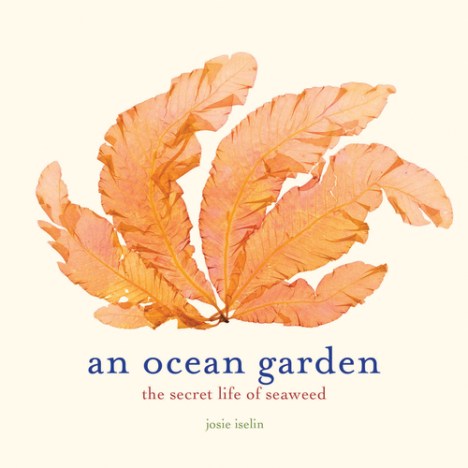
An Ocean Garden – The Secret Life Of Seaweed

Just saw a tweet this morning from Alex Warneke about a new book on the wonderful world of seaweed. Called “An Ocean Garden – The Secret Life of Seaweed“, by Josie Iselin.

Ocean+Garden

A good short review of it is here: http://www.deepseanews.com/2015/11/from-the-top-shelf/

In this captivating book, artist and avid beachcomber Josie Iselin celebrates the unexpected beauty of seaweed, an often overlooked but fundamental aspect of ocean life. Produced on a flatbed scanner, Iselin’s vibrant portraits of ocean flora reveal the exquisite color and extraordinary forms of more than two hundred specimens gathered from tidal pools along the California and Maine coasts. Her engaging text, which accompanies the images, blends personal observation and philosophical musings with scientific fact. Like her previous books, An Ocean Garden: The Secret Life of Seaweed is a poetic and compelling tribute to the natural world and the wonder it evokes.

Photo of the Day -Juvenile Puget Sound King Crab at Point Hudson

Another gem from Bruce Kerwin of Bainbridge Island. DSC_4425 Juvenile Puget Sound King CrabJuvenile Puget Sound King Crab at Point Hudson (eventually the white cap will disappear and he will grow to more than 4 times its current size) – Port Townsend, WA;

DNR buys lands around Taylor Shellfish hatchery for long-term conservation – PT Leader

I missed this story. More good news from DNR, Taylor Shellfish and the Northwest Watershed Institute. Moving forward on protecting shorelines that are key to aquaculture  from development. We need cooperative agreements where the habitat calls for it.

On Sept. 17, Taylor Shellfish Farms sold four undeveloped shoreline parcels, totaling 15 acres, to the Washington Department of Natural Resources (DNR) for preservation as part of the Dabob Bay Natural Area, according to a press release.

Millions of B.C. salmon mysteriously ‘just disappear’ in troubling year – Globe and Mail

More bad news for our fishing fleets.

Although spawning salmon are still returning to British Columbia’s rivers – including some, surprisingly, to urban streams – early returns indicate another troubling year, despite some bright spots…. There were good sockeye salmon returns to the Great Central Lake system on Vancouver Island and to the Nass River on the North Coast, he said. But contrasting that were very poor returns on the Fraser River, where only about two million sockeye returned, far short of the more than six million predicted in preseason forecasts. Even more dramatic was the collapse of the pink salmon on the Fraser, with only about five million fish showing up when more than 14 million had been forecast. Mark Hume reports. (Globe and Mail)

http://www.theglobeandmail.com/news/british-columbia/millions-of-bc-salmon-mysteriously-disappear-in-troubling-year/article27089342/

Lawsuit Claims Commercial Salmon Farms Harm Native Fish In Puget Sound – KUOW

Finally, someone decides to question (and challenge) the prevailing assumption that having lice ridden net pens (and dumping antibiotics to protect the salmon from them) of Atlantic salmon in the midst of an endangered run of wild salmon is a good thing. It’s not. It’s a recipe for disaster. We, the taxpayers, are funding millions of dollars to save our wild stocks. Supporting an industry that is known to have problems as a vector for disease and lice is counterproductive. If you wish to help support this lawsuit, even with $10, contribute to The Wild Fish Conservancy. 

The Wild Fish Conservancy is suing federal environmental and fisheries agencies for inadequately monitoring the impact of commercial salmon farms in Puget Sound. The lawsuit filed Wednesday says commercial farms pose many risks to wild salmon. In 2011 the Environmental Protection Agency and the National Marine Fisheries Service found the opposite. They concluded that commercial salmon farms are unlikely to harm wild salmon. Kate O’Connell Walters (KUOW)

http://kuow.org/post/lawsuit-claims-commercial-salmon-farms-harm-native-fish-puget-sound

Death by dirty water: Storm runoff a risk for fish  – Bellingham Herald

As if you needed to better understand the importance of rain gardens, stormwater runoff and salmon, after my last post, here’s the next thing in my inbox. Another recent experiment that shows the affects that stormwater has on aquatic species.

Just hours into the experiment, the prognosis was grim for salmon that had been submerged in rain runoff collected from one of Seattle’s busiest highways. One by one, the fish were removed from a tank filled with coffee-colored water and inspected: They were rigid. Their typically red gills were gray….. This was the fate of coho salmon exposed to the everyday toxic brew of dirt, metals, oil and other gunk that washes off highway pavement after rains and directly into Puget Sound. Phuong Le reports. (Associated Press)

http://www.bellinghamherald.com/2014/11/16/3977239_scientists-study-stormwater-deadly.html

Return of the River – A homerun of a movie for Gussman and Plumb

Just got out of the world premiere of  ‘Return of the River”, the film that likely will be considered the definitive work on the Elwha Dam removal.  This film, years in the making, was a labor of love for the two Peninsula based filmmakers, John Gussman and Jessica Plumb. And it was great to see it premiered here at the Port Townsend Film Festival.

The film tracks in detail the history of the dam, but more importantly the place that is the Elwha River, the feel for the Olympic Peninsula then and now, and a great depth of interviews with people that were instrumental, on both sides of the controversial project.  It is impossible not to come away impressed with the idea that hard things to do take a long time, and a lot of consensus building. From the interviews with leading politicians, mill managers, environmentalists, writers, biologists, and most importantly, the tribal members of the Lower Elwha Tribe, who never gave up hope to bring back the historic runs. There were so many people who played significant small roles in this drama. Gussman and Plumb treated all with the respect they deserve. There are no demeaning ‘heroes and villains’ caricatures.

It is almost trite to say that certain stories are ‘epic’ and ‘pivotal’ but the removal of the Elwha Dam has been just that. It has galvanized world attention more than almost any other single environmental event of the last ten years, because it is a message of hope. Hope that we can restore what we have destroyed. Gussman and Plumb have captured that story, distilled it to 70 minutes, and given fair treatment to all sides, and points of view. More than ever, we need stories of hope in the face of ever mounting environmental problems to solve.

In the last week, I’ve posted the story that bull trout have been seen in the upper Elwha for the first time in a century. Also that the shores of the Elwha estuary are turning back into a clam bed capable  sand spit. The power of restoration is an amazing thing to watch.  The restoration of this river, with it’s unique short run from sea to protected park, is possible, and is happening, right now, in front of our eyes for just taking the time to go look.

Gussman and Plumb, along with the rest of their crew, have given us the story, in all it’s facets. A well crafted storyline, beautiful filmmaking, solid editing, a wonderful original soundtrack, animation when needed of the hard concepts.

Congratulations for a remarkable piece of work. A 5 star must see film.

Shellfish Tell Puget Sound’s Polluted Tale – Earthfix

It’s always been a question mark in my mind, about how much of the bad stuff in the Sound are we eating with our delicious meals of shellfish. Now we know. And it’s a good word of caution that if you are regularly eating shellfish, that buying them from growers who are away from urban environments, or harvesting them yourself in remote places, is the best rule of thumb. And it also gives us a very easy way  to measure the recovery efforts at work. The bad news is that PCBs, long banned, continue to be found in the water, as do flame retardants. Both are cancer causing. It points out that storm water runoff and our crazy notion that we can pour our sewage into our Sound, have consequences for us.

Scientists used shellfish to conduct the broadest study to date of pollution levels along the shore of Puget Sound. And in some places, it’s pretty contaminated. This past winter the Washington Department of Fish and Wildlife put mussels at more than 100 sites up and down Puget Sound. After a few months, volunteers and WDFW employees gathered the shellfish and analyzed them for metals, fossil fuel pollution, flame-retardants and other chemicals. The WDFW just released the results. [http://wdfw.wa.gov/publications/01643/] Ashley Ahearn reports. (EarthFix)

http://earthfix.kcts9.org/water/article/shellfish-tell-puget-sounds-polluted-tale/

‘Warm blob’ keeps possible record sockeye run away from U.S. waters – Bellingham Herald

The story of how this year’s great hot weather has affected the salmon runs. 

In a development that has left local fishermen scratching their heads, it appears an unusually warm section of ocean water is helping send nearly the entire sockeye salmon run into Canadian fishing waters this season. According to data from the Pacific Salmon Commission through Tuesday, Aug. 19, in recent weeks about 99 percent of the sockeye salmon has gone through the Johnstone Strait around the northern part of Vancouver Island into Canadian waters. That’s made a big difference in who is catching the fish: Nearly 2.9 million sockeye salmon have been caught in Canadian waters, while the U.S. fishermen had caught around 98,000 through Aug. 19. Dave Gallagher reports. (Bellingham Herald)


 http://www.bellinghamherald.com/2014/08/24/3815002_warm-blob-keeps-possible-record.html

Support local journalism. Subscribe to the Bellingham Herald. 

Obama Administration Finalizes Stronger Stream Buffers to Protect Imperiled Salmon from Pesticides

http://www.indybay.org/newsitems/2014/08/13/18759976.php

The Environmental Protection Agency today finalized an agreement to restore no-spray buffer zones around waterways to protect imperiled salmon and steelhead from five toxic pesticides.

A coalition of conservation organizations, advocates for alternatives to pesticides, and fishing groups cheered the victory. These groups brought a lawsuit to demand reasonable fish protections from the insecticides, some of which are derived from nerve toxins developed during World War II….

The buffers apply to salmon habitat throughout California, Oregon, and Washington to prohibit aerial spraying of broad-spectrum pesticides diazinon, chlorpyrifos, malathion, carbaryl, and methomyl within 300 feet of salmon habitat and prohibit ground-based applications within 60 feet.


The agreement provides detailed notice to state regulators, pesticide applicators, farmers, and the public about the required no-spray buffer zones. These buffers will remain in place until the National Marine Fisheries Service completes analyses of the impacts of these five pesticides on the fish. Then, the EPA must implement permanent protections grounded in the Fisheries Service’s findings. (Indymedia)

Slippery plans for “organic” certification of farmed fish – Action needed by April 8th

Over the past decade, WILD has become widely recognized as the gold standard for quality salmon and other seafoods, and the fishing industry and consumers have benefited when labels are accurate and can be trusted. Occasional packages of imported farmed salmon labeled “organic” in US markets simply indicated the corruption of some foreign certification standards. This would never be allowed by our Department of Agriculture… or so we thought.
The USDA National Organic Standards Board (NOSB) is meeting April 29 – May 2, 2014 in San Antonio, Texas, and is considering various petitions that are part of a concerted effort to certify US farmed salmon and other seafoods as organic. Some NOSB members have said that since farmed fish are here already, setting standards will raise the bar on an industry with notoriously dirty practices. Yet, for years since the Livestock Committee recommended farmed
seafoods for certification, instead of assessing species to be reared, whether ocean or coastal cages should be allowed, composition of feed, impacts of pollution and other problems of marine feedlots, at this meeting, they are considering exemptions for usage of chlorine, vaccines, and synthetic feed additives requested by aquaculture operations hoping to secure organic accreditation in the future. They need to be educated before the process picks up any
more momentum on a very slippery slope.
Comments have to be submitted by April 8, 2014 and can be sent via http://www.regulations.gov/ #submitComment;D=AMS_FRDOC_0001-1155. For additional
information, email Michelle Arsenault (Michelle.Arsenault@ams.usda.gov), NOSB Advisory Board Specialist or call 202-720-0081.
This move towards certifying seafoods reared in feedlots would not only confuse consumers, itcould cause serious economic harm to capture fisheries. Fresh farmed organic fish may trump frozen wild fish in the marketplace, even among very savvy consumers. “If the USDA does decide to allow farm-raised fish into the ranks of USDA-certified organic products, this could open the door to a huge increase in profits for the aquaculture industry as well as give them a huge leg up over the commercial fishing industry.” (The Organic Aquaculture Quandary )
The pressure may also be coming from growers of commodity crops looking for new markets to dump their products. Representatives of the American Soy Growers and Illinois Soybean Association attended NOAA meetings in the Pacific Northwest to describe their industry plans to produce feed for the fish farm industry. “Aquaculture Oceans of Opportunity” states “Marine or offshore aquaculture is fast becoming the focus of aquaculture expansion” and the Illinois Soybean Association has “made considerable investments in furthering offshore aquaculture productions systems and in perfecting feed rations”. http://www.ilsoy.org/documents/aquaculture-oceans-opportunity
Since the inception of the National Organic Program, the standards have been trusted to mean that food with the label have been produced in ways that are compatible with organic principles of adhering to practices that “restore, maintain and enhance ecological harmony … and balance natural systems.” These principles require protecting biodiversity, minimizing environmental impacts, controlling inputs, and allowing “natural behaviors.” These are not the practices of
industrial aquaculture.
There are many problems that could be described in comments:
* Marine fish farms replicate some of the worst practices of confined animal feedlot operations, known as CAFOs, which could never receive organic certification.
*Impacts are largely under the waterline and out of sight, so the fish farm industry has escaped scrutiny that would have closed down comparably dirty land-based operations. Marine netpens allow excess feed, pathogens, parasites, and voluminous amounts of pollution to flush into the surrounding waters, putting other aquatic species at risk.
*Farmed fish escape, competing with wild species for food and habitat. More than 613,000 non-native Atlantic salmon escaped from netpens into Washington State waters in 4 years; millions of farmed fish escape world-wide.
*The salmon farming industry uses more antibiotics per pound than any other livestock producer and these pesticides, fungicides, algaecides and other chemicals flush from open cages into the surrounding waters.
*Several studies have concluded that usage of antibiotics in fish farming increases antibiotic resistant bacteria in our marine environment and in our food supply. The industrial aquaculture production system medicates to the weakest animal and sick and treated fish and seafood sometimes end up in the marketplace.
*Neil Frazer, professor at the University of Hawaii, states that large-scale farming of finfish “eventually destroys surrounding wild fish stocks … nature has an effectively inexhaustible supply of diseases.”
*Use of fish meal and fish oil from wild forage fish result in overfishing of wild fish to feed carnivorous farmed fish. One-third of the ocean’s harvest is herring, anchovies, mackerel and other small fish, which are made into fish meal and oil for fattening farmed fish and animals.
The aquaculture industry already uses more than half the world’s fishmeal and more than 80 percent of the fish oil. Rearing salmon, halibut, blackcod and many other marine species is unsustainable because of the net loss of protein.
*Standards for organic livestock requires that their feed is 100% organic feed, yet the proposed aquaculture standard would allow farmed fish feed to be 25% wild fish, claiming the forage fish meal and oil will not be “feed” but instead a “feed supplement. Wild salmon and other food fish were previously denied organic certification by the NOSB.
*Farmed fish have documented higher amounts of environmental contaminants since the feed concentrates mercury, lead, and persistent bioaccumlative toxins. A study by the Environmental Working Group showed farmed salmon often are the most PCB-contaminated protein source in the U.S. food supply, with an average of 16 times the level of PCBs as wild fish.
*“The recommendation acknowledges the human health risks, but would only require them be removed if found to have contaminants in amounts higher than regulatory levels in commercially available fish meal and oil. Thus the proposed “organic” standard would allow the same level of contaminants in fish meal as those permitted by general industrial aquaculture. This provision is a microcosm of the recommendation as a whole: rather than setting a higher bar for organics, and risk losing the ability to label salmon and other predatory fish as “organic,” it merely lowers the organic bar to the existing commercial standards.” Center for Food Safety presentation to the NOSB.
*Organic standards require animals to be able to exhibit their “natural behavior.” Wild salmon and other ocean fish swim for their lifetimes, and confining these fish is a direct violation of one of the core organic principles.
Anne Mosness will attend the Spring 2014 NOSB meeting, representing the Bristol Bay Regional Seafood Marketing Association (email: eatwildfish@aol.com).
More info:   “Can farmed salmon be organic”, PCC Sound Consumer:
Center for Food Safety:
e_final_34952_38967.pdf
The Organic Aquaculture Qandary:
Anne Mosness
34 Rocky Ridge Dr.
Bellingham, Wa. 98229

Peninsula salmon projects get $4.5 million – PDN

Lots of good projects that are going to give jobs to folks here on the Peninsula, and help restore salmon habitat. The work is far from being completed, but it’s good to see these projects and land purchases get funded. Tying this together with the work described by Earth Economics over the weekend on this site, it’s worth it to note that there is value in these ecosystem renewal projects. Slowing the rivers by putting in log jams, for example, do not just provide scientifically proven habitat for salmon (especially young salmon migrating downstream), but they also aide in flood protection among other benefits. Flood plain protection is a value that lowers the cost to repairing damage from floods over multiple decades.

The state has awarded $4.5 million in grants for new salmon restoration projects on the North Olympic Peninsula. ….

Rob Ollikainen reports.

There’s quite a bit more to the story at:

http://www.peninsuladailynews.com/article/20131208/NEWS/312089997/peninsula-salmon-projects-get-45-million


Support local journalism, subscribe to the Peninsula Daily News.