A new study has just come out that helps better understand how to rear hatchery steelhead salmon without impacting genetic diversity, which has been a key concern of wild salmon advocates for years. The findings show that if wild salmon are allowed to spawn naturally, and then the eggs are collected for rearing in a hatchery, that the genetic risks were lessened. This is good news for both sides of the debate, as it shows that hatchery rearing of wild collected eggs may not be a threat to genetic diversity, or at least that’s the way I read it. The authors do state that “…While the longer-term genetic effects were not assessed in this study, other programs have realized reduced genetic diversity during similar timeframes.”
ABSTRACT
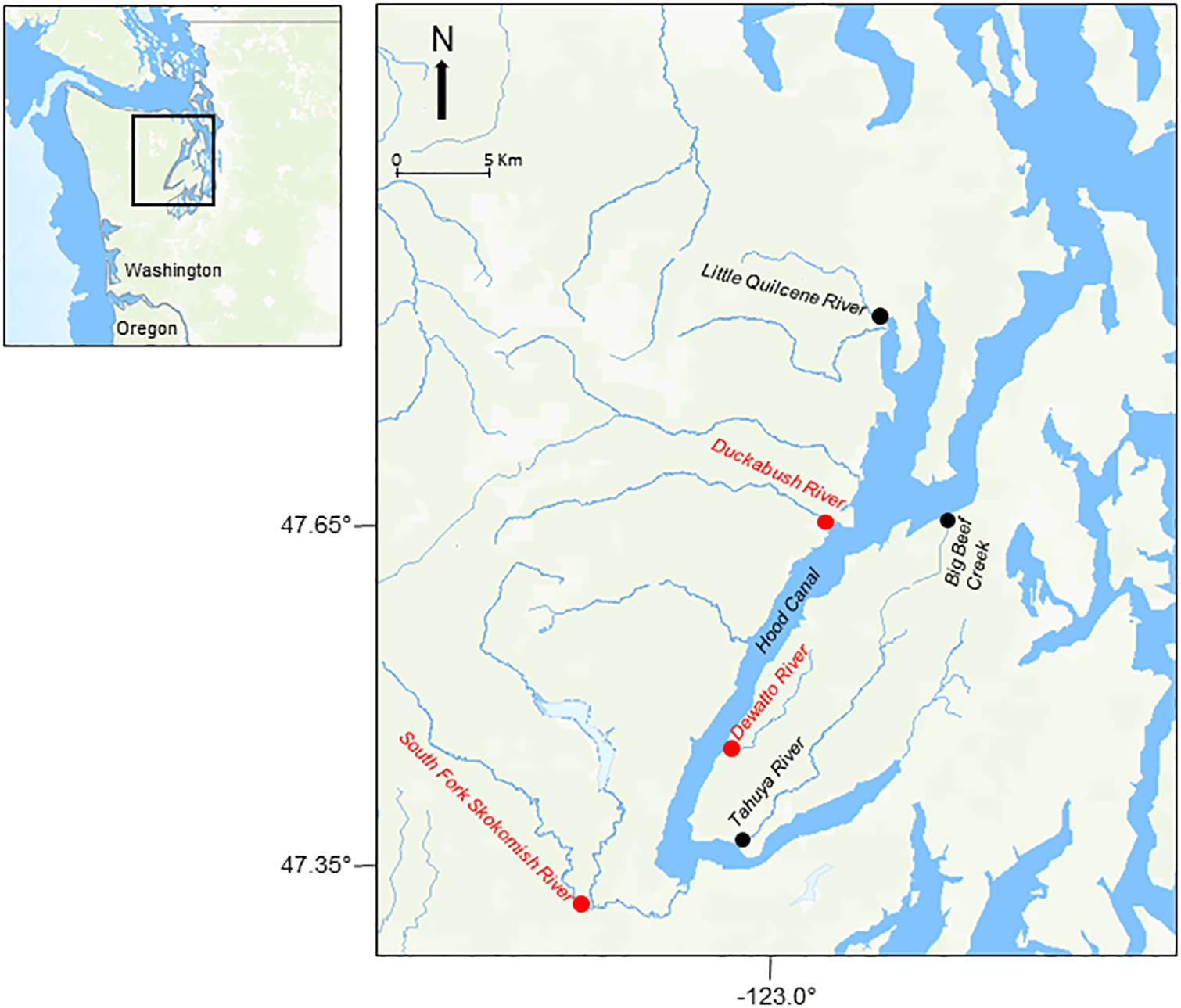
Declining salmonid populations often prompt the use of captive-reared fish to supplement wild stocks, but such programs risk negative genetic and ecological impacts. We evaluated six steelhead (Oncorhynchus mykiss) populations in the Hood Canal watershed, Puget Sound, Washington, including three supplemented and three unsupplemented control populations, over the span of 17 years to assess the effects of supplementation on several population genetics metrics. This program uniquely allowed natural spawning to occur before removing eyed eggs from redds for captive rearing, and later release as smolts or adults. Key genetic metrics—expected heterozygosity, allelic richness, and effective population size—remained stable from before to after supplementation in both the supplemented and non-supplemented populations. Parentage analyses confirmed successful reproduction by captively reared adults after they were released into the wild. These findings suggest that natural spawning prior to captive rearing, among other aspects of the program, lessened the genetic risks typically associated with artificial propagation such as loss of genetic diversity, or a reduction in effective population size. Our results highlight the potential for carefully designed supplementation programs to conserve genetic diversity and maintain effective population sizes in threatened steelhead populations.
Introduction
Supplementation programs, where captive-reared fish are introduced into wild populations to enhance natural production and increase abundance, have been widely implemented as a conservation strategy for declining salmonid populations. However, previous studies have highlighted several potential drawbacks of supplementation efforts, including genetic and ecological risks that may outweigh the intended benefits [1–7]. Understanding these risks is critical because the long-term success of supplementation programs depends not only on their ability to increase population sizes but also on their capacity to maintain the genetic health of these populations. Careful genetic monitoring is therefore essential to assess the effectiveness of these efforts and prevent unintended harm.
You can read the whole article here:
https://journals.plos.org/plosone/article?id=10.1371/journal.pone.0339458
Filed under: Environmental Science, Puget Sound, Salmon, Washington State | Tagged: research, steelhead |