Tidal Power In The Northwest–KUOW

5/26 KUOW
Ashley Ahearn
The Northwest is home to powerful tides. In Puget Sound, water rushes in and out of the Strait of Juan de Fuca at speeds of almost 10 miles per hour. And that, say some researchers, makes it the perfect place to gather energy.
More at
http://kuow.org/program.php?id=23519

More on local ocean acidification

There’s a lot riding on how marine creatures will adapt to acidifying oceans. The animals that dissolve in more corrosive seawater range from oysters, a bedrock species in the Northwest’s lucrative commercial shellfish industry, to krill and pteropods, tiny sea snails propelled by wing-like feet that make up more than half of the diet of some young Alaska pink salmon.

And here are two pertinent pieces of news for anyone living in the Northwest.

  1. Surprisingly corrosive waters have already been found off our shores.
  2. It surfaced decades before scientists expected to see it.

Read the rest of the story at:

http://daily.sightline.org/daily_score/archive/2011/05/24/the-acid-test

Recent samples done by People For Puget Sound on their sailing around the Sound have found levels below 8. The danger is real, and mounting.

State overestimated oil-pollution levels in Sound – Seattle Times

State overestimated oil-pollution levels in Sound

The amount of petroleum that reaches Puget Sound in runoff and stormwater — once compared with the size of an Exxon Valdez spill every two years — appears to be dozens of times lower than initially thought, new studies show.

By Craig Welch

Seattle Times environment reporter

In September 2008, the head of the state Department of Ecology told a PBS Frontline team that so much oil washes into Puget Sound that it equals an Exxon Valdez spill every two years.

A few months later, the agency attempting to restore Puget Sound made a slightly different case. It declared that an Exxon Valdez-size spill of “toxic chemicals” poured into Puget Sound every two years.

Neither is correct, according to new calculations of polluted runoff and stormwater the state published Tuesday. In fact, the amount of petroleum that reaches the Sound appears to be dozens of times lower than former Ecology Director Jay Manning told Frontline.

The confusion over precisely how much toxic stuff gets into the Sound underscores the complexity of tracking pollution rushing across the disparate landscapes that feed this vast water body. The data underlying the state’s grasp of so-called toxic loading grew more sophisticated between 2008 and 2011.

But the inaccurate claims also reflect an eagerness within Gov. Chris Gregoire’s administration to seize on easy-to-grasp anecdotes that highlight Puget Sound’s ecological troubles.

“These studies did exactly what they should have: They refined over time our understanding of the problem,” said Manning, who’s now Gregoire’s chief of staff. “As a result, we now know that the relative contribution of petroleum to pollution in Puget Sound is lower than anticipated — by a significant margin. Do I regret my previous statement? I do. But we have to follow the science.”

Read the rest of the story at the Seattle Times web site. Support local journalism…

http://seattletimes.nwsource.com/html/localnews/2015080382_pugetsound18m.html

Hood Canal council could get millions from Navy for mitigation projects

Some could look at this as a brilliant plan by the Navy to shut down environmental opposition to their plans to continue the militarization of the Hood Canal. Remember that with two sub bases we will have at least twice the closings of the Hood Canal Bridge, all unannounced. It’s already difficult to know when to leave for meetings and medical appointments in either Bremerton or Seattle. – Editor

5/9 Kitsap Sun
Hood Canal council could get millions from Navy for mitigation projects
By Christopher Dunagan

HOOD CANAL — Hood Canal Coordinating Council could be put in charge of environmental restoration projects worth millions of dollars, as the Navy moves forward with construction of an explosives handling wharf at Bangor.

Under federal law, the Navy must provide mitigation for environmental damage caused by the $715-million wharf, currently going through an environmental review process.

Instead of identifying its own mitigation projects, the Navy favors making payments to a government entity such as the Hood Canal Coordinating Council, which would ensure that restoration projects fit into the larger goals of restoring Hood Canal, said Lynn Wall, environmental planner for Naval Facilities Engineering Command Northwest, based in Silverdale.

More at
http://www.kitsapsun.com/news/2011/may/09/hood-canal-council-could-get-millions-from-navy/

An environmental scorecard from Olympia

5/9 Crosscut
An environmental scorecard from Olympia
By Daniel Jack Chasan

A major bill to allow more transfers of development rights to dense areas fares well, as does the phase-out of coal plants. But the effort to impose a tax on oil products for helping with stormwater projects around Puget Sound got little traction.

More at
http://crosscut.com/2011/05/09/environment/20897/An-environmental-scorecard-from-Olympia/

—-

Why I’m worried about the expansion of the Naval base

So do we really want double the amount of Navy subs and subsequent support staff? Everything is a secret, and everything is national security. Speak up now to stop expansion of the sub base, or forever hold your silence, and complaints – editor

5/6 Kitsap Sun
Navy’s floating acoustics lab doing work in Hood Canal
By Kitsap Sun staff

BANGOR — Residents have wondered for weeks, “What’s that white, windowless building being pushed up and down Hood Canal by a tugboat?”

It’s a floating Navy laboratory called M241, revealed Chief Dale Davis, Naval Base Kitsap spokesman. It provides an enclosed, protected structure with a moon pool — an opening in the floor — and a lift for placing test equipment in the water.

M241 is operated by the Naval Surface Warfare Center, Carderock Division, Detachment Puget Sound. The detachment provides management and logistic support for West Coast ship and submarine acoustic trials.

The M241 was brought to the Bangor waterfront in the summer of 2009 when facilities on Fox Island were closed. It will remain at Bangor as part of ongoing research, development, testing and evaluation projects.

What exactly it’s doing out there is secret.

http://www.kitsapsun.com/news/2011/may/06/navys-floating-acoustics-lab-doing-work-in-hood/

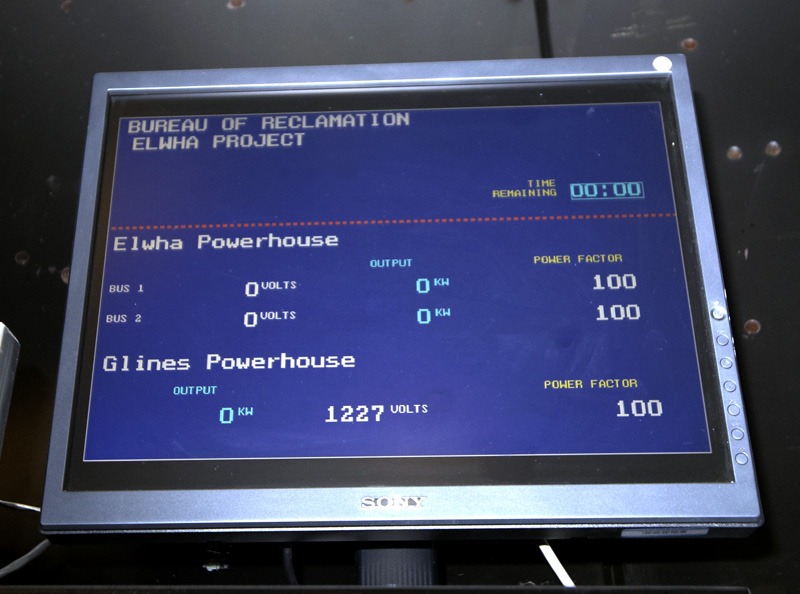
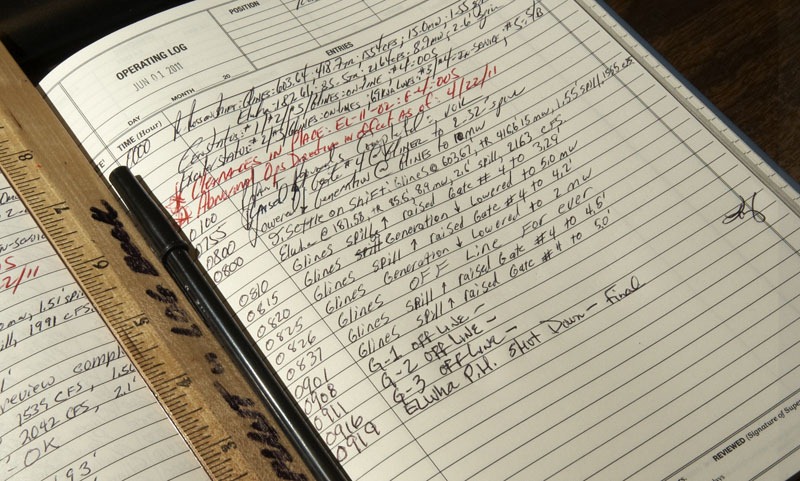
Elwha Dam’s days numbered; powerhouse first to be shut down

5/9 Peninsula Daily News
Elwha Dam’s days numbered; powerhouse first to be shut down
By Rob Ollikainen
Peninsula Daily News

PORT ANGELES — The shabby edifice of the Elwha Dam is showing its age. It towers over the lower Elwha River valley as it has for nearly a century. It still generates electricity for the regional grid.

But the days for this North Olympic Peninsula landmark are numbered.

Generators inside the powerhouse of the 108-foot dam west of Port Angeles will be turned off June 1, Olympic National Park spokesman Dave Reynolds said.

Three-and-a-half months later, a National Park Service contractor will begin to tear it down.

More at
http://www.peninsuladailynews.com/article/20110509/NEWS/305099994/elwha-dams-days-numbered-powerhouse-first-to-be-shut-down

Report sees sharper sea rise from Arctic melt – AP

It’s really a shame that we can’t take this threat as seriously as terrorism. This will cause much more disruption than even 911. 5 foot sea level rise will affect all of us on the coast.

5/4 Associated Press
Report sees sharper sea rise from Arctic melt
By Karl Ritter and Charles J. Hanley, Associated Press

STOCKHOLM — The ice of Greenland and the rest of the Arctic is melting faster than expected and could help raise global sea levels by as much as 5 feet this century, dramatically higher than earlier projections, an authoritative international assessment says.

The findings “emphasize the need for greater urgency” in combating global warming, says the report of the Arctic Monitoring and Assessment Program (AMAP), the scientific arm of the eight-nation Arctic Council.

More at
http://www.heraldnet.com/article/20110504/NEWS02/705049953/-1/NEWS

Paper mill’s cogeneration plant touted to Chamber of Commerce audience – PDN

5/3 Peninsula Daily News
Paper mill’s cogeneration plant touted to Chamber of Commerce audience
By Charlie Bermant

PORT TOWNSEND — The biomass cogeneration plan proposed by the Port Townsend Paper Corp. mill will provide essential support for regional education and health care as well as the economy, according to information presented to the Jefferson County Chamber of Commerce on Monday.

“These kinds of jobs are needed in order to supply our health care,” Team Jefferson chair Bill Wise said of the jobs he said will be created and sustained by the biomass project.

More at
http://www.peninsuladailynews.com/article/20110503/NEWS/305039993/paper-mills-cogeneration-plant-touted-to-chamber-of-commerce-audience

—The mill, which refuses to talk to the press, and seems to enforce a PR blackout, comes out of the cone of silence to issue essentially a marketing pitch that promotes health by building the plant. I recommend considering the source, and doing some research yourself to find out if these claims are true. – Editor

Virus causing salmon deaths in BC?

Virus causing salmon deaths?
By ROB HOTAKAINEN; Staff writer

WASHINGTON – In Canada’s Fraser River, a mysterious illness has killed millions of Pacific salmon, and scientists have a new hypothesis about why: The wild salmon are suffering from viral infections similar to those linked to some forms of leukemia and lymphoma.

For 60 years before the early 1990s, an average of nearly 8 million wild salmon returned from the Pacific Ocean to the Fraser River each year to spawn.

Now the salmon industry is in a state of collapse, with mortality rates ranging from 40 percent to 95 percent.

http://www.theolympian.com/2011/04/18/1620501/virus-causing-salmon-deaths.html?story_link=email_msg

House Dems and the President sell out the EPA

Guns not butter clams…Zero cuts for defense, 16% cuts for environmental protection. Draw your own conclusions. Please remember this when they call for donations to their campaigns in the fall & next year. – editor

4/13 Wall Street Journal
GOP Wins Deep Cuts in Environment Spending
BY JANET HOOK, NAFTALI BENDAVID and STEPHEN POWER

In negotiating the budget deal that averted a government shutdown, Democrats and the White House claimed a big victory in preventing Republicans from blocking a set of environmental regulations. But as details of the compromise became known Tuesday, it was clear Republicans had won deep reductions in spending at the Environmental Protection Agency.

Under the deal headed to House and Senate votes by the end of this week, the EPA’s 2011 budget would be reduced by 16% from 2010 spending, taking it to $8.7 billion.

That reflects the kind of tradeoffs each side made in the negotiations over the bill. The legislation doesn’t include most of the policy provisions that Republicans proposed to block funding for key administration priorities on health care, the environment and other issues. But Republicans found Democrats moving more than halfway in the compromise over how much to cut spending in the $1.05 trillion bill for the remaining six months of the 2011 fiscal year.

More at
http://online.wsj.com/article/SB10001424052748703385404576258550820756980.html

Study confirms septic system problems in Hood Canal – Kitsap Sun

– This supports the work People For Puget Sound and others did a few years back to help get inspections for septic (even self inspections). – editor

4/12 Kitsap Sun
Study confirms septic systems as prime suspect in Hood Canal fish kills
By Christopher Dunagan

SEATTLE — Septic systems in Southern Hood Canal appear to play a pivotal role in the massive fish kills that plague the waterway, according to a long-awaited report by a team of scientists.

The scientists’ general findings about what causes oxygen to reach deadly levels in Hood Canal vary little from a description they provided in 2008. Since then, the group has conducted an extensive analysis, offering more precise estimates about the sources of nitrogen entering the waterway.

Their final conclusion is that roughly 20 percent of the nitrogen in Southern Hood Canal during summer months comes from septic systems. That is enough nitrogen to push oxygen levels into a critically low range and set up conditions for a massive fish kill in the fall.

More at
http://www.kitsapsun.com/news/2011/apr/12/study-confirms-septic-systems-as-prime-suspect/

Puget Sound cleanup crew expected soon – Tacoma News Tribune

KATIE SCHMIDT; Staff writer

More federal money, more jobs and a new Puget Sound Corps are all among the expectations Washington policymakers have for a bill that the governor signed into law Monday.

House Bill 1294, which goes into effect in July, will move the administration of the Washington Conservation Corps from several agencies into the Ecology Department and add a special Puget Sound-focused branch of the corps.

“It’s a very important piece of legislation that’s primarily about the cleanup and conservation of the Puget Sound and about consolidation at the same time,” said Public Lands Commissioner Peter Goldmark, who helped develop the bill.

More at
http://www.thenewstribune.com/2011/04/12/1622771/puget-sound-cleanup-crew-expected.html

Lab puts Puget Sound sea life to an acid test – Seattle Times

4/11 Seattle Times
Lab puts Puget Sound sea life to an acid test
By Craig Welch
Seattle Times environment reporter

The baby crabs look like lint specs swirling in glass jars. The 3-day-old geoducks are too small to even see.

But the shellfish being reared in this cramped government laboratory near the Montlake Cut will play a central role in predicting the future of sea life in Puget Sound.

Biologists at the Northwest Fisheries Science Center are doing some of the most sophisticated work anywhere to see how the marine world responds to a major side effect of fossil-fuel emissions: increasingly corrosive seas.

More at
http://seattletimes.nwsource.com/html/localnews/2014748297_acidification12m.html

Scientist is taking charge at People for Puget Sound – Crosscut

*4/12/11 Crosscut
Scientist is taking charge at People for Puget Sound
By Daniel Jack Chasan

It seemed a great omen for a first meeting with Tom Bancroft, who in June will succeed Kathy Fletcher as executive director of People for Puget Sound : The ferry on which I rode veered, slowed, lay almost dead in the water, as passengers rushed to the port side windows to see a whole pod of killer whales heading north through the Sound.

Their big dorsal fins jutted up through the choppy water. Their sleek bodies curved up into daylight and back down again. Some of them leapt clear of the water. The middle-aged watchers seemed just as excited as the kids.

I described the scene later in People for Puget Sound’s Western Avenue conference room, looking out at the Sound (and the Alaskan Way Viaduct), where a small group of journalists sat down with Bancroft, Fletcher, and the group’s long-time communications director, Mike Sato. Later, Bancroft said he hoped to see orcas like that soon.

More at
http://crosscut.com/2011/04/12/puget-sound/20793/Scientist-is-taking-charge-at-People-for-Puget-Sound/

GMO Food lecture/forum

GMO POSTER_EMAIL.jpeg

NOAA doubles whale watch distances

NOAA today announced new regulations to protect killer whales in inland waters of Washington State from the effects of various vessel activities. The new regulations have two parts:

1. vessels must not approach any killer whale within 200 yards (up from 100 yards)

2. vessels must stay out of the path of oncoming whales out to 400 yards.

The new regulations go into effect 30 days after the Federal Register notice publishes. We’re working with our partners to educate boaters about the new regulations on and off the water.

It is unclear how this will work. Will people who have individual whales approach them be fined? If you start 200 yards away and the whales come closer, is it appropriate to run and flee to stay 200 yards off (which is impossible) or do you need to shut down your engine (currently it is to disengage your transmission)? And what if it is unsafe to do so at the time, such as when running through a narrow passage with the tide? (think Cattle Pass for example). Can a person even see a whale at 400 yards in poor conditions? etc.

What this sounds like to me is that we are hearing the moneyed interests on the San Juan’s who own modern castles along these shores who have been fighting having the whale watch boats in front of their homes for many years. A cynical person could think that they managed to pay off the right people to get the job done. I say this having had read the testimony last year as the two sides presented testimony to NOAA, and it was clear how unclear the distance issue actually was. There is no clear science that was presented on this issue, just supposition. In fact, the science that was presented was clear that there was no known issues that they could actually prove that boats inside these boundaries were having any effect at all. You could just as easily argue that because whale numbers are rising, that the boats are having a beneficial effect. And so it goes. Well, we’ll just have to see what kind of enforcement that NOAA funds for this. The only good news is that the enforcement has been incredibly missing to date, and is unlikely to find any funding in the current budget crisis.

Risks over recycling sewage into biosolids are still not resolved – Kitsap Sun

3/26 Kitsap Sun
Risks over recycling sewage into biosolids are still not resolved
By Christopher Dunagan

When the city of Bremerton started applying processed sewage sludge to its forestland west of Gorst, the trees began to grow dramatically faster.

One can see the result 20 years later in tree rings when the Douglas firs are cut down: skinny rings before the application, fat rings ever since.

Some people consider biosolids — produced from sewage sludge — to be a prime fertilizer, rich in nitrogen, phosphorus and organic material.

Others raise questions about an array of low-level compounds found in the material, from toxic industrial chemicals to pharmaceutical drugs to personal health care products.

More at
http://www.kitsapsun.com/news/2011/mar/26/risks-over-recycling-sewage-are-still-not/

Senate restricts phosphorus fertilizers – Tacoma News Trib.

3/26 Tacoma News Tribune
THE NEWS TRIBUNE

Senate lawmakers approved a bill to limit the use of phosphorus-based fertilizers in an effort to protect water sources from contamination.

Supporters say that the wide use of phosphorus-based fertilizers has led to runoff getting into lakes and streams and contributing to harmful algae blooms.

The bill makes an exemption for fertilizers being used on gardens or agricultural lands, but does not exempt organic fertilizer from the management requirements.

Opponents argue that targeting fertilizers as the culprit behind water contamination is misguided, as all human and animal waste also contains phosphorus and adds to algae blooms.

Limiting the use of phosphorus in fertilizers was one of the top four priorities this year for the Washington Environmental Priorities Coalition.

The bill now returns to the House to vote on amendments added.

More at
http://www.thenewstribune.com/2011/03/26/1600403/olympia-senate-restricts-phosphorus.html

County close to buying 7.45 acres in Clallam Bay for beach access – PDN

County close to buying 7.45 acres in Clallam Bay for beach access
By Rob Ollikainen
Peninsula Daily News

CLALLAM BAY — Getting to the beach at Clallam Bay will be a lot easier if Clallam County commissioners approve paperwork before them today.

Commissioners will consider authorizing a $75,000 acquisition of 7.45 acres of land north of state Highway 112 and a half-mile west of the existing Clallam Bay Spit County Park.

The new park, which will have 700 feet of beach access, is next to a one-acre parcel the county already owns.

More at
http://www.peninsuladailynews.com/article/20110322/NEWS/303229988/county-close-to-buying-745-acres-in-clallam-bay-for-beach-access