

Recently, I passed a second year since I returned to bicycling after a long hiatus. In the last year, I logged over 4000 km (2485 miles), hardly a lot by many riders point of view but significant enough for this 73 year old.
Along the way, I’ve faced the danger of the road. I ride with a friend who was hit by an impaired driver back in the early 2000s. My friend’s life changed dramatically and he has spent the last decades learning to live with the outcome of that person’s incompetence. He lost his career but eventually got back on a bike, competing in the paralympic class races. He is lucky to be alive. The youth who hit him was high and was allowed to get behind the wheel again and eventually ended up in other accidents and killed himself by overdosing. A tragic waste of life. Should he have been allowed to drive again?
Another friend who rides with me was clipped by the side view mirror of the car of an elderly woman who should not have been driving. Luckily for my friend, the injury was not very bad, and he got the license of the driver and the police went ahead and charged her. Should she be allowed to drive again?
Years ago I rode a bike into the rear end of a pickup truck that ran a yellow light, nearly killing myself. I have had a Collie run under my front wheel when I was sixteen, throwing me over the handlebars. Only the helmet on my head protected me from possible death or serious disfigurement. Any wonder I carry bear spray with me? I also narrowly avoided running into a car door while riding on Eastlake Ave in Seattle many years ago.
Lately, there have been high profile incidents of bicyclists being killed by drivers. The most recent was a man in Chicago named Riley O’Neil, an urban planner who led the bicycle parking program and other key efforts at bicycle infrastructure in the city.

Riley was killed while in a bike lane that did not give enough distance from parked cars opening their doors directly into the lane. A car door was opened into the lane, Riley swerved into the traffic lane and was hit and killed by a truck.
In the wake of his death, I have monitored social media on the incident. A common refrain from some is that somehow the bicyclist is to blame, either for not watching out for car doors opening, or that he shouldn’t have even been on the street (read *any* street) as it is dangerous for bikes.
It occurred to me that I never hear that in the wake of a car death, that people decide that it was the fault of the driver for getting into a car in the first place. I never hear the road itself is dangerous to cars so the best solution is to not drive. Occasionally, I will read that a certain stretch of highway is “dangerous” and should be fixed and many times, is fixed. We demand that our roads are safe for cars, yet that doesn’t stop more than 44,000 people from dying in car accidents in the U.S. every year. Should those people not have been driving? Was the road to blame? Was it not safe enough? Do we do nothing to help lower that death toll?

Our roads were originally built for getting traffic like wagons and bicycles out of the mud of the 1800s. Bicycles were a huge fad around the 1890s. The need for smoother roads for bikes drove some of the paving initiatives that proceeded cars. Cars and trucks were first a novelty but eventually we have become brainwashed that they are the only vehicles that should be allowed. Car drivers demanded that roads be improved for their benefit. The fact that most bicycle riders are also car owners so they pay the same road and gas taxes as those who don’t use bicycles do not seem to matter to the critics. We are often given little attention as road budgets escalate, and yet the minute a road is enlarged, it seems that it is too packed with traffic. Building more lanes is not a solution to traffic. In fact, it seems to make it worse.

I also hear that bicycle lanes are often “empty” at the given moment a driver passes by. I drive on many roads that are virtually empty of vehicle traffic for the time I ride on them. Should we rip those roads out? No, because we assume that people will eventually drive on them.
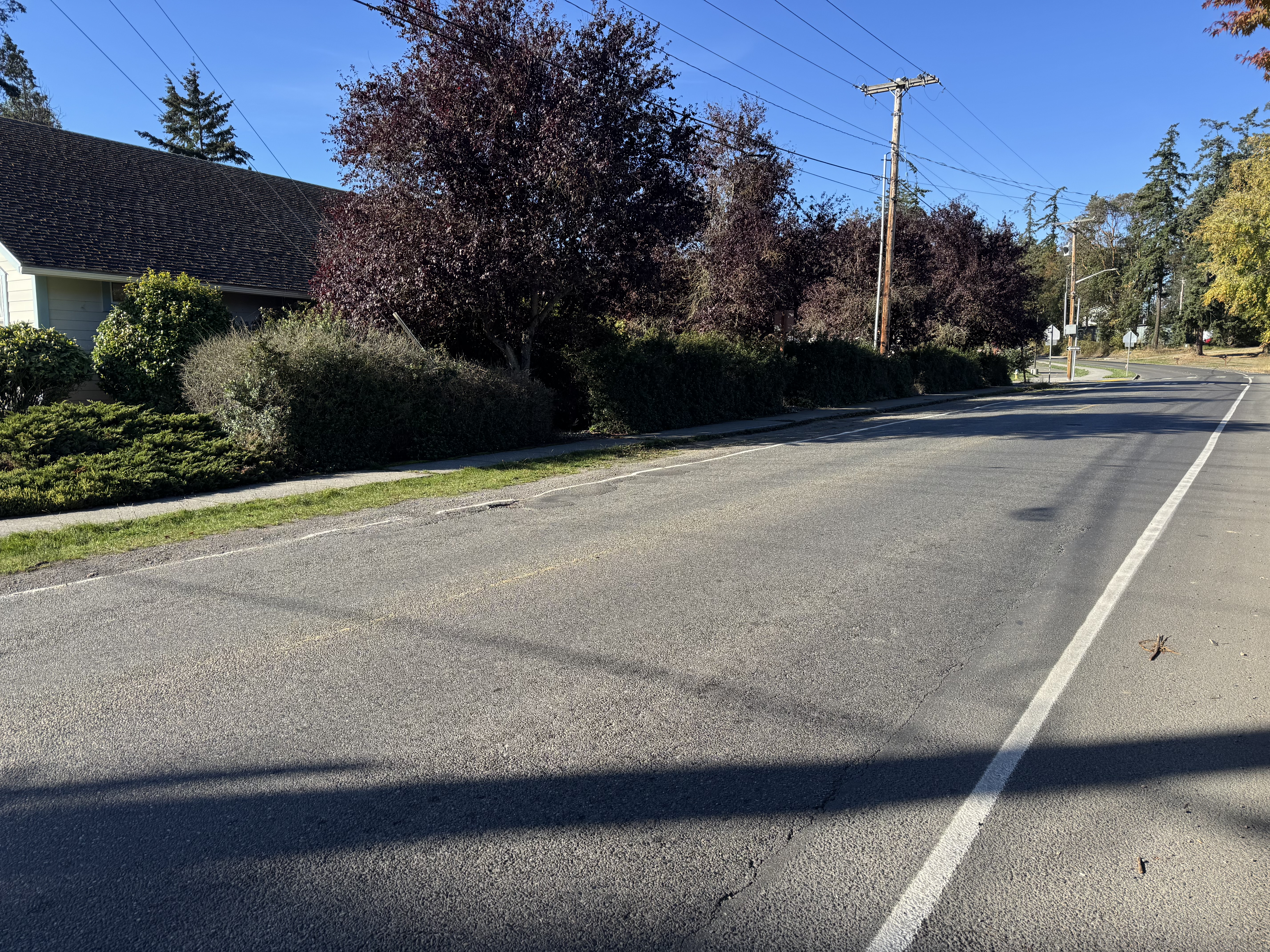
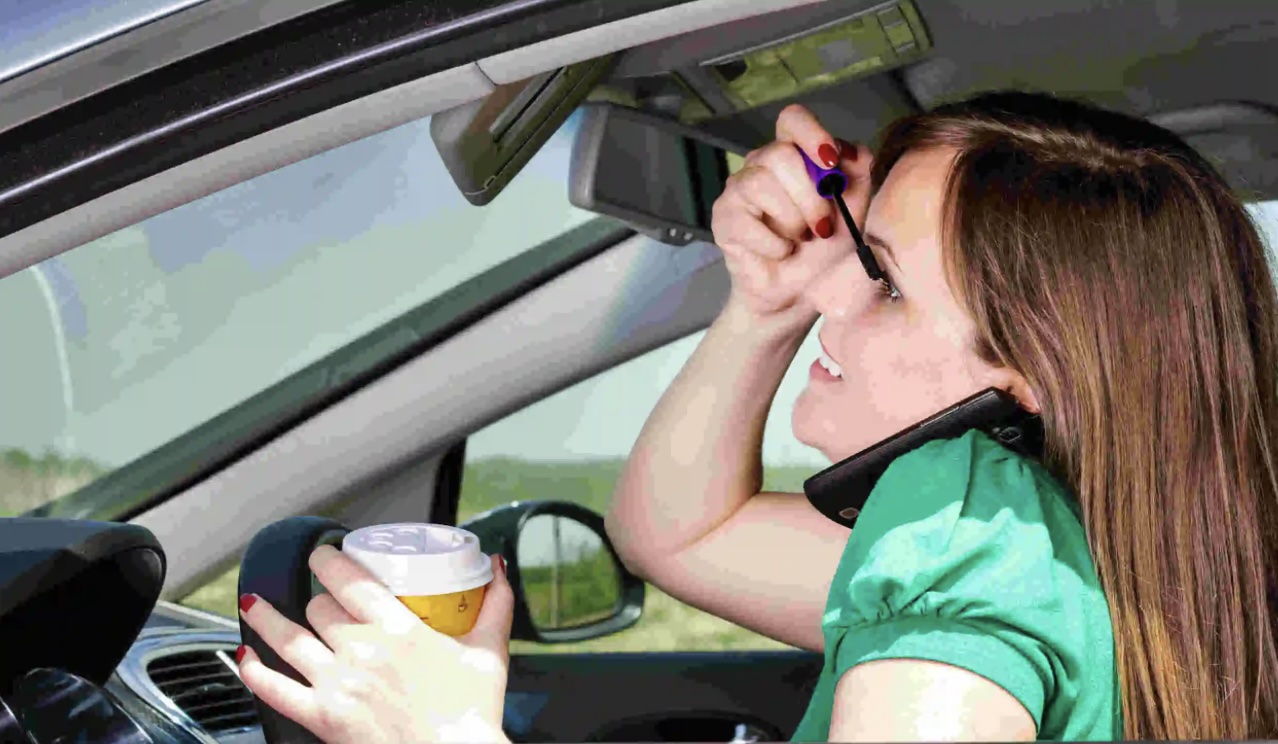
Many people I talk to say they stopped riding or have never ridden because the roads are too dangerous. I agree with them. Whether for bikes, motorcycles or other cars, people are more distracted than ever. Huge screens on electric vehicles, cell phones, radio, I’ve even seen women putting on mascara as they drive. It’s all a huge distraction. Roads are poorly maintained, they are often overloaded with cars, with drivers annoyed at the never ending slow speeds they end up driving even on gigantic freeways.
The answer is not to blame the cyclist. First, you have one less car to deal with on “your” road. That should make your trip faster, not slower. Secondly, the cyclist has a right to be on the road. Third, building more specialized bike lanes will move more traffic off “your” road, which should lead to you getting to the Starbucks coffee line with the other cars that much faster in the morning.

Making roads safer is not just for adults. Children used to ride everywhere. My bike gave me a special freedom and maturity when I was a kid. Now, parents are too afraid to let their children out on the streets with their bikes. How is that an improvement? Why shouldn’t children be safe when riding bikes? Why shouldn’t adults too?
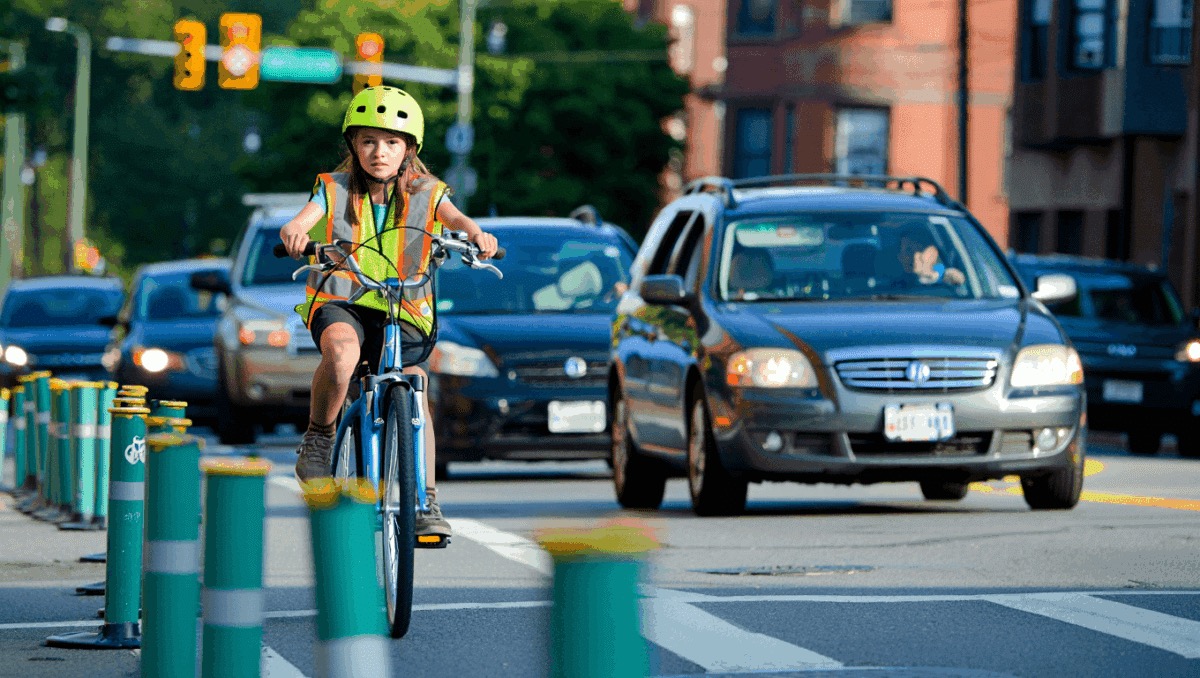
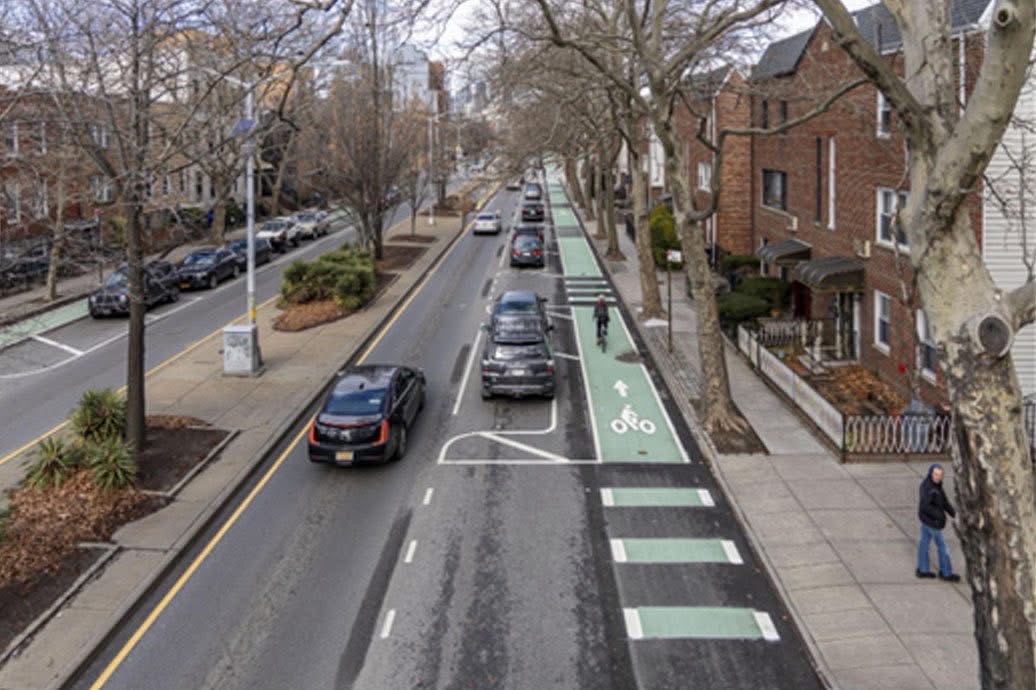
Things are improving. Seattle has a sophisticated bicycle infrastructure, promoted for decades by advocacy of the Cascade Bicycle Club and work with the University of Washington. It gets bicyclists off the car roads onto dedicated bike lanes or bicycle paths entirely off the road. Portland and Minneapolis are also very advanced in their bicycle networks. New York, Chicago and other cities are making inroads. Bicycle deaths are down in the last few years (a little over 1000 people died on bicycles last year). 90% of those deaths are adults over 20, meaning 100 of those were essentially children or teens. Do we really want to be sacrificing our children to car drivers?
Bicyclists are not without some part of this problem. Many riders don’t wear helmets. They often don’t have lights on their bikes. They ride at dusk or night in dark clothes.
According to the engineering safety firm ACCRA “Bicyclists are essentially invisible to motorists at night and hence should and must, per state laws, take the necessary precaution to see and be seen. Every state requires a white front light to illuminate the bicyclist’s path of travel when riding between sunset and sunrise. Front lights are required to be visible typically at a distance of at least 500 feet. Some states require only a rear red reflector visible at a distance of at least 500 feet, whereas some require a rear lamp emitting a red light at a distance of at least 500 feet.”

The newest safety feature is rear facing radar. I won’t ride without it. It’s a game changer to see cars approaching from behind and have the ability to modify my riding to get further into safety.

We have to stop blaming the victims of poor road design, distracted drivers and our inability to demand safer ways to ride, especially in urban environments. Europe has learned how to design for bikes and cars. Tens of thousands ride daily in many European cities. It can be done. That has not only improved driving in those cities but has drastically reduced air pollution, which kills thousands a year who suffer from asthma and other lung related diseases.
It will take time, some mistakes in design will be made, but it will improve driving as well as biking. The more people who get out of their cars and into biking will mean improvements in mental and physical health as they improve exercising.
So when you hear of the death of a bicycle rider, remember they were a person with a family, friends, job and coworkers. The fault was not theirs but the society we have created that ignores the needs of those not able or willing to drive.

Filed under: Alternative Transportation, Bicycles | Tagged: bicycle, safety |

The first bicycle advocacy group I belonged to was around 1970 in Vancouver Washington. We were the ‘Bicycle Advocates’ and our mission was to create bicycle lanes on several of our existing roadways and by design on new roads. Our idea fell on deaf ears. I had been working in bike shops for several years by then. Arriving here in PA in 1973 with my bike repair tools and my top of the line racing and touring bike I augmented my income while attending college repairing my professors and other students bicycles. I found out quickly how dangerous our roads were then after watching a hit and run take place on Hwy 101 near Lake Sutherland. A rider got clipped by the mirror on a camper. I took the wrecked bike and wracked bicycle owner and his riding companion back to PA. The hospital ER took care of the rider. I found a used wheel for the guy’s bike at Woody Lock and Key. He and his friend were back on the road. I never gained enough courage to do that myself.
Thanks Howard…it’s playing a long game. hopefully we won’t end up as roadkill before our time.
After decades of bicycling to work, to the store, and just to go see new places, I reluctantly stopped riding when I moved to an area which did not have roads safe for bicycles. I think that one practical approach to solving this problem would be to pass laws which, at the county, state, city, and federal levels, require roads to be just as safe for non-motorized traffic as they are for motorized traffic — and start with roads which connect communities with essential services. Of course this will be expensive, but there is a precedent that could be used. In 2018, the U.S. Supreme Court issued a decision which forces the state of Washington to pay 100 percent of the cost of replacing barrier culverts. There was no budget for that work, and the cost estimates were quite high. But the state is continuing find money to slowly replace those culverts over time because of that legal requirement. In this case, slow is better than not at all. If laws could be passed requiring safe roads for ALL users, there may not be enough money to make all the necessary changes soon, but at least the changes would be on the “to do” list.
Thanks for the comments John. You didn’t say where you lived, so I’m unsure of specific guidance. The Culvert decision was unique, in that it had to do with the Tribes suing the State because the culverts (in some cases) blocked migrating salmon and were likely partially responsible for the drastic loss of salmon and their habitat. That was established by science so the Tribes sued and won. The idea that the state *legally* is responsible for providing safe roadways for non-motorized traffic is interesting but ultimately an “optional” enhancement that would be needed to be ajudicated on a city by city, county by county, state by state basis. I see little appetite for the Federal Government nor the State to feel like it *has* to require more than it already does.
But, that being said, there are already requirements in place, and *new* roads, like the one on Discovery Road that was completed last year, did adhere to that kind of upgrade. Those kind of road re-engineering projects are few and far between.
I do believe that you should continue to demand that our local officials, both city and county, push for better bicycle infrastructure. They know they need to, I’ve talked to them, but the money is just very hard to come by at this moment. The County keeps a 5 year running spreadsheet of road and non-motorized projects. I have a copy. But as you may know, the county is in very bad economic shape at the moment. All we can do is lobby to get these projects noted and put on the timeline for some future date.
In the meantime, document small areas needing attention. For example, let the city know that when they next pave a street, to add wider shoulders that are also paved, or build in better sidewalks and bike lanes on that small section.
Thank you so much for posting this Al. You do all of us a great service for continuing to point out the wrongs in our world. And to also offer suggestions for improvement.
thanks Teri I really appreciate the feedback.