

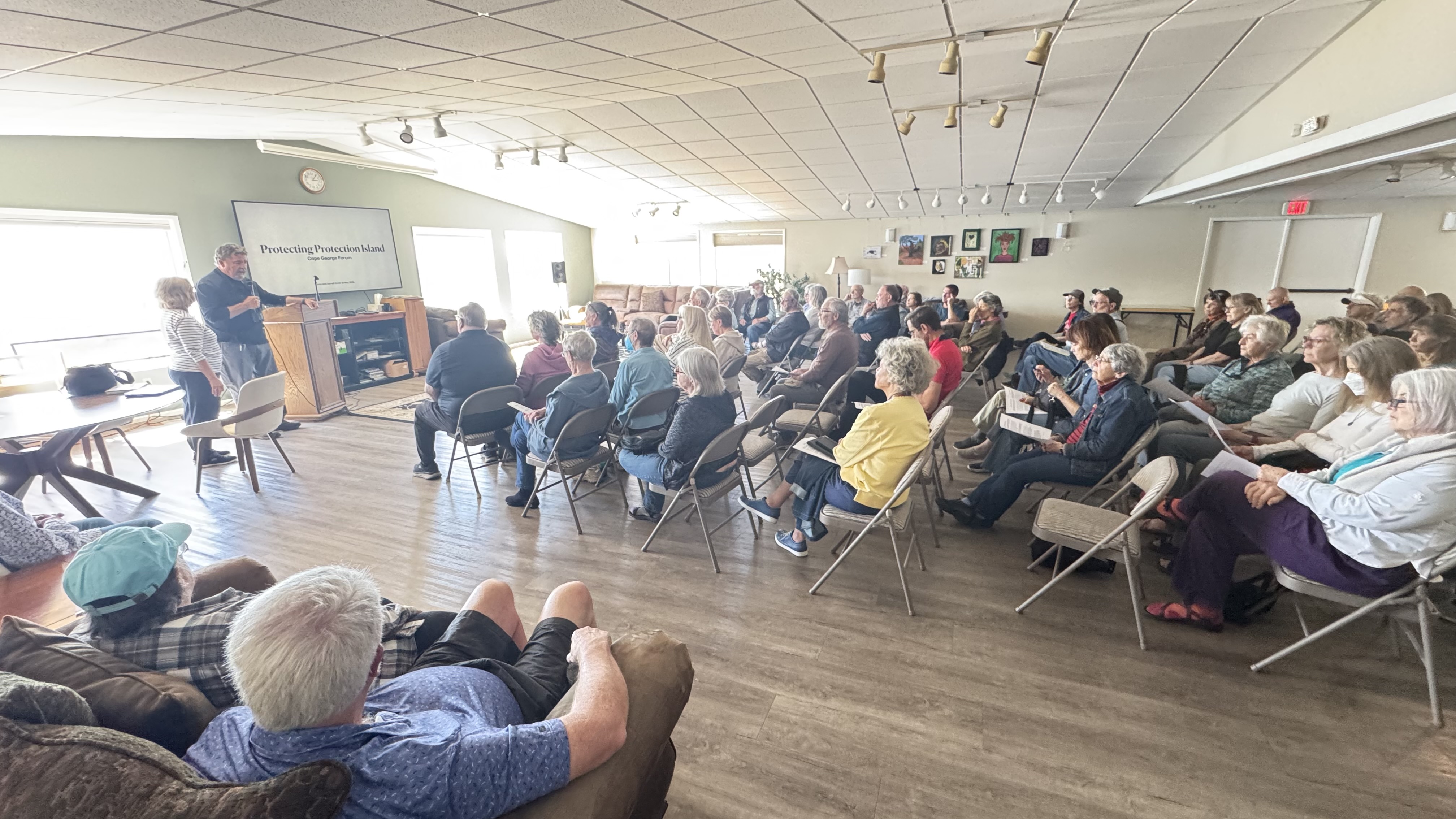
A large crowd of people gathered at Cape George on Sunday to hear Lorna and Darrell Smith discuss both the history of Protection Island and why they are concerned about the proposed Jamestown S’Klallam Land Transfer that the tribe recently has made public.
In the 1970s and early 1980s Lorna Smith was a key person in the work done to make Protection Island a national wildlife refuge. She acted as the liaison between the Seattle Audubon Society and the two women from Jefferson County that led the battle to get the island designated as a refuge, Zella Schultz and Eleanor Stopps, The thousands of letters of support from both native and non native Americans convinced even normally reticent politicians such as Senator Slade Gorton to help push the legislation through Congress and convince President Ronald Reagan to sign it. It was supported by all members of the Washington delegation and the Republican governor, John Spellman.
Also in attendance on Sunday were two granddaughters of Eleanor Stopps who share Lorna’s concerns. This reporter, who also worked with Audubon photographing the spit in the late 70s, also was in attendance.
The Smiths spent the first hour discussing the rich bird heritage of the island and the Spit, before pivoting to the proposed land transfer and the many questions that need to be answered about this proposal.
The Tribe currently is paid approximately $800,000 a year by the federal government to co-manage the Spit and the island. A month ago the Federal Government authorized over $76 million to support the refuges of the country. Money is there. There is no imminent threat of the government cutting off funds. That would have to be authorized by Congress.
The tribe has already begun requesting the ability to lay 80,000 bags of oysters on the bottom of Dungeness Spit’s inner bay, much to the dismay of bird supporters, who worry that this may cause continued loss of fish and other animals the birds feed upon. Currently, there is a lawsuit moving through the courts to stop this from happening.
In March, tribal Vice Chair Loni Greninger testified in Congress that the co-management has been very successful from both the point of view of the Tribe and the government. So if the working arrangement for co-management is successful, why should the Tribe give up $800k and why should Americans give up one of their 570 national wildlife refuges to the Tribe to become owned by them? How much is the Spit and the island worth to the Tribe and why? The answer might be found in the tribe’s lucrative aquaculture industry, wholly owned by them. While the tribe in their proposal denies having any plans for anything other than the vague term, “conservation” the actual answer to this question might have come from Vice Chair Greninger’s comment to the Port Townsend Leader on April 22nd edition. In it she stated:
“If we’re able to have that fuller ownership instead of co-management, then I don’t have to rely on any other government and their rules and regulations,” she said.
This is exactly what is feared by those who fought so hard to protect this island and Spit. With the tribe in full ownership, we will have no say as to what happens to it, nor if future tribal leaders decide to utilize these environmental treasures for economic gain. While it is understandable that the Tribe once used to forage for seafood there, the differences between subsistence shellfish harvest and modern mechanized aquaculture, with the ability to liquify the bottom with air compressors to get to geoduck, or spread thousands of bags of oysters across hundreds of acres at a time is a far cry from how it once was done.
There is every reason to continue to have the tribe manage the refuges. There is little incentive for Americans to simply hand them over to satisfy a demand. Why is Representative Emily Randall and Senator Maria Cantwell so hellbent on getting this done?
The birds are currently protected, as is the unique ecosystem they rely upon. Why should Americans relinquish this to a tribe that is engaged in the business of oyster, geoduck, crabbing, fish farming and fishing when they themselves are admitting that they want to set their own rules for the use of Protection Island? If the Tribe does get it, will we be on the outside looking in and have no input into protecting birds that live there? Many of us are waiting for more answers.