

A recent article in Sherwood titled, “Aquaculture is Making History” (subtitled “We now farm more fish than we catch”) spoke to the amazing growth of aquaculture worldwide. While the good news is that Americans, the most morbidly obese country on earth, are eating 5 lbs. more seafood per year than they had in the 1990s, the downside to all this is that farmed fish are perhaps the most destructive farming imaginable. Along with land-based farming’s effect on the planet, including the destruction of rain forests, the oceans have witnessed an across-the-board destruction in wild places needed to support wild fish and other wild seafood we eat.
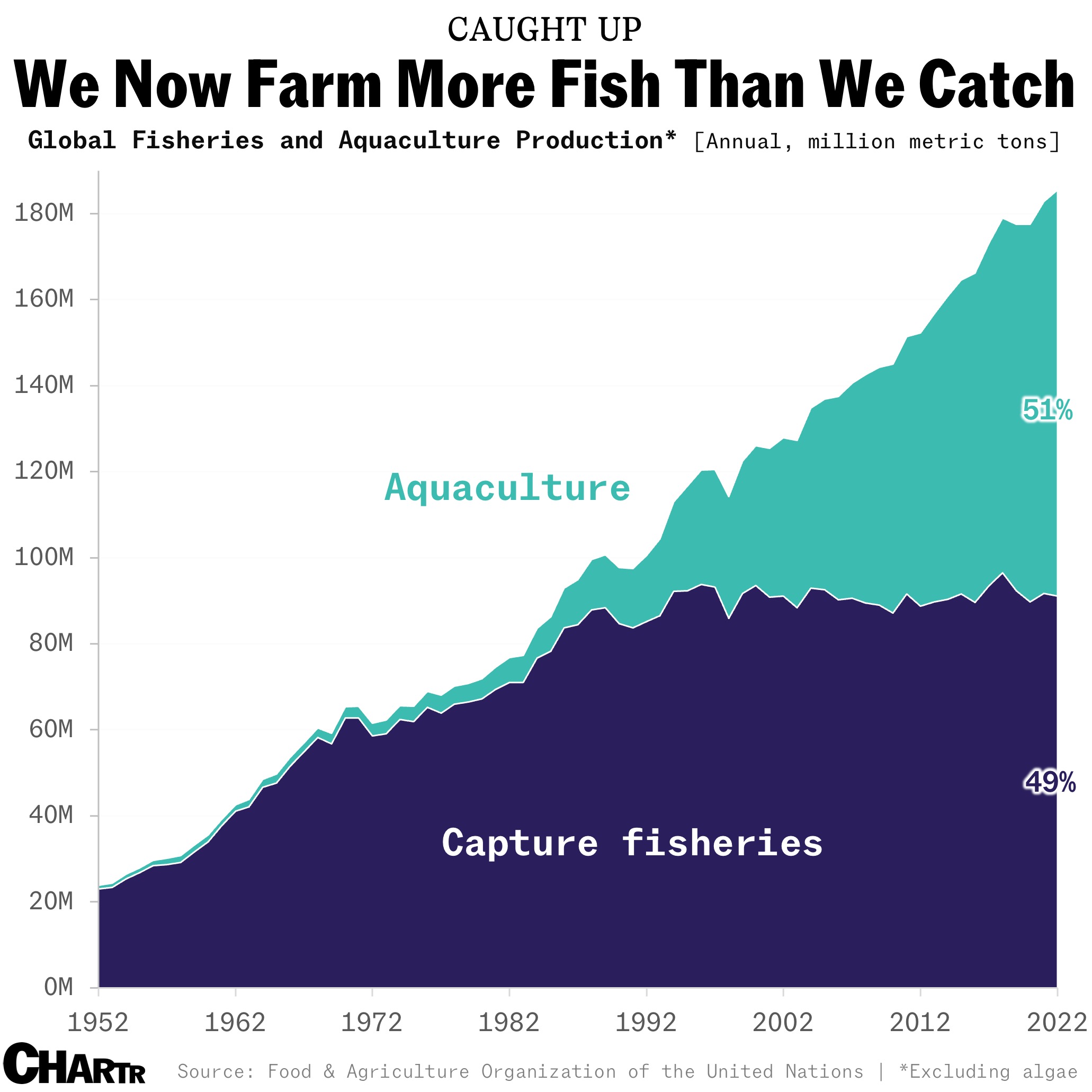
From the destruction of mangrove forests along the coasts of tropical waters, where the shrimp farms destroy miles of fish nurseries for the bland shrimp we eat, to the conversion of hundreds of miles of virgin shoreline for the monoculture of various bivalves like geoduck, from the fish farms off the coast of South America to the net pens in Sweden, Norway and Canada creating vectors for disease, we are in the process of radically altering our seas. Eating wild fish is the best thing you can do to stem this trend. Avoiding farmed shrimp and salmon makes an economic statement to those engaged in it.
Salmon in particular is a huge problem. While the global community outside of Alaska have decimated salmon runs, salmon net pens continue to provide a growing number of fish to the American market. Salmon has now met the demand of shrimp in our diets.
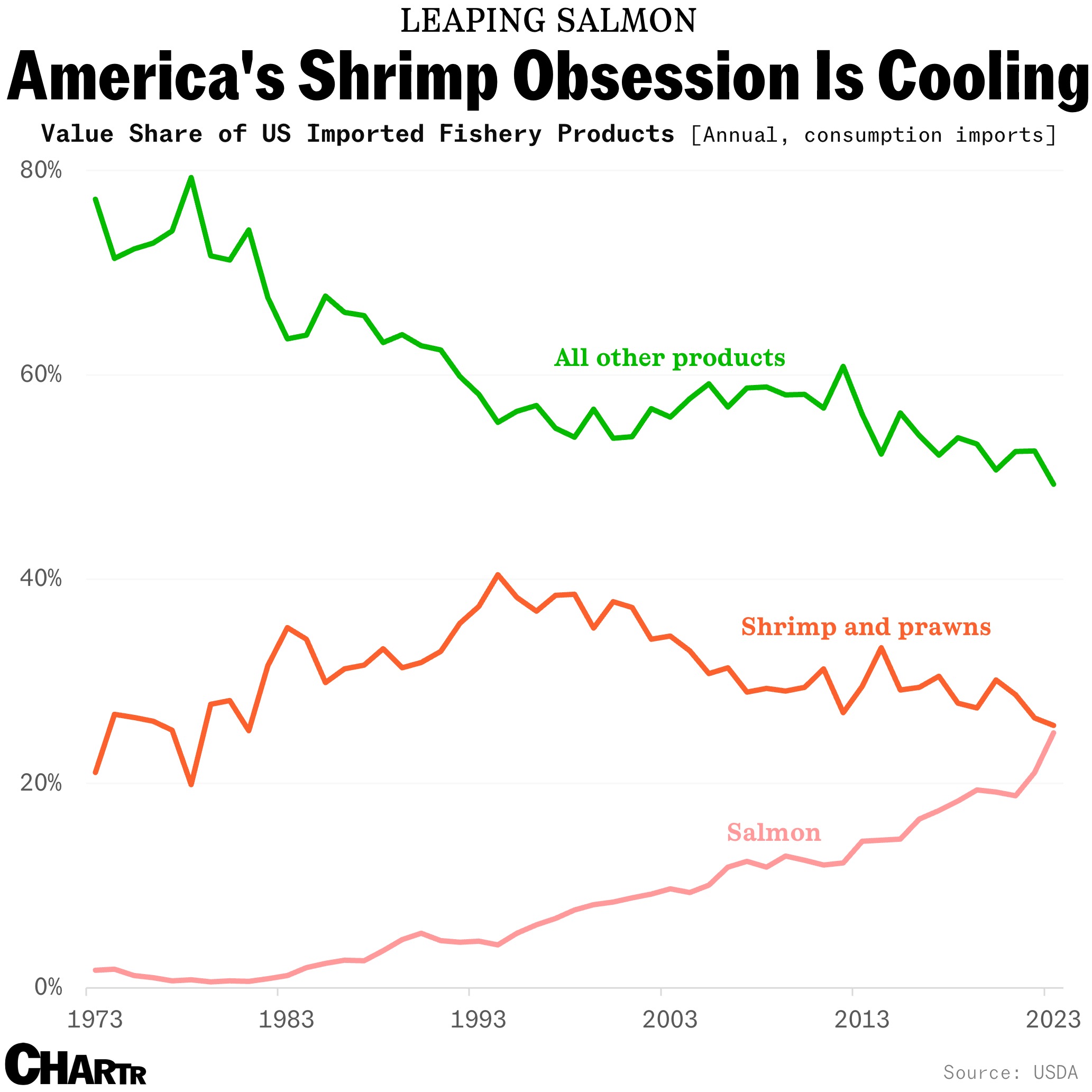
This rise in farmed salmon, while good for our diets, poses the huge threats to wild salmon, who of course swim past the nets to get a free lunch and then contract whatever disease is happening to the confined fish inside the nets. Think this is just supposition? When net pens were recently banned and removed in specific Canadian waters, the next years that fish that had migrated past since the removal of the pens the runs were huge and healthy, showing virtually no signs of sea lice or disease. Sea lice were huge problems for the net pen industry and attached themselves to wild fish swimming nearby.
What is to be done? Even the Nature Conservancy recently hired an ex-aquaculture industry person who unequivocally supports fish farming globally. Are you really going to fund such an organization?
It is worth noting that the rise in aquaculture also supports seaweed and other plant-based farming. With a push by NOAA (who officially sees the Puget Sound as worthy of turning into an aquaculture farm) to open seaweed farms here, the possibility of even more waters being turned off limits to all of us so floating farms and shorelines can continue to be converted to industrial use is very real.
In 1999 & 2000 the Governor of Washington State and the shellfish industry opened the floodgates to industrial geoduck farming, given that the Chinese market was exploding with a crazy belief in the aphrodisiac properties of eating geoduck. What was never discussed in that law was “how much is enough? When do we say we have converted enough shoreline to aquaculture?” The industry influences our rural politicians by contributing to their campaigns and seeds their people into environmental organizations both by sitting on their councils, and donating to their “recovery” efforts, as long as it does not impact their ability to make money. In discussions with environmental organizations about this very issue, all but one of them would consider talking up against aquaculture, because they all rely on grants from the industry to support their non-profit work.
Tribes have shifted into commercial aquaculture, some doing good work in raising relatively benign fish such as sablefish (aka black cod) but have also taken on extremely controversial acts such as pressing to put a large-scale aquaculture farm inside the federally protected Dungeness Spit. While scientists from the Spit were threatened with their jobs by national managers (during the Trump presidency), local leaders and environmentalists were unwilling to criticize the tribes for any reason whatsoever.
All this means that while some environmental organizations may be crowing about the growth of aquaculture to feed a hungry planet, the increasing threats to our seas and wild fish continue unabated.
Read the whole article on Sherwood and sign up for their newsletter.
Note: Some of you regular readers may note that The News has not been publishing as much lately. While I have made an effort to keep up, bad news has been in much greater volume than good news, and I strive to find positive environmental stories to share with you, along with efforts by concerned citizens to protect our fragile and decreasing natural resources. So, my feelings are “less is more”. I’ll continue to bring you the News as it matters. Today’s article I felt was more educational in nature, helping put in perspective the larger forces that are affecting our region. Have a great 4th of July. Our democracy means we have voices that can dissent against this wholesale destruction and not find ourselves in a “re-education” camp, or worse. This November, vote for candidates who actually deliver and not just talk. There are too many of the talk, not deliver on both sides. We will be posting our picks for true environmental candidates in an upcoming post. Thanks again for reading.